



Staph: The Hidden Training Hazard
Responsible for 18,650 deaths nationwide a year—150 percent as many deaths as caused by AIDS—the monster is microscopic, extremely aggressive, and damned difficult to kill. The monster is a microbe called Staphylococcus.


In the movie "Jaws," actor Roy Scheider was able to get the better of a monster, a killer great white shark. But in real life, the macho actor succumbed to an entirely different kind of monster after he was weakened by cancer.
The National Football League spends millions on revamping its 32 teams' training facilities, installing state-of-the art hygienic safeguards and educating its coaches, trainers, and doctors about maintaining proper hygiene in training. And still its players are often felled by the same monster that killed Scheider.
Hospitals create educational campaigns, plaster their walls with informational posters and caveats, and encourage their staffs to keep equipment sterilized and practice good cleaning habits. Yet the monster remains one of the top four post-operative complications.
Responsible for 18,650 deaths nationwide a year—150 percent as many deaths as caused by AIDS—the monster is microscopic, extremely aggressive, and damned difficult to kill. The monster is a microbe called Staphylococcus.
Commonly referred to as "staph," this bacterium infects some 500,000 patients in American hospitals each year. The most harmful and most common staph germ is Staphylococcus aureus (S. aureus). Once contracted through an open wound, it can lead to toxic shock and death.
Why is this important to you, the conscientious street cop who wears gloves, routinely washes his hands, and keeps a bottle of Purell in his or her shirt pocket on patrol?
Because staph is not just out on the street with the homeless and the hypes. The equipment we use in defensive tactics training and even our sparring partners can be the gateway to a staph infection.
Contaminated gym gear such as gloves and face protectors may be passed from one student to the next. Grapplers may find themselves in skin-to-skin contact with one another, resulting in the bacteria being passed through an open cut or abrasion. And the seemingly unused towel lying atop a folding chair could be a transmission device for anyone with an open wound who uses it or even sits on that chair.
Case Studies
Think we're being alarmist? Think again. Staph infections have hit a number of law enforcement training facilities in recent years. Consider the following:
A staph outbreak at a Texas police academy found 43 of the 110 cadets suffering soft-tissue infections, with two incurring bloodstream infections.
And that's not an isolated incident. In the winter of 2006, the Delaware State Police Training Academy found itself doing battle with Methicillin-resistant Staphylococcus aureus, the dreaded MRSA. In the twentieth week of its 22-week course, two new police officers were diagnosed with the infection. The state's health department was called in to advise on the cleanup. And officers were moved out of their on-site accommodations and had to commute from home for the remaining two weeks of the program to minimize exposure.
Last January, a Prince George's County, Md., class of cadets was forced to go on leave for two weeks after nine recruits and three trainers were reported to have staph infections.
In one academy case, responsibility for a staph break-out was attributed to a "carrier" recruit who blamed his abstinence from showering on an allergy to soap. His ongoing physical contact with fellow recruits saw the bacteria spread like wild fire.
Neil Pascoe works for the Texas Department of State Health Services, Infectious Disease Control Unit. Called upon to look at the Texas academy outbreak, Pascoe became part of an investigation team seeking to address the infections and prevent their recurrence.
"We identified a number of areas of concern," Pascoe says. "But the major one was the initiation of defensive tactics and countermeasures, active physical contact between the recruits and not the training staff. It was also coed.
"A week after the initiation of these defense tactics saw the abrupt start of this outbreak. There was a single outbreak with over 20 cases. And all were MRSA," Pascoe adds.
Pascoe says that as the investigation progressed, the implications of the infection were found to be more far-reaching than first suspected.
"When we came on the scene, there was ongoing transmission," Pascoe notes. "The problem was that the training class that had initially been infected had ended and a new training class had started. One might hope that with the graduation of the first class that the problem would have ended. But that was not the case. The next academy class had infections as well."
And Pascoe's team found that infections weren't just confined to the affected department's personnel. "Other training classes were being held simultaneously with the first recruit training class. A visiting law enforcement officer became infected. This was bad enough, but then he took the infection home and shared it with his wife. It took months to resolve the contamination."
[PAGEBREAK]
Investigation and Decontamination
Resolving a staph outbreak means not only curing those infected with the bacteria, but laying a foundation that will prevent a recurrence.
"In our case, we initiated essentially three areas of intervention and what we call control measures," Pascoe explains. "The first was active inspection and disinfection of the mats and the equipment that was in use at the time these defensive tactics were going on. Previously they hadn't done anything, so we had to disinfect the mats after each group had done their training or their activities, as well as shared items like gloves, strike pads, simulated weapons. Prior to handling these things, we disinfected their hands. Similarly, we did that after their activity."
On the east coast, Prince George's County and Delaware also cleaned up their acts.
"These infections were never a public health risk since it was contained in the training class," Prince George's County Deputy Chief Michael Blow, head of the strategic management bureau, said in a statement.
"Now that everyone has been successfully treated and cleared, we can get back to the business of training recruits, who are excited about returning to work."
Stopping It Before It Starts
It's been said that an ounce of prevention is worth a pound of cure. Just as Pascoe's recommendations proved effective in combating the Texas breakout, other trainers are taking precautionary measures.
Ed Nowicki is executive director of the International Law Enforcement Educators and Trainers Association (ILEETA). He is a strong advocate for increased hygienic vigilance in training environments.
Nowicki points out that preventing injuries goes a long way toward preventing staph infections.
"You have to balance a desire for realistic training with a need to be safe," Nowicki says. "Handcuffing techniques are a prime example. You want to get in the habit of being able to get handcuffs on a person quickly, and this takes some aggressive training. But when you're practicing such routines repeatedly, the ulna nerve on the wrist can really take a beating. You can end up leaving abrasions, open wounds that can then get infected. Why not prevent such injuries in the first place?"
To this end, Nowicki encourages the use of foam underwraps on the wrists of recruits. These wraps are themselves covered by tape so as to provide a secondary level of protection.
Pascoe also discovered a very simple way for officers to reduce their chances of being hit by staph in defensive tactics classes: Wear long sleeves and sweat pants. In his investigation of the Texas outbreak, he found a high correlation between the number of students wearing shorts and short-sleeved T-shirts and infections.
Nowicki has dealt with sepsis himself, and warns that another danger is cops' abilities to downplay or rationalize injuries. It's another reason why he's big on precautionary hygiene.
"We used bleach on our mats. The smell was sometimes over-powering, but it was something we had to do," says Nowicki.
Mike Siegfried is a force instructor for the San Bernardino County (Calif.) Sheriff's Department. As such, he is responsible for training 3,000 of the department's members every four months. He echoes the concerns articulated by Pascoe and Nowicki.
"I make sure that we have our mats and gear cleaned with a 10-percent bleach solution every single day," Siegfried says. "Not only that, I also make sure that students aren't allowed to use shoes on the mat and take steps to prevent cross-contamination such as when they go outside on the grass or visit a restroom. I make sure they get those shoes off and secured in an area where they're not going to get the carpet that's next to the wrestling mat contaminated with feces or urine."
Such vigilance might be described as over-the-top to some people. But such vigilance may be why Siegfried is not aware of a single one of the students in his programs contracting a staph infection during his three years as an instructor.
More Patrol

Team Wendy Introduces the EXFIL Endurance Ballistic Helmet, Engineered to Reduce the Burden of Extended Wear
Team Wendy has launched its EXFIL Endurance, a new lightweight ballistic helmet engineered to deliver protection, comfort, and fit during demanding, extended operations.
Read More →
The First Responders Children’s Foundation National First Responders Day Roll Call of Heroes Ceremony Returns to Times Square, NYC
First Responders Children’s Foundation (FRCF), in collaboration with T-Mobile, will host the Roll Call of Heroes ceremony in Times Square to commemorate National First Responders Day on Wednesday, Oct. 28. During the event, FRCF will present 18 Hero Awards.
Read More →
Streamlight to Showcase Newest Lighting Products for Law Enforcement Professionals at IACP 2026
Streamlight will showcase its newest lights for law enforcement at the International Association of Chiefs of Police Annual Conference & Expo. Featured lights will include the TLR-3 X, the PolyTac 1X, and more.
Read More →
Streamlight Portable Scene Light III Wins 2026 OH&S New Product of the Year Award
Streamlight’s Portable Scene Light III has won the 2026 Occupational Health & Safety (OH&S) New Product of the Year Award in the Lighting category.
Read More →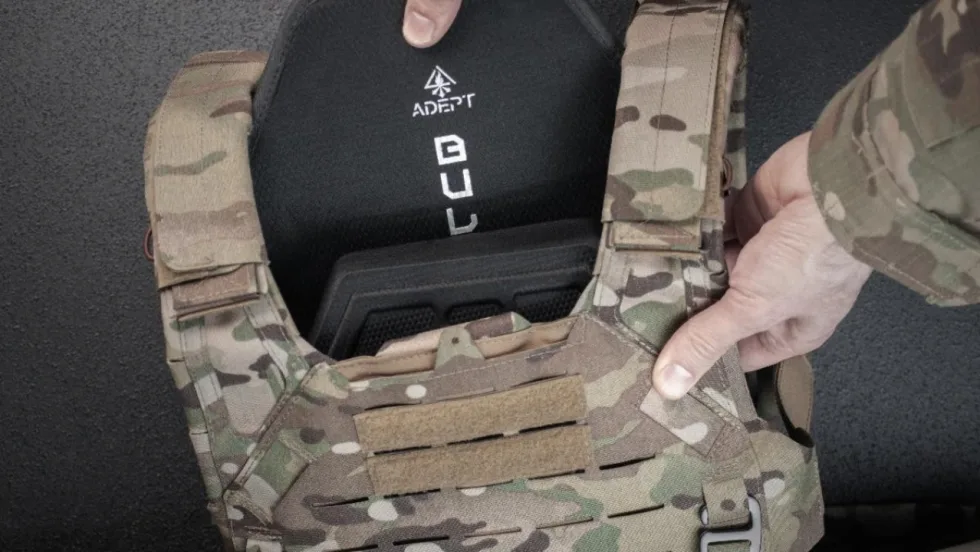
Adept Armor Introduces Two New Rifle Plates
Adept Armor has launched two new Level IV ballistic plates, the Emperor and the Archon Mark 2, which brings Adept Armor’s new Quatroid ceramic to the high-threat, performance-value center of the range at 5.2 pounds.
Read More →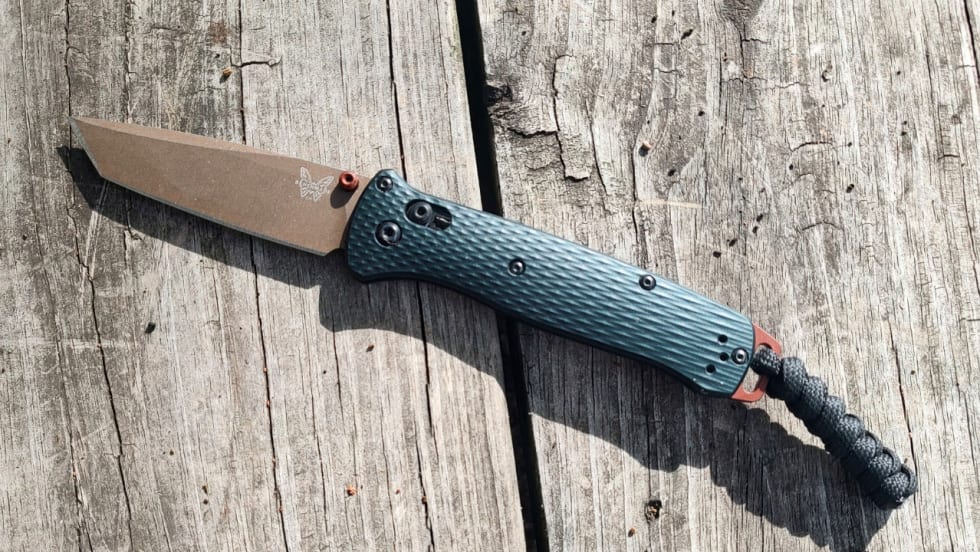
POLICE Product Test: Benchmade Bailout
The Benchmade Bailout is a slim, lightweight carry knife with a deep-ride pocket clip and comes in a variety of blade steels and scales. Here is a detailed review of the Taiga Green Bailout, released earlier this year.
Read More →
NLEOMF Announces July 2026 Officer of the Month
NLEOMF honored a Michigan deputy sheriff as the July 2026 Officer of the Month for rescuing a trapped driver from a burning vehicle following a Fourth of July crash.
Read More →
Streamlight to Showcase Newest Lighting Products at National Safety Council’s Safety Congress & Expo 2026
Streamlight will showcase its latest lights, including the Portable Scene Light III and the LiteBox 1Million, at the 2026 National Safety Council (NSC) Safety Congress & Expo.
Read More →
The 2027 World Police & Fire Games Set for Perth, Australia
The 2027 World Police & Fire Games (WPFG) will take place in Perth, Western Australia, from Friday, March 12 through Sunday, March 21, 2027.
Read More →
5.11 Partners with National Fallen Firefighters Foundation to Support #ForThe343
5.11 has joined the nationwide movement honoring the 343 New York City Fire Department firefighters lost on Sept. 11, 2001.
Read More →