



Shots Fired: Charles City, Iowa 04•14•2007
The call came in a little past 8 p.m. A suicidal man was parked inside a closed garage with the engine running. The Charles City, Iowa, officer assigned to the call was on his first night out and fell prey to many a rookie's bane: he got lost rolling to the call. That meant that the lieutenant who rolled to assist, Brandon Franke, was effectively on his own.

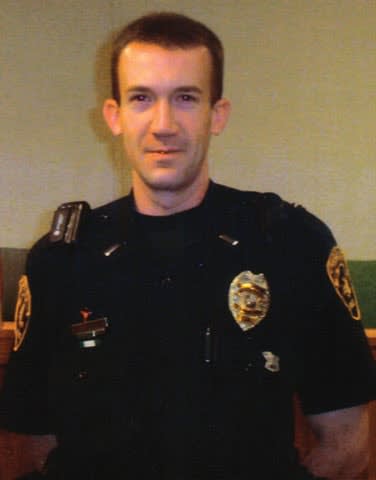
The call came in a little past 8 p.m. A suicidal man was parked inside a closed garage with the engine running. The Charles City, Iowa, officer assigned to the call was on his first night out and fell prey to many a rookie's bane: he got lost rolling to the call.
That meant that the lieutenant who rolled to assist, Brandon Franke, was effectively on his own.
The seven-year veteran wasn't unduly concerned. Information from dispatch indicated that while the informant said her husband was suicidal, she was reasonably sure that he was unarmed. A born optimist and no stranger to calls involving distraught individuals, Franke figured the situation to be simply a matter of contacting the husband and getting him the medical and psychological help he obviously needed.
Meth Binges
Arriving at the location in the 100 block of Park Avenue, Franke found the female informant waiting for him in the front yard.
The woman didn't have much more information to add than what was provided by dispatch, save for a possible reason for her husband's behavior. She'd earlier told the man that she'd had enough of his meth binges: either the drugs went or she did. Her husband had come up with a third option: He would leave…permanently.
Now he sat in the garage, stewing in his thoughts as carbon monoxide fumes swirled about him, further fogging his already addled mind. She said that she'd tried to lift the garage door without success, but hadn't yet tried the remote garage door opener in her car, which was parked on the street. Franke asked her to get it.
As he waited for the woman to retrieve the remote, Franke considered the subject of his concern, one David Jerome King.
Charles City is a pretty small town. You either know everybody or know of everybody. Franke knew that King's reputation wasn't a good one. He was a recreational meth and alcohol abuser with a rap sheet more a testament to bad luck at getting caught than any predatory behavior. Franke had even had personal contact with the man on a previous call wherein King turned out to be more of a cooperative contact than a reliable witness.
Every field situation has officer safety implications, and Franke knew that. But the 29-year-old officer didn't see anything inherent to the situation that would preclude his taking proactive measures to save the man's life, especially when he considered that simply opening the garage door might clear the air and the man's mind, too.
But when King's wife returned with the remote, Franke tried it without success. The suicidal man had apparently deactivated the system from the inside, probably in a bid to keep his wife from interrupting him. Franke asked the woman if there was another way to get inside the garage. He was told that there was a door that led from the kitchen into the garage.
Through the Kitchen
Nobody else was inside. Franke approached the house. He felt that intervention at this point would entail entering the garage and hoped that the element of surprise was on his side. It was a calculated gamble, but with a man's life at stake Franke was willing to roll the dice.
He entered through the unlocked front door then cautiously crossed through the living room to where it ended in a "T" intersection with the kitchen. Forking toward the door leading into the garage, Franke was frustrated to find that its window was obscured by a curtain on the other side of the door. He edged closer to the door. As he gripped the handle, he felt pressure from the opposite side.
The knob turned against his hand. Franke backed away. As he did, the door flew open and a visibly agitated David King crossed the door threshold into the kitchen, one arm hidden behind his back.
"What are you doing in my house?" King asked.
Franke was now asking himself that same question.
Show Me Your Hands!
King stalked further into the room, his eyes expressionless orbs beneath the red bandana scarf atop his head. The lieutenant backpedaled, determined to create as much room as possible between himself and King. Any thoughts of saving the man now became subordinate to saving himself from whatever threat was held behind King's back.
"Show me your hands!" Franke ordered. "What's in your hands?"
"I have a weapon," King answered.
Franke didn't doubt it. The only thing in question was the nature of the weapon. He considered the various implements King might have had access to in the garage…a hammer…a knife…a hatchet. The man's aggressive approach did nothing to dissuade Franke from the speculation.
TASER Time
Determined to finish his shift with no more holes in himself than when he'd started, Franke drew his X26 TASER.
At the sight of the TASER, King brought his hand forth, answering Franke's questions regarding the nature of his threat with the proclamation, "I've got a gun."
King held a .22 revolver at chest level, barrel pointing downward. Franke saw that King's finger was not on the trigger—a small comfort.
Continuing to give ground, Franke yelled for King to drop the weapon as he backed out of the kitchen and into the living room. Keeping his eyes on King as much as he could, he surveyed the Spartan furnishings for something that might provide cover or concealment. The front door was an iffy proposition, at best, but Franke needed desperately to find some concealment, something that would get him out of no man's land and buy him time to talk King down.
But King kept coming toward him, and Franke knew he'd never make it to the door in time. In the hopes of incapacitating King before he could re-grip the gun and get off a shot, Franke activated his TASER. The twin darts shot out toward King's direction, but there was no connection.
Expressionless Eyes
"What the f___ are you doing?" King asked. "What did you do that for?"
The man's words were too calm, and his apathetic expression and blank stare too incongruous for the sentiments he spoke. There was something disconcertingly matter-of-fact about how King was conducting himself.
He raised the revolver and pointed it at Franke.
Franke drew his .40 caliber Glock 22C. He wasn't sure why the TASER hadn't worked, but there was no ambiguity about King's determination to shoot him. His expressionless eyes said it all. Franke knew it would come down to his sidearm doing its job if he was going to get out of the man's house alive.
He drew and aimed for center mass, squeezing off three Hydra Shok rounds.
They were quick shots—accurate, too—Franke was as certain of this as he'd been of anything in his life. But reality slowed down, and the scene became muted. His first report was little more than a muffled hand clap; the succeeding two he didn't hear at all. Only the sensation of the slide cycling let him know he was firing.
With Franke's third shot, the gun fell out of King's hand. The man's arms grabbed his lower abdomen where one of the shots had struck. He slowly collapsed to the ground where he lay on his side.
Franke stared at the crumpled man. He couldn't believe how things had evolved…or how quickly. Already his mind was playing the situation back: He'd showed up, determined to save the man; he'd backed away, determined to stop the man; and now he was requesting paramedics and backup, once again determined to save the man.
Franke secured his weapon and rolled the obviously pained King onto his back where he put direct pressure on his wound before being immediately relieved by other officers and paramedics that had descended upon the scene.
But nothing could save King.
Two of Franke's Hydra Shoks had struck the suspect: one in the mid-torso stomach area and one in the groin area. Independent of one another, either would have been fatal. The third had missed, striking the floor.
King was transported to Floyd County Memorial Hospital and pronounced dead within the hour.
Investigation Findings
The subsequent shooting investigation revealed that one of the TASER probes had hit King's chest, while the other hit the living room door frame that he was standing next to.
Looking back, Franke realizes that while it didn't start out as an officer assisted suicide, it had quickly evolved into one.
"I thought I heard him say as he was going down, 'Thank you, copper, thank you for doing that,'" Franke reflects.
"But the patrol car recorder, which captured all of the audio from the incident, indicated that the suspect said, 'F___ you, copper, f___ you for doing that.' He didn't say anything after that."
Whatever King's intentions or sentiments, Franke knows in his heart that he did what he had to do. The lieutenant is also extremely appreciative of Police Chief Mike Wendel's handling of the matter.
Instead of allowing the media to put its spin on the event, Chief Wendel went out of his way to lay down a clear and detailed account of the shooting. He let it be known that Franke had gone into the location with a reasonable belief that the man was not armed given the information that had been communicated to him. He also stressed that Franke "went into this thing in a life-saving or counseling mode, not a self-defense mode."
Franke is back on duty, but the shooting has had an effect on him.
"I had anticipated having to take a life in the line of duty. I felt that I could do what I had to do," Franke notes. "But dealing with the aftermath of the shooting was different. I had trained how to perform in different situations, but you don't do a lot of training on how to deal with it afterwards, so you kind of feel like you're on your own afterwards.
"Everybody on my department was great, but training doesn't give you that aspect. I had to be cleared by a psychologist before I could go back to work. My department doesn't have a debriefing policy or anything like that. Talking to the psychologist helped a little bit. I experienced some sleep disruption after the shooting."
Six months later, the shooting is still fresh in Franke's mind. He is appreciative of the fact that he saved a rookie cop from having to deal with the situation. He undoubtedly saved the woman's life, as well as his own. By his own admission, he feels that he needs to consider the more positive aspects of his involvement in the shooting as opposed to dwelling on the negative.
The Will to Survive
Franke had to do what he had to do. Bad things happen when an officer isn't willing to kill to protect himself.
And there are some officers who by their own admittance are reticent to take another's life, even when faced with situations in which they may be killed. One West Coast officer was such a man.
A devout Christian, he commented on multiple occasions about his inability to kill a man. Not surprisingly, when a suspect on PCP tore the mounted shotgun out of the officer's patrol car, the officer did not do what he had to do to protect himself, and was killed by a shotgun blast fired from the shotgun he had loaded himself.
Obviously, our actions as officers should be governed by a reverence for human life. But reverence for human life includes our own. Officers who fail to take the necessary actions to save themselves from threats bequeath unnecessary heartaches to loved ones who survive them and avoidable threats to their peers who may not.
Fortunately for himself and his loved ones, Charles City Police Lt. Brandon Franke is not such an officer.
WHAT WOULD YOU DO?
Consider the situation faced by Lt. Brandon Franke of the Charles City (Iowa) Police Department and ask yourself these questions.
Judgment calls are notoriously "iffy" propositions. Would you have waited for backup before entering the house? What difference might the presence of a second officer have played in the situation?
Lt. Franke's attempt to TASER the subject was frustrated when the twin darts failed to connect to the man. Fortunately, he was able to successfully engage the subject with his sidearm. How do you feel about using a TASER on a subject armed with a firearm?
What techniques and tactics have helped you in dealing with suicidal individuals? Have you been able to talk a subject out of taking his or her life? Have you ever been forced into a situation similar to that faced by Lt. Franke?
Do you know—or know of—any fellow officers who have expressed a reluctance to take a subject's life even if deadly force is necessary and warranted? How do you feel about working around such officers?
More Patrol

Team Wendy Introduces the EXFIL Endurance Ballistic Helmet, Engineered to Reduce the Burden of Extended Wear
Team Wendy has launched its EXFIL Endurance, a new lightweight ballistic helmet engineered to deliver protection, comfort, and fit during demanding, extended operations.
Read More →
The First Responders Children’s Foundation National First Responders Day Roll Call of Heroes Ceremony Returns to Times Square, NYC
First Responders Children’s Foundation (FRCF), in collaboration with T-Mobile, will host the Roll Call of Heroes ceremony in Times Square to commemorate National First Responders Day on Wednesday, Oct. 28. During the event, FRCF will present 18 Hero Awards.
Read More →
Streamlight to Showcase Newest Lighting Products for Law Enforcement Professionals at IACP 2026
Streamlight will showcase its newest lights for law enforcement at the International Association of Chiefs of Police Annual Conference & Expo. Featured lights will include the TLR-3 X, the PolyTac 1X, and more.
Read More →
Streamlight Portable Scene Light III Wins 2026 OH&S New Product of the Year Award
Streamlight’s Portable Scene Light III has won the 2026 Occupational Health & Safety (OH&S) New Product of the Year Award in the Lighting category.
Read More →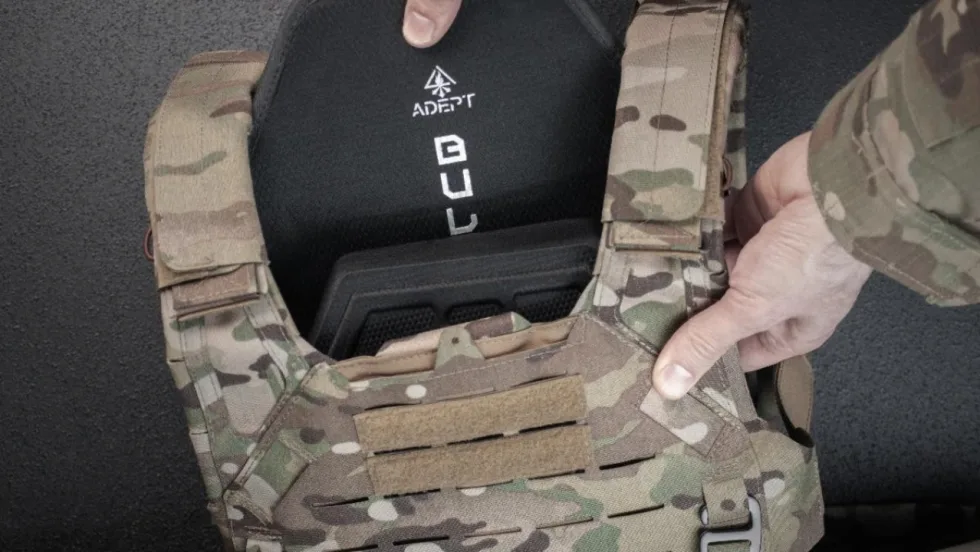
Adept Armor Introduces Two New Rifle Plates
Adept Armor has launched two new Level IV ballistic plates, the Emperor and the Archon Mark 2, which brings Adept Armor’s new Quatroid ceramic to the high-threat, performance-value center of the range at 5.2 pounds.
Read More →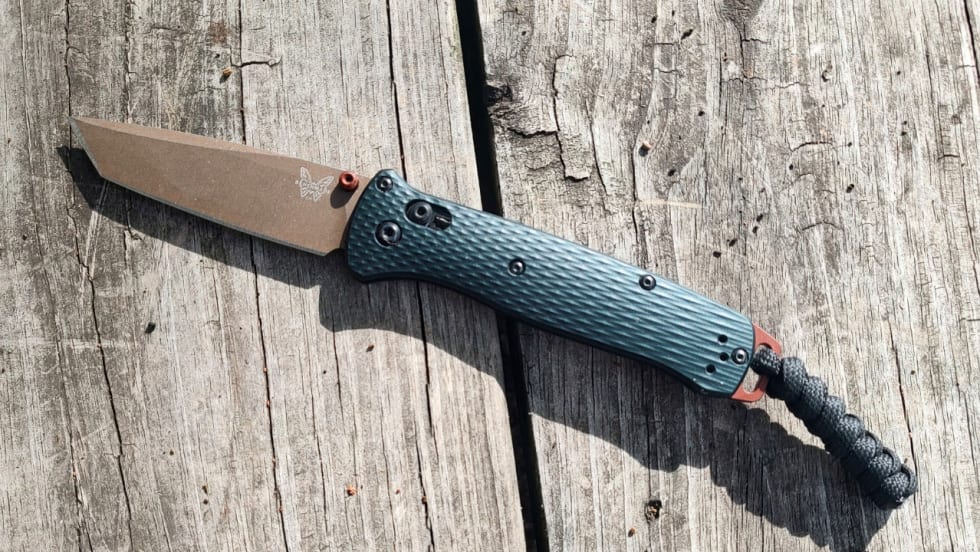
POLICE Product Test: Benchmade Bailout
The Benchmade Bailout is a slim, lightweight carry knife with a deep-ride pocket clip and comes in a variety of blade steels and scales. Here is a detailed review of the Taiga Green Bailout, released earlier this year.
Read More →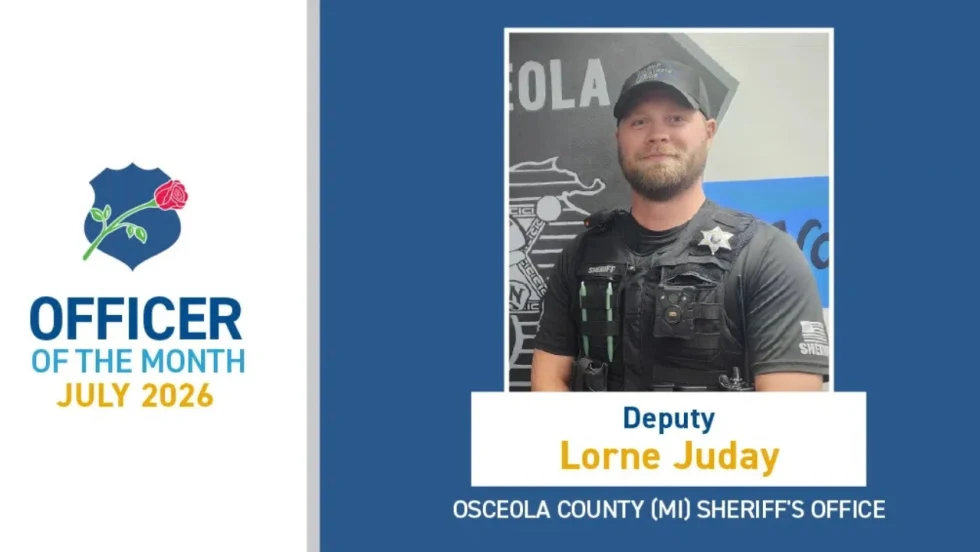
NLEOMF Announces July 2026 Officer of the Month
NLEOMF honored a Michigan deputy sheriff as the July 2026 Officer of the Month for rescuing a trapped driver from a burning vehicle following a Fourth of July crash.
Read More →
Streamlight to Showcase Newest Lighting Products at National Safety Council’s Safety Congress & Expo 2026
Streamlight will showcase its latest lights, including the Portable Scene Light III and the LiteBox 1Million, at the 2026 National Safety Council (NSC) Safety Congress & Expo.
Read More →
The 2027 World Police & Fire Games Set for Perth, Australia
The 2027 World Police & Fire Games (WPFG) will take place in Perth, Western Australia, from Friday, March 12 through Sunday, March 21, 2027.
Read More →
5.11 Partners with National Fallen Firefighters Foundation to Support #ForThe343
5.11 has joined the nationwide movement honoring the 343 New York City Fire Department firefighters lost on Sept. 11, 2001.
Read More →