



Secret Agent: Sur-Tec's VP Covert App
Sur-Tec's VP Covert Audio and GPS software suite is a patented surreptitious listening tool for law enforcement that allows an undercover officer or CI to stream live audio and GPS to one or more computers. The mobile application element of the software runs in the background on the user's smartphone.

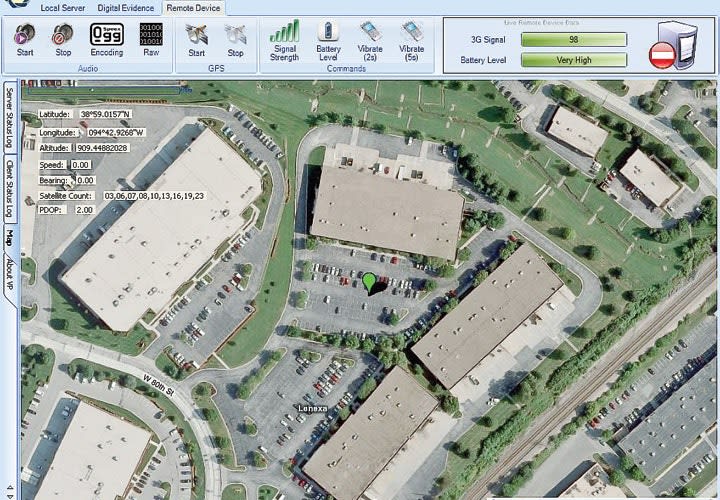
Sur-Tec's VP Covert Audio and GPS software runs on the Windows Mobile Platform and replaces RF body wires. Photo: Sur-Tec.
There's a pivotal scene in almost every cop movie ever made since the 1960s. The undercover officer or the reluctant confidential informant meets with the criminal boss while wearing a wire and things go horribly wrong.
They go horribly wrong in real life, too. "We had one customer put it like this: 'You get caught wearing a wire, and it's a very bad day. It hardly ever ends well,'" says Todd Dupriest, CEO of Lenexa, Kan.-based Sur-Tec.
Since its founding 25 years ago, Sur-Tec has specialized in covert video and video surveillance tools. And one tool that the company has always wanted to improve is the radio frequency (RF) body wire. In 2009, Sur-Tec rolled out a new product that may make the RF body wire as obsolete as the buggy whip.
Sur-Tec's VP Covert Audio and GPS software suite is a patented surreptitious listening tool for law enforcement that allows an undercover officer or CI to stream live audio and GPS to one or more computers. The mobile application element of the software runs in the background on the user's smartphone.
Back in 2008 when Sur-Tec was developing VP, a computer engineering association magazine declared that streaming audio live over smartphones without latency (buffering) was not possible with current technology. Sur-Tec's engineers knew that it would be difficult, but they didn't agree that it was impossible.
"We're not using a voice channel," explains Dupriest. "We are streaming audio and that was technically challenging. Our customers demand as close to zero latency as humanly possible."
Concealment and speed are not the only benefits of the VP system over conventional RF wires. The range of RF body wires is limited by the power of their transmitters, urban clutter such as buildings, and the presence of a repeater. In contrast, VP has no range limits.
VP's data stream can be sent to any computer equipped with the software anywhere in the world. At last year's National Technical Investigators Association (NATIA) annual training conference in suburban Dallas-Fort Worth, Sur-Tec demonstrated the capabilities of VP by streaming data live to the show from Maui, Kansas City, and New York.
Of course, the capabilities of VP are affected by the quality of the cellular data network in the area of operation. "We're infrastructure dependent," says Dupriest. "Our system is as good as the network on which it operates." VP was developed to run on Sprint's 3G network. When that's not available, the system roams until it finds an appropriate signal. It can also be set up to use a Wi-Fi signal.
Also, if the signal drops, VP is designed to ensure that the undercover officer or informant still has a record of the conversation. The software transforms the phone into a surreptitious digital audio recorder. In addition, a data connection is re-established automatically once a signal is available without any action by the user.
Monitors can also send signals through vibrations to the undercover operative. The system allows the cover officers to buzz the operative's phone with either a two-second or a five-second pulse that could be used as a warning or an alert.
Dupriest says he realizes that savvy criminals may soon catch on to the use of smartphones for surveillance, but that doesn't invalidate VP. "It's a matter of officer safety," Dupriest argues. If the bad guy finds something on you, let him find a cell phone. Worst case scenario: he takes it or you have to destroy it to prove it's a cell phone. Go ahead, destroy it. It's just a cell phone. The other side of that coin is: you get caught with a wire."
VP is now available for the Windows Mobile platform. Sur-Tec is working on an Android version. The software sells for $4,995 per device for a lifetime license. Sur-Tec also offers a monthly plan for qualifying agencies.
More Technology
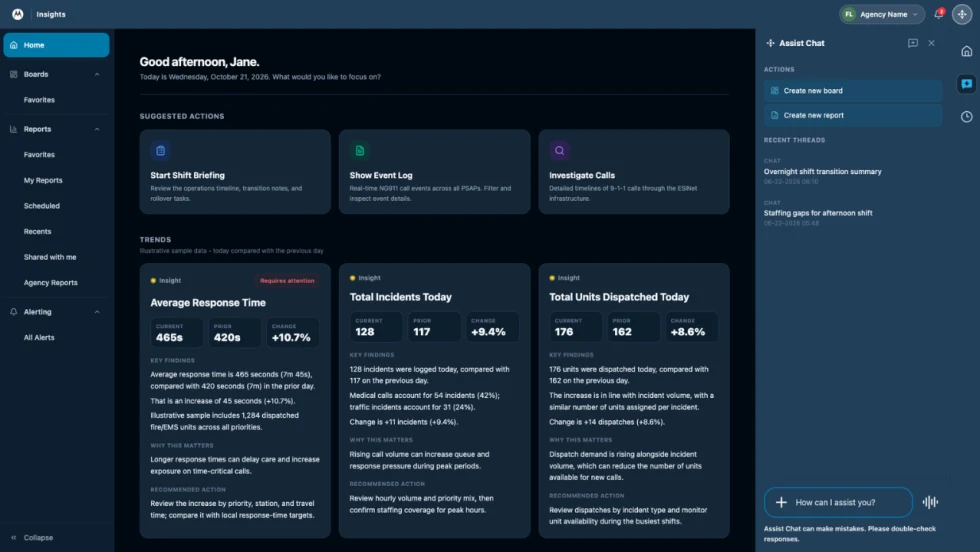
How Motorola Solutions’ New “Insights” Platform Helps Public Safety Agencies Identify Trends to Improve Their Operations
Motorola Solutions has introduced Insights, which leverages Assist, its mission-critical artificial intelligence (AI), to address these challenges and shape what’s next for public safety analytics and reporting technology.
Read More →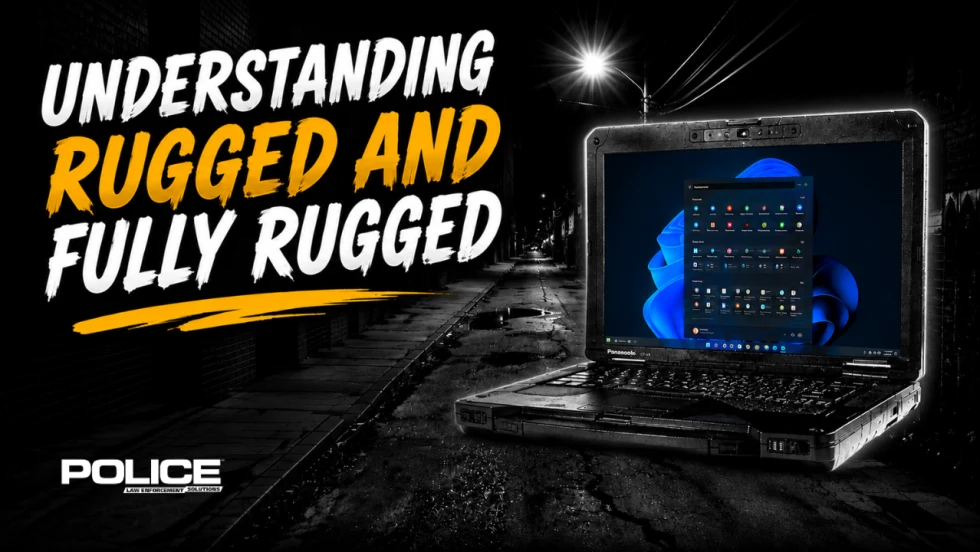
What Qualifies a Laptop as Rugged or Fully Rugged?
Police officers face a wide range of working conditions that can damage or even destroy a regular consumer laptop. Learn what qualifies a computer as rugged or fully rugged and why those devices are vital for law enforcement.
Read More →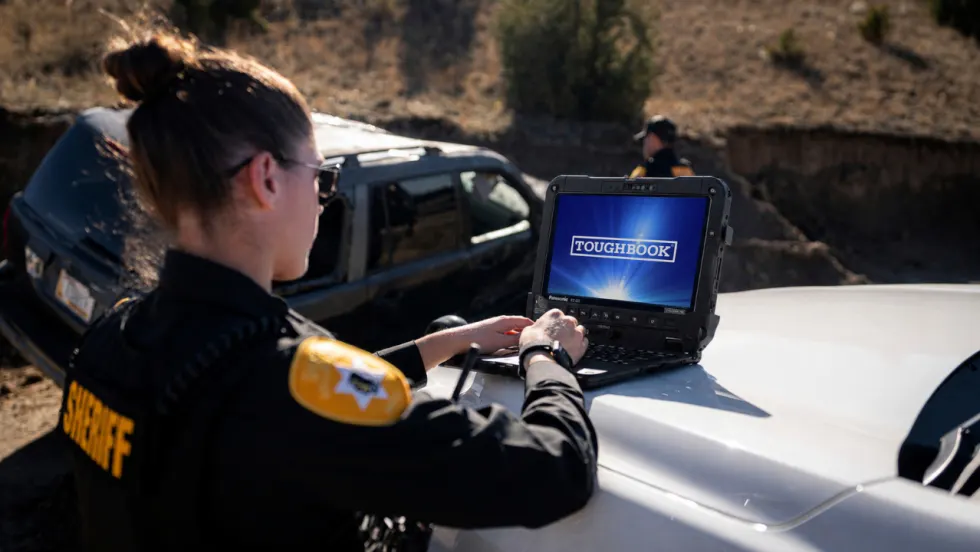
Panasonic Connect Launches the Toughbook 34 and Toughbook G3, Fully Rugged 2-in-1 Mobile Computers
Panasonic Connect has launched the Toughbook 34 and Toughbook G3 to facilitate in-vehicle dispatch, records management, and mobile command operations from any location.
Read More →

A police agency's guide to data-driven fleet management
Costs are rising and the public expects more transparency into how their tax dollars are spent. This e-book shows how police agencies can use fleet data to take control of fleet expenses while improving officer safety and demonstrating fiscal responsibility to the communities they serve.
Read More →
AI and analytics for law enforcement: Turning data into insights
Law enforcement agencies are managing more video, sensor data and digital evidence than ever before. Discover how AI and analytics can help turn that data into actionable insights that strengthen situational awareness, accelerate investigations and support more informed decisions.
Read More →
Vasco Electronics Adds Automatic Language Detection to Vasco Translator Q1
Vasco Electronics’ software update introduces hands-free language switching and expanded offline translation across 45 language pairs, empowering law enforcement, healthcare, and front-office enterprise teams
Read More →
North Miami Police Department Deploys Mark43
The North Miami Police Department has deployed Mark43 as part of its Five-Year Strategic Plan that represents its collective vision and goals for a more proactive police department, anchored by a core commitment to leveraging modern technology to enhance efficiency and public safety.
Read More →
Cellebrite Genesis for Enterprise Now Generally Available
Made available to the public sector in June, Cellebrite Genesis is serving a growing mix of national, regional, and local agencies worldwide, including some of the largest regional and metropolitan police departments. It is now available for enterprise organizations.
Read More →
2026 Vision FirstNet Users Summit to Host Emerging Leaders Training on Grassroots Advocacy for Public Safety
“Emerging Leaders Training: Understanding the Importance of Grassroots Advocacy for Public Safety," a session during the 2026 Vision FirstNet Users Summit, will offer a roadmap for unified advocacy at the federal level.
Read More →
Motorola Solutions Completes Acquisition of D-Fend Solutions
Motorola Solutions has acquired D-Fend Solutions, an industry leader in counter-drone technology. This deal provides public safety and enterprise customers with access to advanced counter-unmanned aerial systems.
Read More →