



Rethinking Reaction Time
When you survive an armed threat, you're certain not to remember much of what happened because of the intense stress and trauma of having your life on the line. And what you do remember may be distressingly puzzling.

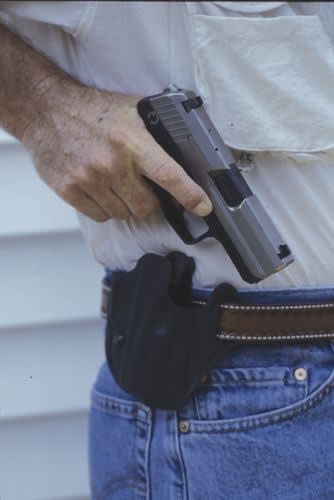
When you survive an armed threat, you're certain not to remember much of what happened because of the intense stress and trauma of having your life on the line. And what you do remember may be distressingly puzzling.
You may vividly recall that when you made the decision to shoot, your assailant was facing you straight on, pointing a gun at your chest. But when the smoke cleared, all your rounds had hit him in the back. What happened? And how do you keep from looking like an illegal executioner?
You may recollect holding your sidearm behind your leg as you approached the suspect's vehicle, thinking you were buying an edge in case of trouble. Yet he was able to grab a gun off of his console and blast you before you could get a round off in defense. How could he be faster when you were "ready"?
Or maybe your attacker dropped his gun and went down, neutralized, after your first two rounds. Yet you kept on shooting. Was that simply vindictive overkill?
Force Science
A behavioral scientist who has studied officer-involved shootings for nearly 30 years is coming up with some surprising answers to these and other perplexing questions about the dynamics of deadly force. Last spring, Dr. Bill Lewinski, a specialist in law enforcement psychology and human biomechanics (body movements), established the nonprofit Force Science Research Center (FSRC) at Minnesota State University-Mankato to expand and intensify his unique experiments.
What Lewinski has discovered already could have a profound impact on your physical and legal survival. Combined with groundbreaking research now in progress or being planned at the FSRC, his work may ultimately produce revolutionary changes in tactics for winning armed confrontations.
Most of Lewinski's efforts to date have involved documenting and timing-to hundredths of a second-the precise movements of action and reaction that typically occur in deadly conflicts. Using scores of volunteers roleplaying as officers and suspects recorded by time-coding video cameras, he has been able to prove for the first time "exactly how far behind the reactionary curve cops are in street confrontations."
Behind the Curve
In one startling test, for example, a female volunteer who had never before held a firearm (simulating an inexperienced offender) was able to pull a hidden gun from her waistband and shoot at an officer in an average of 16/100 of a second. The typical officer going for his weapon in a Level I holster requires 1.5 seconds to draw and fire a sighted shot once he perceives a stimulus to act. "In 1.7 seconds, an attacker using a Glock 9mm pistol can deliver six rounds on average," Lewinski says. "Considering just reaction time alone, the officer is screwed."
Amazingly, that's true even if the officer has his gun out in a "ready" position and is mentally committed to defending his life once a lethal threat is evident. Lewinski compared the timing of the woman "assailant" against officers with guns held in the belt-tuck, low-ready, close-ready, and "Hollywood high-guard" positions. In every case, the woman with her hand on the hidden gun in her waistband was able to produce a deadly action faster than the officers could perceive the threat and respond with a defensive reaction. Lewinski independently and scientifically replicated these findings with other volunteers.
Indeed, even when reacting from the ultimate ready position-gun on target, finger on the trigger, prepared to fire-the average officer is still behind the reactionary curve, according to Lewinski's action/reaction timings.
"When it comes to reacting to an immediate deadly threat," Lewinski declares, "you'd better hope that the suspect is inaccurate in delivering his initial rounds, and that your accuracy overcomes his willingness to kill you."
Understanding Police Shootings
Branching out from his core research, Lewinski has explored some of the most controversial elements of officer-involved shootings.
By videotaping and analyzing footage of armed subjects turning away as fast as possible from face-to-face threatening confrontations with officers, he has been able to explain how offenders sometimes end up unintentionally shot in the back.
"We have documented that a young, agile assailant can turn from facing and pointing a gun at an officer to presenting a square back to him in just 14/100 of a second," Lewinski says. "The officer may make an unretractable decision to shoot when the suspect is facing him and threatening deadly force, but before the officer's gunfire reaches the suspect, he has turned to run and unavoidably is hit in the back. The movement is so fast that many times the officer doesn't even realize the suspect has turned and is mystified by where the bullets end up hitting."
In one California case, Lewinski's experiments kept an officer from being charged criminally after a fatal in-the-back shooting and later were credited with preventing a multimillion-dollar lawsuit filed by the suspect's survivors from being brought to trial.
Other studies have addressed the phenomenon of "extra" shots being fired by officers after a threatening suspect is neutralized. Lewinski documented that once a stimulus to cease shooting in a high-stress, life-threatening situation is perceived, a typical officer will still squeeze off two to three additional rounds before the message to stop transmits from his brain to his trigger finger. "In just one second an officer can shoot a semi-automatic pistol four times," Lewinski observes. "It's not a case of malicious over-reaction. It's a law of physiology."
On behalf of officers under legal scrutiny after a shooting, Lewinski has explained his unique findings to internal affairs and homicide investigators, medical examiners, prosecutors, grand juries, judges, civil rights lawyers, civilian review boards, criminal- and civil-court jurors, and others who are responsible for assessing officers' judgment in street conflicts. His documented work has kept a number of officers from going to prison or being found liable in civil lawsuits.
Now, Lewinski says, it is time for officers, trainers, and administrators to start looking more closely at the tactical implications of his discoveries.[PAGEBREAK]
Getting a Jump on the Bad Guy
"Some things are obvious," says Lewinski, "once officers acknowledge how much at a disadvantage they really are in the action/reaction dynamic. Because it is so dangerous and difficult to shoot your way out of threatening situations, it's important to devote more attention to preventing them in the first place."
That means enhancing your tactical attention to cover and concealment, cautious approaches to potentially high-risk situations, contact/cover deployment, verbal and physical suspect control and restraint, and other street survival basics. Otherwise, as trainer Gary Klugiewicz, a member of FSRC's national advisory board, puts it, "Careless tactics may set you up for turning a suspect contact situation into a desperate personal safety situation."
Lewinski also stresses the importance of being alert for and responding to early indicators of imminent threats (such as furtive movements and other potential preludes to violent attack) rather than waiting for immediate threats (such as a gun being pointed directly at you). "Incredibly," he says, "there are still departments that insist by policy that officers cannot legitimately shoot to defend themselves unless an offender is actually pointing a weapon at them. Given what we have confirmed about reaction times, that is lunacy."
In a standoff situation, can officers turn the action/reaction realities to their advantage? Perhaps. "If the suspect is already starting to pull the trigger, you cannot react fast enough to get the first round off, according to our research findings," Lewinski explains. "But if he has his finger on the trigger but has not yet made the decision to shoot, you have a very narrow window of opportunity.
"It will take him on average half a second to mentally process anything you might do and begin to pull his trigger. So what can you accomplish in half a second that might allow you to outshoot him?"
Depending on your mental state and on how close to on target your gun is, you might be able to shoot effectively before he can in this situation. Once you have decided to shoot, it will take you approximately one-third of a second to raise your gun from a low-ready position and pull the trigger. That would beat his reaction time. Some preliminary testing by a police department in Colorado has shown promising results for officers under these circumstances.
Delving Deeper
Other options for improving reaction time suggested by some firearms trainers-ones that Lewinski intends to fully research-may be to move or to move and shoot, imposing lag time on the suspect as he reacts to the change in circumstances and tracks your new location.
"But many questions need to be tested," Lewinski points out. "At what distances does moving work best? What kinds of moves are most effective? Does an officer's size and fitness affect the value of moving? What effective moves can most easily be taught and then remembered and exercised by officers on patrol? What are the risks in the field of an officer who has not tactically assessed the scene he's in moving blindly to the side? What challenges to an officer's shooting accuracy are created by moving and how can these best be overcome? And how much time and edge does he lose if he quick-peeks to the side before he moves? There is so much even about this simple proposal that needs to be determined."
In reality, we don't know for certain a lot about tactical survival options because we have not really researched them scientifically, Lewinski contends.
"We've embraced a lot of tactics because they seem logical or because some trainer or other influential 'expert' has persuaded us they're effective," says Lewinski. "I've never seen a football team play a game strictly on logic. They use the practice field to come up with innovations and to 'research' their value. In law enforcement, at best, we have largely tested tactics on relative handfuls of trainees and have drawn broad conclusions without the scientific process being imposed."
Verifying Theories
Through strategic alliances built by the Force Science Research Center, Lewinski intends to expand not only his research capabilities but also the ability to create and verify survival options that address the challenges being documented by his growing roster of discoveries.
Conducting such research is not cheap or easy, so Lewinski is willing to take all the help he can get. Recognizing the importance of understanding officers' reaction time, law enforcement agencies have offered personnel for research-related experiments. Through another alliance, Lewinski is using donated equipment from IES Interactive Training of Littleton, Colo., to conduct further research on deadly force.
Also collaborating closely with FSRC is Fox Valley Technical College in Appleton, Wis., which provides hands-on, in-service instruction to law enforcement officers. "The officers attending our courses can serve as a great pool for devising and testing tactical options," explains Bob Roberts, criminal justice dean of Fox Valley College and a member of FSRC's national advisory board.
Meanwhile, as funds permit, Lewinski and other researchers at the Force Science Research Center will be delving into the secrets of topics such as how the information officers detect in their peripheral vision impacts their judgment and reaction time and how perception and visual discrimination change under various light conditions.
"Each of these inquiries is bound to produce discoveries that will present significant challenges to trainers and officers and, ultimately, result in important strides forward in the campaign to make law enforcement personnel safer in America and throughout the world," says Lewinski.
Charles Remsberg is the co-founder and former president of Calibre Press. He has written textbooks concerning officer survival and has co-produced several police training videos.
More Patrol

Adept Armor Introduces Two New Rifle Plates
Adept Armor has launched two new Level IV ballistic plates, the Emperor and the Archon Mark 2, which brings Adept Armor’s new Quatroid ceramic to the high-threat, performance-value center of the range at 5.2 pounds.
Read More →
POLICE Product Test: Benchmade Bailout
The Benchmade Bailout is a slim, lightweight carry knife with a deep-ride pocket clip and comes in a variety of blade steels and scales. Here is a detailed review of the Taiga Green Bailout, released earlier this year.
Read More →
NLEOMF Announces July 2026 Officer of the Month
NLEOMF honored a Michigan deputy sheriff as the July 2026 Officer of the Month for rescuing a trapped driver from a burning vehicle following a Fourth of July crash.
Read More →
Streamlight to Showcase Newest Lighting Products at National Safety Council’s Safety Congress & Expo 2026
Streamlight will showcase its latest lights, including the Portable Scene Light III and the LiteBox 1Million, at the 2026 National Safety Council (NSC) Safety Congress & Expo.
Read More →
The 2027 World Police & Fire Games Set for Perth, Australia
The 2027 World Police & Fire Games (WPFG) will take place in Perth, Western Australia, from Friday, March 12 through Sunday, March 21, 2027.
Read More →
5.11 Partners with National Fallen Firefighters Foundation to Support #ForThe343
5.11 has joined the nationwide movement honoring the 343 New York City Fire Department firefighters lost on Sept. 11, 2001.
Read More →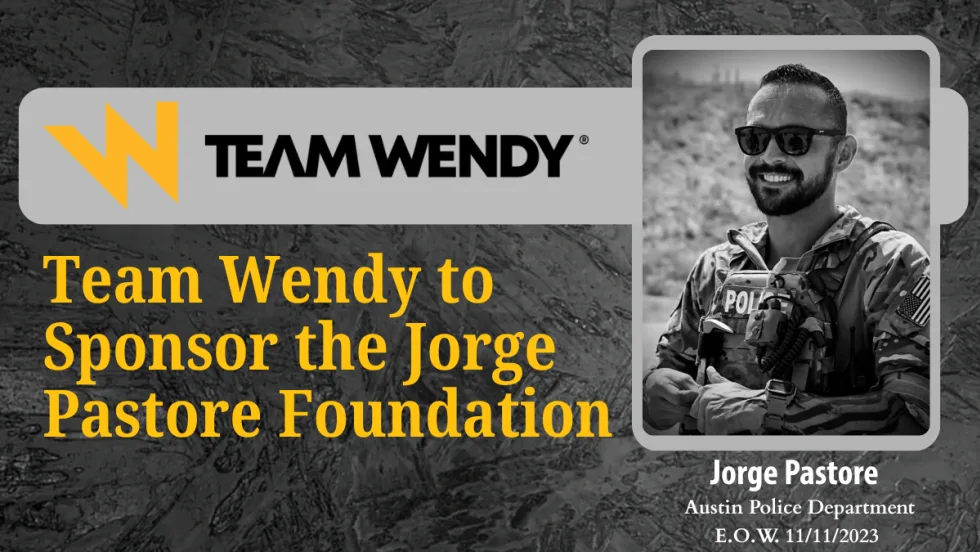
Team Wendy Announces Title Sponsorship of the Jorge Pastore Foundation
Team Wendy’s 3-year partnership with the Jorge Pastore Foundation expands access to programs that strengthen those who serve.
Read More →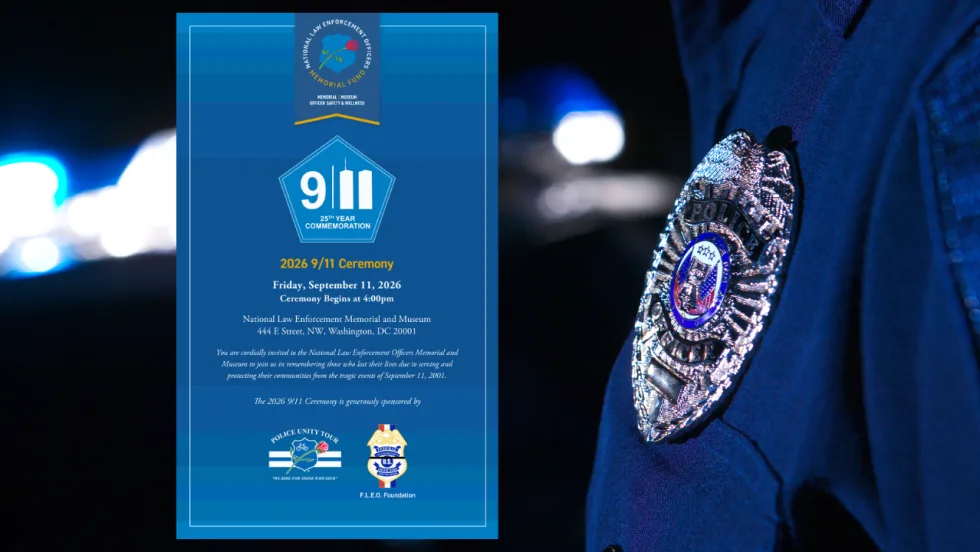
National Law Enforcement Memorial and Museum Hosting 9/11 25th-Year Commemoration Ceremony
The National Law Enforcement Memorial and Museum is hosting a 9/11 25th Year Commemoration Ceremony on Sept. 11 at 4 p.m.
Read More →
National Law Enforcement Officers Memorial Fund Announces June 2026 Officers of the Month
The National Law Enforcement Officers Memorial Fund (NLEOMF) named 15 officers of the Chico Police Department (California) as the Officers of the Month for June 2026 for their roles in responding to an active-shooter incident at a public library.
Read More →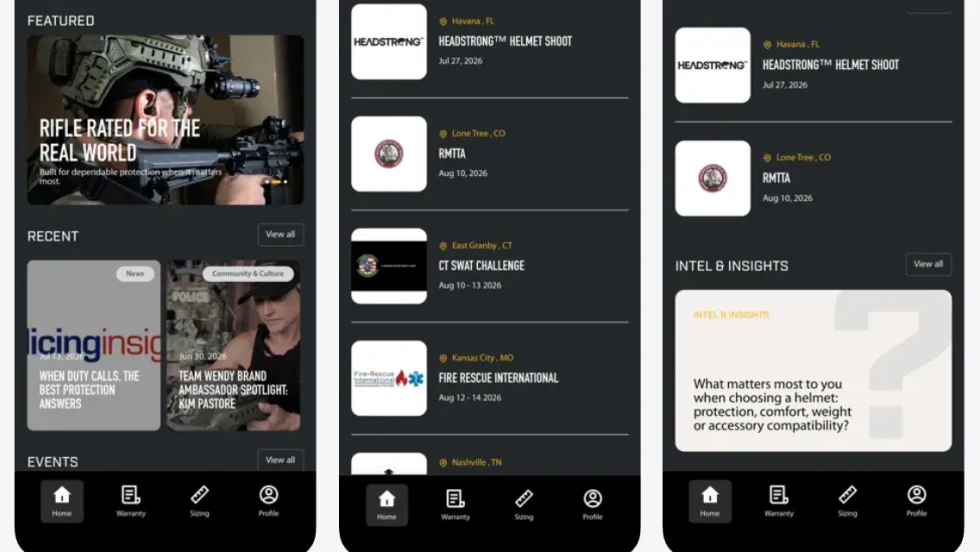
Team Wendy App Creates New Digital Hub for Helmet Owners
The Team Wendy Community App provides one location for warranty registration, size-fit tools, product updates, and community connection. For helmet owners, the new app creates a simpler path to the information and tools that matter most.
Read More →