



Resumption of Questioning
Once a custodial suspect has been given Miranda warnings, there are three basic options he can choose to exercise: (1) waive his rights and agree to talk, (2) invoke his right to remain silent, or (3) invoke his right to counsel. The suspect’s response determines whether, and under what circumstances, he can later be re-approached by law enforcement officers to obtain an admissible statement.

Once a custodial suspect has been given Miranda warnings, there are three basic options he can choose to exercise: (1) waive his rights and agree to talk, (2) invoke his right to remain silent, or (3) invoke his right to counsel. The suspect’s response determines whether, and under what circumstances, he can later be re-approached by law enforcement officers to obtain an admissible statement.
Reinitiating Interrogation After a Waiver
Ideally, the suspect will agree to talk following the Miranda admonition. If he does, you may continue to question him unless and until he clearly, unambiguously tells you he has changed his mind (allowing for sleep, food, drink, and restroom use) (Davis v. U.S.). Once you have a valid waiver, the burden shifts to the suspect to establish a change of heart, and a wishy-washy comment is not enough to stop the questioning.
In Davis, the murderer initially waived, but later said, “Maybe I should talk to a lawyer.” The Supreme Court ruled that this ambiguous comment, coming after a valid waiver had been obtained, was not enough to require officers to cease questioning, or to stop and clarify the suspect’s wishes, or to repeat the Miranda warning. Davis’s subsequent incriminating statement was therefore admissible against him.
Also, no new warning and waiver are required simply because questioning shifts from one case to another, or because of a change in investigating officers or agencies (Colorado v. Spring; U.S. v. Baron). If the suspect agrees to talk after being Mirandized on Case A, officers investigating Case B can initiate questioning on that case without a new warning and waiver that same day.
Only one Supreme Court case has considered the issue of whether a new warning and waiver are required after a break in interrogation. In Wyrick v. Fields, the court held that an intervening period of two hours between sessions did not necessitate a new warning. Lower courts have held that no new waiver was necessary for successive interrogation sessions conducted 16 hours after the waiver (U.S. v. Rodriguez-Preciado), and even 36 hours later (People v. Mickle). On the other hand, a new warning was required after a three-day interruption (People v. Quirk).
A prudent rule-of-thumb follows from these cases: no new warning is required for reinitiation on any case, by any officers, on the same day a waiver has occurred, but should be repeated for questioning the following day, or thereafter.
After Invocation of Silence
If a custodial suspect responds to a Miranda warning by saying that she doesn’t want to talk, she cannot be re-approached at a later time in order to make a second attempt to get an admissible statement on that same case. However, the Supreme Court has said that as long as officers “scrupulously honor” the suspect’s right not to discuss that case, it may be possible to obtain a waiver and an admissible statement as to a different case.
In Michigan v. Mosley, a robbery suspect invoked his right to silence when Mirandized by the robbery investigator, and no questions were asked. More than two hours later, a homicide investigator approached Mosley, gave him a Miranda warning, and asked if he would agree to answer questions about a homicide case. Mosley agreed and eventually incriminated himself. The Supreme Court ruled the homicide statement admissible.
When a suspect has previously invoked his right to silence as to Case A, it would seem to be a good idea, as in Mosley, to wait a couple of hours and change interrogators, if possible, before re-approaching to seek a waiver and a statement on Case B.
After Invocation of Counsel
Unlike the situation just discussed, where a custodial suspect invokes his Miranda right to counsel, he cannot be re-approached by any officer, on any case, to obtain an admissible statement unless counsel is present when a waiver is sought. In a trio of cases, the Supreme Court has said an invocation of counsel is different from an invocation of silence, and can only be scrupulously honored by ensuring the presence of counsel at any future custodial interrogation, on any case.
In Edwards v. Arizona, a murder suspect responded to Miranda warnings by asking for an attorney. Questioning ceased. The next day, officers returned to the suspect’s cell, Mirandized him again, and took an incriminating statement on that same case. The Supreme Court ruled this statement inadmissible to prove guilt because, by failing to fulfill the suspect’s request for an attorney, the officers had not scrupulously honored his invocation of rights.
Arizona v. Roberson was a variation on the Edwards facts, in that the officers who re-approached Roberson after he had invoked his Miranda right to counsel on Case A sought to question him about Case B. Again, the Supreme Court suppressed the statement, ruling that unlike an invocation of silence, an invocation of counsel applies to all cases, not just the case on which warnings have been given.
And in Minnick v. Mississippi, the Supreme Court ruled that even if a requested attorney has been appointed and has consulted with the suspect, police still may not re-approach the suspect in custody to obtain an admissible statement, on any case, without the attorney present.
After a Break in Custody
Language in a number of Supreme Court opinions talks of the Mosley and Edwards rules as applying only where there has been no break in custody (e.g., McNeil v. Wisconsin). Lower courts have held that a release from custody terminates a Miranda invocation and permits officers to obtain admissible statements, either through non-custodial questioning, or following re-arrest and valid waiver (U.S. v. Skinner; People v. Storm).
After Invocation
A custodial suspect who has invoked his right to either silence or counsel may always change his mind and reopen discussions. In Oregon v. Bradshaw, a homicide suspect initially invoked his right to counsel and questioning ceased. Later, the suspect asked, “What’s going to happen to me now?” The arresting officer explained the booking process and reminded the suspect that he had invoked his rights. The suspect then agreed to waive his rights and take a polygraph exam, after which he confessed.
The Supreme Court ruled that the suspect’s question about what was going to happen to him “evinced a willingness and a desire for a generalized discussion about the investigation,” so the subsequent waiver was valid and the statement was admissible.
Bradshaw stressed that if a suspect himself reinitiates discussions following an invocation, there must be a waiver of the right he had previously invoked. This means that a new warning and waiver should occur before any questioning where an invoking suspect changes his mind and decides to talk.
Devallis Rutledge, a former police officer and veteran prosecutor, is Special Counsel to the Los Angeles County District Attorney.
More Patrol

Streamlight Portable Scene Light III Wins 2026 OH&S New Product of the Year Award
Streamlight’s Portable Scene Light III has won the 2026 Occupational Health & Safety (OH&S) New Product of the Year Award in the Lighting category.
Read More →
Adept Armor Introduces Two New Rifle Plates
Adept Armor has launched two new Level IV ballistic plates, the Emperor and the Archon Mark 2, which brings Adept Armor’s new Quatroid ceramic to the high-threat, performance-value center of the range at 5.2 pounds.
Read More →
POLICE Product Test: Benchmade Bailout
The Benchmade Bailout is a slim, lightweight carry knife with a deep-ride pocket clip and comes in a variety of blade steels and scales. Here is a detailed review of the Taiga Green Bailout, released earlier this year.
Read More →
NLEOMF Announces July 2026 Officer of the Month
NLEOMF honored a Michigan deputy sheriff as the July 2026 Officer of the Month for rescuing a trapped driver from a burning vehicle following a Fourth of July crash.
Read More →
Streamlight to Showcase Newest Lighting Products at National Safety Council’s Safety Congress & Expo 2026
Streamlight will showcase its latest lights, including the Portable Scene Light III and the LiteBox 1Million, at the 2026 National Safety Council (NSC) Safety Congress & Expo.
Read More →
The 2027 World Police & Fire Games Set for Perth, Australia
The 2027 World Police & Fire Games (WPFG) will take place in Perth, Western Australia, from Friday, March 12 through Sunday, March 21, 2027.
Read More →
5.11 Partners with National Fallen Firefighters Foundation to Support #ForThe343
5.11 has joined the nationwide movement honoring the 343 New York City Fire Department firefighters lost on Sept. 11, 2001.
Read More →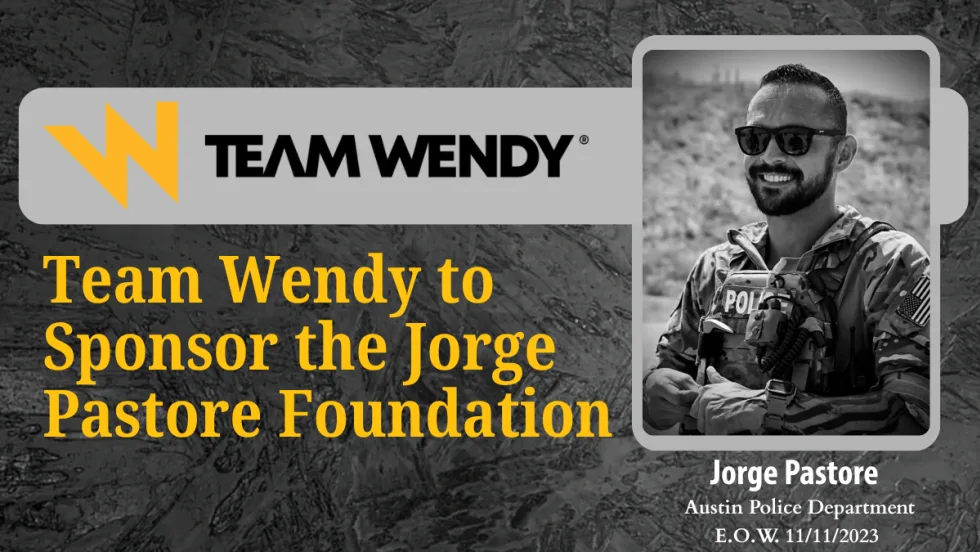
Team Wendy Announces Title Sponsorship of the Jorge Pastore Foundation
Team Wendy’s 3-year partnership with the Jorge Pastore Foundation expands access to programs that strengthen those who serve.
Read More →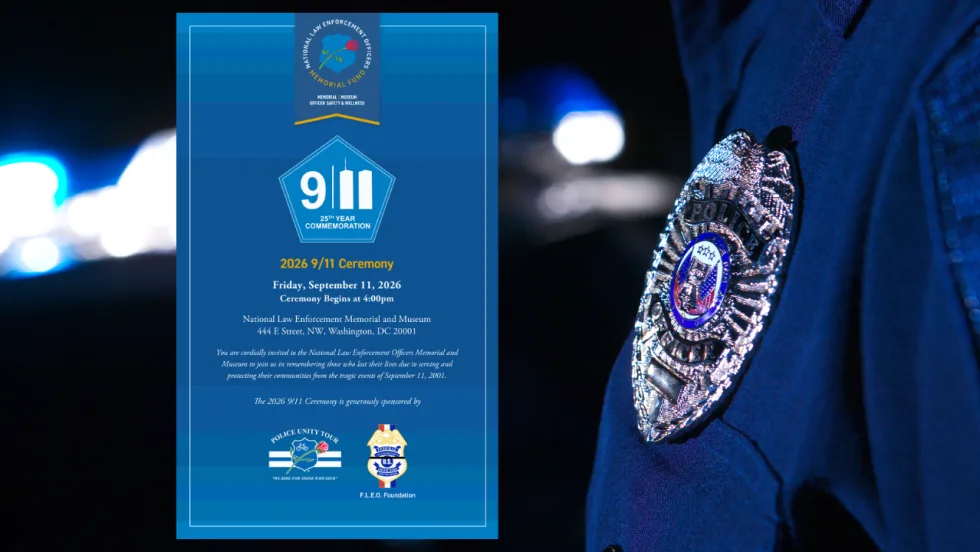
National Law Enforcement Memorial and Museum Hosting 9/11 25th-Year Commemoration Ceremony
The National Law Enforcement Memorial and Museum is hosting a 9/11 25th Year Commemoration Ceremony on Sept. 11 at 4 p.m.
Read More →
National Law Enforcement Officers Memorial Fund Announces June 2026 Officers of the Month
The National Law Enforcement Officers Memorial Fund (NLEOMF) named 15 officers of the Chico Police Department (California) as the Officers of the Month for June 2026 for their roles in responding to an active-shooter incident at a public library.
Read More →