



Residential Protective Sweeps
There's always a risk that when a Supreme Court decision discusses two or more major points, those points may get blurred. One familiar example is Terry v. Ohio, which is often cited as the opinion that gave us the "stop and frisk" rule.

There's always a risk that when a Supreme Court decision discusses two or more major points, those points may get blurred. One familiar example is Terry v. Ohio, which is often cited as the opinion that gave us the "stop and frisk" rule.
There really were two separate rules in Terry, one involving the stop (a person may be temporarily detained with reasonable suspicion that he's involved in criminal activity) and the other involving a frisk (a person may be pat-searched with reasonable suspicion that he's armed and dangerous).
But it is not always true that anyone who can lawfully be stopped can also lawfully be frisked. You might have reasonable suspicion to believe that a suspect just passed a bad check or used a stolen credit card, for example, and this would justify the stop. But without some facts to suggest that the suspect is currently armed and dangerous, no frisk would be allowable merely because the stop was lawfully made.
It was the fact that by coincidence the suspects in Terry were believed to be armed while casing a jewelry store for a possible robbery that allowed the court to uphold both the stop and the frisk. Some readers of the Terry opinion failed to notice that there were two separate rules in operation in that case, and they mistakenly read the decision as creating a single stop-and-frisk rule.
Maryland v. Buie: The Protective-Sweep Rule
There has been a similar strain of confusion about the Supreme Court rulings in Maryland v. Buie. In that case, two men robbed a Godfather's Pizza. One of them was wearing a red running suit. Police developed probable cause to arrest Jerome Buie and went to his home two days later to serve an arrest warrant. They lawfully entered the house and began looking for Buie throughout the premises, eventually finding him in the basement. An officer then looked around the house for the second suspect, and found a red running suit in plain view, which he seized. The Maryland appellate court suppressed this clothing, ruling that officers needed probable cause to conduct such a protective sweep.
The Supreme Court reversed this decision. The court said that where officers are lawfully inside a residence to serve an arrest warrant, they can conduct a protective search with only reasonable suspicion, not probable cause, to believe there could be a dangerous assailant hiding on the premises: "There must be articulable facts which, taken together with the rational inferences from those facts, would warrant a reasonably prudent officer in believing that the area to be swept harbors an individual posing a danger to those on the arrest scene" (Maryland v. Buie).
Having set forth a rule allowing protective sweeps based on reasonable suspicion of danger, the court restricted the scope of such a search: "A 'protective sweep' is a quick and limited search of premises, incident to an arrest and conducted to protect the safety of police officers and others. It is narrowly confined to a cursory visual inspection of those places in which a person might be hiding. The sweep lasts no longer than is necessary to dispel the reasonable suspicion of danger and in any event no longer than it takes to complete the arrest and depart the premises." Evidence or contraband seen in plain view during a lawful sweep can be seized and used in evidence at trial.
Maryland v. Buie: The Adjoining-Peek Rule
The other ruling from Buie was not really required by the facts, but the court tossed it in anyway. After defining the justification and limitations for protective sweeps, the court said this: "We also hold that as an incident to the arrest the officers could, as a precautionary matter and without probable cause or reasonable suspicion, look in closets and other spaces immediately adjoining the place of arrest from which an attack could be immediately launched."
This peek is in some ways more limited than the protective sweep, though in some ways less restricted. Unlike the protective sweep, this peek into adjacent hiding spaces does not require any suspicion that someone dangerous may be on the premises. On the other hand, it is limited to peeking into (not entering) closets, bathroom, bedrooms, or other rooms or spaces that adjoin the room in which the arrest is being made. It does not allow a full-scale sweep of the entire premises.
The Problem
The problem is that, as with Terry, some officers have blurred the differences in the two kinds of Buie searches. It is sometimes believed that whenever an officer has gained lawful access, a protective sweep can be automatically made throughout the premises, or that searches can extend into areas not capable of concealing an assailant. Both of these beliefs are incorrect, and they sometimes lead to the loss of valuable evidence.
For example, in People v. Hassan, the Illinois appeals court suppressed narcotics found by officers who had no reasonable suspicion to justify a protective sweep. For similar reasons, the same result was reached by the Florida Court of Appeal in Vasquez v. State, and by the California Supreme Court in People v. Celis.
In U.S. v. Reid, the Ninth Circuit federal appeals court found an additional problem: when the officers searched Reid's house, he was not under arrest, but was only being detained. The court found that this fact distinguished the situation from Buie, and the protective sweep that revealed an illegal weapon was ruled unconstitutional.
Although the Texas Court of Appeals found sufficient justification for a protective sweep in Mondragon-Garcia v. State, the court ruled that the officer went beyond the scope of a sweep when he lifted a mattress and found a weapon. Since this was not a place where an assailant could have been concealed, it was not within the Buie limitations, and the weapon was ordered suppressed.
Despite the fact that the Buie rules have been around for more than 15 years, mistakes still seem common. In September, 2005, the Second Circuit federal appeals court, reviewing the seizure of an illegal firearm in a New York case, again had to suppress the weapon because the officers had engaged in a protective sweep without documenting suspicion. Said the court, "Lack of information cannot provide an articulable basis upon which to justify a protective sweep" (U.S. v. Gandia).
Safety First
Obviously, you're not going to take unnecessary risks. But when you feel that a protective sweep is necessary, try to identify the reasons why you suspected another person might be on the premises, and record those reasons in your report. If you routinely make sweeps without articulable suspicion, you risk the loss of any evidence you encounter, as well as possible civil liability for unconstitutional search.
Adjoining Peek
After lawful entry
Incident to lawful arrest
Automatic. No suspicion of danger required
Limited to immediately adjoining rooms/spaces
Evidence in plain view may be seized
Protective Sweep
After lawful entry
Incident to lawful arrest
Reasonable suspicion that an assailant may be present
Limited to areas where a person could hide
Duration limited to arrest and departure time
Evidence in plain view may be seized
Devallis Rutledge, a former police officer and veteran prosecutor, is Special Counsel to the Los Angeles County District Attorney.
More Patrol
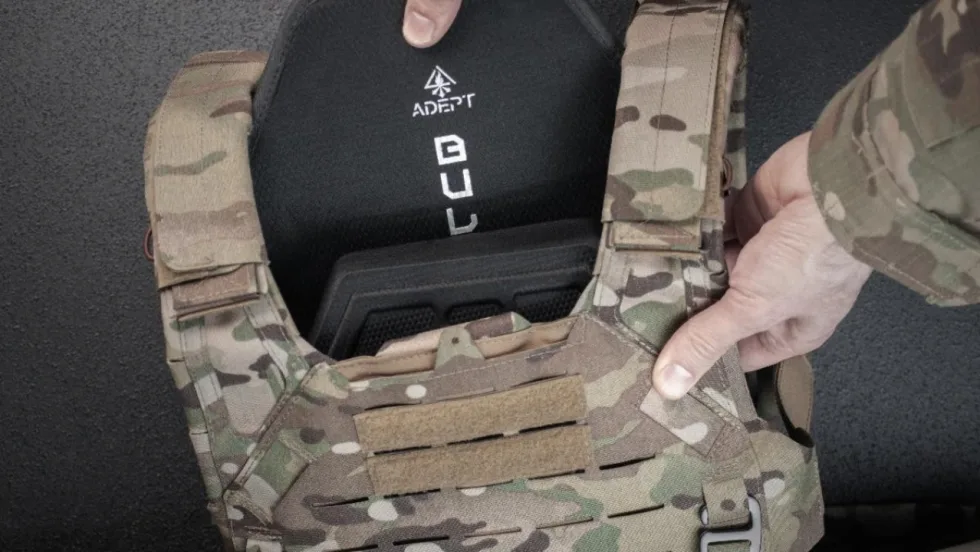
Adept Armor Introduces Two New Rifle Plates
Adept Armor has launched two new Level IV ballistic plates, the Emperor and the Archon Mark 2, which brings Adept Armor’s new Quatroid ceramic to the high-threat, performance-value center of the range at 5.2 pounds.
Read More →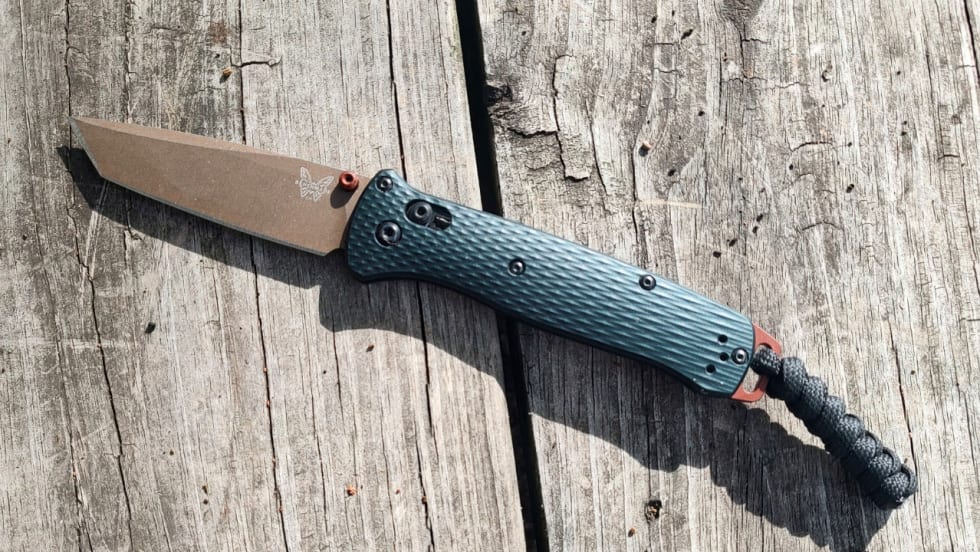
POLICE Product Test: Benchmade Bailout
The Benchmade Bailout is a slim, lightweight carry knife with a deep-ride pocket clip and comes in a variety of blade steels and scales. Here is a detailed review of the Taiga Green Bailout, released earlier this year.
Read More →
NLEOMF Announces July 2026 Officer of the Month
NLEOMF honored a Michigan deputy sheriff as the July 2026 Officer of the Month for rescuing a trapped driver from a burning vehicle following a Fourth of July crash.
Read More →
Streamlight to Showcase Newest Lighting Products at National Safety Council’s Safety Congress & Expo 2026
Streamlight will showcase its latest lights, including the Portable Scene Light III and the LiteBox 1Million, at the 2026 National Safety Council (NSC) Safety Congress & Expo.
Read More →
The 2027 World Police & Fire Games Set for Perth, Australia
The 2027 World Police & Fire Games (WPFG) will take place in Perth, Western Australia, from Friday, March 12 through Sunday, March 21, 2027.
Read More →
5.11 Partners with National Fallen Firefighters Foundation to Support #ForThe343
5.11 has joined the nationwide movement honoring the 343 New York City Fire Department firefighters lost on Sept. 11, 2001.
Read More →
Team Wendy Announces Title Sponsorship of the Jorge Pastore Foundation
Team Wendy’s 3-year partnership with the Jorge Pastore Foundation expands access to programs that strengthen those who serve.
Read More →
National Law Enforcement Memorial and Museum Hosting 9/11 25th-Year Commemoration Ceremony
The National Law Enforcement Memorial and Museum is hosting a 9/11 25th Year Commemoration Ceremony on Sept. 11 at 4 p.m.
Read More →
National Law Enforcement Officers Memorial Fund Announces June 2026 Officers of the Month
The National Law Enforcement Officers Memorial Fund (NLEOMF) named 15 officers of the Chico Police Department (California) as the Officers of the Month for June 2026 for their roles in responding to an active-shooter incident at a public library.
Read More →
Team Wendy App Creates New Digital Hub for Helmet Owners
The Team Wendy Community App provides one location for warranty registration, size-fit tools, product updates, and community connection. For helmet owners, the new app creates a simpler path to the information and tools that matter most.
Read More →