



RedXDefense's XCAT Chemical Detector
RedXDefense's new XCAT is a narcotics, explosives, and gunshot residue detection system that was developed as the law enforcement version of the company's portable military explosive detector.

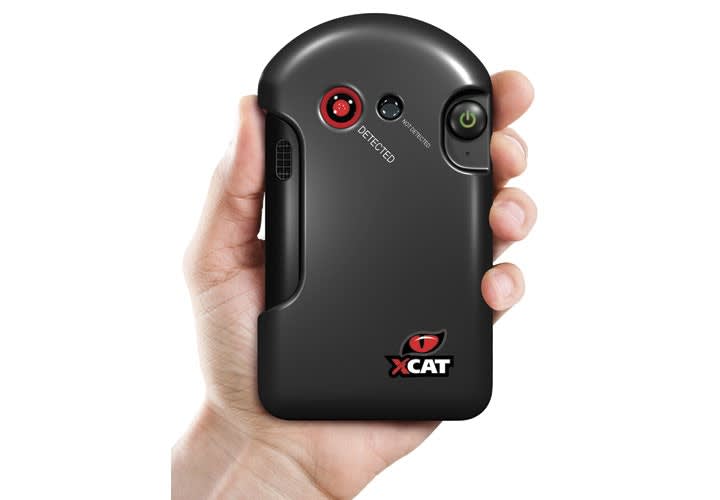
Photo courtesy of RedXDefense.
There has long been a conduit for used equipment between the U.S. military and law enforcement. Gear and guns purchased for warfare often find their way into the hands of badged civilian officers. Recently, however, there's been a new wrinkle in this relationship: Companies have been modifying and improving technology they first developed for the military and selling the upgraded versions to police agencies.
That's the story behind RedXDefense's new XCAT, a narcotics, explosives, and gunshot residue detection system. The XCAT was developed as the law enforcement version of the company's portable military explosive detector, the XPAK.
The XPAK was a breakthrough product, a man-portable explosive detection system that uses fluorimetric analysis (ultraviolet light analysis) to yield a visual signal that indicates the presence of the test substance. One characteristic of the rugged XPAK is that it is about the size of a military backpack. RedXDefense knew that if the police version of the XPAK was going to be a success it had to be much smaller.
The company's engineers quickly realized that much of the bulk of the XPAK was due to its large sampling surface, which is optimized to collect trace material over a large area. In contrast, the police version required only a small sampling area and only had to be rugged enough to survive fair wear and tear and being stored in a police vehicle. These two factors allowed engineers to significantly reduce the weight to one pound.
But much more went into developing the XCAT than just shrinking the XPAK. To be of optimum utility for law enforcement officers, the XCAT had to be a versatile system that could detect narcotics, explosives, and gunshot residue. What RedXDefense's management wanted was a tool that didn't exist, a handheld unknown substance analysis system that was accurate, versatile, and relatively inexpensive.
That was a tall order, according to Arman Ghodousi, product development manager for RedXDefense, who says research and development on the product took nearly three years. "These testing systems are usually designed for either narcotics or explosives but not both," he says. "But we finally reached a form factor that is conducive to law enforcement operations and can provide a single platform solution at an affordable price."
The XCAT is easy to use. All the operator has to do is select the test card that matches the suspected substance, then sample a trace amount of the substance on the card, and insert it into the machine. The chemistry happens in the machine, and the operator receives notice if the substance is present via a simple indicator, a red light for "yes" and a green light for "no." Detection occurs in less than a minute, depending on the substance being analyzed.
Ghodousi says the XCAT is designed to replace cumbersome, multi-step colorimetric identification kits that officers often use in the field to conduct presumptive tests on suspect chemicals. "It achieves superior accuracy without the effort and the subjective analysis," he explains, "but it's not as accurate as spectroscopic analysis." However, spectroscopic systems are generally not used in the field because they are very expensive and somewhat fragile.
The company is currently shipping production XCATs to law enforcement agencies and commercial security organizations around the world.
Ghodousi says that one of the great advantages that the XCAT offers is RedXDefense's ability to add new test cards to its product line. For example, the company recently developed a card for detecting "bath salts" (the designer drugs mephedrone, methylone, and methylenedioxypyrovalerone (MDPV).
"The XCAT uses simple, proven technologies that we've reconfigured into a new form factor to deliver affordable and versatile detection capability," Ghodousi says. "We are really excited about it and about what it can do for law enforcement officers."
Editor's note: This story was updated on April 1, 2013.
More Technology
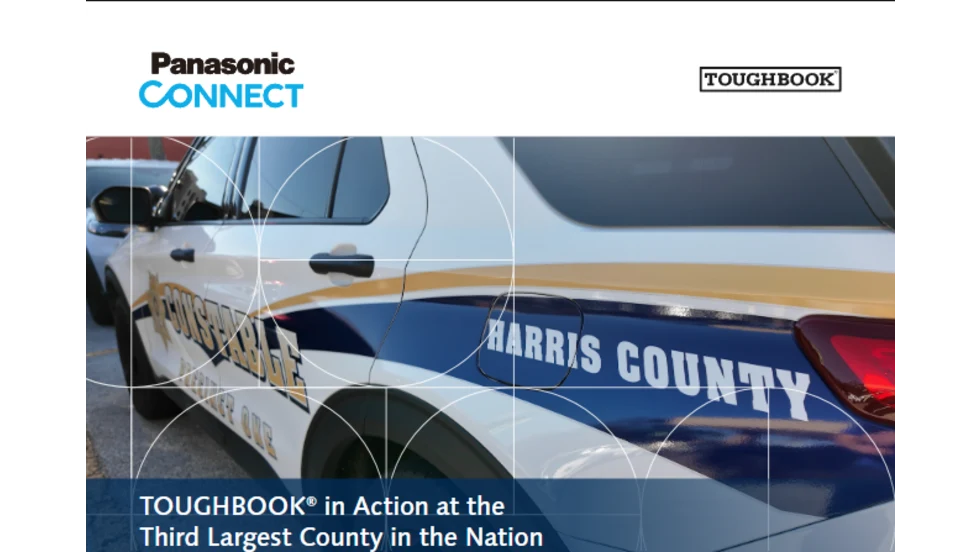
TOUGHBOOK in Action at the Third Largest County in the Nation – Harris County, TX
Learn how Harris County, one of the nation’s largest counties, modernized its law enforcement fleet with TOUGHBOOK® rugged laptops—strengthening security, productivity, and operational readiness across every unit.
Read More →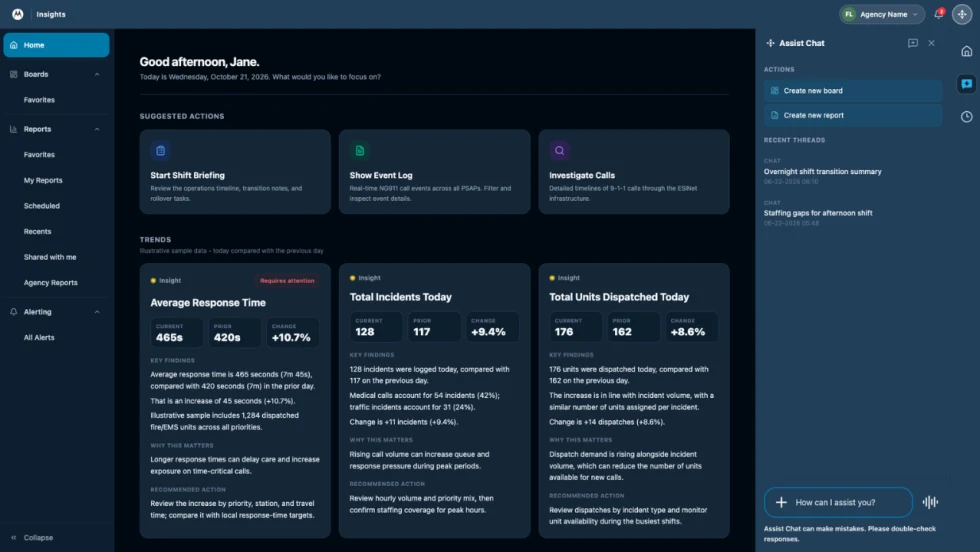
How Motorola Solutions’ New “Insights” Platform Helps Public Safety Agencies Identify Trends to Improve Their Operations
Motorola Solutions has introduced Insights, which leverages Assist, its mission-critical artificial intelligence (AI), to address these challenges and shape what’s next for public safety analytics and reporting technology.
Read More →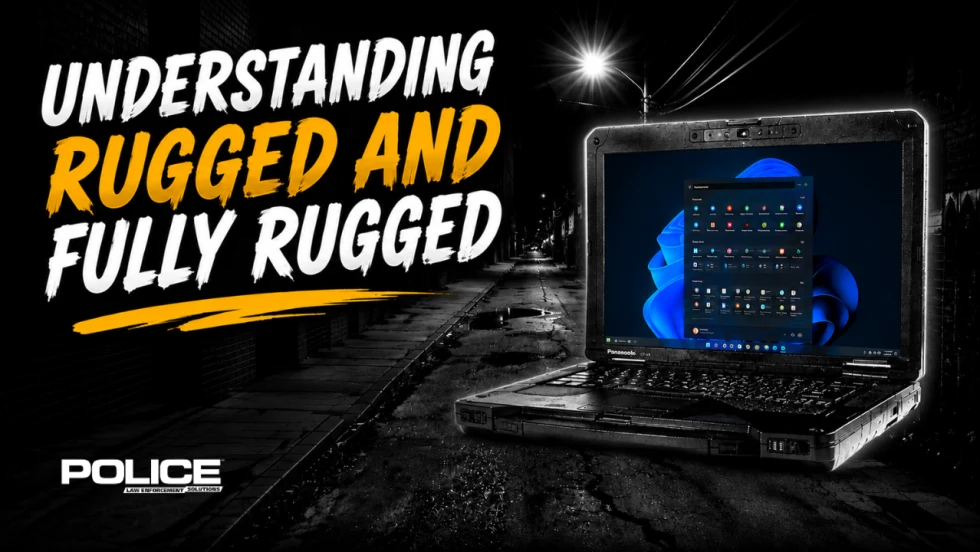
What Qualifies a Laptop as Rugged or Fully Rugged?
Police officers face a wide range of working conditions that can damage or even destroy a regular consumer laptop. Learn what qualifies a computer as rugged or fully rugged and why those devices are vital for law enforcement.
Read More →
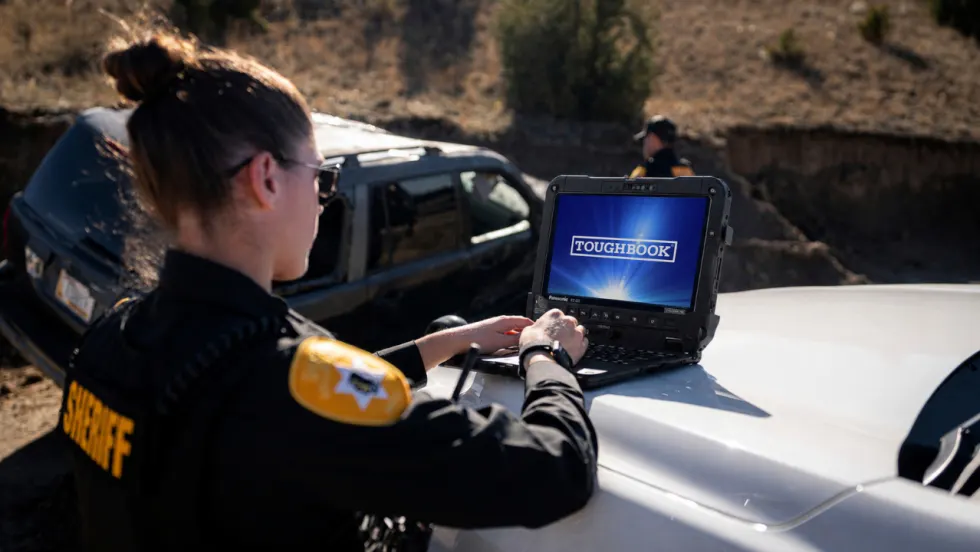
Panasonic Connect Launches the Toughbook 34 and Toughbook G3, Fully Rugged 2-in-1 Mobile Computers
Panasonic Connect has launched the Toughbook 34 and Toughbook G3 to facilitate in-vehicle dispatch, records management, and mobile command operations from any location.
Read More →
A police agency's guide to data-driven fleet management
Costs are rising and the public expects more transparency into how their tax dollars are spent. This e-book shows how police agencies can use fleet data to take control of fleet expenses while improving officer safety and demonstrating fiscal responsibility to the communities they serve.
Read More →
AI and analytics for law enforcement: Turning data into insights
Law enforcement agencies are managing more video, sensor data and digital evidence than ever before. Discover how AI and analytics can help turn that data into actionable insights that strengthen situational awareness, accelerate investigations and support more informed decisions.
Read More →
Vasco Electronics Adds Automatic Language Detection to Vasco Translator Q1
Vasco Electronics’ software update introduces hands-free language switching and expanded offline translation across 45 language pairs, empowering law enforcement, healthcare, and front-office enterprise teams
Read More →
North Miami Police Department Deploys Mark43
The North Miami Police Department has deployed Mark43 as part of its Five-Year Strategic Plan that represents its collective vision and goals for a more proactive police department, anchored by a core commitment to leveraging modern technology to enhance efficiency and public safety.
Read More →
Cellebrite Genesis for Enterprise Now Generally Available
Made available to the public sector in June, Cellebrite Genesis is serving a growing mix of national, regional, and local agencies worldwide, including some of the largest regional and metropolitan police departments. It is now available for enterprise organizations.
Read More →
2026 Vision FirstNet Users Summit to Host Emerging Leaders Training on Grassroots Advocacy for Public Safety
“Emerging Leaders Training: Understanding the Importance of Grassroots Advocacy for Public Safety," a session during the 2026 Vision FirstNet Users Summit, will offer a roadmap for unified advocacy at the federal level.
Read More →