



Reasonable Force
In the age of ubiquitous video and mushrooming oversight, how can you ensure that your use of force does not bring unwanted discredit upon you, your department, and the entire profession? The same as always: Know the law, and comply with it.

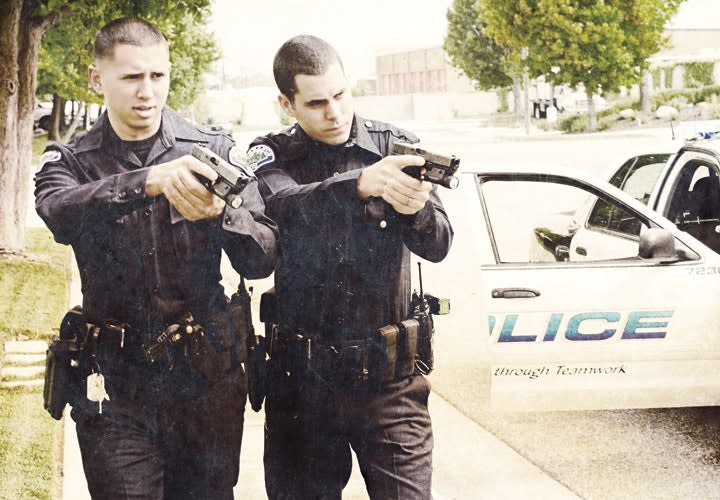
Photo: Vincent Taroc
In the age of ubiquitous video and mushrooming oversight, how can you ensure that your use of force does not bring unwanted discredit upon you, your department, and the entire profession? The same as always: Know the law, and comply with it. Here's a brief summary of some leading cases on use of force from the U.S. Supreme Court.
Tennessee V. Garner
Officers shot and killed an unarmed residential burglar who ignored commands to stop as he fled over a backyard fence. Finding this to be unreasonable force, the court said this: "Where the suspect poses no immediate threat to the officer and no threat to others, the harm resulting from failing to apprehend him does not justify the use of deadly force to do so. A police officer may not seize an unarmed, non-dangerous suspect by shooting him dead.
"Where the officer has probable cause to believe that the suspect poses a threat of serious physical harm, either to the officer or to others, it is not constitutionally unreasonable to prevent escape by using deadly force. Thus, if the suspect threatens the officer with a weapon or there is probable cause to believe that he has committed a crime involving the infliction or threatened infliction of serious physical harm, deadly force may be used if necessary to prevent an escape, and if, where feasible, some warning has been given."
Brower V. Inyo County
Officers parked an 18-wheeler across the road behind a curve and shined bright lights toward a pursuit suspect's oncoming car. His heirs sued for excessive force. Lower courts did not consider this a "detention," and dismissed the suit. The Supreme Court reinstated the suit, saying this: "A Fourth Amendment seizure occurs when there is a governmental termination of freedom of movement through means intentionally applied. Petitioners can claim the right to recover for Brower's death because the unreasonableness they allege consists precisely of setting up the roadblock in such manner as to be likely to kill him."
Graham V. Connor
Police used physical force to detain a suspicious "drunk" who turned out to be a diabetic in insulin shock. Lower courts dismissed his lawsuit, and the Supreme Court again reversed. This decision sets forth several principles under which many use-of-force cases are analyzed.
Said the court, "Our Fourth Amendment jurisprudence has long recognized that the right to make an arrest or investigatory stop necessarily carries with it the right to use some degree of physical coercion or threat thereof to make it. The test of reasonableness requires careful attention to the facts and circumstances of each particular case, including [1] the severity of the crime at issue, [2] whether the suspect poses an immediate threat to the safety of the officers or others, and [3] whether he is actively resisting arrest or attempting to evade arrest by flight.
"The reasonableness of a particular use of force must be judged from the perspective of a reasonable officer on the scene, rather than with the 20/20 vision of hindsight. The calculus must embody allowance for the fact that police officers are often forced to make split-second judgments—in circumstances that are tense, uncertain and rapidly-evolving—about the amount of force that is necessary in a particular situation."
Brosseau V. Haugen
Haugen fled from officers trying to arrest him. He jumped into a Jeep and ignored commands to get out. He started driving away, putting officers and citizens in the area in jeopardy. One officer fired and wounded Haugen, who later sued for excessive force.
Officer Brosseau appealed the denial of her motion to dismiss on grounds of qualified immunity (i.e., no violation of clearly established law). The Supreme Court noted that "a car can be a deadly weapon," and since Haugen's actions "posed a threat of serious physical harm" to officers and others, neither Garner nor any other cases clearly established that deadly force in these circumstances was unreasonable, so the officer was entitled to dismissal from suit.
Muehler V. Mena
Could officers serving a search warrant in a gang shooting case detain an occupant of the house in handcuffs during the three-hour search? Yes, said the court: "Inherent in the authorization to detain an occupant of the place to be searched is the authority to use reasonable force to effectuate detention. Where a warrant authorizes a search for weapons at a wanted gang member's residence, the use of handcuffs minimizes the risk of harm to both officers and occupants. The three-hour detention in handcuffs was reasonable."
Scott V. Harris
A high-speed pursuit that, as shown by the dash cam, "placed police officers and innocent bystanders at great risk of serious injury," could lawfully be stopped by police maneuvers that caused the fleeing suspect to crash and become a quadriplegic, according to the Supreme Court: "A police officer's attempt to terminate a dangerous high-speed car chase that threatens the lives of innocent bystanders does not violate the Fourth Amendment, even when it places the fleeing motorist at risk of serious injury or death."
Los Angeles County V. Rettele
Deputies serving a search warrant encountered a sleeping couple, who were ordered up at gunpoint and briefly detained. The Supreme Court approved these actions since "bedding can conceal a weapon," and "Officers executing a search warrant may take reasonable action to secure the premises and to ensure their own safety."
The court added this important caution: "Unreasonable actions include the use of excessive force or restraints that cause unnecessary pain or are imposed for a prolonged and unnecessary period of time."
Plumhoff V. Rickard
Trapped at the end of a dangerous high-speed chase, Rickard still tried to drive away. To prevent further danger to themselves and others, officers fired 15 shots, killing Rickard. Applying Scott, the Supreme Court found the use of force reasonable. The court said, "Rickard's flight posed a grave safety risk, and the police acted reasonably in using deadly force to end that risk. If police officers are justified in firing at a suspect to end a severe threat to public safety, the officers need not stop shooting until the threat has ended."
San Francisco V. Sheehan
This case illustrates what experienced officers know well—namely, that an armed and menacing person suffering from mental illness can be just as dangerous (and even more unpredictable) than a person without such illness. A mentally ill woman in a group home threatened staff with a knife, and then threatened responding officers, who shot her in self-defense.
Ruling that the officers were justified in their actions, the Supreme Court said this: "Sheehan was dangerous, recalcitrant and law-breaking. Knowledge of a person's disability cannot foreclose officers from protecting themselves, the disabled person, and the general public."
Get Local Advice
City attorneys, county counsel, and state's attorneys who defend your department in civil suits are your best source of information on use-of-force rules in your jurisdiction. Because your decision to use force must often be made quickly, without time for deliberation, it's imperative that you know when it's reasonable to draw your firearm, to point it, to fire it, or to use handcuffs or intermediate force on a suspect.
Devallis Rutledge is a former police officer and veteran prosecutor who currently serves as special counsel to the Los Angeles County district attorney. He is the author of 12 books, including "Investigative Constitutional Law."
More Patrol
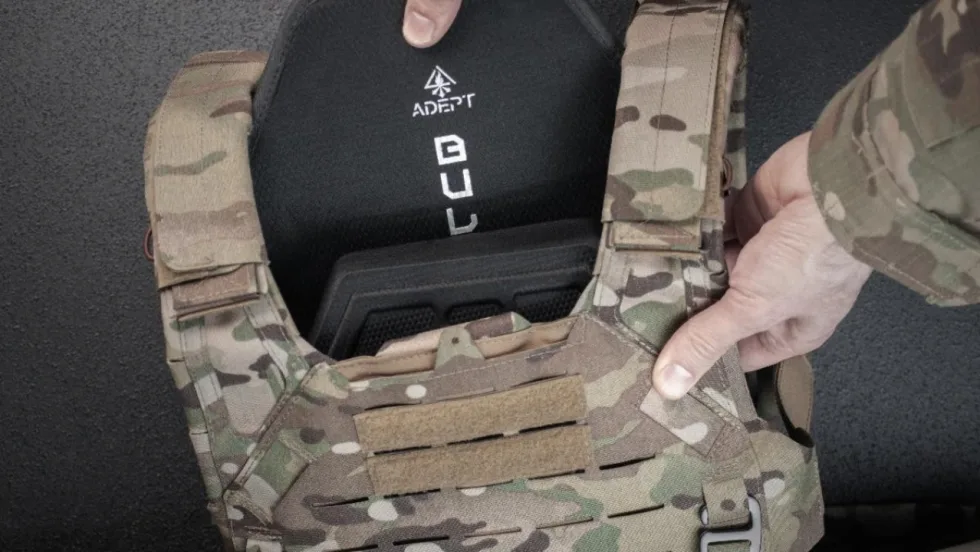
Adept Armor Introduces Two New Rifle Plates
Adept Armor has launched two new Level IV ballistic plates, the Emperor and the Archon Mark 2, which brings Adept Armor’s new Quatroid ceramic to the high-threat, performance-value center of the range at 5.2 pounds.
Read More →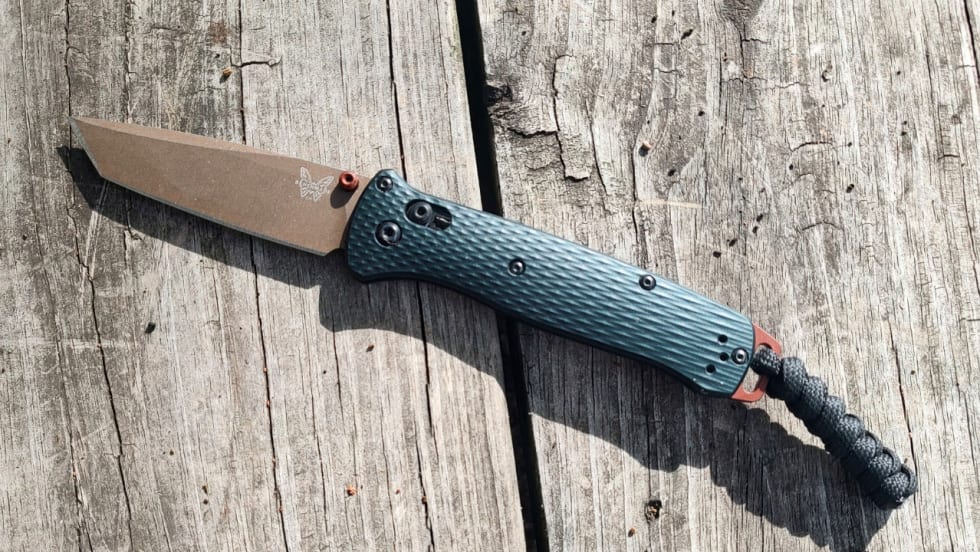
POLICE Product Test: Benchmade Bailout
The Benchmade Bailout is a slim, lightweight carry knife with a deep-ride pocket clip and comes in a variety of blade steels and scales. Here is a detailed review of the Taiga Green Bailout, released earlier this year.
Read More →
NLEOMF Announces July 2026 Officer of the Month
NLEOMF honored a Michigan deputy sheriff as the July 2026 Officer of the Month for rescuing a trapped driver from a burning vehicle following a Fourth of July crash.
Read More →
Streamlight to Showcase Newest Lighting Products at National Safety Council’s Safety Congress & Expo 2026
Streamlight will showcase its latest lights, including the Portable Scene Light III and the LiteBox 1Million, at the 2026 National Safety Council (NSC) Safety Congress & Expo.
Read More →
The 2027 World Police & Fire Games Set for Perth, Australia
The 2027 World Police & Fire Games (WPFG) will take place in Perth, Western Australia, from Friday, March 12 through Sunday, March 21, 2027.
Read More →
5.11 Partners with National Fallen Firefighters Foundation to Support #ForThe343
5.11 has joined the nationwide movement honoring the 343 New York City Fire Department firefighters lost on Sept. 11, 2001.
Read More →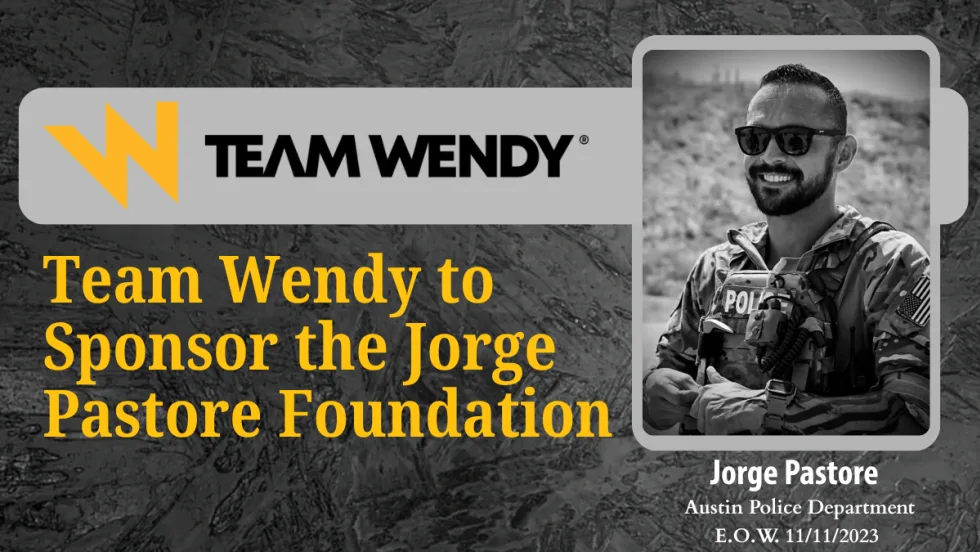
Team Wendy Announces Title Sponsorship of the Jorge Pastore Foundation
Team Wendy’s 3-year partnership with the Jorge Pastore Foundation expands access to programs that strengthen those who serve.
Read More →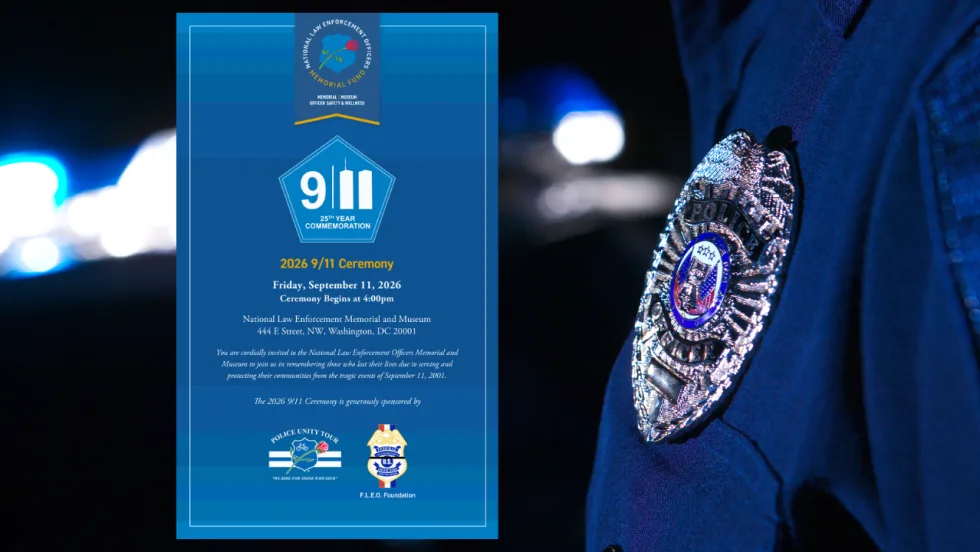
National Law Enforcement Memorial and Museum Hosting 9/11 25th-Year Commemoration Ceremony
The National Law Enforcement Memorial and Museum is hosting a 9/11 25th Year Commemoration Ceremony on Sept. 11 at 4 p.m.
Read More →
National Law Enforcement Officers Memorial Fund Announces June 2026 Officers of the Month
The National Law Enforcement Officers Memorial Fund (NLEOMF) named 15 officers of the Chico Police Department (California) as the Officers of the Month for June 2026 for their roles in responding to an active-shooter incident at a public library.
Read More →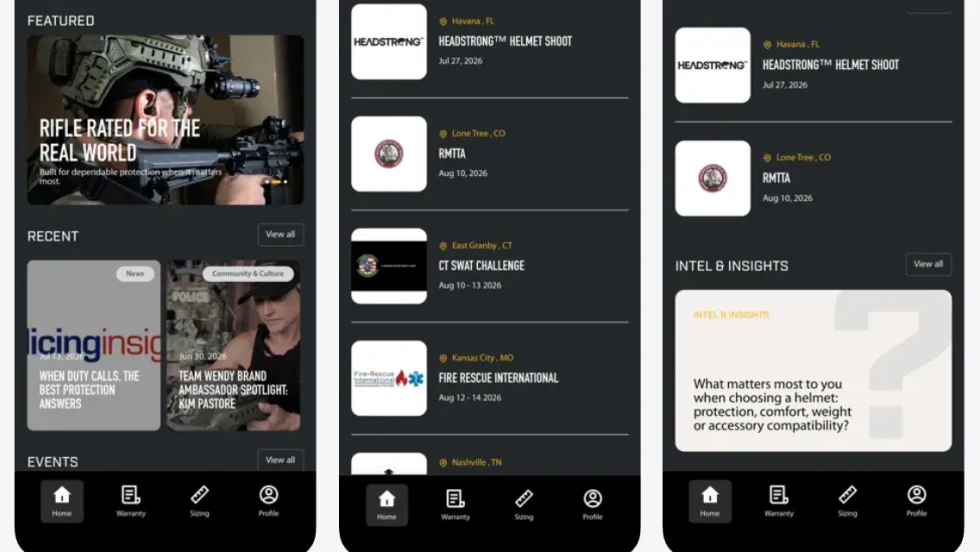
Team Wendy App Creates New Digital Hub for Helmet Owners
The Team Wendy Community App provides one location for warranty registration, size-fit tools, product updates, and community connection. For helmet owners, the new app creates a simpler path to the information and tools that matter most.
Read More →