



Reaching Out to the Community
The events that unfolded in Ferguson and Baltimore may be over but their legacy lives on. These incidents are sparking a vigorous debate across the United States over the relationship between law enforcement and the citizenry they protect.

The fatal shooting of Michael Brown by a Ferguson, MO, police officer on August 9, 2014, made headlines when it led to a series of protests and riots within the community. The unrest continued on November 24, 2014, when a grand jury decided not to indict the white officer for killing the young black man. Less than a year later, rioting flared in Baltimore after the April 12, 2015, arrest and subsequent in-custody death of Freddie Gray, a 25-year-old African American.
The events that unfolded in Ferguson and Baltimore may be over but their legacy lives on. These incidents are sparking a vigorous debate across the United States over the relationship between law enforcement and the citizenry they protect.
They also left many citizens with a distaste and distrust of the police officers there to protect and serve them, and it’s a scenario local law enforcement agencies like those in Westbrook, ME, and Columbia Heights, MN, are working to overcome.
The Westbrook PD recently renewed its focus on the city’s Brown Street neighborhood—a historic part of the city that is beleaguered by drug activity and domestic violence issues. The department hired a community policing coordinator and located a police liaison in an office on Brown Street in September. Down the road, the nonprofit Opportunity Alliance plans to renovate a city-owned building to serve as headquarters for community volunteers.
The Columbia Heights PD's success with community policing programs has even received national recognition. The International Association of Chiefs of Police and Cisco awarded Columbia Heights with a Community Policing Award for cities with a population of fewer than 20,000.
Though these are separate initiatives in two very different areas of the country, both have a common goal—bringing police and the community together for the greater good.
“Sometimes the public forgets—and we as police also forget—that keeping crime down and increasing public safety is every one’s responsibility. It’s a true partnership,” says Capt. Lenny Austin of the Columbia Heights PD. “We need the community’s support, but it’s more than that. It’s the attitude that we are in this together.”
Cutting Crime
Columbia Heights’ community policing program is actually nearly a decade old. It’s safe to say this department saw a need to engage the community long before incidents like those in Ferguson or Baltimore made it a necessity.
The city of Columbia Heights, population just shy of 20,000, is a first ring suburb of Minneapolis. Though it is a small community of just 3.5 square miles, its proximity to a major city brings with it a host of challenges that are far different and often more severe than in the city’s third or fourth ring suburbs. In 2008, those challenges were affecting the safety of citizens and police. Austin explains: “There were several neighborhoods having significant crime issues—and not crimes impacting quality of life and disorder, but violent crimes.”
Austin says the police chief at the time saw the value of community policing and decided to give it a go. The department’s initial efforts centered on the city’s crime hot spots, where officers began problem-oriented policing, but eventually grew into a citywide program that is now a way of life for citizens and officers. Their efforts are paying off in spades. “Our crime rate is currently at a 40-year low,” says Austin. “I started here in 1995, and today this is definitely a different city from a crime perspective. Community policing has had a positive impact here.”
The most noticeable change has been in restoring citizens’ faith in the police, especially in troubled neighborhoods. Though Austin says he wouldn’t describe the previous relationship as adversarial, he admits it was “an area that needed work.” “We have a much improved and more positive relationship and a much better understanding of each other since we began community policing,” he says. “It’s helped the department in what we need to do because we have a much better understanding of the people we serve and what their needs are. And community members better appreciate what is happening from a police perspective in terms of crime and public safety.”
Building solid relationships with the community is the key to unlocking public distrust of police, according to Westbrook Police Chief Janine Roberts, a former longtime officer in Portland, ME. “We need to use every opportunity available to us to engage the public we serve,” she says. “Even when we are taking enforcement action against individuals, there are opportunities to create a relationship. Realistically there are times when the volatility of the situation will not accommodate initiating a relationship. However, when officers maintain self control during these situations, we are demonstrating our trustworthiness.”
Roberts, a big proponent of police coordinator positions, which help connect community members with services they need such as drug treatment programs or child protective services, believes a transparent relationship between police officers and community members helps foster positive relationships and is a good place to start. Being willing to explain procedures, policies, laws, and why officers do or don’t do certain things can go a long way toward building trust, according to Roberts.
“Everything in life comes down to communication and relationships,” she explains. “The better our relationship is, the more trust we have, allowing us to disagree on occasion and still not damage the relationship.”
While involving police in programs such as Neighborhood Watch and others can help, Austin states departments must go beyond this low-hanging fruit to engage the community. He recommends partnering with stakeholders such as business owners, school officials, church leaders, civic organization members, and participants in smaller neighborhood groups.
“Start by reaching out—to anybody,” says Roberts. “Offer up officers and department leaders to be guest speakers at community meetings and dinners such as Rotary and Lions clubs, veterans and church groups, youth groups, etc."
“Get out there and have a simple dialogue,” Austin adds. “Sometimes in law enforcement we try to overcomplicate things when what we really need to do is sit down and have a discussion with people in the neighborhood.”
Roberts agrees. “The more we communicate, the better the relationship, and the more likely our communication efforts will be accurate and understood because those receiving the information will be more comfortable asking questions and asking for clarification when uncertain.”
This dialogue must be ongoing. “There must be follow up discussions,” Austin stresses. “We need to continue to be engaged in these dialogues. But this starts with having open and very frank discussions.”
Take It to Them
When striving to build relationships, the best place to start may be where relationships are most strained, according to Roberts. “Are there segments in the community who distrust the police? Or who have a bad/wrong opinion of the department?” she asks. “If so, reach out to these groups, invite them to a meeting, on their turf, set the agenda, listen to their concerns, take notes and follow up on any items not addressed or answered during the meeting.”
It’s important to take such meetings to the citizens rather than ask citizens to attend a meeting at the department. “Community members don’t necessarily want to participate,” Austin stresses.
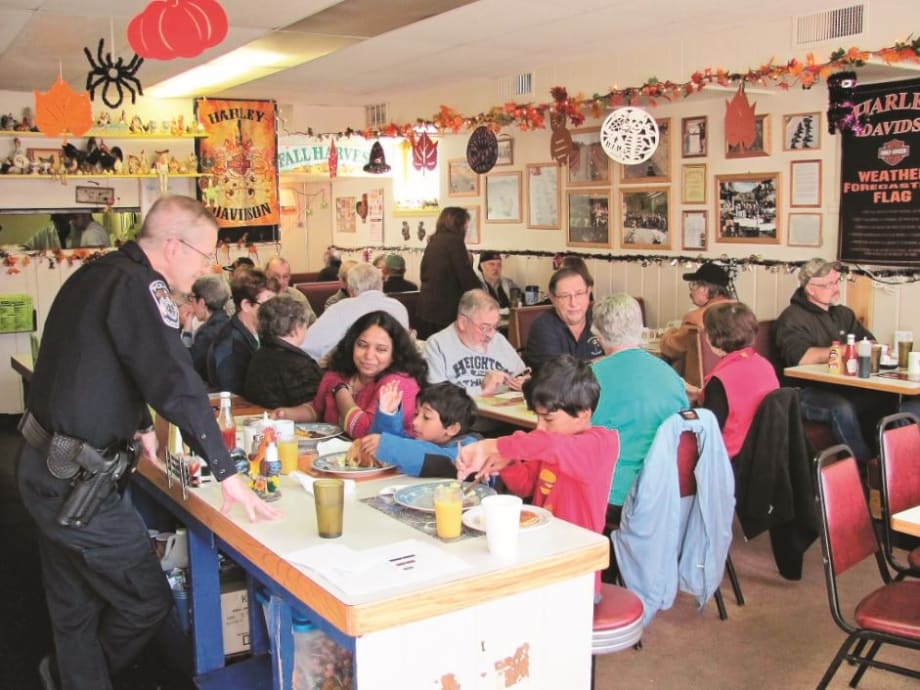
Columbia Heights PD often hosts “Eat and Greets,” where the department partners with restaurants and other businesses in a given neighborhood to donate food and space for a police-citizen meeting. “We have the event right in their neighborhood,” he says. “And we bring the fire department, EMS, social services, school district officials and more with us. We have found that it’s not just the police people in these neighborhoods want to meet. We bring all of these entities together to assist the neighborhood, get information out there, and break down perceptions and barriers.”
The Minnesota department also asks officers to invite people to these meetings. They post flyers throughout the community in advance and go door to door asking community members to attend. “We let them know that we want them to have a place at the table and have these conversations with us,” he says.
Once the community is there, Roberts says it’s important to listen to what citizens have to say. She recommends learning about the different cultures and subcultures within the citizenry and learning how best to work with them.
To aid officers in learning more about individual citizens, Columbia Heights hosts “Coffee with a Cop” events monthly. Here, officers meet with community members in an informal setting and discuss concerns. “One of the biggest challenges is getting officers outside their comfort zones and having them sit down with people in an informal setting to talk,” Austin says. “We tell officers they’re going to be asked questions that they may not know the answer to, but that’s OK. You can always get back to them with an answer. But that one-on-one interaction is essential.”
Westbrook hosts a National Night Out event in its Brown Street neighborhood to get officers engaged in meeting area residents and property owners; those they don’t often have contact with as well as those they regularly arrest for criminal actions.
The success of these interactions cannot be underestimated. Roberts recalls how one of these meetings led to a young man with a lengthy arrest record arriving to help clean up trash in the neighborhood. “He did so on his own volition,” she says. “These meetings also provide residents with an opportunity to provide their public safety concerns and give information on criminal activity they regularly witness.”
Roberts stresses community policing doesn’t stop with these meetings but occurs every single day. Westbrook officers keep the lines of communication open by regularly stopping into local businesses, introducing themselves, learning about the building/facility, looking at security measures in place and making recommendations to improve security. They even collect emergency contact information to keep on file. “Having beat officers stop in occasionally goes a long way in creating relationships,” she says.
Department Buy-In
“The one thing I’ve seen is that community policing efforts often start with great momentum and then die on the vine,” says Austin.
Success hinges on getting every level of the department from the top down and every member of the department from sworn officers to civilian staff to embrace the program and get involved.
“It’s important for the chief to define his or her vision of community policing and relay that vision to the entire department,” Roberts says. “It’s also important to select those officers who have a natural affinity for engaging the public to be the spokesperson and get involved in planning community events.”
Columbia Heights mandates a minimum of 10 hours of community police outreach efforts per employee per year. This requirement extends to civilian staff as well as sworn officers and features a variety of programs such as D.A.R.E., open gyms, anti-bullying school reading programs, Big Brothers Big Sisters, Coffee with a Cop, and community picnics.
Westbrook does not mandate a set number of hours but instead asks officers to volunteer their time. “Realistically, not all officers have the best personality to engage the public on a more personal level,” Roberts explains. “I identified my community policing minded officers by asking for volunteers. We need all types to help serve our diverse public so it’s important for the chief to identify each officer's strengths and use them to the community’s advantage.”
Community policing does have a cost, admits Roberts. Compensating officers and other department staff for their off-duty time spent participating in community policing events is necessary. Branding and marketing the community policing program also adds up. Roberts recommends working with the directors of grant-funded programs and local businesses to help offset these costs. In Westbrook, a drug-free coalition program funded the department’s latest version of Cop Cards, its Caught Doing Good youth program, training for officers related to children exposed to violence, and funded attendance at a week-long conference on community engagement strategies.
“Learn about local grant programs that might align with your policing needs; make friends and ask for help,” Roberts says. “They can’t say yes if you don’t ask.”
Track Results
Though community policing efforts might net immediate results, it’s important for departments to formally track any program’s effectiveness.
Columbia Heights decided to poll the community and key stakeholders to measure how the department’s community policing efforts were being received. The department partnered with a local university to perform a large-scale research project in the summer of 2014, which included a scientifically validated survey.
The survey polled members of the police department, city employees, community stakeholders, and a sampling of residents. The results were overwhelmingly positive.
“We didn’t see any curveballs, but we did see a true appreciation for what the police department is attempting to do,” says Austin, noting 76% of community partners saying they felt their partnership with the police department led to a reduction in crime, and 72% of community partners noted the collaborative relationship was working to solve their problems. In addition 94% of residents indicated they felt safe from neighborhood crime, while 99% stated they felt police would act on their program when called.
“We feel we’re one of the few agencies out there really evaluating our performance, evaluating our results; [looking at] what we’re doing well and where we can make improvements,” Sgt. Erik Johnston said in an article titled, “Columbia Heights Police Department Honored for Community Policing Successes.”
Though large-scale surveys are not possible every year, the department does keep its finger on the pulse of the community in between by annually reviewing their efforts to set the course for the following year. These reviews look at what’s working, what might be needed in the years to come, and what needs to be changed. “This strategic planning session is not just something the formal leadership does; it’s something all staff members participate in,” he says. “I think it’s important to get everyone involved.”
As Westbrook and Columbia Heights police departments have found, community policing can go a long way toward changing the tide of the public’s mistrust in police.
“Community policing is vitally important to the ultimate success of law enforcement and their mission to protect and serve their communities,” Former New Orleans police superintendent Ronal Serpas, who serves on the President’s Task Force on 21st Century Policing, said in a statement. “Recent events have demonstrated that trust between law enforcement and the community is essential. The agencies we are honoring have demonstrated how incorporating the community policing philosophy into their mission has built a stronger agency and awarded them with strong and lasting relationships with their communities.”
Leigh Hunt is a freelance writer based in Fort Atkinson, Wis. Hunt has written about police issues for nearly 17 years.
More Training
Registration Underway for Sixth Annual First Responders Relay
The California Police Athletic Federation’s annual First Responder Relay will welcome first responder teams from across the globe to compete along Ventura's scenic coastline on Oct. 11. Registration is underway.
Read More →
Vector Solutions Launches Comprehensive Online Dispatch Training Catalog for Emergency Communications Professionals
Vector Solutions’ new catalog of 35 expert-developed online courses can help emergency communication centers strengthen training, meet certification requirements, and simplify continuing education.
Read More →
Tools for Active Shooter Response Training
What technologies help prepare officers for active shooter response situations? This behind-the-scenes look at law enforcement training explores shot simulators, smart firearms, laser target systems, and the tools used to build safer, more effective training environments.
Read More →
Two-Officer Tactical Doorway Entry Techniques
Entering a room during active-threat situations requires communication, coordination, and disciplined tactical movement. In this video, trainers from the United States Deputy Sheriff’s Association demonstrate critical room entry concepts, including fatal funnel awareness, team coordination, and safe tactical movement.
Read More →
High Compressed Ready Explained | Muzzle Control For Room Entry
In this video, Mike Willis, law enforcement national training and program director for the United States Deputy Sheriffs’ Association, demonstrates the high compressed ready position and discusses muzzle control during room entry.
Read More →
Why Attend the DroneSense Innovation Summit by Versaterm?
Let’s hear from Ryan Bracken, head of product, about why your agency should send someone to the first annual DroneSense Innovation Summit by Versaterm in April.
Read More →
Caswell Live Fire Spins Off from InVeris
Caswell Live Fire has spun off from parent company InVeris, coinciding with the 100th anniversary of Caswell’s founding. Over the past 100 years, Caswell has developed pioneering solutions that support military, law enforcement, and commercial clients worldwide.
Read More →
When Do You Transport a Wounded Officer Instead of Waiting for EMS?
Thumbnail for video series POLICE Topics, Tactics & Tips with a yellow headline that reads When Do You Transport a Wounded Officer Instead of Waiting for EMS?
Read More →
How to Pick Your High-Risk Stop Location for Tactical Advantage
Hear veteran trainer Mike Willis, of the United States Deputy Sheriff’s Association, explain several considerations that can help you wisely pick your best spot to initiate high-risk or felony traffic stops.
Read More →
Coffee Break with Police Experts: Using Your Patrol Vehicle for Cover
In this video, hear from Dustin Mowery, a product specialist at Team Wendy, as he discusses how to best use a patrol vehicle for cover.
Read More →