



Quicker Response to Active Shooters
Despite its traditional mission, I always thought our motor unit could assume a more tactical posture and play less of a support role, especially when responding to school shootings. Since motors are such a specialized unit, it is easier to pull them off of their primary missions and redirect them whenever necessary.

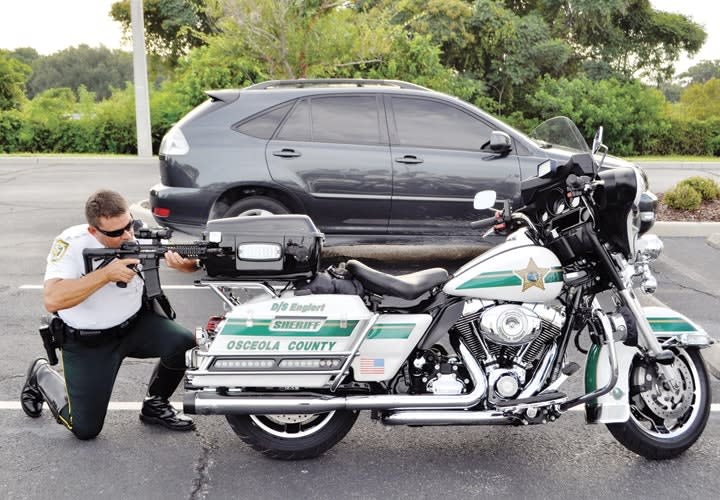
Photo courtesy of the Osceola County (Fla.) Sheriff's Office.
There are four possible ways to mitigate the damage inflicted by an active shooter. You can harden the target, arm and train potential victims, strengthen prevention programs and suspect identification, and improve law enforcement response times. Each one of these steps is easier said than done because of the associated bureaucratic, political, and budgetary considerations.
Department of Homeland Security research reveals that the average duration of an active shooter incident at a school is 12.5 minutes. In contrast, the average response time for law enforcement is 18 minutes. That means it only makes sense for us to find ways to improve our response times. Working on our response times is about the only anti-active shooter measure that we can take at the operator level. We must find a way to shave off some time and in doing so, create some type of tactical advantage.
Existing Resources
In order to increase response times, you have to look at your available resources and pair them with the situation you want to improve. Two questions should immediately pop into mind: What resources aren't you tapping into, and of the ones you are using, how can you use them more effectively?
Many agencies were asking these questions after last December's Sandy Hook massacre, including mine. So let me share with you how I created a tactical advantage for law enforcement in my jurisdiction.
I command four units within my agency's Special Operations Division. One of them is motors, which has played a traditional role in traffic enforcement. The motor unit also conducts various escorts and help with motorcycle safety education programs. For the most part in any other operations, the motor officers traditionally served a support role unless they find themselves in an exigent circumstance.
Despite its traditional mission, I always thought our motor unit could assume a more tactical posture and play less of a support role, especially when responding to school shootings. Our motor officers were already covering school zones immediately before and after school. So if something took place during that time frame, they would be some of the first officers to arrive. Also, since motors are such a specialized unit, it is easier to pull them off of their primary missions and redirect them whenever necessary.
Actual incidents supported my belief. In the last two out of three shootings my agency has been involved with, the first responder on the scene was a motor officer.
Though these shooting incidents did not involve an active shooter, the motor officers would have had to respond the same way if things turned bad. Since our motor officers are trained and prepared to respond to an active shooter already, the only question left to be answered was how to make them more effective.
Enter the Rifle
The Sandy Hook massacre raised the intensity on the national discussion on active shooters. Everyone was looking for ways to improve school safety, my agency included.
My input to the command staff was to arm our motor officers with rifles and give them a new tactical role. I knew of a few agencies in my state that had already done so. The challenge was to find a way to secure rifles in the motorcycle saddlebags so they were out of sight from public view and yet readily available to the officer.
I looked at different weapons systems, available mounts for motorcycle saddlebags of which there were very few, and finally came up with a plan. I then submitted a proposal to the command staff, which was subsequently approved. We would use a rifle mount we designed and manufactured ourselves that would hold an M4 with a collapsible stock and a 10.5-inch barrel.
I went to my weapons guy in the Training Unit. I told him my mission parameters and that I had zero budget. He came up with a cost-effective solution. We ordered seven upper receiver groups with 10.5-inch barrels and used existing lower receiver groups from spare replacement rifles, which cut our expenses considerably. Three of us already had rifles so that made it even easier. He was also tasked with creating an advanced tactical rifle course specific to motors, as well as active shooter response training.
Initially, I could only find one rifle mount that would fit our Harley Electra Glide Police model saddlebags. When we tried it out, it did not meet with my expectations for security. The rifle wiggled when locked in the mount because it was typically used for pump shotguns and not rifles. Once installed, it was also hard to shut the lid of the saddlebag. I also believed that the vibration from riding the bike would eventually damage the saddlebag and possibly the rifle. Since I needed an alternative, I assigned my motor unit's MacGyver the task of creating a new mount from existing parts from our vehicle maintenance section.
We had to create a new bracket through trial and error as there was no template to work from. And our MacGyver did an amazing job.
The design used a clamshell design mount that we already had in stock with a customized bracket, and the rifle fit perfectly. It no longer rattled and moved around; it fit more flush to one side of the saddlebag because of the flatter bracket design; and it left more space in the saddlebag to store a magazine bandolier and a cleaning kit. The saddlebag lid also closed properly without having to force it down. Though it was an exacting fit with little room for error, no damage would occur to the saddlebag or the rifle while in transit.
Active Shooter Training
The training presented to our motor unit consisted of basic rifle maintenance and marksmanship. Basic skills were incorporated in dynamic settings so there was a great deal of movement and obstacle negotiation. Since our entire motor unit consisted of senior officers, a good chunk of the training was review. I had already ordered the motor unit to attend advanced pistol and shotgun training. In addition, the three of us that had rifles attended the advanced patrol rifle course as well.
We also covered motorcycle specific considerations. We practiced deploying from the motorcycle, the use of a motorcycle for cover, and other tactical considerations specific to the motor officer. The motorcycle has some distinct advantages once you learn how to exploit them.
The last part of the training was active shooter specific. We focused on moving to contact and ending the threat. This is the only mission within law enforcement that does that. Every other law enforcement mission counts on using time as a tactic. In a school shooting, you are already out of time the moment it starts. Though every motor officer must be prepared for solo operations, they were specifically trained in two person hunter team operations since they are often deployed in pairs during their normal assignments.
According to an article by Katherine W. Schweit in the May 2013 edition of The FBI Bulletin, "in more than half of the mass-shooting incidents where a solo officer arrived on scene the shootings were still underway with 75% requiring law enforcement personnel to confront the perpetrator before the threat ends." This fact adds more to the argument for arming all officers with rifles. If you have specialty units working in and around school zones, it only makes sense that they have an enhanced capability. I was able to do something with my agency's motor unit.
I hope that this example creates a dialog within your agency and that you can do something as well. Theodore Roosevelt said, "Do what you can, with what you have, where you are." We have a duty to do no less.
Amaury Murgado is a lieutenant with the Osceola County (Fla.) Sheriff's Office. He is a retired Army Reserve master sergeant and has more than 25 years of law enforcement experience.
More Patrol
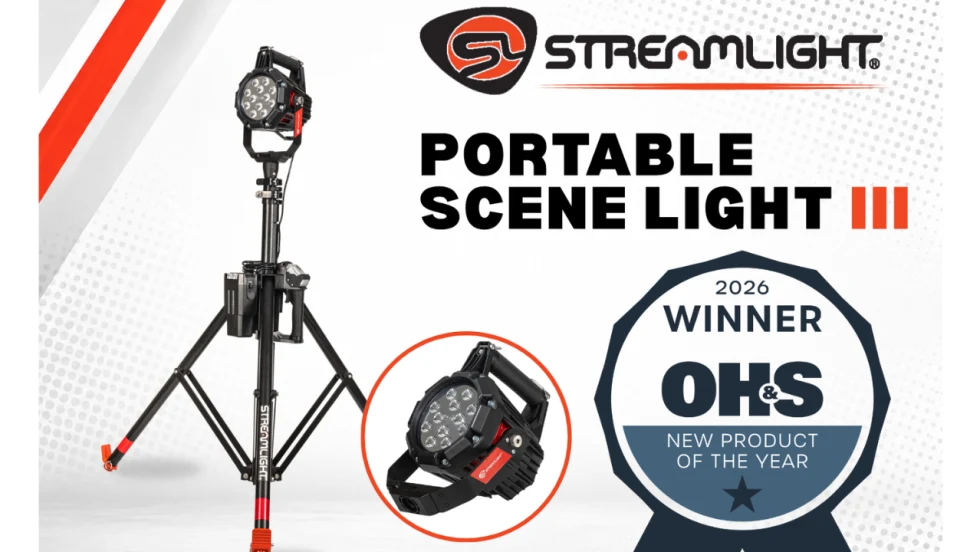
Streamlight Portable Scene Light III Wins 2026 OH&S New Product of the Year Award
Streamlight’s Portable Scene Light III has won the 2026 Occupational Health & Safety (OH&S) New Product of the Year Award in the Lighting category.
Read More →
Adept Armor Introduces Two New Rifle Plates
Adept Armor has launched two new Level IV ballistic plates, the Emperor and the Archon Mark 2, which brings Adept Armor’s new Quatroid ceramic to the high-threat, performance-value center of the range at 5.2 pounds.
Read More →
POLICE Product Test: Benchmade Bailout
The Benchmade Bailout is a slim, lightweight carry knife with a deep-ride pocket clip and comes in a variety of blade steels and scales. Here is a detailed review of the Taiga Green Bailout, released earlier this year.
Read More →
NLEOMF Announces July 2026 Officer of the Month
NLEOMF honored a Michigan deputy sheriff as the July 2026 Officer of the Month for rescuing a trapped driver from a burning vehicle following a Fourth of July crash.
Read More →
Streamlight to Showcase Newest Lighting Products at National Safety Council’s Safety Congress & Expo 2026
Streamlight will showcase its latest lights, including the Portable Scene Light III and the LiteBox 1Million, at the 2026 National Safety Council (NSC) Safety Congress & Expo.
Read More →
The 2027 World Police & Fire Games Set for Perth, Australia
The 2027 World Police & Fire Games (WPFG) will take place in Perth, Western Australia, from Friday, March 12 through Sunday, March 21, 2027.
Read More →
5.11 Partners with National Fallen Firefighters Foundation to Support #ForThe343
5.11 has joined the nationwide movement honoring the 343 New York City Fire Department firefighters lost on Sept. 11, 2001.
Read More →
Team Wendy Announces Title Sponsorship of the Jorge Pastore Foundation
Team Wendy’s 3-year partnership with the Jorge Pastore Foundation expands access to programs that strengthen those who serve.
Read More →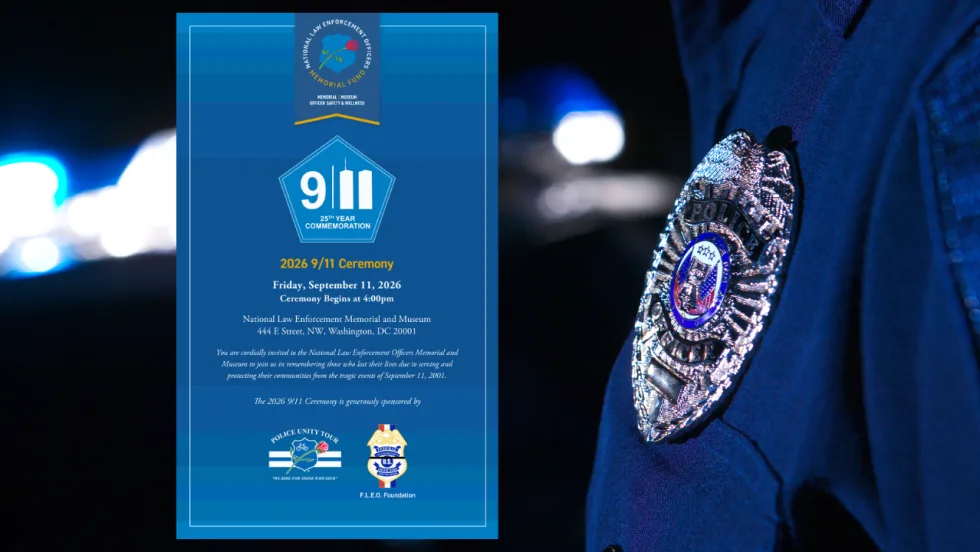
National Law Enforcement Memorial and Museum Hosting 9/11 25th-Year Commemoration Ceremony
The National Law Enforcement Memorial and Museum is hosting a 9/11 25th Year Commemoration Ceremony on Sept. 11 at 4 p.m.
Read More →
National Law Enforcement Officers Memorial Fund Announces June 2026 Officers of the Month
The National Law Enforcement Officers Memorial Fund (NLEOMF) named 15 officers of the Chico Police Department (California) as the Officers of the Month for June 2026 for their roles in responding to an active-shooter incident at a public library.
Read More →