



Practical Flashlight Techniques and Tactics
Any article on law enforcement operations and the use of flashlights can be controversial and much will have been covered in the past. But let's see if I can offer some fresh thoughts on the subject.

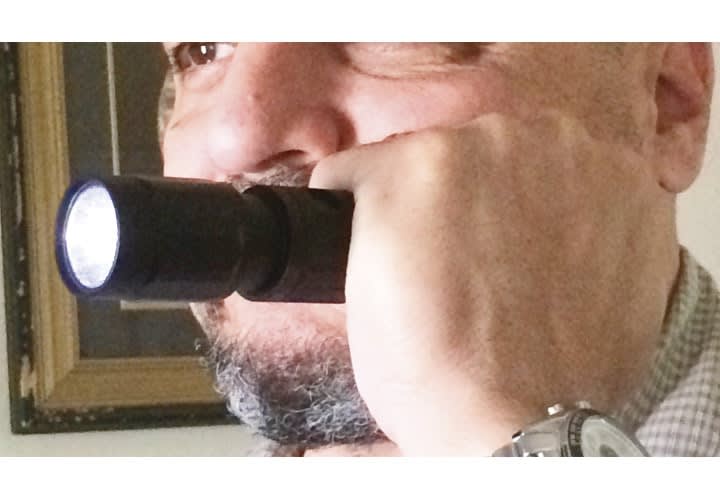
Photo: Pelican
Any article on law enforcement operations and the use of flashlights can be almost as controversial as an article on the 9mm vs. the .45 ACP for stopping power. A lot of material will have been covered in the past by any number of instructors and each will be adamant in his or her arguments. But let's see if I can offer some fresh thoughts on the subject.
Before we get started, a few notes. Unless I say otherwise this article and the use of the light is for patrol officers who are operating alone or may be with another backing officer, not SWAT operations. For the most part I will concentrate on handheld lights.
Light and Gun
OK, let's look at some applications for lights in law enforcement. Flashlights can be used for navigation, signaling, to disorient, to identify someone as a threat, and other applications.
If a flashlight is held in your hand and not co-witnessed with the muzzle of a firearm it can be used for all those things. However, when a light is attached to a firearm or co-witnessed with a firearm, it is mostly limited to being used to identify whether a suspect is a threat. You might also use a weapon light or co-witnessed light to disorient a suspect, but the primary mission for a weapon light or light used with a firearm is to ID a suspect so you can challenge that suspect and/or direct gunfire into him. In other words you need to be constantly aware that when your weapon light is attached to a gun or your light is co-witnessed with a gun, you are pointing a lethal weapon wherever you direct the light.
In general low-light engagements will be close, and in most of them enough ambient light will be present to have already identified the target as a threat or not. The use of the light is icing on the cake so to speak.
You might intimidate the suspect or maybe disorient her with enough light to get her to comply. Some law enforcement experts even believe the use of high-output lights constitutes some kind of force from afar like command presence. Also, with a 200-plus lumen light at short distances you will see visual reaction from most people when you direct the beam into their eyes.
Bottom line: you need to be able to safely search an area with a flashlight in conjunction with a firearm.
Training and Techniques
I have taken training and given training in the use of flashlights and firearms for nearly 30 years now. Most of the scenarios I have experienced started in the dark. On a threat command or some other signal, the target was illuminated and identified, and then gunfire was directed into it. I would hazard to guess that you do not search for anyone in the dark. So why do we train that way?
A few years ago I changed how I train officers in night shooting at my department and elsewhere. I have officers turn on their lights and begin looking around (square range safety adhered to) with the light, then some type of threat presents itself, and they engage the target using some combo technique. Certain techniques allow the light to move anywhere, others not so much. So you need to search with the corona of the light beam.
For most of my career I have used the Harries flashlight technique (I knew and really liked Michael Harries.). And I can tell you that a lot of officers do it wrong. For best results your support elbow needs to be pointed down with pressure against the back of the hands. Most users do not maintain this pressure as they fatigue and level off the support arm. This improper Harries technique causes shots to be pulled to the support side because it's basically like performing one-handed shooting with your wrist resting on a fence post that's moving. When performed correctly, however, the Harries technique works great.
I have also tried all the other techniques, including the FBI, Chapman, Ayoob, and SureFire Neck index. I used to show multiple techniques to see what worked best for officers. These training experiments went on for years. And much to my chagrin, the SureFire Neck index, which I teach in a modified version I call the "cheek index," has been overwhelmingly chosen by my officer students and has given them the best results.
I say "to my chagrin," because I really disliked the technique when I first saw it. But now I agree with my students, and it is the one I use most.
Two years ago I taught a 12-hour firearms perishable skills course to my entire department over several days. And I decided to limit the instruction and practical application of flashlight techniques to the Harries and the Neck/Cheek index. More than 90% chose the Neck/Cheek and were surprised how well they did with it. It is very fast for shots on target and very safe when searching areas where innocents are present. The small tactical light gave the best performance for most.
When distances increase past realistic ranges for a pistol, I default to the Harries but until then I use the Neck/Cheek index. When using the Neck/Cheek index, your support arm should be locked against your chest. If the support hand knuckles are pressed into the hollow of the cheek it seems to help lock everything up and lights up your sights better than when held lower against the neck in my opinion. Now wherever your head looks the light goes with it. Your handgun can be in a low ready or in close gun protected position. If a threat presents itself your handgun is pushed out, sights acquired, rounds delivered.
Choosing a Light
I think many of us, especially veteran officers, used to believe that any light output above 65 lumens might be too much. Now we are seeing lights being routinely carried by officers that put out 500, 600, 800, even 1,000 lumens. And the thirst for higher lumens seems insatiable. Is there too much light output at some point? Maybe. But so far the predicted downsides have not developed. My advice is to choose the level of brightness you feel is best for your mission.
And there is more to consider when choosing a light than just brightness. For example, do you want a flood beam or a tight beam? You may need both flood and tight beam and choose one that adjusts.
Many full-size, patrol-quality flashlights sold today are powered by rechargeable batteries and use a specialized cradle to power up. Smaller lights often run on relatively inexpensive and readily available AA and AAA batteries; others run on slightly more exotic and more expensive Lithium CR123 cells.
Some of the newest small tactical lights are powered by batteries that are charged via a micro USB port. This is concealed under a sliding collar on the light. Since most contemporary police patrol units are now equipped with mobile computers, a USB port is usually available to trickle charge the light. This system seems very convenient, giving you a small tactical light without the expense of lithium batteries.
Being the dinosaur that I am, I still like a large light, whether rechargeable or not. A full-size patrol light is easier to place underneath your arm when taking notes, and it can be used as an impact weapon in an emergency. I seem to be in the minority on this issue, and the trend—for a number of reasons like convenience and liability—is for the small belt-mounted handheld light.
When it comes to the power source, I am a big fan of the AA battery lights. In the past the biggest reasons for the use of lithium CR123 batteries instead of AA batteries were more consistent output, no leakage, and long shelf life. But current AA batteries and the flashlights powered by them seem to have no problems with consistent power. In fact, there are lithium AA batteries cheaper than CR123s, and Eveready is advertising leakproof alkaline batteries. As for shelf life, AA batteries from reputable makers now can be stored for as much as 10 years. And one of the reasons that I really like AA batteries in mission critical lights is that when you find yourself somewhere in need of batteries you can find AAs just about anywhere, even in a TV remote.
When it comes to the controls on my flashlight, I just want the basics, and I think most cops feel the same way. Obviously your handheld light needs a momentary on/off switch that also allows you to click it in the on position; everything else isn't as important. An ability to have a low setting is nice for taking notes, and it's becoming more important with the higher lumen output lights. But it's important that it not accidentally give you low light when you want high.
Then there's the strobe. Most police flashlights have this feature now, but I have not seen any regular working police officers use it. Yes, it disorients the suspect, but it also disorients you and other officers. So I think it is important that flashlights that have this feature give you an option to lock it out. Before I get hate mail, I have really tried to get the strobe function to work for me in some kind of situation. I even took an early tactical light with a strobe feature out in the field and used it on suspects, but I got tired of being disoriented myself. Maybe it's personal preference, but that was my experience.
Many officers believe in the old tactical axiom that in order to make sure you have one light, you need two, since Murphy's law can bite you when you least expect. This is one reason why small AAA-powered lights are popular in law enforcement. Some of the newer AAA lights put out more than 65 lumens so they can make a good backup light.
Another reason for the popularity of smaller lights is they can be really useful when taking notes or cite writing. Some of them have a clip that allows for bezel down carry. This is an excellent feature. I have found that you can clip it to your shirt pocket or at the opening of your uniform shirt.
Carrying the Light
You can't always have a flashlight in your hand. This is especially true when you are conducting a reload or manipulation of your firearm. Some officers choose to put their lights in their pockets or back in their belt carriers in these situations. I have used a lanyard, which I admit could be a problem in a physical encounter with a suspect or if you get it caught on a fence. Lately I have just zip-tied a black plastic stretchy key ring holder that will break if stretched too much. This system allows me to let go of the light, do whatever needs to be done, then bend my hand at the wrist, and retrieve the light.
Dean Caputo is a consultant for Pelican Products and a decorated, retired Southern California law enforcement officer with 33 years of service. He currently serves as a reserve officer and rangemaster.
More Patrol

Adept Armor Introduces Two New Rifle Plates
Adept Armor has launched two new Level IV ballistic plates, the Emperor and the Archon Mark 2, which brings Adept Armor’s new Quatroid ceramic to the high-threat, performance-value center of the range at 5.2 pounds.
Read More →
POLICE Product Test: Benchmade Bailout
The Benchmade Bailout is a slim, lightweight carry knife with a deep-ride pocket clip and comes in a variety of blade steels and scales. Here is a detailed review of the Taiga Green Bailout, released earlier this year.
Read More →
NLEOMF Announces July 2026 Officer of the Month
NLEOMF honored a Michigan deputy sheriff as the July 2026 Officer of the Month for rescuing a trapped driver from a burning vehicle following a Fourth of July crash.
Read More →
Streamlight to Showcase Newest Lighting Products at National Safety Council’s Safety Congress & Expo 2026
Streamlight will showcase its latest lights, including the Portable Scene Light III and the LiteBox 1Million, at the 2026 National Safety Council (NSC) Safety Congress & Expo.
Read More →
The 2027 World Police & Fire Games Set for Perth, Australia
The 2027 World Police & Fire Games (WPFG) will take place in Perth, Western Australia, from Friday, March 12 through Sunday, March 21, 2027.
Read More →
5.11 Partners with National Fallen Firefighters Foundation to Support #ForThe343
5.11 has joined the nationwide movement honoring the 343 New York City Fire Department firefighters lost on Sept. 11, 2001.
Read More →
Team Wendy Announces Title Sponsorship of the Jorge Pastore Foundation
Team Wendy’s 3-year partnership with the Jorge Pastore Foundation expands access to programs that strengthen those who serve.
Read More →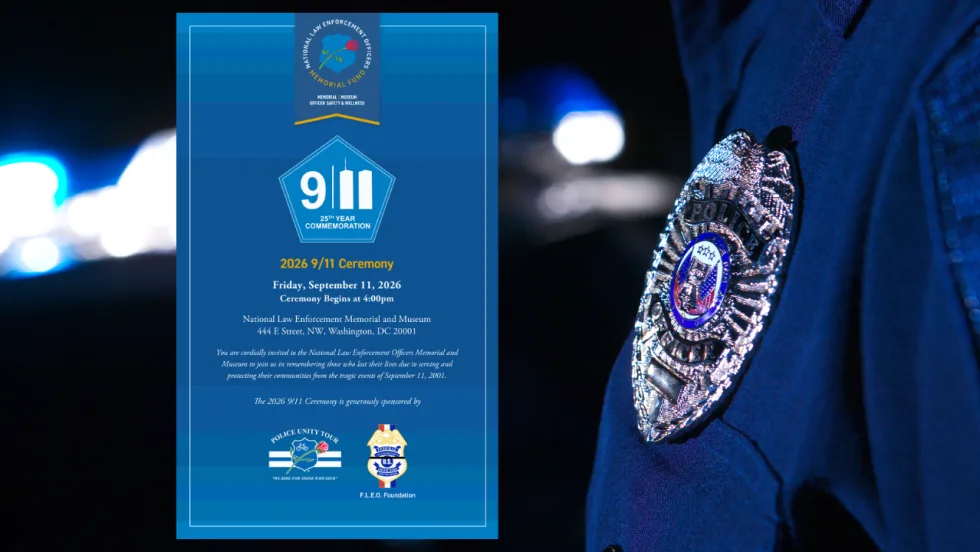
National Law Enforcement Memorial and Museum Hosting 9/11 25th-Year Commemoration Ceremony
The National Law Enforcement Memorial and Museum is hosting a 9/11 25th Year Commemoration Ceremony on Sept. 11 at 4 p.m.
Read More →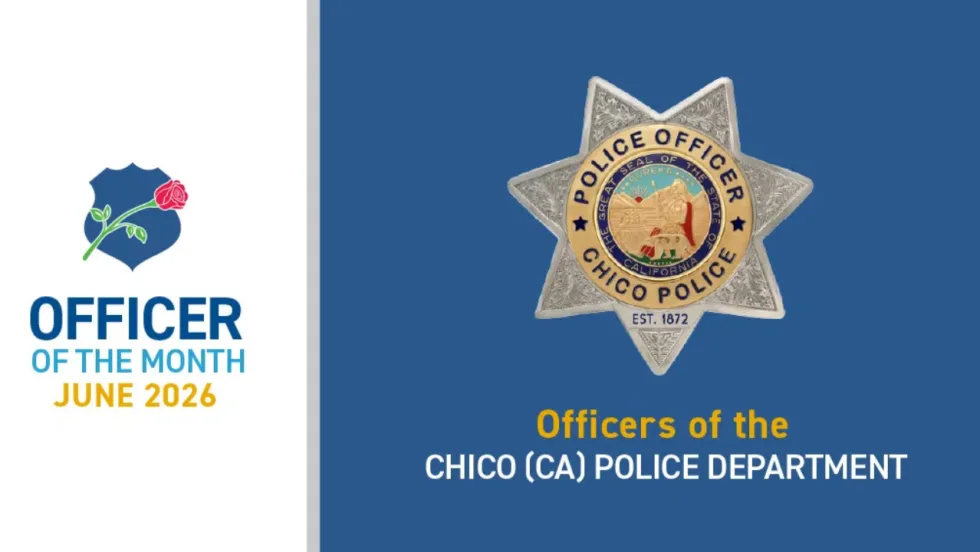
National Law Enforcement Officers Memorial Fund Announces June 2026 Officers of the Month
The National Law Enforcement Officers Memorial Fund (NLEOMF) named 15 officers of the Chico Police Department (California) as the Officers of the Month for June 2026 for their roles in responding to an active-shooter incident at a public library.
Read More →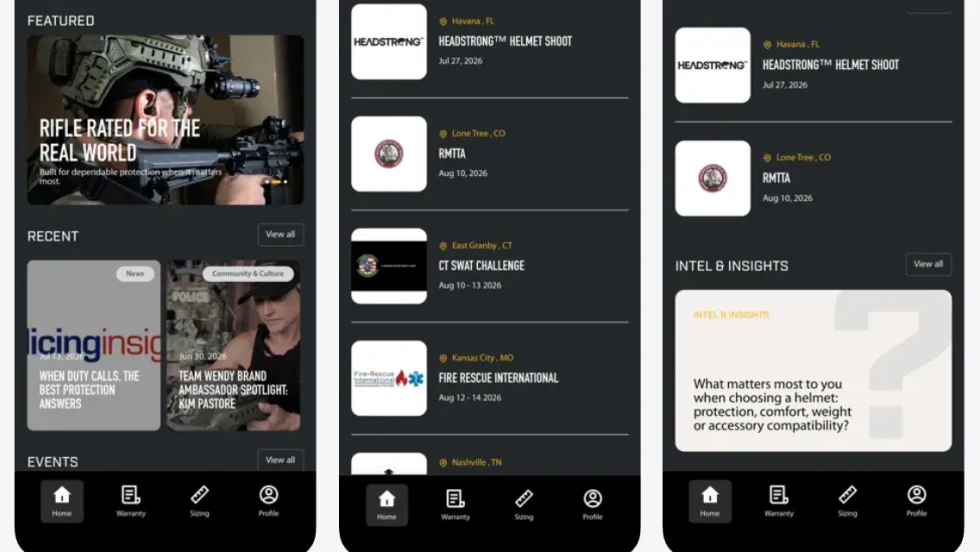
Team Wendy App Creates New Digital Hub for Helmet Owners
The Team Wendy Community App provides one location for warranty registration, size-fit tools, product updates, and community connection. For helmet owners, the new app creates a simpler path to the information and tools that matter most.
Read More →