



Placing the Blame
There are probably no easy solutions to the problem of violent crime in America, but the fact that we can't keep the bad guys in jail, or even under close watch after we let them out, is a major problem.


Experts are quick to blame violent crime in America on many factors. But two of their most consistent targets are legal access to guns and the influence of violent media. Most officers I have spoken with in 15 years on this magazine disagree.
One of the officers I have had the privilege to interview is Sgt. James Zboravan of the Los Angeles Police Department. Zboravan has experienced gun violence first-hand. On Feb. 28, 1997, just weeks out of the police academy, he was wounded in the infamous firefight outside of a North Hollywood branch of Bank of America. (See "Baptism of Fire" in this issue.)
Conventional wisdom would have you believe that officers who have been involved in shootouts are in favor of limiting the law-abiding public's access to firearms, but that's not Zboravan's opinion. "If you make laws restricting ownership of firearms, you only affect law-abiding people," he says. "High-capacity magazines were illegal in California since 1994, but three years later the robbers had them at North Hollywood."
Investigations of the men who committed the North Hollywood Bank Robbery also turned up the fact they had a passion for the bank robbery movie "Heat." Released in 1995, "Heat" features a fierce full-auto gun battle between bank robbers and law enforcement. Which is pretty much what happened outside the North Hollywood Bank of America in 1997.
So you would think Zboravan might blame the film for inspiring the robbers. But Zboravan doesn't believe Hollywood bears any responsibility. "There's a line between reality and fiction. If somebody is going to blur that line, I'm not going to blame the movie industry," he says.
So if it's not Hollywood and guns to blame for America's violence. Then where do we point the finger? Personally, I believe you need to look at laziness, greed, and just plain, pure evil.
The North Hollywood bank robbers were lazy. They could have worked for a living but didn't. They were also greedy. It is believed they already had $2 million from other jobs against banks and armored cars before they hit that BofA 20 years ago. And yes, they were evil. In 1995 they gunned down Herman Cook, a Brinks Armored Car guard, during a robbery. And outside that BofA two years later, they tried to murder dozens of LAPD officers and even civilians.
Sadly there is no cure for the combination of laziness, greed, and evil found in most violent criminals. And Hollywood and guns did not cause their defects of character. The only solution to the destruction these men and women cause is to separate them from the rest of us, in extreme cases, permanently.
Unfortunately, there is now a strong movement in this country to empty out prisons. Which means more violence. There are reasons people should be released from prison, but we have to be careful. Let's look at the cautionary tale of the North Hollywood bank robbers.
In 1993, four years before their bloody 1997 rampage, the robbers were arrested after being stopped for speeding in Glendale, CA. A search of their car yielded two semi-automatic rifles, two handguns, 2,800 rounds of ammunition, smoke bombs, improvised explosive devices, body armor, and a map book in which they had reportedly marked routes to banks. They were charged with conspiracy to commit robbery, which was bargained down to a lesser charge. They were held 100 days. They were also placed on three years of probation. But they robbed banks and armored cars while they were supposed to be supervised.
There are probably no easy solutions to the problem of violent crime in America. But if I had to name the one thing that leads to the murders and maiming of more police officers and innocent civilians than any other, it's the fact that we can't keep the bad guys in jail or even under close watch after we let them out. If the prosecutors in 1993 had pushed for a stiffer penalty on the robbers or if their probation had been more rigidly supervised, then armored car guard Herman Cook wouldn't have been murdered and nine LAPD officers would not have been shot outside a North Hollywood bank 20 years ago.
We need to keep this cautionary tale in mind and remind our elected officials about it during this era of prison reform.
More Patrol

Adept Armor Introduces Two New Rifle Plates
Adept Armor has launched two new Level IV ballistic plates, the Emperor and the Archon Mark 2, which brings Adept Armor’s new Quatroid ceramic to the high-threat, performance-value center of the range at 5.2 pounds.
Read More →
POLICE Product Test: Benchmade Bailout
The Benchmade Bailout is a slim, lightweight carry knife with a deep-ride pocket clip and comes in a variety of blade steels and scales. Here is a detailed review of the Taiga Green Bailout, released earlier this year.
Read More →
NLEOMF Announces July 2026 Officer of the Month
NLEOMF honored a Michigan deputy sheriff as the July 2026 Officer of the Month for rescuing a trapped driver from a burning vehicle following a Fourth of July crash.
Read More →
Streamlight to Showcase Newest Lighting Products at National Safety Council’s Safety Congress & Expo 2026
Streamlight will showcase its latest lights, including the Portable Scene Light III and the LiteBox 1Million, at the 2026 National Safety Council (NSC) Safety Congress & Expo.
Read More →
The 2027 World Police & Fire Games Set for Perth, Australia
The 2027 World Police & Fire Games (WPFG) will take place in Perth, Western Australia, from Friday, March 12 through Sunday, March 21, 2027.
Read More →
5.11 Partners with National Fallen Firefighters Foundation to Support #ForThe343
5.11 has joined the nationwide movement honoring the 343 New York City Fire Department firefighters lost on Sept. 11, 2001.
Read More →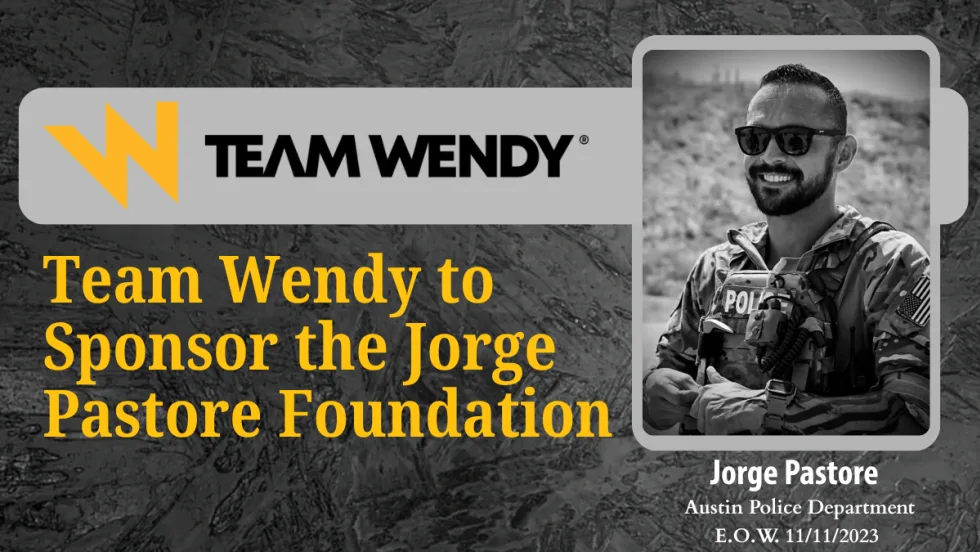
Team Wendy Announces Title Sponsorship of the Jorge Pastore Foundation
Team Wendy’s 3-year partnership with the Jorge Pastore Foundation expands access to programs that strengthen those who serve.
Read More →
National Law Enforcement Memorial and Museum Hosting 9/11 25th-Year Commemoration Ceremony
The National Law Enforcement Memorial and Museum is hosting a 9/11 25th Year Commemoration Ceremony on Sept. 11 at 4 p.m.
Read More →
National Law Enforcement Officers Memorial Fund Announces June 2026 Officers of the Month
The National Law Enforcement Officers Memorial Fund (NLEOMF) named 15 officers of the Chico Police Department (California) as the Officers of the Month for June 2026 for their roles in responding to an active-shooter incident at a public library.
Read More →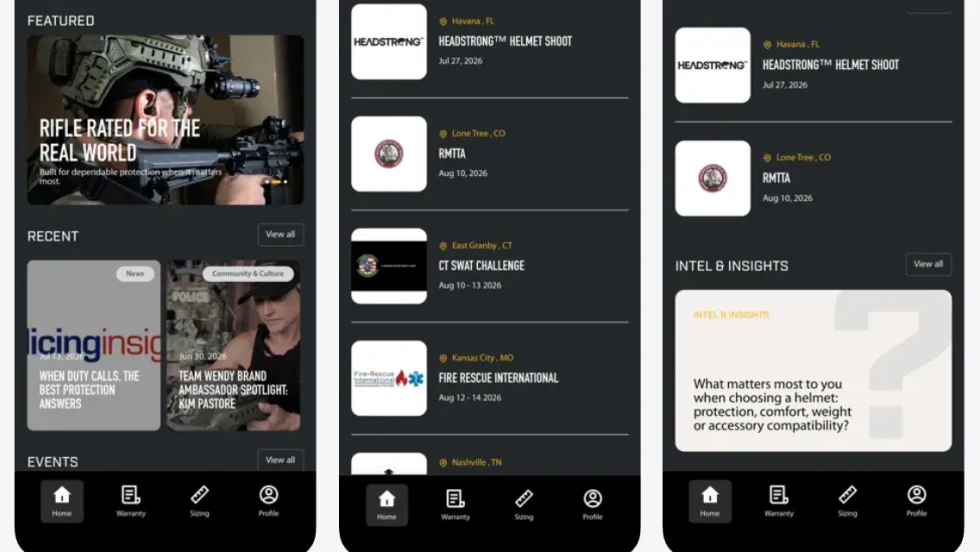
Team Wendy App Creates New Digital Hub for Helmet Owners
The Team Wendy Community App provides one location for warranty registration, size-fit tools, product updates, and community connection. For helmet owners, the new app creates a simpler path to the information and tools that matter most.
Read More →