



Operations Plans
The saying "It's not over 'til the fat lady sings" is incorrect. It's not over until the paperwork is done. That includes a report after the fact, as well as an operations plan beforehand.

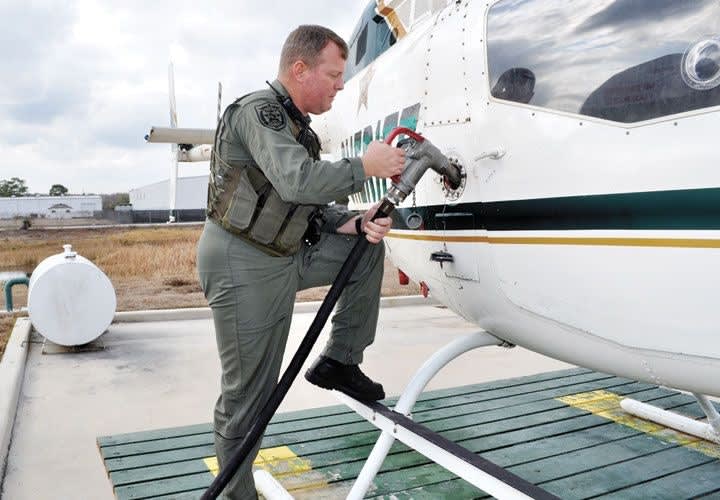
Don't forget to figure out fuel requirements for all vehicles when pertinent to an ops plan.
Everyone wants to do the cool stuff: run code, kick in doors, grab the bad guy right out of his shoes, and put him in the box. But the administrative work has to get done, too. The saying "It's not over 'til the fat lady sings" is incorrect. It's not over until the paperwork is done. I teach my recruits at the academy that for every minute of fun, there will be at least an hour of paperwork. That includes a report after the fact, as well as an operations plan beforehand.
At some point you will be in charge of a specialty unit or be part of a special operation. Either way, someone will ask you to write an operations plan (ops plan). An ops plan is your blueprint for success, but most people have never actually learned how to write one. Digging up the last plan on file and using it as a template isn't the same thing as developing one from scratch. You need to know what exactly an ops plan is, what it is supposed to accomplish, and what it is really used for.
What an Ops Plan Is and Is Not
People plan in two distinct mindsets: strategically (long term) or tactically (short term). An operations plan is typically a tactical plan that covers a specific action that occurs over a relatively short period of time. It serves as both a plan and a set of orders.
It is a plan in the sense that it details all the operational considerations of some type of action that is coming up in the near future. It is a set of clear and distinct orders because it will detail what can and cannot be done during the same period. It also establishes tasks to be performed, objectives to be reached, and how to demobilize the action.
When you hear the term ops plan you probably automatically think of something high speed and low drag involving SWAT. You might forget that it's probably the most common form of plan used within an agency. Actually, let me amend that: It should be the most common form of plan used. It can be as simple as covering a special traffic enforcement zone with four motor officers or as detailed as covering a full blown checkpoint requiring close to a hundred officers.
The great news is that instead of learning hundreds of different ops plans, all you need to focus on are the principles contained therein. They are the same regardless of the kind of operation you are planning for; only the details are different.
What an ops plan is not, is a waste of time. It is a good way to iron out problems and deal with pitfalls before they actually occur. It solidifies and confirms your resources. Further, it gives you a historical record to cross reference with future operations and provides documentation for court purposes.
Combine an ops plan with an after action report and you have a powerful tool that will help you evaluate and improve future plans. It will also give you insight as to any future training you may need to conduct to improve your operations.
What's it Supposed to Accomplish?
As stated earlier, an ops plan is both a plan and a set of orders. It's there to help get you organized and iron out contingencies. This is the point where you should work out as many details as possible, as it will help cut down on surprises later.
One way to stay organized is to follow a format that gives you ample maneuvering room in writing out your plan. I have seen ops plans that run from one to 15 pages and everything in between. In my opinion, keeping the format simple is as important as the details needed to fill in the blanks. I find that complicated formats may look good to pencil pushers, but field types know the meaning of KISS (keep it simple, sir).
I have consistently used one format as the basis for my ops plans. It's the one I learned in the military. I find the Army Five Paragraph Operations Order format works well and crosses over with little difficulty into law enforcement. The format consists of five distinct sections: Situation, Mission, Execution, Service Support, and Command and Signal. I have modified the format to meet my needs on many occasions and there lies its beauty: flexibility.
Other times, I have had to follow the format given to me by my agency. But truth be told, although I followed the required format, I still also wrote it out using the five paragraphs as a way to check myself. The complete exact military format and its full breakdown can be found online by placing "military operational plans" in any search engine.
I will give you a cheat that I use to this day. I keep a copy of the "Army's Ranger Handbook" with me, as it contains all the information I need on planning, decision-making, and troop leading procedures. I never leave home without it.
The Format
The actual structure of the format is not as important as the principles behind it. So if these terms don't meet with your approval, change them. If you want to combine a few, do it. For example, maybe you can combine the sections "situation" and "mission" into one heading called "objective." Just don't forget the information needed for situation and mission. Here are the terms I use and their interpretations for law enforcement:
Situation - This is a clear statement of what's going on. This will include what you are up against, environmental concerns, and what you can expect in terms of resistance and assistance. It's what you expect to be doing on the day of your operation.
Mission - This is the who, what, where, when, and why of your plan. It's an exact statement of what you are going to do and hope to accomplish.
Execution - This is the meat and potatoes of your plan. This is where the plan doubles as a set of orders. Since you already covered what you are going to do, this is where you cover how you are going to do it, who is going to do it, and when.
Service Support - This is where you include who is helping you and how. For example, you may have other agencies involved. Or, you may have other units from your own agency assisting. You may have outside personnel in wreckers or ambulances, or the fire department on scene as well. This is where you outline who outside of your agency is doing what and when.
Command and Signal - Here you outline your chain of command for the operation and your lines of communications. It is critical that everyone know who is in charge and where everyone can go if they have a question. Only one person can ever be in charge if things are to go smoothly from the start. As for radio communications, I recommend that you secure both an admin channel and a tactical channel for your operation well in advance if possible. It will save you a lot of headaches. Having only one channel creates a bottleneck that hinders responsiveness to any dynamic situations that arise.
Hopefully you can see that by using this simple format, you can pretty much cover anything under the sun. Just about anything you have to plan and write about will fit in one of these categories. Understanding the basics will get you through any of your supervisor surprises. For all you know you may have to write an ops plan tomorrow and just don't know it yet.
What It's Really Used For
An ops plan is only as good as the paper it's written on. All the planning in the world will never fully prepare you for what happens when you hit the ground running. Once your operation starts, your tactical situation will dictate everything else. The plan is really only the starting point and a way to work out potential bugs. There will be times when you have to just go with the flow and accept that your plans might have to be adjusted. Still, having a plan is better than just winging it for prearranged operations.
One of the main reasons you have an ops plan is for historical purposes. You want record of what you planned to do, how you planned to do it, and why. Going to court can be a good thing or it can be a nightmare. An ops plan answers a great many questions and speaks to your overall intent. Consider it as important and along the same lines as a search warrant. You really wouldn't want to do one of those haphazardly either.
Proper Planning Requires Training
It seems that law enforcement trains a great deal in some areas and purposefully omits others. When we train, we tend to drive, shoot, and practice combatives. We very seldom work on everyday administrative tasks. For example, supervisors are required to write evaluations but no one teaches them how. Sure, they're taught how to use the forms or computer program, but very little else. We put people in charge of operations and expect them to plan, conduct, and document everything, but have they ever been shown how? We need to get away from the "do what the last guy did" mentality.
A good way for you to get a jump-start on ops planning is to learn the five paragraph order format. You can also conduct some research for yourself, get some additional training, and be prepared for the next "hey you" detail. You're going to be held responsible so you may just want to know what you are doing before you get caught short.
Amaury Murgado is a special operations lieutenant with the Osceola County (Fla.) Sheriff's Office. He is a retired master sergeant from the Army Reserve, has 24 years of law enforcement experience, and has been a lifelong student of martial arts.
More Patrol

Adept Armor Introduces Two New Rifle Plates
Adept Armor has launched two new Level IV ballistic plates, the Emperor and the Archon Mark 2, which brings Adept Armor’s new Quatroid ceramic to the high-threat, performance-value center of the range at 5.2 pounds.
Read More →
POLICE Product Test: Benchmade Bailout
The Benchmade Bailout is a slim, lightweight carry knife with a deep-ride pocket clip and comes in a variety of blade steels and scales. Here is a detailed review of the Taiga Green Bailout, released earlier this year.
Read More →
NLEOMF Announces July 2026 Officer of the Month
NLEOMF honored a Michigan deputy sheriff as the July 2026 Officer of the Month for rescuing a trapped driver from a burning vehicle following a Fourth of July crash.
Read More →
Streamlight to Showcase Newest Lighting Products at National Safety Council’s Safety Congress & Expo 2026
Streamlight will showcase its latest lights, including the Portable Scene Light III and the LiteBox 1Million, at the 2026 National Safety Council (NSC) Safety Congress & Expo.
Read More →
The 2027 World Police & Fire Games Set for Perth, Australia
The 2027 World Police & Fire Games (WPFG) will take place in Perth, Western Australia, from Friday, March 12 through Sunday, March 21, 2027.
Read More →
5.11 Partners with National Fallen Firefighters Foundation to Support #ForThe343
5.11 has joined the nationwide movement honoring the 343 New York City Fire Department firefighters lost on Sept. 11, 2001.
Read More →
Team Wendy Announces Title Sponsorship of the Jorge Pastore Foundation
Team Wendy’s 3-year partnership with the Jorge Pastore Foundation expands access to programs that strengthen those who serve.
Read More →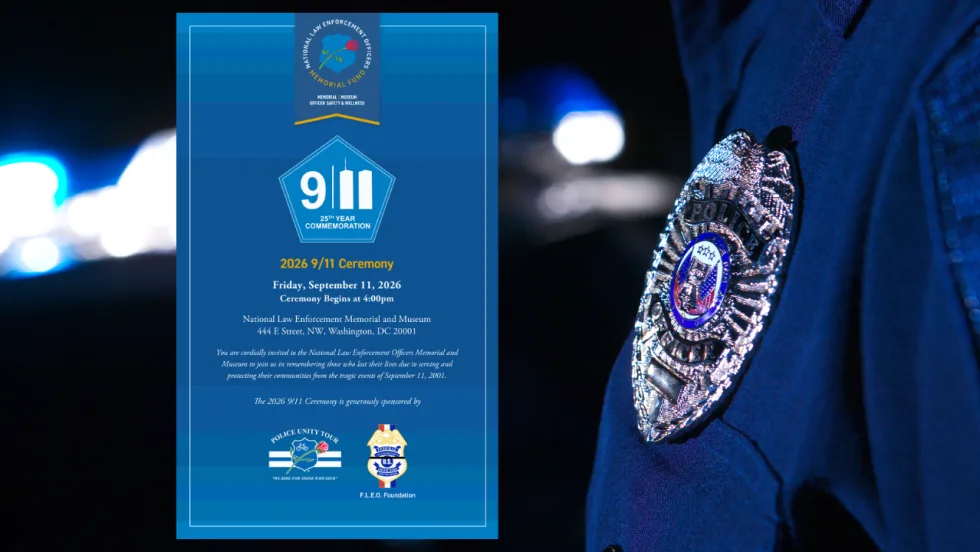
National Law Enforcement Memorial and Museum Hosting 9/11 25th-Year Commemoration Ceremony
The National Law Enforcement Memorial and Museum is hosting a 9/11 25th Year Commemoration Ceremony on Sept. 11 at 4 p.m.
Read More →
National Law Enforcement Officers Memorial Fund Announces June 2026 Officers of the Month
The National Law Enforcement Officers Memorial Fund (NLEOMF) named 15 officers of the Chico Police Department (California) as the Officers of the Month for June 2026 for their roles in responding to an active-shooter incident at a public library.
Read More →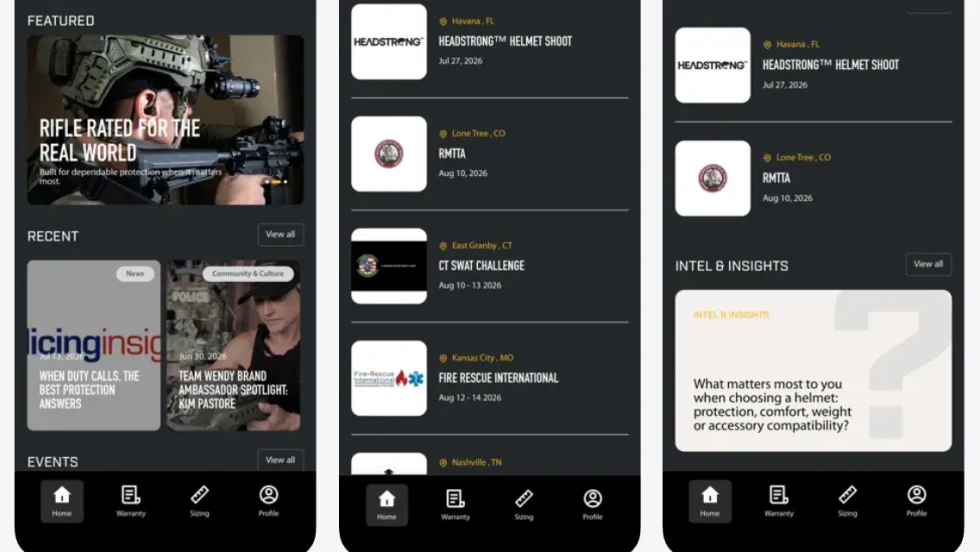
Team Wendy App Creates New Digital Hub for Helmet Owners
The Team Wendy Community App provides one location for warranty registration, size-fit tools, product updates, and community connection. For helmet owners, the new app creates a simpler path to the information and tools that matter most.
Read More →