



Next-Generation Headsets and Mics
Law enforcement officers accustomed to using smartphones with wireless devices in their personal lives are itching to use the same type of technology on duty. And manufacturers of headsets, microphones, and wireless devices are working to meet that challenge.

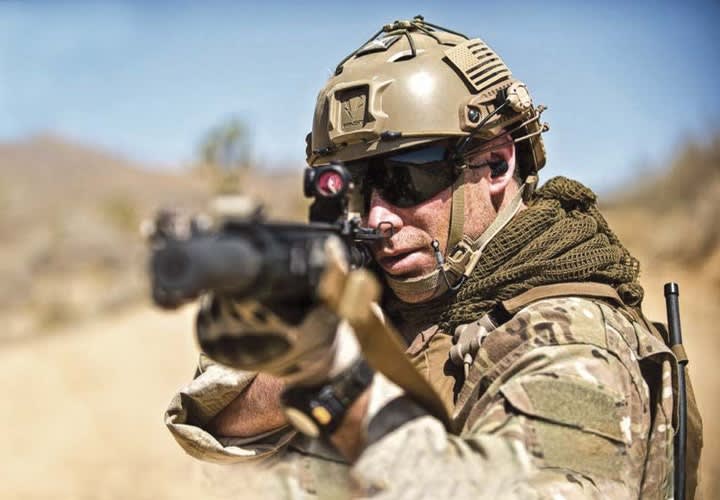
Photo: Silynx Communications
It's no secret that government organizations can be slow to change, especially when it comes to technology. But many law enforcement officers accustomed to using smartphones with wireless devices in their personal lives are itching to use the same type of technology on duty. And manufacturers of headsets, microphones, and wireless devices are working to meet that challenge.
"I think because they live in a world now that's full of all kinds of wireless things for their smartphones, officers have an expectation that their two-way radios should be similar," says Dave George, president of Pryme Radio Products.
Officers are also asking for lower-profile communications devices. This is a must for those working undercover, but it's also a preference for patrol and tactical officers who would rather their equipment be less obtrusive. Wireless solutions as well as products made in a smaller form factor help.
"The day of the ginormous speaker mic is going away," George predicts. But not anytime soon, as the majority of law enforcement officers still use traditional wired radios and microphones.
"We're seeing probably a 20% to 30% year-to-year growth in Bluetooth for police. But most still want wired radio microphones," says Motorola's Senior Product Manager Danny Sanchez.
As consumer products continue to evolve, early adopters are helping to shape the law enforcement communications technology landscape by making known their desires and seeing manufacturers incorporate officer preferences into their equipment.
Bluetooth
Bluetooth is the ubiquitous technology that allows a device to use radio waves to communicate with other devices over short distances without any wires. Found in most smartphones, it's also now used for most law enforcement officers' wireless headsets and microphones.
Making Bluetooth devices for law enforcement requires additional ruggedization and security, as well as ease of use under stressful situations, says Motorola's Sanchez. But what posed most of a challenge for Motorola was the complicated pairing process.
The company has removed many of the steps in this "handshake" between radios and speaker microphones to make the communication connection occur more quickly, for both safety and customer satisfaction. But patrol officers were also used to instantaneous use of their push-to-talk (PTT) buttons with wired radio microphones. Sanchez says wireless accessories allow Bluetooth radio devices to provide the same level of performance once paired.
To accommodate officers with more specialized needs, Pryme manufactures a Bluetooth headset adaptor that nine different devices can plug into at once. A motor officer can plug a Pryme motorcycle kit into it to use his radio wirelessly while driving the motorcycle. There is also a specialized kit for a bicycle officer, as well as solutions for those on tactical teams.
Motorola is offering a different type of communications solution with its new SI-500 device, which is a hybrid between a speaker microphone and body-worn camera. It uses Bluetooth and a "smart interface" to act as a hub for communications, not just for the radio, says Sanchez. Bluetooth will also be used to support sensors on the device for biometrics and an accelerometer, and to use the data to automate camera recording with certain triggers, if an agency desires.
"On the surveillance side, there's a lot more interest in disguising the two-way radio," says Pryme's George. "It could be for undercover or just people who want to be discreet. So they want accessories that either are or look exactly like the ones that most of the public are wearing to work with their cell phones." Most of these utilize Bluetooth. And there is a variety of compatible systems that allow officers to operate radios hidden on their person with a remote disguised as a car key fob or something similarly discreet.
Companies like Motorola also offer radios that are smaller and easier to hide that will work with new, more covert Bluetooth headsets and microphones.
New Bluetooth Low Energy technology (also called Bluetooth Smart or Version 4.0+ of the Bluetooth specification) allows devices such as Pryme's small radio PTT adaptor to run for long periods of time on standard coin-cell batteries. This is how Apple Pay and Google Wallet let you pay by waving your phone over a terminal at a store.
Pryme manufactures multiple Bluetooth adaptors because there's a demand for them. But that might soon change, George says. "There are some two-way radios now that have Bluetooth built into them, so they don't need an adaptor. You can see the trend moving in that direction."
Hearing Protection
Another major trend in law enforcement communications is integrated hearing protection. When most people think of hearing protection they picture large over-ear muffs being worn by an officer training on the shooting range. And while this equipment still exists, there are many more options that incorporate hearing protection and noise cancelation technology into standard communications equipment to meet officers' needs. They're certainly not limited to the range.
"I think for the patrol officer, hearing protection is becoming more of a demand," says Matt Hein, CEO of Silynx Communications, which manufactures in-ear headsets including the Clarus line. This is an overall trend in workplace safety, he says. More people are becoming aware of the dangers of hearing loss, and the fact that exposure to loud noises during shooting exercises and on duty can cause serious irreparable damage over time.
Tactical officers tend to encounter gunfire more often on calls, so more SWAT teams expect that hearing protection be a part of their communications systems. To make sure SWAT officers can hear ambient noise even with earbuds in their ears, Silynx engineers mics on the outside of all of its headsets. The user can set the volume for these external mics to his or her own preference, even down to zero. Part of what allows this type of system to work is microphone technology that produces clear communications that are loud enough to be heard over any ambient noise.
In his experience, SWAT officers' main requirements for communications gear are hearing protection with situational awareness and integration to comms devices, says Threat4's tactical solutions expert Patrick Armstrong. "We have taken this concept to the next level in our Talon headset by merging in hearing aid algorithms to not only provide situational awareness (ability to hear the environment while having ears protected), but to give that awareness direction and tuned to human vocals for speech intelligibility, as a normal unprotected ear would," Armstrong says. Threat4 calls it sound localization technology.
Following a similar idea, Motorola provides directional "hearing" in its SI-500 speaker microphone-body camera hybrid. It uses five internal mics so that the device can pick up and transmit sound coming from the officer's mouth, no matter where on the body the camera is mounted.
Smartphones
Since most everyone uses a smartphone, it's only natural that officers would request ways to make use of them on duty. Silynx sells systems that allow officers to connect to any radio or phone, and one that will even connect to both at the same time. Threat4's Talon tactical headset was designed to satisfy customer demands to connect the headset to not only up to three portable radios, but also to incorporate cell phones into the radio receive (RX) audio stream, Armstrong says. "Now our headset connects officers' radios with their cellphones, and prioritizes RX signal over the phone so that if RX comes in while they are on the cell phone the RX audio overrides the phone's audio."
Officers have also requested ways to use their smartphones to control their radios, similar to the way a phone can act as a television remote control with the right application. Now, without physically touching their radios, officers can simply use one of a growing number of PTT apps to answer radio calls and change settings including volume with their phones. This is especially useful for undercover officers who can easily blend in appearing to use a smartphone like anyone else, with no one the wiser that the phone is being used to control a hidden radio.
Interested in keeping up with this technology, George says all of the wireless accessories Pryme is making for law enforcement radios work on phones using this new evolving technology of enterprise PTT applications including Kodiak, Zello, and WAVE, which are designed to be secure.
Motorola has taken the route of developing a specific device to pair with its radios to achieve the same goal. The LEX L10 Mission Critical LTE handheld can be securely touch-paired with APX radios to remotely manage the radio's zone, channels, volume, and battery strength, as well as provide a backup route for emergency signaling during undercover missions, according to Motorola.
"It's pretty interesting, what's going on between the merge of radios with smartphones," says George. "It's worth watching."
Manufacturers will continue to develop a variety of new communications solutions to satisfy law enforcement customers. Officers just need to speak up and be heard.
For More Information:
CJ Component Products
More Technology

A police agency's guide to data-driven fleet management
Costs are rising and the public expects more transparency into how their tax dollars are spent. This e-book shows how police agencies can use fleet data to take control of fleet expenses while improving officer safety and demonstrating fiscal responsibility to the communities they serve.
Read More →
AI and analytics for law enforcement: Turning data into insights
Law enforcement agencies are managing more video, sensor data and digital evidence than ever before. Discover how AI and analytics can help turn that data into actionable insights that strengthen situational awareness, accelerate investigations and support more informed decisions.
Read More →
Vasco Electronics Adds Automatic Language Detection to Vasco Translator Q1
Vasco Electronics’ software update introduces hands-free language switching and expanded offline translation across 45 language pairs, empowering law enforcement, healthcare, and front-office enterprise teams
Read More →

North Miami Police Department Deploys Mark43
The North Miami Police Department has deployed Mark43 as part of its Five-Year Strategic Plan that represents its collective vision and goals for a more proactive police department, anchored by a core commitment to leveraging modern technology to enhance efficiency and public safety.
Read More →
Cellebrite Genesis for Enterprise Now Generally Available
Made available to the public sector in June, Cellebrite Genesis is serving a growing mix of national, regional, and local agencies worldwide, including some of the largest regional and metropolitan police departments. It is now available for enterprise organizations.
Read More →
2026 Vision FirstNet Users Summit to Host Emerging Leaders Training on Grassroots Advocacy for Public Safety
“Emerging Leaders Training: Understanding the Importance of Grassroots Advocacy for Public Safety," a session during the 2026 Vision FirstNet Users Summit, will offer a roadmap for unified advocacy at the federal level.
Read More →
Motorola Solutions Completes Acquisition of D-Fend Solutions
Motorola Solutions has acquired D-Fend Solutions, an industry leader in counter-drone technology. This deal provides public safety and enterprise customers with access to advanced counter-unmanned aerial systems.
Read More →
ZeroEyes, Advantech & Camden Police Partner to Bring AI Gun Detection Technology to Delaware School District
ZeroEyes has partnered with Advantech and the Camden Police Department to deploy ZeroEyes’ AI gun detection and intelligent situational awareness platform at Delaware’s Caesar Rodney School District (CRSD).
Read More →
Leonardo U.S. Cyber & Security Solutions Introduces SignalTrace, the Next Evolution in Electronic Signature Detection Technology
SignalTrace reflects years of product refinement and a clearer expression of the technology’s purpose of recognizing and correlating electronic signatures in publicly broadcast wireless signals to reveal patterns, relationships, and trends that might otherwise go undetected.
Read More →
Pimloc Launches Secure File Sharing to Streamline Release of Redacted Video
Pimloc’s Secure File Sharing lets organizations deliver redacted video, audio, and documents through expiring, passcode-protected links, accelerating delivery while reducing security, compliance, and chain-of-custody risks.
Read More →