Handlers must be willing to act as a good decoy, which can make or break a dog.
Credit:
IMAGE: Dothan Police Department
9 min to read
Lt. William Wozniak is a known name in the law enforcement K-9 world.
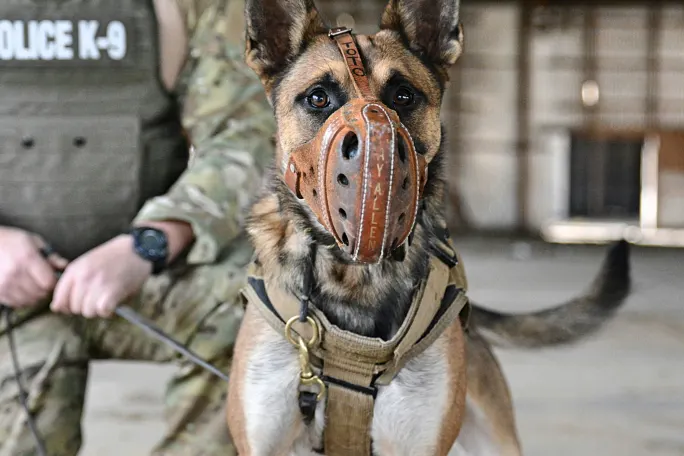
As the K-9 trainer for the Dothan Police Department, Wozniak hosts a yearly seminar to expose dogs to realistic situations. The event’s main purpose is to sharpen skills and improve safety as handlers and their K-9 partners are put through progressively difficult scenarios.
Ad Loading...
Since its inception in the 1990s, the seminar has experienced significant growth. This year’s event, in February, drew teams from 32 different law enforcement agencies in nine states. Wozniak credits Jason Stanze and the Houston K9 Academy for the significant growth of the event over the last eight years.
The seminar's goal, according to Wozniak, is to change lives one handler at a time. The seasoned K-9 handler and trainer with over 30 years of experience explains, “Everything we do is to create better situation awareness for the K9 unit. If you don’t expose your dog to these scenarios, they won’t know how to react on the street.”
K-9 News interviewed Wozniak to discuss the significance of exposing dogs to new training scenarios, shed light on common training mistakes, and to learn how K-9 teams can continually sharpen their skills.
Teach dogs to search for a person hiding in a building on the ground then make the scenarios successively harder.
Credit:
IMAGE: Dothan Police Department
Why does K-9 training need to be successive?
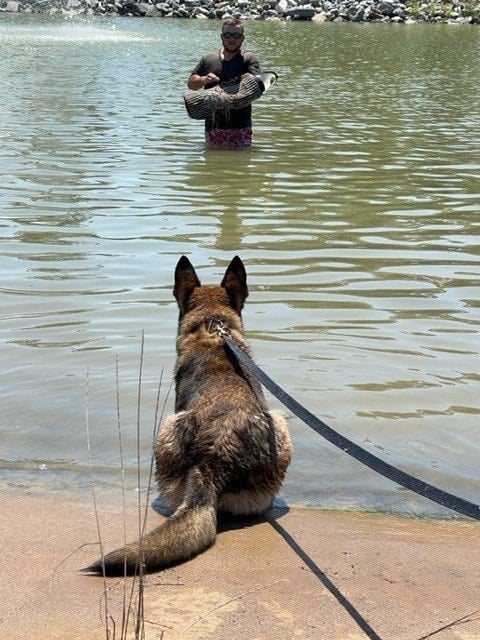
Start off basic. If you take a one-gram training aid and hide it six feet off the ground on a dog that was just taught the odor, the dog will not find it. You have to start basic, where everything is at nose level and close to the ground until the dog understands how to find an odor and what to do when he finds it. We expand from there using successful successive approximation. In the canine world, that is taking a series of well-planned steps to accomplish a goal. You cannot expect a dog to find a training aid that's one foot off the ground one day, and the next day find it six feet up in the air. Take baby steps to get a dog to locate that. When we teach dogs to search for a person hiding in a building, we don't start with sticking a person in the back of the building, 10 feet off the ground, then send the dog in and expect the dog to understand what we want him to do. We have a series of steps to get that dog to understand what he's doing in that building and what he's looking for. We also have to teach the dog how to respond when he gets there.
What advanced training do K-9 teams need?
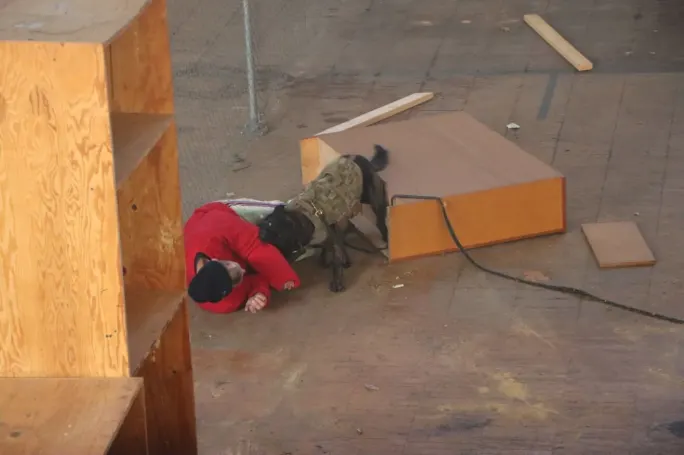
Our seminar is an intermediate to advanced seminar. You can't come here with a dog that's just out of a basic class and expect them to perform. We put dogs in buildings filled with fog to simulate gas environments and things like that. If you don't expose a dog to these things, 99% of the time they will fail. If you don't expose the dog to a suspect that strikes him in a fight, the dog will pop off and let go when it happens. Our seminar exposes police dogs to everything we can think of to make them stronger on the street, because if you don't expose them to certain things, they're going to fail. On Day One, we keep things simple to see where everybody is. It gets more intense as the days go on, where teams might encounter multiple suspects, deeper in buildings or in heavily wooded areas; the tracks get longer and harder; and the scents are harder to find.
Ad Loading...
What are some things dogs are not exposed to that may cause problems later?
One of my selection tests before I even bring a dog back is to put the dog on steps. I put a decoy in the middle of the steps and send the dog for a bite. Some dogs will push past the decoy to get to where their feet are flat on the ground. If you don't expose a dog to biting on steps, they will not engage a suspect. Metal steps that you can see through can be a real issue. Dogs have issues with them because they have depth perception problems. Dogs who are not exposed to these steps will not want to go up them and they won’t bite on them either. We put dogs on closed steps, concrete steps and open-bottom steps. That’s just one of those environmental exposure things that people may not think about.
Gunfire from a handler is another one. When I started, we were taught when a suspect shoots a gun, send the dog. But when you do that, the dog learns that when he hears gunfire; he gets to bite someone. Some dogs get so amped up about this, that a handler can't draw his firearm or fire a round [to protect themselves], without the dog coming undone. We have to make that dog neutral. It doesn't matter where the gunfire is coming from; the dog has to be neutral to gunfire. It shouldn't matter where the gunfire is coming from, the dog needs to remain calm. Because if you have a dog thinking he's going to fight every time he hears gunfire, how can an officer draw and fire a round to protect himself?
It’s become commonplace to use drones in police work. How much exposure do dogs need to drones?
Dogs need exposure to everything we can expose them to. We don't want the focus to come off the suspect. If a dog sees something new, his focus is no longer on the bad guy. I had a deployment where we had a drone above and it didn't seem to affect our dog. But it was up pretty high. However, we did a track with our aviation unit, and when we would make contact with the suspect, we had the helicopter fly in to expose the dog to rotor wash, a spotlight and the noise. The dog learned to handle the suspect with that helicopter above us.
What other scenarios challenge the dogs?
This year we did a scenario with two suspects hidden in a building. The teams would first encounter a suspect the dog could see, but there was another suspect hidden in a room. Ninety percent of the dogs bypassed the hidden suspect because they were keyed up and focused on the suspect they could see. Then, while the handler was dealing with that suspect, the other suspect came out from behind them and attacked. You have to expose dog teams to multiple suspects. In a building search, officers always have to think that there are multiple suspects. That should always be your mindset and mentality. In this scenario, it wasn’t so much an exposure failure on the dogs part, as much as with the handlers.
What are common errors you see when working with K-9 teams?
Not training. We do a 10-week basic class. Teams go through the class, leave, and we don’t see them again until seminar—if they even come to the seminar. Then they will call us and say they are having issues with the dog, and we learn they haven’t been training. Departments need to make time for these guys to train, they always say “manpower” is the issue for not allowing them to train. The industry standard is 16-18 hours a month for maintenance. Dothan teams get 24+, but the minimum should be 16-18 hours. Some teams just train for certification. Their ultimate goal is to hold a national certification. They spend so much time trying to pass certification that they don't train for the street. To be a successful K-9 team, you need to train often and properly, doing everything you can to keep yourself, your dog and fellow officers safe on the street.
Ad Loading...
How do you help K-9 teams with specific issues?
We begin by evaluating what the issue is. If you have a dog with a nonproductive response or a false issue, I want to see the dog first. It could be something the handler is doing. They might be rewarding the dog for improper behavior, then the dog is conditioned to respond incorrectly. Once we pinpoint the issue, there are usually things we can do to fix it. Usually, issues stem from lack of training and not doing the right things to prevent these issues. Still, there are tricks of the trade that we can show them to help them correct the problem.
How should handlers be selected?
The biggest problem I see is officers who like the idea of being a handler but not everything that goes in to being a successful handler and a successful dog team. Agencies need to pick the best handler possible. But many agencies don't even have a selection process. Dothan does a physical fitness test, interviews and more. You want to choose handlers that are go-getters and have the drive to make themselves, their teammates and their dogs better. We need handlers who are not selfish. Handlers who are willing to take the time to be a GOOD decoy. A good decoy can make or break a dog. I tell new handlers, “This is the hardest thing you're going to do in your law enforcement career.” It involves a lot more than hooking a dog up to a leather leash and walking around a car. It's the attention to detail and the little things you do that can make or break a dog team. Proper leash control, and leash manipulation is my biggest pet peeve. If you can't properly manipulate a lead, you are going to have issues.
How can teams develop effective training scenarios on their own?
Teams need to train regularly and train for the street. Training should involve more than going to a parking lot and running a few basic scenarios. Our goal is to get better, not train just to check boxes. I tell my guys that they need to think like a dope dealer when they set up training scenarios. They should think like a bomb maker when they set up explosive detection scenarios. And they should think like a bad guy when they are hiding or laying a track.
Where should teams train?
Dogs know when it's a training day. Because everybody's there. They also can get comfortable if you don’t vary where you train. You cannot go to the same place every time because the dog will be comfortable there. We work with business owners who let us use their facilities and landowners who let us use their land. I get calls all the time about dogs who are very obedient at the police department or at home. But in new situations, the dog doesn’t want to do anything. Well, he's not comfortable. He's comfortable at the house. He’s comfortable with your training location. The more training areas you can expose your dogs to, the better.
How do you get permission from businesses and local facilities to use their property?
We drive around the city, looking for abandoned buildings and buildings with rental signs. Then we reach out to the owner. If we respond to a burglar alarm, we explain, ‘Hey, look, we're always looking for new training areas. Can you help us? Here is what we can provide for you.’ We have a real estate company that has me on speed dial. If one of their properties gets broken into, or they have an issue with suspicious people, they pick up the phone and call me. Then I call one of my guys and we write the report for them. We also have a hold harmless agreement that was drafted up and approved by an attorney. It says that we will not hold them liable for anything that happens in a training area. We sign it, they sign it. I keep a copy and they get a copy. Then they give us the keys. We make sure our guys take great care of the training area.
Ad Loading...
Credit:
IMAGE: Dothan Police Department
How can agencies sign up for next year’s training event or reach out to you about training needs?
The California Police Athletic Federation’s annual First Responder Relay will welcome first responder teams from across the globe to compete along Ventura's scenic coastline on Oct. 11. Registration is underway.
Vector Solutions’ new catalog of 35 expert-developed online courses can help emergency communication centers strengthen training, meet certification requirements, and simplify continuing education.
What technologies help prepare officers for active shooter response situations? This behind-the-scenes look at law enforcement training explores shot simulators, smart firearms, laser target systems, and the tools used to build safer, more effective training environments.
Entering a room during active-threat situations requires communication, coordination, and disciplined tactical movement. In this video, trainers from the United States Deputy Sheriff’s Association demonstrate critical room entry concepts, including fatal funnel awareness, team coordination, and safe tactical movement.
In this video, Mike Willis, law enforcement national training and program director for the United States Deputy Sheriffs’ Association, demonstrates the high compressed ready position and discusses muzzle control during room entry.
Let’s hear from Ryan Bracken, head of product, about why your agency should send someone to the first annual DroneSense Innovation Summit by Versaterm in April.
Caswell Live Fire has spun off from parent company InVeris, coinciding with the 100th anniversary of Caswell’s founding. Over the past 100 years, Caswell has developed pioneering solutions that support military, law enforcement, and commercial clients worldwide.
Thumbnail for video series POLICE Topics, Tactics & Tips with a yellow headline that reads When Do You Transport a Wounded Officer Instead of Waiting for EMS?
Hear veteran trainer Mike Willis, of the United States Deputy Sheriff’s Association, explain several considerations that can help you wisely pick your best spot to initiate high-risk or felony traffic stops.