



Miranda Warning Issues
Miranda warnings are triggered by a simple formula: Custody + Interrogation = The requirement for Miranda warnings. A motorist is not in "custody" for Miranda purposes when he or she is detained for an ordinary traffic stop.

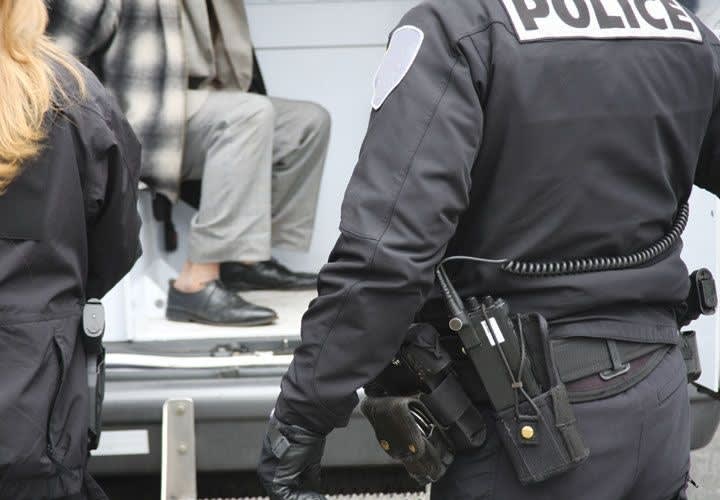
You stop a car for a lawful reason. In plain view is a packet of rolling papers. The two compliant vehicle occupants have vastly conflicting stories about their actions that night. While still retaining the driving credentials, you ask the driver, "Is there any contraband in the car?"
Is this driver being detained? Is the driver being asked an incriminating question? Should the driver be advised of his rights per Miranda prior to this question being asked?
Miranda warnings are triggered by a simple formula: Custody + Interrogation = The requirement for Miranda warnings. A motorist is not in "custody" for Miranda purposes when he or she is detained for an ordinary traffic stop. There is a "non-coercive aspect of ordinary traffic stops" that leads to the conclusion that "persons temporarily detained pursuant to such stops are not in custody for the purposes of Miranda." (Pennsylvania v. Bruder, 1988)
Deep Impact
In 1963, Ernesto Arturo Miranda was arrested by the Phoenix Police Department for robbery of $4 from one victim and the kidnap-rape of another. That seemingly routine case led to one of the most important rulings ever made by the U.S. Supreme Court. (See "How It All Began: Miranda v. Arizona.")
The Miranda decision was a landmark case in that it brought about a huge change in the way American police had to conduct custodial interrogations, if they wanted any statements they obtained to be admissible in court.
Prior to Miranda, police interrogators had to be mostly concerned with the voluntary nature of a confession. A case from 1936 (Brown v. Mississippi) held that any confession brought about by coercion would be inadmissible, under the Due Process Clause of the Fourteenth Amendment.
The Miranda decision, basing its ruling on the Fifth Amendment privilege against compelled self-incrimination, held that "the prosecution may not use statements stemming from custodial interrogation of a defendant unless it demonstrates the use of procedural safeguards effective to secure the privilege against self-incrimination." It is from this statement the aforementioned "Custody + Interrogation = Miranda" is derived.
Miranda Trigger
For patrol officers, the "custody" part of the Miranda equation is of the biggest concern. If there is no custody, Miranda rules do not apply.
Obviously, a formal arrest would trigger Miranda. Another trigger would be whether a reasonable person felt he or she was being subjected to the level of restraint normally associated with a formal arrest; this perception is judged objectively, based on all of the circumstances.
Note that "custody" for Miranda/Fifth Amendment purposes and "arrest" for Fourth Amendment purposes are not synonymous. A person who is arrested is in custody, but some suspects are in custody even though they have not been arrested. A person is obviously in custody if he or she has been told, "You're under arrest." Even without being so advised, a person is also in custody if he or she is handcuffed, or secured in the cage of a patrol car, or being confronted by officers with firearms pointed at him or her, or kept in a police station and not being allowed to depart at will.
The U.S. Supreme Court has held that as long as a person has not been formally arrested or subjected to equivalent restraints, the person is not in custody for Miranda purposes. For example, custody does not occur merely because the person is the "focus" of an officer's subjective suspicions - even if questioning takes place in a police station (Beckwith v. US; Oregon v. Mathiason; California v. Beheler; Stansbury v. California; Yarborough v. Alvarado).
Nor is questioning custodial merely because the officer has PC to arrest or has subjectively decided to make the arrest (Berkemer v. McCarty). As noted above, absent the use of any arrest-like restraints, a person is not in custody merely because he or she is "not free to leave" a temporary field detention (Pennsylvania v. Muniz).
And this year, the Supreme Court ruled that a sentenced prisoner is not in custody if he is being held in the general population, in places that have become familiar to him as his place of residence for the duration of his sentence (Maryland v. Shatzer-see "Rewriting the Edwards Rule," Point of Law June 2010).
Asking Questions
Interrogation was defined in the Miranda decision as "questioning initiated by law enforcement officers after a person has been taken into custody or otherwise deprived of his freedom of action in a significant way."
Interrogation issues mostly pertain to detectives and are not often matters of contention at the patrol level. But you should be aware that "the definition of interrogation can extend only to words or actions on the part of police officers that they should have known were likely to elicit an incriminating response." (Rhode Island v. Innis, 1980)
Voluntary statements are not subject to Miranda warnings, so an officer need not stop a suspect from making incriminating voluntary statements. General on-scene questioning such as "What happened?" is not subject to Miranda warnings. This is true even if this question elicits an incriminating response from the suspect such as, "I just killed two people."
Miranda warnings are not required prior to collecting non-testimonial evidence such as the performance of field sobriety tests and the reciting of the alphabet. Other non-testimonial evidence includes providing fingerprints and collecting voice, handwriting, blood, and urine samples.
There is also a "routine booking questions" exception to Miranda. Questions designed to obtain biographical information necessary to complete an arrest report are not subject to Miranda warnings. Also, the emergency exception allows custodial questioning without warnings and waivers where information is needed to neutralize an immediate threat to officer safety or public safety (New York v. Quarles).
As long as no custodial interrogation occurred, an officer could complete an arrest and never advise the suspect of rights per Miranda. To preserve the possibility of obtaining a suspect's volunteered statements, and to permit the prosecutor to impeach a testifying defendant with evidence of his inexplicable pre-Miranda silence, officers should not prematurely give warnings but should wait to do so until commencing custodial interrogation.
Det. Joseph Petrocelli is a 20-year veteran of New Jersey law enforcement. You can comment on this article, suggest other topics, or reach the author by writing to editor@policemag.com.
More Patrol

Adept Armor Introduces Two New Rifle Plates
Adept Armor has launched two new Level IV ballistic plates, the Emperor and the Archon Mark 2, which brings Adept Armor’s new Quatroid ceramic to the high-threat, performance-value center of the range at 5.2 pounds.
Read More →
POLICE Product Test: Benchmade Bailout
The Benchmade Bailout is a slim, lightweight carry knife with a deep-ride pocket clip and comes in a variety of blade steels and scales. Here is a detailed review of the Taiga Green Bailout, released earlier this year.
Read More →
NLEOMF Announces July 2026 Officer of the Month
NLEOMF honored a Michigan deputy sheriff as the July 2026 Officer of the Month for rescuing a trapped driver from a burning vehicle following a Fourth of July crash.
Read More →
Streamlight to Showcase Newest Lighting Products at National Safety Council’s Safety Congress & Expo 2026
Streamlight will showcase its latest lights, including the Portable Scene Light III and the LiteBox 1Million, at the 2026 National Safety Council (NSC) Safety Congress & Expo.
Read More →
The 2027 World Police & Fire Games Set for Perth, Australia
The 2027 World Police & Fire Games (WPFG) will take place in Perth, Western Australia, from Friday, March 12 through Sunday, March 21, 2027.
Read More →
5.11 Partners with National Fallen Firefighters Foundation to Support #ForThe343
5.11 has joined the nationwide movement honoring the 343 New York City Fire Department firefighters lost on Sept. 11, 2001.
Read More →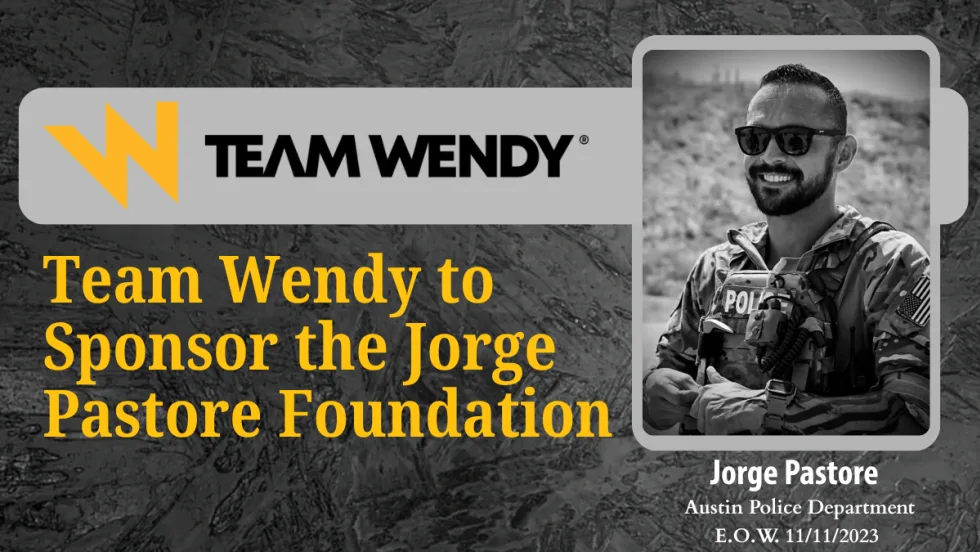
Team Wendy Announces Title Sponsorship of the Jorge Pastore Foundation
Team Wendy’s 3-year partnership with the Jorge Pastore Foundation expands access to programs that strengthen those who serve.
Read More →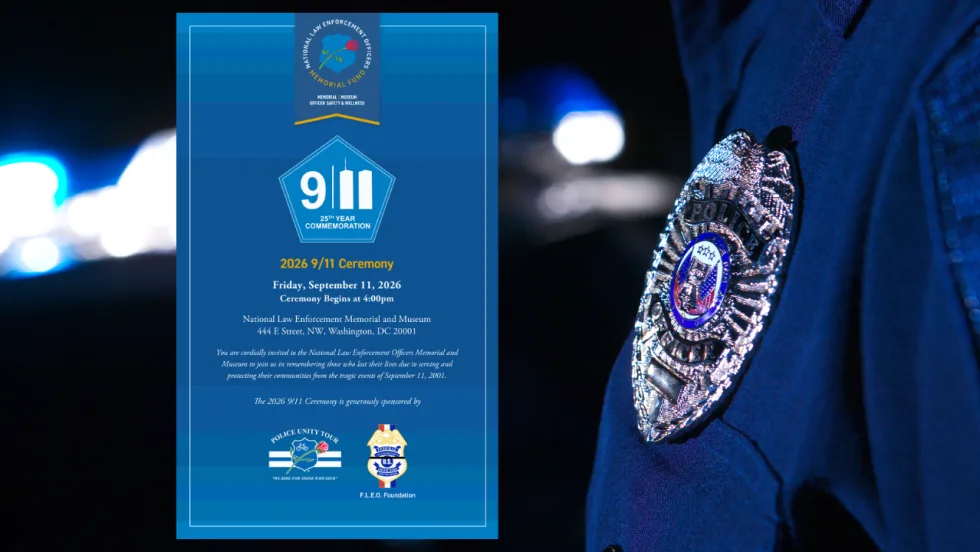
National Law Enforcement Memorial and Museum Hosting 9/11 25th-Year Commemoration Ceremony
The National Law Enforcement Memorial and Museum is hosting a 9/11 25th Year Commemoration Ceremony on Sept. 11 at 4 p.m.
Read More →
National Law Enforcement Officers Memorial Fund Announces June 2026 Officers of the Month
The National Law Enforcement Officers Memorial Fund (NLEOMF) named 15 officers of the Chico Police Department (California) as the Officers of the Month for June 2026 for their roles in responding to an active-shooter incident at a public library.
Read More →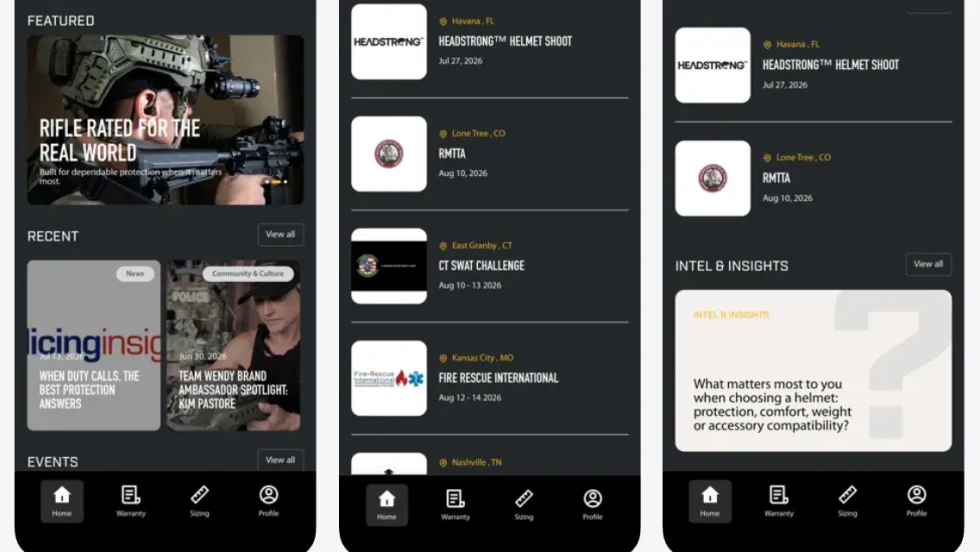
Team Wendy App Creates New Digital Hub for Helmet Owners
The Team Wendy Community App provides one location for warranty registration, size-fit tools, product updates, and community connection. For helmet owners, the new app creates a simpler path to the information and tools that matter most.
Read More →