



Military Vets Joining Law Enforcement
Men and women leaving active-duty military jobs would seem to be a perfect fit for police careers. But there are many obstacles in their way and hurdles they must overcome before pinning on their badges and joining the thin blue line.

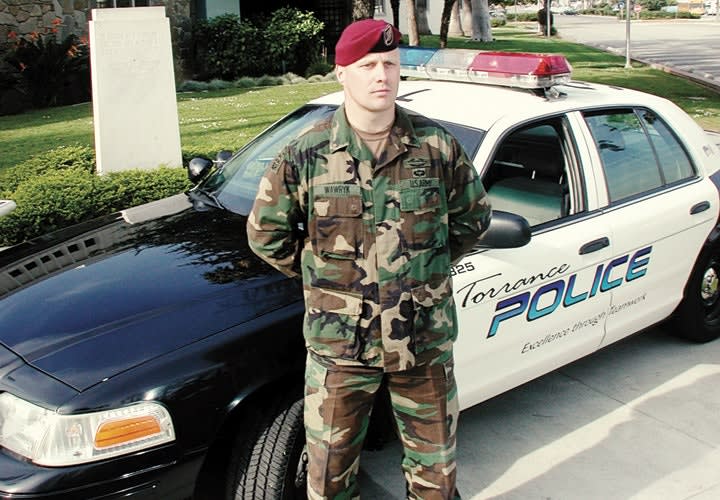
Photo: Kelly Bracken
Police officers and military veterans are kindred spirits. Both wear their uniforms with pride. Both don their uniforms to be part of a larger team of professionals protecting those who can't protect themselves at great personal risk. And both operate within a rigid command structure.
So it's natural that many military veterans seek employment in police ranks when they rejoin the civilian workforce. That's what is happening right now in numbers unseen since the closing days of the Vietnam War. The result is a job market flooded with well-qualified police officer candidates who served in Iraq and Afghanistan.
Police recruiters are looking for physically and mentally fit candidates with good decision-making abilities, common sense, and well-defined morals who can respect a paramilitary chain of command. So the men and women leaving active-duty military jobs would seem to be a perfect fit for police careers. But there are many obstacles in their way and hurdles they must overcome before pinning on their badges and joining the thin blue line.
Combat veterans seeking police careers may do poorly on entrance exams, they may lack confidence in their skill sets, or they may have had some post-traumatic stress disorder symptoms that come out in psychological screenings. Any of these issues can keep returning military personnel from a police job, but all can be remedied. More importantly, there are people and programs in and out of the military that can help.
Sequester Effect
All branches of the U.S. military are facing the greatest downsizing of personnel since the post-World War II era. The Military Times recently reported that the Army alone is proposing to cut 80,000 soldiers from its ranks in the next 48 months.
All these downsized veterans are being cast out into the civilian world to look for work. Many of them will seek an easy fit into police work. But they are competing for a scarce few police jobs with thousands of fellow veterans and many more thousands of unemployed or underemployed recent university, college, and high school graduates.
So how does the recently discharged veteran get a step up on the competition? One way is to look for help in getting prepared for the civilian world.
Transition Assistance
Georgia-based Hire Heroes USA (hireheroesusa.org) is a non-profit organization with a national reputation for helping veterans get employment in the civilian job market. Brian Stann, president and CEO of Hire Heroes USA, says the organization helps about 100 veterans each week.
Stann says Hire Heroes finds that about 20% of returning veterans are seeking civilian law enforcement jobs. Some actually go into the military with the long-term goal of being a civilian police officer.
Hire Heroes works with the military's own transition assistance programs to get the vets ready before they are discharged. One of the most important steps is helping the veteran see how his or her military training applies in the job market.
There are many different jobs in the military and it really depends on the individual and his or her work in the military how easily he or she will adapt to a civilian police job. Generally speaking though, the leadership and decision-making skills learned in the military may be exactly what a police agency is seeking.
A generation or so ago in policing, departments were giving preference to college graduates when looking for qualified officer candidates. Education still remains an important factor for police hiring, but many agencies have learned that the education gained in military service may have a greater value to a police officer than a formal college education.
Most agency recruiters want someone with sound decision-making skills on the streets as a police officer. But if you compare the decision-making responsibility that is required of a 19- to 20-year-old serving in Iraq or Afghan with the decisions being made by a college student, the contrast is extreme. The soldier has led a squad from point A to point B and had to decide the safest way to get there. The college student has had to complete a class assignment in time to attend a frat party on Friday night. Some departments have recognized this and taken a more global approach to the candidate's qualifications to be a police officer. This approach helps departments get the best candidates with the best experience, and can also help candidates get past the screening process.
PTSD
Every police officer candidate must pass a background check to become a sworn law enforcement officer. This always includes a psychological evaluation to make sure that only mentally fit persons are hired as police officers.
Psych evaluations can create problems for some vets returning from combat zones who may have sought help for post-traumatic stress disorder symptoms. If a psychological screening reveals a history of PTSD, the candidate may not get hired. The police hiring process, specifically the mental health screening, doesn't allow much leeway for the varying degrees of mental health issues.
Departments hire contract psychologists to screen police officer candidates and the police recruiters may not even know what criteria are used to evaluate the candidate. The psychologist simply says, "qualified" or "not qualified." The problem is compounded when different departments in a geographic area use the same group of psychologists.
Psychological testing is a necessary screening process for police officers, as nobody wants an officer on the streets who is suffering from PTSD. But you have to look deeper into the issue of PTSD and the combat vet as it is understood in society today.
It is important to understand that not every veteran returning home from military service has PTSD. Some studies suggest that it affects between 10% and 20% of veterans returning from active duty.
And the unfortunate fact is that PTSD is getting a lot of attention in society today. Some of it deserved and some of it overstated. PTSD has become the darling diagnosis for anyone having issues ranging from anxiety to suicidal thoughts. What is lost is that there are varying degrees of mental health issues classified as PTSD, and it's not a permanent condition for most people.
According to Department of Veterans Affairs mental health workers interviewed for this article, there are many vets who simply avoid seeking help because they don't want to be labeled with PTSD. They have heard stories of how some employers make the jump from military service to PTSD with little effort, lumping all veterans into the PTSD category. The fact is that the percentage of veterans experiencing mental health issues is no greater than the rest of society. It's just that there is more attention paid to veterans' mental health issues than the rest of society.
A Holistic Approach
One would hope that law enforcement agencies would be more understanding of post-traumatic stress disorder simply because they are used to dealing with it. It's no secret that PTSD is becoming more diagnosed in police officers and some departments are getting the message that the condition doesn't mean they have to throw away the officer or the officer candidate.
There is evidence that police departments are understanding PTSD better these days, not only in their own ranks, but in the pool of prospective candidates. A recent study conducted by the Naval Center for Combat and Operational Stress Control examined law enforcement agencies' hiring practices regarding PTSD. The study found that a PTSD diagnosis is not necessarily a disqualifier for a police job. Most agencies studied reported that every candidate is evaluated on a case-by-case basis and it depends on the severity of the diagnosis whether PTSD is a disqualifier. The good news for discharged veterans seeking a police career is that they should not expect to be disqualified for PTSD unless it continues to be a disabling condition.
Weekend Warriors
Among the ranks of most law enforcement agencies are a contingent of military Reserve and National Guard personnel who most likely have been deployed or will be deployed to active duty. The U.S. military has fought two major wars in the past 10 years, relying heavily on the ranks of the National Guard and the Reserves to bolster the strength of regular troops. These working police officers who serve in the military face similar issues when returning from deployment as regular troops facing discharge from their branch of the service.
Their police careers have been put on hold. Most likely their entire civilian lives also were put on hold while they were away. If they have families, they had to make contingencies for their absences. They likely also made much more income in their police jobs than they made on active duty deployment with the military. And when they return, they may face similar challenges as those faced with discharge from a full-time military job.
Police departments logically want to know that the returning officer is mentally and physically fit for duty. Some may require a mental health screening before returning them to full duty. But it is wrong for an agency to assume that the soldiers returning from battle to their regular police jobs will have adjustment issues or PTSD. It really depends on the person and the military assignment.
Officers returning from military service say a lot of factors determine how successfully they can readjust back to civilian life. A lot depends on what they did when deployed. A soldier who changes tires in the motor pool has an important job, but probably doesn't experience the same anxiety as a squad leader facing constant battle conditions. Activated Reserves and National Guard who serve as law enforcement officers also have much less stress when deployed if they know things are being taken care of on the home front. They can have peace of mind if they know their agencies are providing gap pay to keep their families' budgets afloat. But not everyone gets that.
Some Reserves and National Guard come back and get right back into police work without a problem. Some have serious obstacles to overcome when trying to adjust to the civilian world. A PTSD diagnosis for a returning officer can end a police career.
That means officers returning from active-duty military service can be put in the difficult position of having to live with PTSD or risk losing their careers by seeking help. HIPAA (The Health Insurance Portability and Accountability Act of 1996) should help keep their psychological treatments private, but that's not something they can count on.
Despite the challenges faced by veterans leaving active-duty military service for new or existing police careers, the ranks of police forces are swelling with veterans of the wars in Iraq and Afghanistan. With the help of non-profits like Hire Heroes USA and government programs that incentivize employers to hire veterans, vets are getting police jobs.
Vets bring bona fide decision-making experience and solid leadership skills to the police ranks. And there's strong evidence that many police departments are realizing the value of veterans when looking to hire the best candidates for the job. Many recruiters know that a police force diversified with college-educated officers, military veteran officers, and some who have both been to college and to war is a win for everyone.
More Training
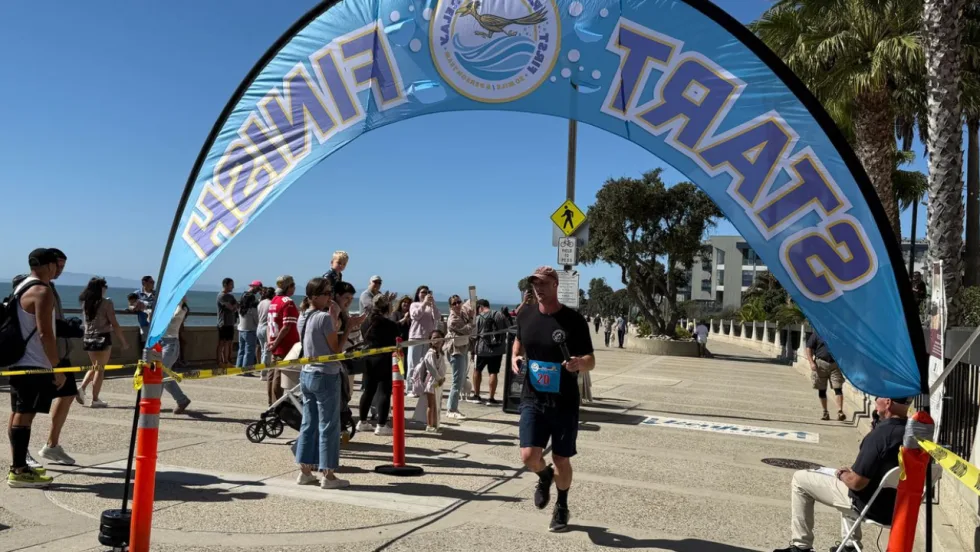
Registration Underway for Sixth Annual First Responders Relay
The California Police Athletic Federation’s annual First Responder Relay will welcome first responder teams from across the globe to compete along Ventura's scenic coastline on Oct. 11. Registration is underway.
Read More →
Vector Solutions Launches Comprehensive Online Dispatch Training Catalog for Emergency Communications Professionals
Vector Solutions’ new catalog of 35 expert-developed online courses can help emergency communication centers strengthen training, meet certification requirements, and simplify continuing education.
Read More →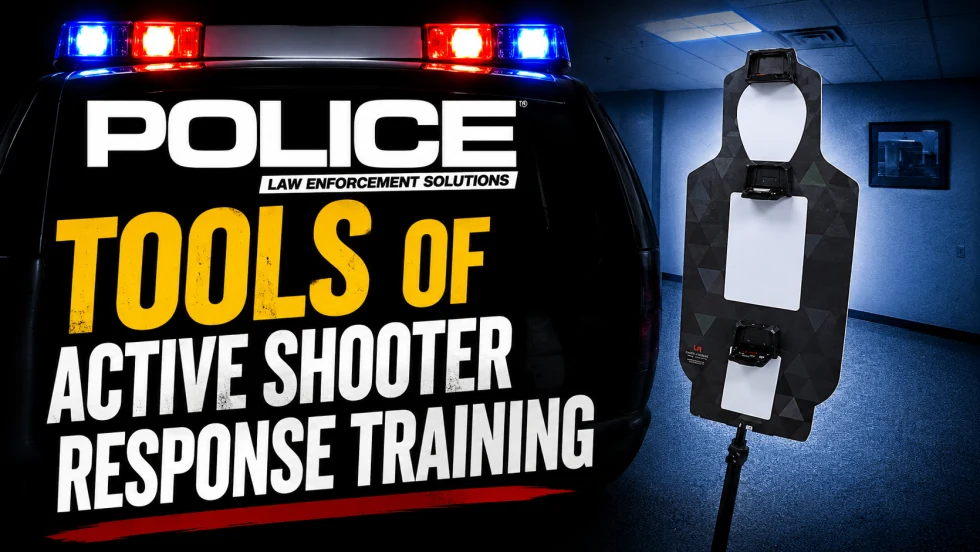
Tools for Active Shooter Response Training
What technologies help prepare officers for active shooter response situations? This behind-the-scenes look at law enforcement training explores shot simulators, smart firearms, laser target systems, and the tools used to build safer, more effective training environments.
Read More →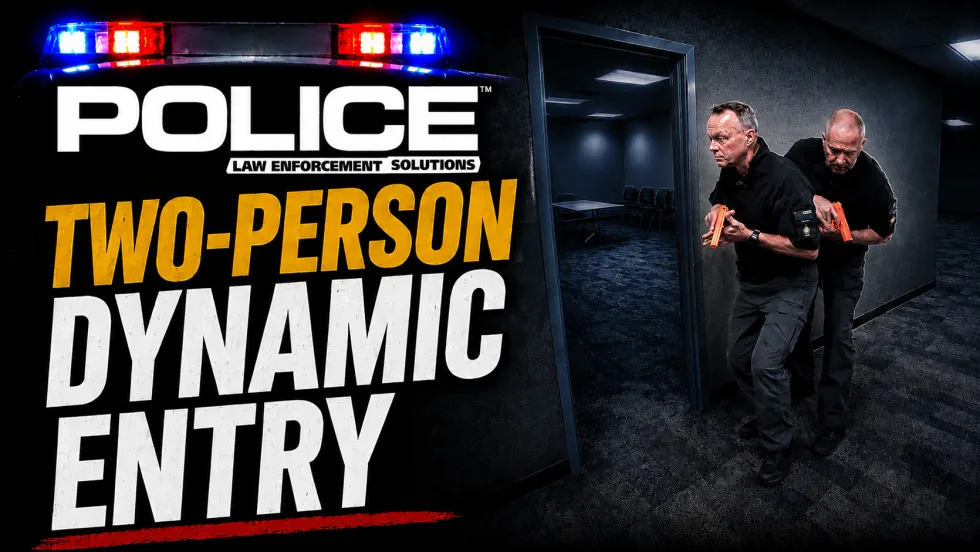
Two-Officer Tactical Doorway Entry Techniques
Entering a room during active-threat situations requires communication, coordination, and disciplined tactical movement. In this video, trainers from the United States Deputy Sheriff’s Association demonstrate critical room entry concepts, including fatal funnel awareness, team coordination, and safe tactical movement.
Read More →
High Compressed Ready Explained | Muzzle Control For Room Entry
In this video, Mike Willis, law enforcement national training and program director for the United States Deputy Sheriffs’ Association, demonstrates the high compressed ready position and discusses muzzle control during room entry.
Read More →
Why Attend the DroneSense Innovation Summit by Versaterm?
Let’s hear from Ryan Bracken, head of product, about why your agency should send someone to the first annual DroneSense Innovation Summit by Versaterm in April.
Read More →
Caswell Live Fire Spins Off from InVeris
Caswell Live Fire has spun off from parent company InVeris, coinciding with the 100th anniversary of Caswell’s founding. Over the past 100 years, Caswell has developed pioneering solutions that support military, law enforcement, and commercial clients worldwide.
Read More →
When Do You Transport a Wounded Officer Instead of Waiting for EMS?
Thumbnail for video series POLICE Topics, Tactics & Tips with a yellow headline that reads When Do You Transport a Wounded Officer Instead of Waiting for EMS?
Read More →
How to Pick Your High-Risk Stop Location for Tactical Advantage
Hear veteran trainer Mike Willis, of the United States Deputy Sheriff’s Association, explain several considerations that can help you wisely pick your best spot to initiate high-risk or felony traffic stops.
Read More →
Coffee Break with Police Experts: Using Your Patrol Vehicle for Cover
In this video, hear from Dustin Mowery, a product specialist at Team Wendy, as he discusses how to best use a patrol vehicle for cover.
Read More →