



Maintain a Healthy Mind
If you don't work to maintain a healthy mind, you will lose a running battle with things like memory, stress, and empathy, which are all important for a law enforcement officer's daily routine.

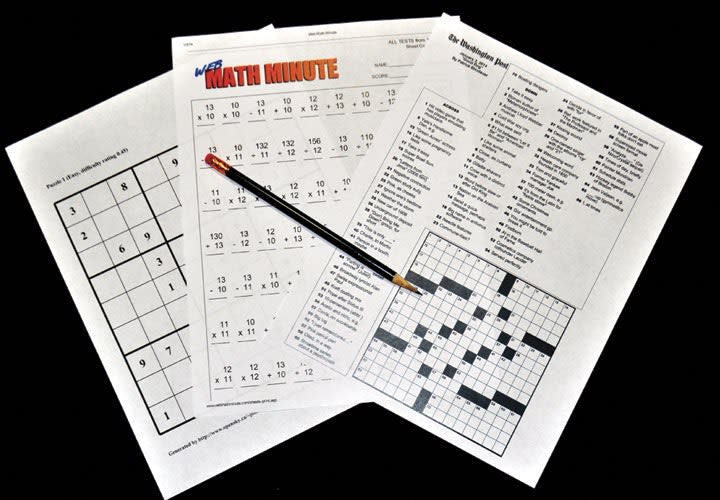
Photo: Amaury Murgado
It's not difficult to find information and inspiration about staying in shape and maintaining a healthy body. However, without maintaining a healthy mind, you are only dealing with half of the equation. The mind and body connection is no longer relegated to pseudo-science or eastern mysticism, but a part of recognized science documented by notable research.
If you don't work to maintain a healthy mind, you will lose a running battle with things like memory, stress, and empathy, which are all important for a law enforcement officer's daily routine. New studies have also shed light on additional ways to boost your brain’s abilities, so to reap the most benefits keep an "open mind."
Familiar Recommendations
There are many familiar recommendations for improving your mind's health that need little to no explanation because people tend to view them as universal truths with or without the research to back them up. You’ve no doubt heard most of these already from your parents, friends, and coaches. Whether you act on them, however, is another matter altogether. Some of these recommendations include the following.
Positive Mindset. A 2009 Yale study showed that stress can reduce brain volume and function, even in otherwise healthy individuals. In short, being exposed to long-term stress decreases the number of brain cells you have. Because negativity is often associated with stress, you need to find ways to change the way you look at things. According to the Mayo Clinic, positive thinking is a key part of effective stress management.
For example, phrases like Abraham Lincoln’s quote "We can complain because rose bushes have thorns, or rejoice because thorn bushes have roses," help you to pause and reconsider your mindset. Finding ways to change your outlook to something more positive helps you over the long run. Don’t dismiss it as new-age hooey.
Hydration. Though most of us know the importance of staying hydrated, the impact of heat and dehydration on brain function is often overlooked. Dehydration can have very serious neurologic effects and disrupt cognitive functioning. It can negatively impact short-term memory, hand-eye coordination, and concentration.
And don’t rely simply on the old "eight glasses of water a day" rule. It's important to remember that your hydration needs can vary dramatically day to day depending on your activity level, diet, and a host of other factors. One simple way to check is to use urine as an indicator. If yours is darker than a typical glass of fresh lemonade, you need to hydrate.
Sleep. What law enforcement officer hasn't felt the effects of not enough sleep? It's unfortunately all too familiar that a lack of sleep impairs reasoning, problem-solving, and attention to detail. Research shows that lack of sleep increases the risk for obesity, heart disease, and infections. You can joke all you want that you'll sleep when you're dead, but it doesn't change the fact that on the average, adults need seven to eight hours of sleep per night. Now studies show that as we get older we might need more than that. A recent study even suggests that sleep helps restore the brain by flushing out toxins that build up during waking hours.
Not So Familiar Recommendations
Meditation. In a 2011 study, lead author Britta Hölzel suggested that meditating for at least 30 minutes a day over an eight-week period can increase the density of gray matter in brain regions associated with memory, stress, and empathy. Meditation seems to work because it positively affects the hippocampus, which prior research has found to be involved in learning, memory, and emotions. The reason this is so important is that research has shown that people who suffer from depression and post-traumatic stress disorder often have decreased density in their hippocampus.
Early research from UCLA also suggests that meditation can build brain tissue around areas of the brain associated with attention. In this case, you can use meditation to train your brain to focus better and pay attention to detail.
Although some people might dismiss meditation as being too hard to learn, all you need is a willingness to concentrate on what's happening at the moment, to slow down your mind, and to focus on your breathing. With all of the resources available on the Internet, you can be self-taught in no time. If you're more of a hands-on person, try seeking help from officers at your agency. Many already practice some form of meditation being that they are involved with martial arts.
Exercise. You already know you are supposed to work out to improve flexibility, cardiovascular conditioning, strength, and stamina. You might sometimes forget that working out can reduce stress and help deal with depression. Now research shows that physical activity also increases the brain's ability to learn, adapt, and perform other cognitive tasks.
This makes sense because exercise affects the brain in many ways. For one, it increases heart rate, which pumps more oxygen to the brain. Second, it also aids in the release of hormones. When combined, these two factors aid in providing a nourishing environment for the growth of brain cells. Exercise also stimulates the growth of new connections between cells in the brain.
Mind Games. "Use it or lose it" really applies to our brains. For example, when you watch television, your brain goes into a form of neutral; it places itself into almost a sleep state. Therefore, if you’re going to keep watching your favorite shows, you need to find ways to engage your mind and shift it out of neutral.
Intelligent games can give you just the kick in the pants you need. These include chess, Scrabble, crossword puzzles, and Sudoku. Any game that makes you think and challenges your brain will do. Solving math problems as quickly as possible is another great form of mental exercise.
Another way to stay engaged is simply to try to learn something new every day.
Keep Learning
Maintaining a healthy mind has more relevance for me every time I forget where I put my car keys. But as new officers find themselves having to work longer and retire older because of pension reforms, it's equally relevant for them now while they are young.
I know I have never been sharper than when I was working on my master's degree. I was constantly reading, writing, teaching, and learning new things. Come to think of it, I better break out the math problems again.
Amaury Murgado is a special operations lieutenant with the Osceola County (Fla.) Sheriff's Office.
More Training

Registration Underway for Sixth Annual First Responders Relay
The California Police Athletic Federation’s annual First Responder Relay will welcome first responder teams from across the globe to compete along Ventura's scenic coastline on Oct. 11. Registration is underway.
Read More →
Vector Solutions Launches Comprehensive Online Dispatch Training Catalog for Emergency Communications Professionals
Vector Solutions’ new catalog of 35 expert-developed online courses can help emergency communication centers strengthen training, meet certification requirements, and simplify continuing education.
Read More →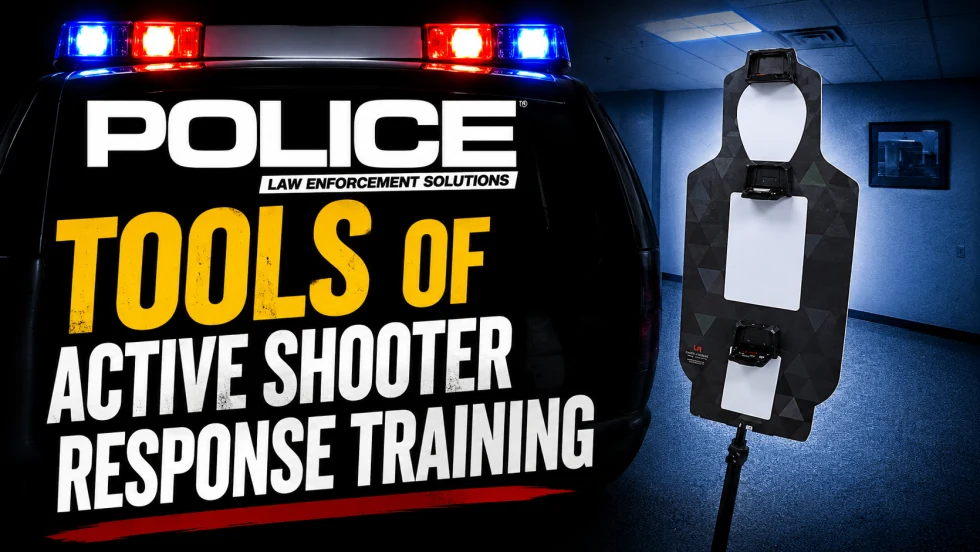
Tools for Active Shooter Response Training
What technologies help prepare officers for active shooter response situations? This behind-the-scenes look at law enforcement training explores shot simulators, smart firearms, laser target systems, and the tools used to build safer, more effective training environments.
Read More →
Two-Officer Tactical Doorway Entry Techniques
Entering a room during active-threat situations requires communication, coordination, and disciplined tactical movement. In this video, trainers from the United States Deputy Sheriff’s Association demonstrate critical room entry concepts, including fatal funnel awareness, team coordination, and safe tactical movement.
Read More →
High Compressed Ready Explained | Muzzle Control For Room Entry
In this video, Mike Willis, law enforcement national training and program director for the United States Deputy Sheriffs’ Association, demonstrates the high compressed ready position and discusses muzzle control during room entry.
Read More →
Why Attend the DroneSense Innovation Summit by Versaterm?
Let’s hear from Ryan Bracken, head of product, about why your agency should send someone to the first annual DroneSense Innovation Summit by Versaterm in April.
Read More →
Caswell Live Fire Spins Off from InVeris
Caswell Live Fire has spun off from parent company InVeris, coinciding with the 100th anniversary of Caswell’s founding. Over the past 100 years, Caswell has developed pioneering solutions that support military, law enforcement, and commercial clients worldwide.
Read More →
When Do You Transport a Wounded Officer Instead of Waiting for EMS?
Thumbnail for video series POLICE Topics, Tactics & Tips with a yellow headline that reads When Do You Transport a Wounded Officer Instead of Waiting for EMS?
Read More →
How to Pick Your High-Risk Stop Location for Tactical Advantage
Hear veteran trainer Mike Willis, of the United States Deputy Sheriff’s Association, explain several considerations that can help you wisely pick your best spot to initiate high-risk or felony traffic stops.
Read More →
Coffee Break with Police Experts: Using Your Patrol Vehicle for Cover
In this video, hear from Dustin Mowery, a product specialist at Team Wendy, as he discusses how to best use a patrol vehicle for cover.
Read More →