



Keep It Real
As you attempt to make an arrest, you are on full alert, not knowing who the suspect is, what the suspect is capable of, or what the suspect is willing to do. Even on a so-called "routine" stop, this time the offender could be a time bomb waiting to explode.

As you attempt to make an arrest, you are on full alert, not knowing who the suspect is, what the suspect is capable of, or what the suspect is willing to do. Even on a so-called "routine" stop, this time the offender could be a time bomb waiting to explode.
For the officer, it is like Russian roulette, never knowing when your time is up to meet such a person. Does he have a knife, gun, or perhaps a military background? He's a big guy; maybe a professional mixed martial arts fighter, maybe all of the above, and it's your time to arrest him. You don't know him. Are you prepared for the unexpected?
From what I see in my training classes, the answer is most likely a resounding no!
When I train law enforcement and military personnel, I am often astonished by what they don't know about the realities of close-quarter-combat in an officer survival situation. Most know a handful of controlling techniques, which are useless against a resisting opponent. Or some sport fighting techniques, which are useless against a foe armed with a weapon.
What they don't know is how to adapt and protect themselves in an unpredictable close-quarter, life threatening situation or how to use basic gross motor skills and improvised weapons. All of this knowledge is vital to effective in-close fighting and real-world training.
Reality Training
First we have to define what real-world training or reality training is.
Reality training is knowledge and preparation in regards to what the bad guys are going to try to do to you. That's right, that means becoming familiar with down-and-dirty street fighting, as well as how the bad guys use both traditional and improvised weapons to commit their crimes.
The bad guys try to stay updated with law enforcement tactics. They practice techniques such as stripping guns out of high-retention holsters. You need to know how those same bad guys think and fight if you want to stay three steps ahead of them.
Law enforcement agencies spend thousands of dollars on the newest training equipment to simulate real combat only to have some instructors use it carelessly. Not only do people get hurt trying to go full contact, but the padding itself instills a false confidence in the officer. What most might do with all that padding on in a bright training room on a nice clean mat, they would never do in a dark alley full of debris and uncertainties.
Beating the heck out of each other in a big padded suit is not what I consider reality training and may be a total waste of time and money if not done properly. There is a place for equipment training, but it is not the same as reality training.
What I consider reality training are tactics and techniques using simple gross motor skills that consistently work against a resisting opponent and seamlessly transition between empty hand, edged weapons, and firearms. Such training provides knowledge of improvised weapons and teaches how to respond in various gear and in a variety of environments.
Gross Motor Skills
Close-quarter combat involving empty-hand, edged-weapon, and firearms techniques utilizes the same basic gross motor skill fundamentals if integrated properly.
Although their jobs are different, a carpenter, plumber, and electrician all use a tape measure, level, and square. General universal laws apply to all three trades, allowing them flexibility to improvise on the job when necessary. All are on the same page to a degree.
I don't see general universal laws when it comes to law enforcement and military close-quarter basic training programs. I see the defensive tactics instructors have their laws, the firearms instructors have theirs, and the knife practitioners have their own. All of these laws or skills are acceptable when separate, but often prove contradictory when someone tries to integrate them.
For effective close-quarter combat, what is needed is a general seamless integration program of all three above skill sets, based on laws that govern gross motor skills in a close quarter setting.
You'll need the same basic skills whether you are trying to control a violent offender by utilizing a headbutt, evading a knife-counter-knife situation, or denying a criminal trying to obtain your firearm. A low center of gravity, balance, and body mechanics are just a few gross motor skills that will enhance your performance in all three situations. Work on developing these abilities to improve your overall response to offender attacks.
The Headbutt
The headbutt is a perfect example of a technique that requires a seamless transition of moves. To achieve the optimum position you must apply basic motor skills correctly. It can be used when you need to stop an offender's resistance and regain control of the situation. The goal is to smash the top of your head (not your forehead) into the face of the offender between the eyebrows and the chin with such force that it will momentarily stun the person and give the advantage back to you.
To properly perform the technique you first need to bend your knees. Then grab and pull down on the back of the opponent's neck in a violent motion while simultaneously extending your legs and propelling your head into the offender's face. While executing the headbutt, keep your tongue in, teeth clenched, shrug your shoulders up to your ears, and keep your elbows in. This will create a solid mass similar to the head of a torpedo while protecting you against injury.
For maximum damage, precede the headbutt with a knee to the groin. Whether you connect or not, the offender's human response mechanism will buckle or bend the body to naturally protect his vital area and cause his head to shoot forward exactly at the time you pull on his neck and launch your body upward, creating a major collision between his face and the top of your head.
The headbutt can cause extreme damage to your opponent. On the street this is a good thing. On the mats training with your colleagues, this can be bad. When practicing, communicate with your training partner. Start slowly at first, and always use a mouth piece and groin protection. As you become adept at the motion, selectively add head gear and instruct your partner to increase resistance.
These skills are easily developed if properly coached and correctly integrated into your training. Trying to predict every close-quarter situation is impossible and unrealistic, but once you understand some laws of basic gross motor skills, your ability to control an offender will greatly improve. This concept then can be transferred to improvised weapons.
Adapting to Improvised Weapons
Adapting to improvised weapons is critical when it comes to survival skills. When someone possesses the ability to make something from nothing and turns a bad situation around, some call this luck. But others say luck is when preparation meets opportunity. I prefer the latter.
Any object can be used as a weapon as long as you understand the mechanics of the object.
A baton, ladle, or tennis racket may all be used with the same method if your goal is impact. No one teaches ladle technique, but they do teach tennis and how to use body mechanics to get the greatest power out of a swing. These techniques can be transferred to your baton or any other object when powerful impact is the objective. Understanding the gross motor skill and the body mechanics is the key to the adaptation.
Understanding the mechanics of impact, slashing, and thrusting objects is vital in preparing yourself to use and respond to improvised weapons. Such expertise may be your saving grace in a rough-and-ready altercation.
Getting the Right Training
If such techniques are so vital, why isn't this type of training more widely available to the law enforcement community? The answer can be summed up in two words: budgets and liability.
These two concepts determine the type of training that a state, city, or department is willing to approve. They can't waste money because budgets are so tight and they certainly do not want to be sued.
Granted, most management will agree this type of real-world training is vital and extremely beneficial to their personnel. But they worry they'll need to pay days out if officers get hurt during what may be deemed unconventional training.
But it's not the techniques in the training that get people hurt. It's the method of how the training is being practiced. It's how the instructor is coaching. Coaching is paramount to the success and survival of the officer. Seek out a good trainer who focuses on the basics and you'll be able to use them in any situation; you need versatility in your training arsenal. Similar to an athlete, the officer must train hard, stay injury free, and be completely prepared for the big game. In this case, the "game" is a life or death situation on the street and the opponent is out for the officer's blood.
Reality training doesn't change a person's ethics. It does, however, change how people think and feel about themselves. It builds true confidence and reinforces the will to survive based on experience and success in the reality training world.
You don't know me and you won't know the next criminal you attempt to apprehend.
But if you use reality training to develop essential techniques applicable to most situations, you will be better prepared to improvise if your standard defensive tactics fail and you find yourself in a fight for your life.
Joe Maffei has been a practitioner of defensive tactics and martial arts for more than 30 years and trains military and law enforcement agencies under contract. He holds two Black Belts, is a full instructor in Jeet Kune Do Concepts and the Filipino arts, and is the owner of the The Integrated Martial Development Center in Waltham, Mass.
More Patrol
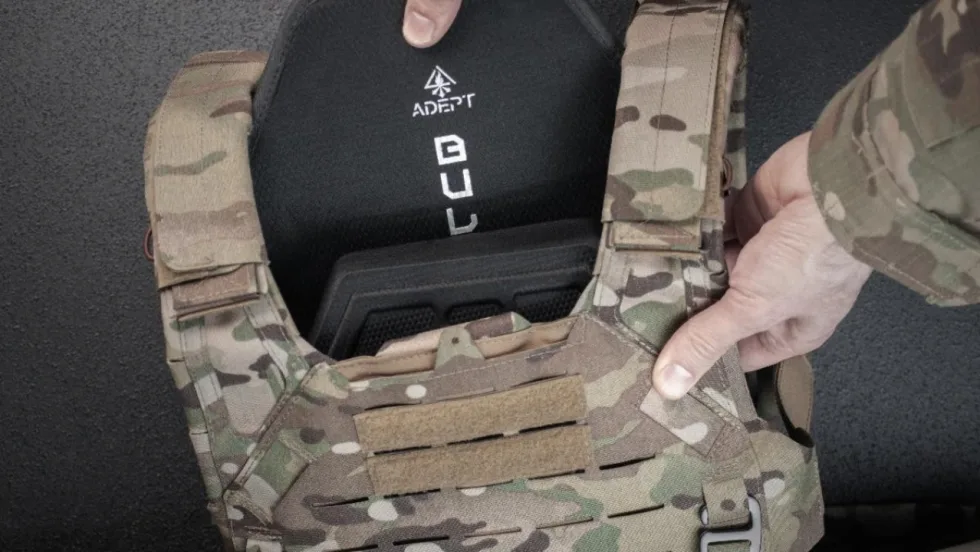
Adept Armor Introduces Two New Rifle Plates
Adept Armor has launched two new Level IV ballistic plates, the Emperor and the Archon Mark 2, which brings Adept Armor’s new Quatroid ceramic to the high-threat, performance-value center of the range at 5.2 pounds.
Read More →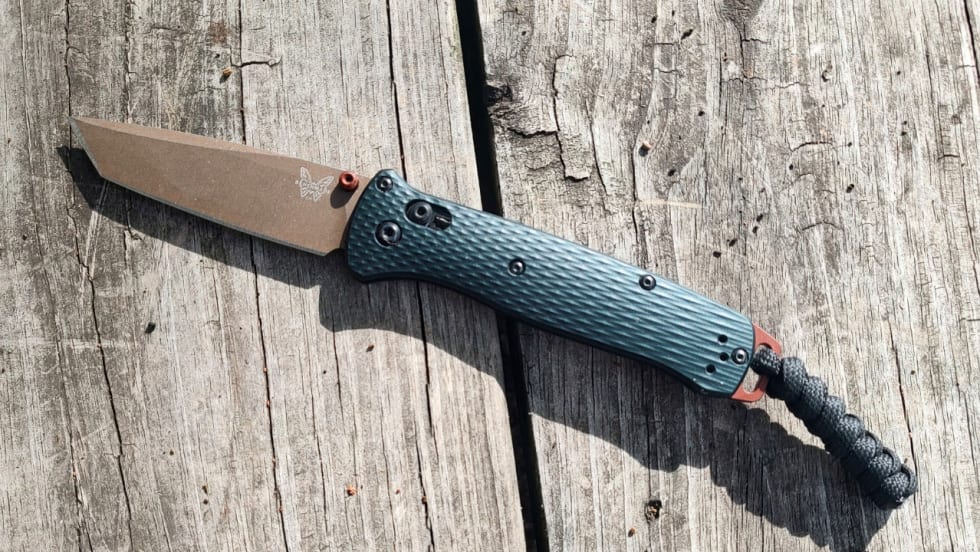
POLICE Product Test: Benchmade Bailout
The Benchmade Bailout is a slim, lightweight carry knife with a deep-ride pocket clip and comes in a variety of blade steels and scales. Here is a detailed review of the Taiga Green Bailout, released earlier this year.
Read More →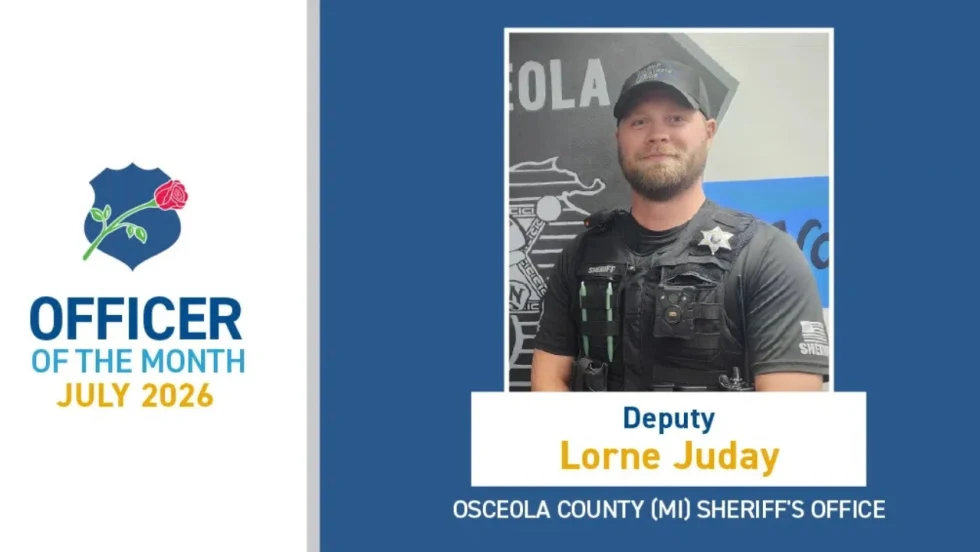
NLEOMF Announces July 2026 Officer of the Month
NLEOMF honored a Michigan deputy sheriff as the July 2026 Officer of the Month for rescuing a trapped driver from a burning vehicle following a Fourth of July crash.
Read More →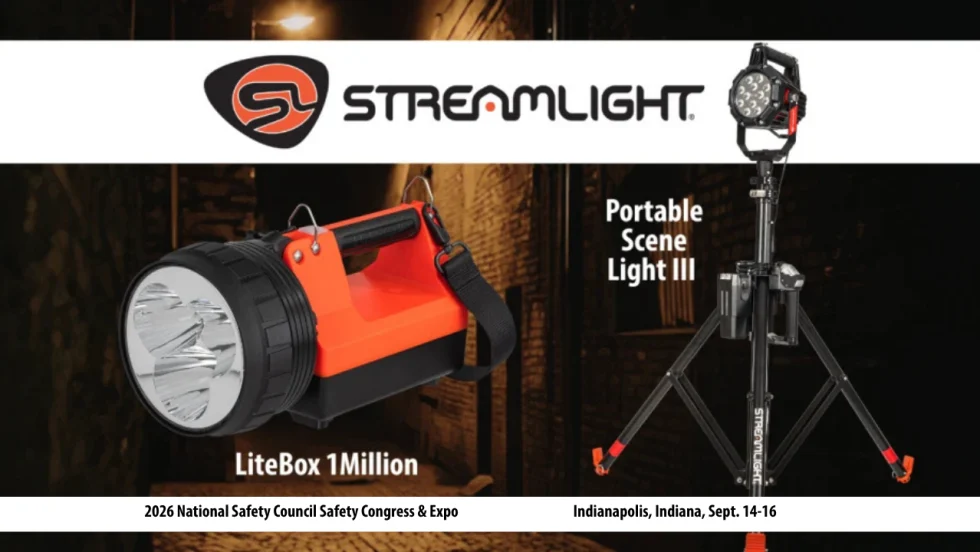
Streamlight to Showcase Newest Lighting Products at National Safety Council’s Safety Congress & Expo 2026
Streamlight will showcase its latest lights, including the Portable Scene Light III and the LiteBox 1Million, at the 2026 National Safety Council (NSC) Safety Congress & Expo.
Read More →
The 2027 World Police & Fire Games Set for Perth, Australia
The 2027 World Police & Fire Games (WPFG) will take place in Perth, Western Australia, from Friday, March 12 through Sunday, March 21, 2027.
Read More →
5.11 Partners with National Fallen Firefighters Foundation to Support #ForThe343
5.11 has joined the nationwide movement honoring the 343 New York City Fire Department firefighters lost on Sept. 11, 2001.
Read More →
Team Wendy Announces Title Sponsorship of the Jorge Pastore Foundation
Team Wendy’s 3-year partnership with the Jorge Pastore Foundation expands access to programs that strengthen those who serve.
Read More →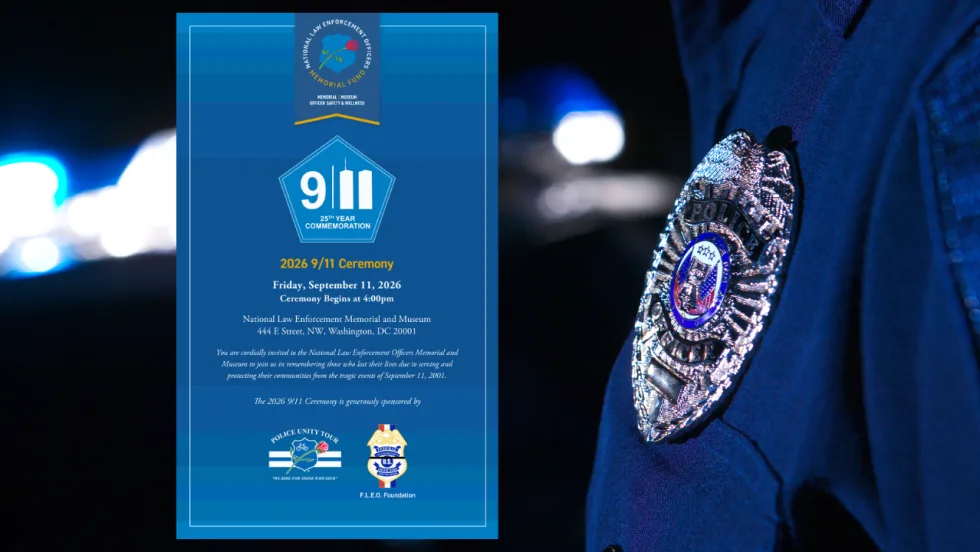
National Law Enforcement Memorial and Museum Hosting 9/11 25th-Year Commemoration Ceremony
The National Law Enforcement Memorial and Museum is hosting a 9/11 25th Year Commemoration Ceremony on Sept. 11 at 4 p.m.
Read More →
National Law Enforcement Officers Memorial Fund Announces June 2026 Officers of the Month
The National Law Enforcement Officers Memorial Fund (NLEOMF) named 15 officers of the Chico Police Department (California) as the Officers of the Month for June 2026 for their roles in responding to an active-shooter incident at a public library.
Read More →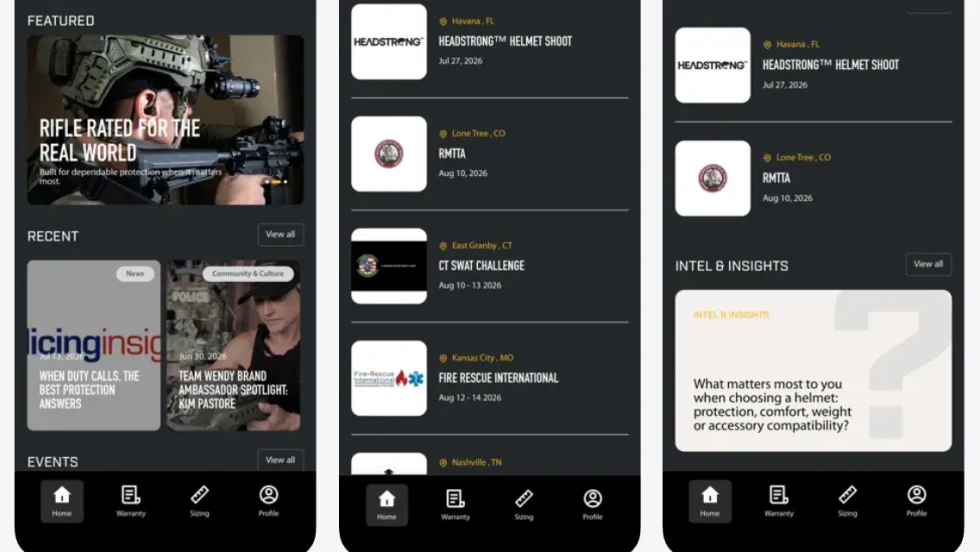
Team Wendy App Creates New Digital Hub for Helmet Owners
The Team Wendy Community App provides one location for warranty registration, size-fit tools, product updates, and community connection. For helmet owners, the new app creates a simpler path to the information and tools that matter most.
Read More →