



Impound Inventory
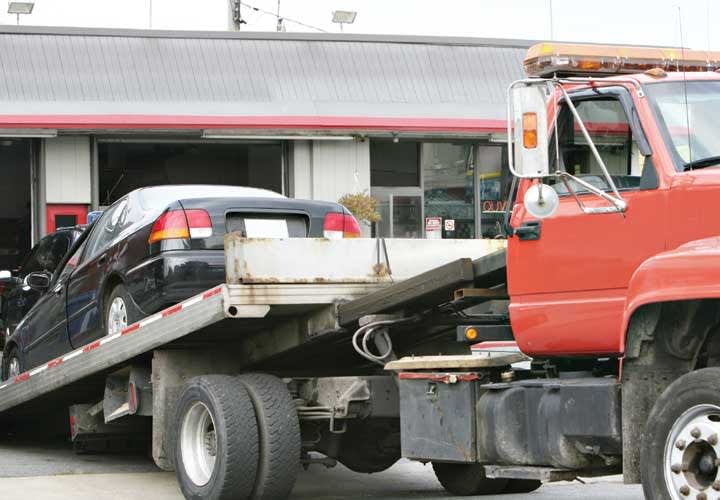
When a suspect's vehicle is lawfully impounded (such as when the driver is arrested where the vehicle cannot be safely parked and locked, and there is no sober, licensed driver to take custody of it), it is usually permissible to conduct a standard inventory of the vehicle and its contents.

With most search-and-seizure activity, your subjective reason for doing something has no effect on the constitutional reasonableness of what you do. As a general rule, as long as there is an objective justification for your actions, it makes no difference that you may have had a different purpose in mind. One exception to this general rule is the impound inventory.
When a suspect's vehicle is lawfully impounded (such as when the driver is arrested where the vehicle cannot be safely parked and locked, and there is no sober, licensed driver to take custody of it), it is usually permissible to conduct a standard inventory of the vehicle and its contents. The U.S. Supreme Court has explained that such inventories serve three legitimate purposes:
"When vehicles are impounded, local police departments generally follow a routine practice of securing and inventorying the automobiles' contents. These procedures developed in response to three distinct needs: the protection of the owner's property while it remains in police custody; the protection of the police against claims or disputes over lost or stolen property; and the protection of the police from potential danger. The practice has been viewed as essential to respond to incidents of theft or vandalism. These caretaking procedures have almost uniformly been upheld." (South Dakota v. Opperman)
In a series of decisions, the court has made clear that two conditions have to be met to justify an impound inventory: (1) the officer must be following the department's standardized inventory procedure, and (2) the inventory must not be misused as a search for contraband or criminal evidence.
Cooper v. California
Joe Nathan Cooper was arrested for selling heroin, and his car was impounded under a forfeiture statute. During a standard inventory, officers found evidence that Cooper later sought to suppress as the "fruit" of an unlawful search. The Supreme Court upheld the inventory, reasoning as follows:
"The officers seized petitioner's car because they were required to do so by state law. They seized it to impound it and they had to keep it until forfeiture proceedings were concluded, over four months after it was lawfully seized. It would be unreasonable to hold that the police, having to retain the car in their custody for such a length of time, had no right, even for their own protection, to search it. We cannot hold unreasonable under the Fourth Amendment the examination of a car validly held by officers for use in a forfeiture proceeding." (Cooper v. California)
Harris v. U.S.
James H. Harris's car had been seen leaving the scene of a robbery. When officers apprehended him, they impounded the car, inventoried it, and found the robbery victim's property. Harris moved to suppress, claiming that the warrantless search was invalid. The Supreme Court once again approved the inventory.
Said the court, "A regulation of the Metropolitan Police Department requires the officer who takes an impounded vehicle in charge to search the vehicle thoroughly, to remove all valuables from it, and to attach a property tag. The discovery of the evidence was not the result of a search of the car, but of a measure taken to protect the car while it was in police custody. Nothing in the Fourth Amendment requires the police to obtain a warrant in these narrow circumstances." (Harris v. U.S.)
Cady v. Dombrowski
Off-duty police officer Chester J. Dombrowski was driving drunk outside his jurisdiction when he crashed into a guard rail and a bridge. His car was towed to an impound lot. When officers investigating the accident learned that Dombrowski was a police officer, they conducted a standard inventory of his disabled vehicle to locate his firearm, to prevent it falling into the wrong hands. It was subsequently learned that Dombrowski had used the gun to commit a murder, and admissibility of the gun was challenged in court.
In its decision upholding admission of the weapon into evidence at trial, the Supreme Court found two facts significant: The officer's "specific motivation and the fact that the procedure he followed was standard." These two factors became the basis for the court's later holdings in three other cases, eventually producing the rule that inventories must be according to standardized procedures, and must not be conducted for an investigative purpose.
South Dakota v. Opperman
Police lawfully impounded Donald Opperman's car for traffic violations. Following their routine procedure, they began an inventory, which revealed drugs. The Supreme Court rejected the argument that a search warrant should have been obtained, and pointed out that since an inventory is an administrative caretaking procedure, the concept of "probable cause" does not apply. Here, the court stressed the necessity that the officer's purpose must not be to search for criminal evidence:
"The probable-cause approach is unhelpful when analysis centers upon the reasonableness of routine administrative caretaking functions, particularly when no claim is made that the protective procedures are a subterfuge for criminal investigations. This court has consistently sustained police intrusions into automobiles impounded or otherwise in lawful police custody where the process is aimed at securing or protecting the car and its contents. There is no suggestion that this standard procedure was a pretext concealing an investigatory police motive." (South Dakota v. Opperman)
Colorado v. Bertine
The discovery of drugs and other evidence in containers found during an inventory of Steven Lee Bertine's impounded vehicle following his arrest for DUI provided the next occasion for the Supreme Court to stress the features of a legitimate inventory:
"Our decisions have always adhered to the requirement that inventories be conducted according to standardized criteria and on the basis of something other than suspicion of evidence of criminal wrongdoing. In the present case, there was no showing that the police, who were following standardized procedures, acted in bad faith or for the sole purpose of investigation." (Colorado v. Bertine) (Note that this statement implies that as long as the inventory is properly conducted, it will not be invalidated simply because officers also hoped or expected to find contraband or criminal evidence.)
Florida v. Wells
Because the Florida Highway Patrol had no standard policy regarding the opening of closed containers found during an impound inventory, drugs were suppressed in this case. Again emphasizing the non-investigatory nature of a valid inventory, the court said, "An inventory search must not be a ruse for a general rummaging in order to discover incriminating evidence. The individual officer must not be allowed so much latitude that inventory searches are turned into a purposeful and general means of discovering evidence of crime." (Florida v. Wells)
The Last Word
The court has referred to these inventory cases as establishing the principle that an officer's subjective motive is critical "in the context of an inventory search." (Whren v. U.S.) This makes it important that police reports and testimony clearly show that impound inventories are conducted according to a standard departmental policy and are designed to account for valuable or dangerous instrumentalities that might have been inside the vehicle. If you should encounter contraband or evidence while you are engaged in a routine inventory, it can be seized under the "plain view" exception, and should then be admissible.
Devallis Rutledge is a former police officer and veteran prosecutor who currently serves as Special Counsel to the Los Angeles County District Attorney. He is the author of 12 books, including "Investigative Constitutional Law."
More Patrol

Streamlight Portable Scene Light III Wins 2026 OH&S New Product of the Year Award
Streamlight’s Portable Scene Light III has won the 2026 Occupational Health & Safety (OH&S) New Product of the Year Award in the Lighting category.
Read More →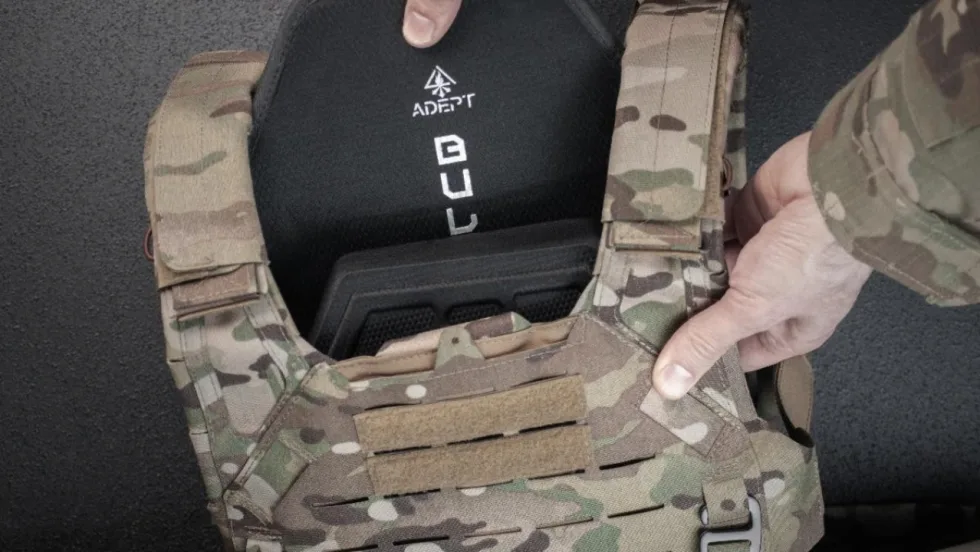
Adept Armor Introduces Two New Rifle Plates
Adept Armor has launched two new Level IV ballistic plates, the Emperor and the Archon Mark 2, which brings Adept Armor’s new Quatroid ceramic to the high-threat, performance-value center of the range at 5.2 pounds.
Read More →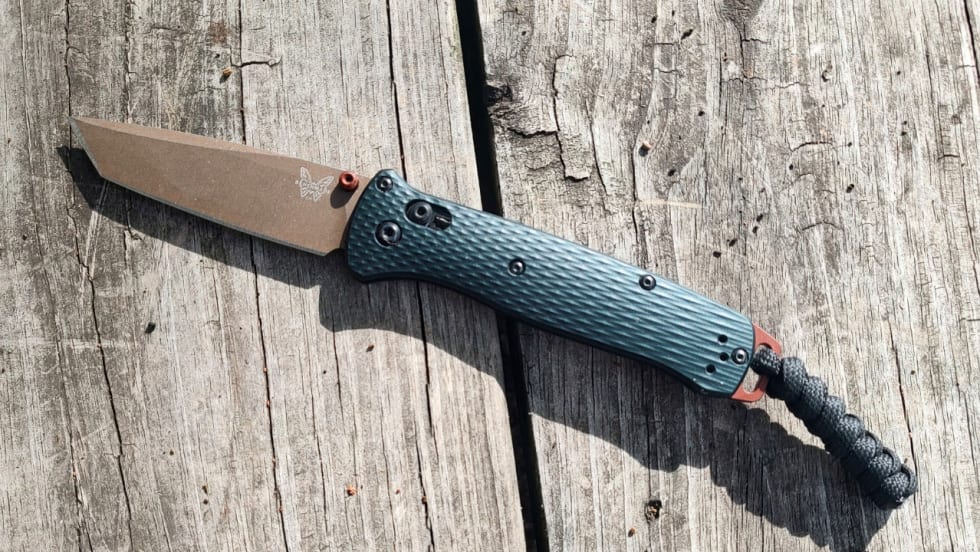
POLICE Product Test: Benchmade Bailout
The Benchmade Bailout is a slim, lightweight carry knife with a deep-ride pocket clip and comes in a variety of blade steels and scales. Here is a detailed review of the Taiga Green Bailout, released earlier this year.
Read More →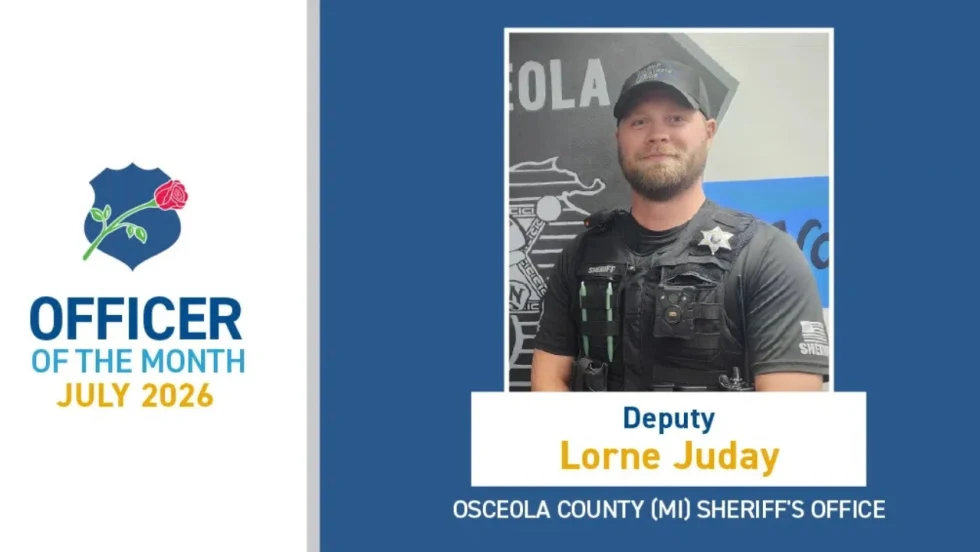
NLEOMF Announces July 2026 Officer of the Month
NLEOMF honored a Michigan deputy sheriff as the July 2026 Officer of the Month for rescuing a trapped driver from a burning vehicle following a Fourth of July crash.
Read More →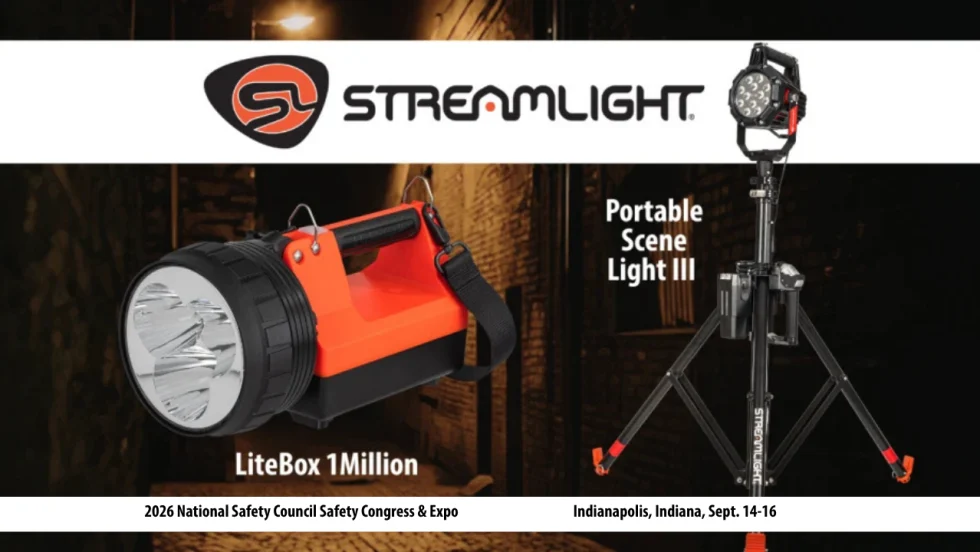
Streamlight to Showcase Newest Lighting Products at National Safety Council’s Safety Congress & Expo 2026
Streamlight will showcase its latest lights, including the Portable Scene Light III and the LiteBox 1Million, at the 2026 National Safety Council (NSC) Safety Congress & Expo.
Read More →
The 2027 World Police & Fire Games Set for Perth, Australia
The 2027 World Police & Fire Games (WPFG) will take place in Perth, Western Australia, from Friday, March 12 through Sunday, March 21, 2027.
Read More →
5.11 Partners with National Fallen Firefighters Foundation to Support #ForThe343
5.11 has joined the nationwide movement honoring the 343 New York City Fire Department firefighters lost on Sept. 11, 2001.
Read More →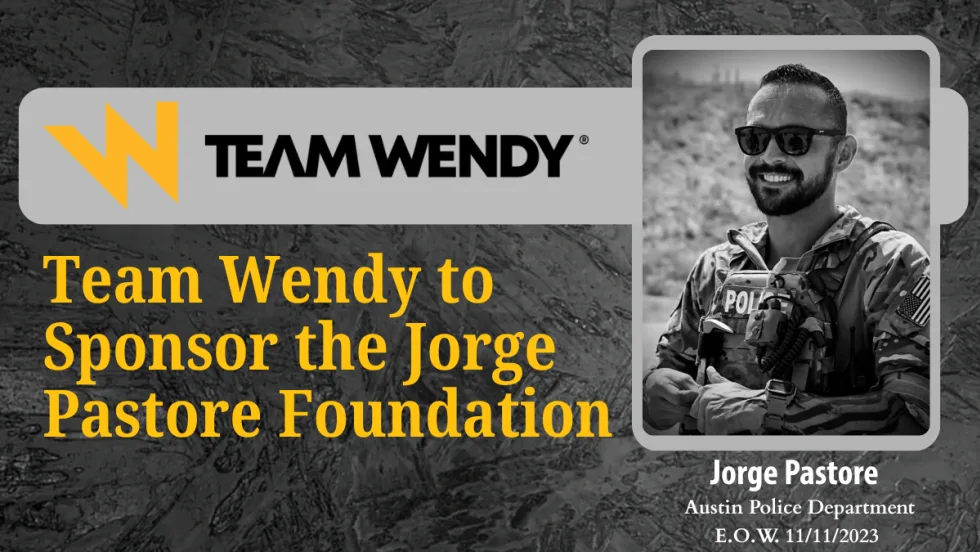
Team Wendy Announces Title Sponsorship of the Jorge Pastore Foundation
Team Wendy’s 3-year partnership with the Jorge Pastore Foundation expands access to programs that strengthen those who serve.
Read More →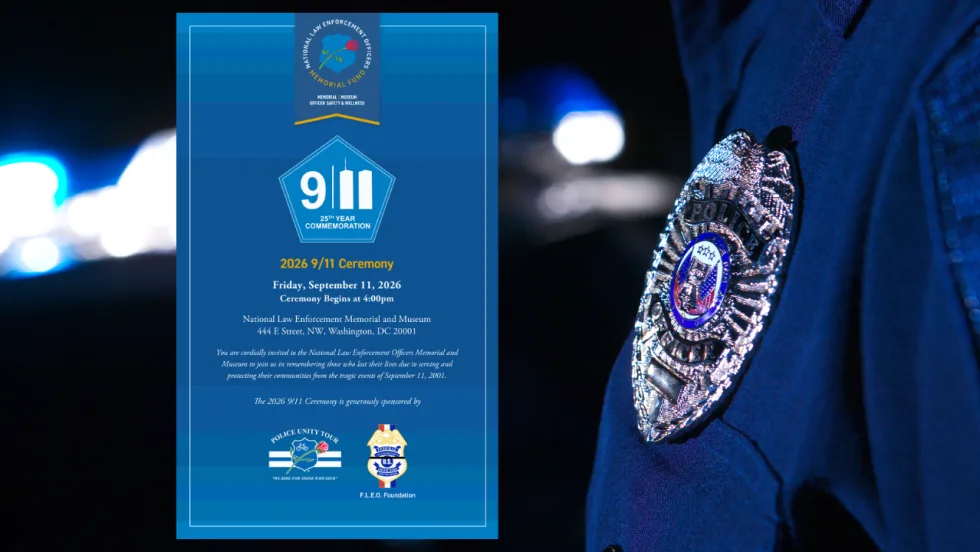
National Law Enforcement Memorial and Museum Hosting 9/11 25th-Year Commemoration Ceremony
The National Law Enforcement Memorial and Museum is hosting a 9/11 25th Year Commemoration Ceremony on Sept. 11 at 4 p.m.
Read More →
National Law Enforcement Officers Memorial Fund Announces June 2026 Officers of the Month
The National Law Enforcement Officers Memorial Fund (NLEOMF) named 15 officers of the Chico Police Department (California) as the Officers of the Month for June 2026 for their roles in responding to an active-shooter incident at a public library.
Read More →