



ID Procedures and the Right to Counsel
There are several ways a crime victim or other eyewitness might have an opportunity to identify a stranger-perpetrator of a crime before being called as a witness in court. (If the perpetrator is an acquaintance, the ID will not generally be an issue.)

There are several ways a crime victim or other eyewitness might have an opportunity to identify a stranger-perpetrator of a crime before being called as a witness in court. (If the perpetrator is an acquaintance, the ID will not generally be an issue.)
• Public Confrontation. The witness might chance to see the perpetrator someplace around the neighborhood or in the community, such as while shopping or attending an event.
• Field Showup. Police detain a suspect near the scene of a recently committed crime and seek an ID or elimination from the victim or witness, who might be brought to the suspect's location for a viewing.
• Photo Display. An array of several pictures or a sequence of pictures of suspects and "fillers" who resemble the description may be presented to the witness.
• Stationhouse Showup. The witness is asked to look at the suspect in the police station and indicate whether or not the person is recognized.
• Lineup. The suspect and a number of similar "fillers" may be displayed together, or sequentially, usually at the police station or jail.
• Courthouse Confrontation. Before the court hearing or trial, the witness sees and recognizes the perpetrator in or around the courthouse.
Except for the confrontations (which are chance encounters not arranged by law enforcement officers), these procedures must be conducted in a non-suggestive manner that meets due process requirements of reliability. The U.S. Supreme Court has also issued several opinions discussing the applicability of the Sixth Amendment right to counsel to certain pretrial ID processes.
U.S. v. Wade
After Billy Joe Wade was indicted and had counsel appointed on a federal bank robbery charge, agents brought two witnesses to a lineup and sought IDs. Both witnesses identified Wade as one of the robbers, and he was convicted at trial. The Supreme Court reversed, ruling that Wade's constitutional right to counsel had attached by indictment, and the lineup after that point was a "critical stage" of the case at which counsel should have been present:
"Since the presence of counsel can often avert prejudice and assure a meaningful confrontation at trial, there can be little doubt that the postindictment lineup was a critical stage of the prosecution at which [the defendant] was as much entitled to aid of counsel as at the trial itself. Thus, both Wade and his counsel should have been notified of the impending lineup, and counsel's presence should have been a requisite to conduct of the lineup, absent an intelligent waiver."
Gilbert v. California
The companion case to Wade also ruled that ID evidence from a lineup held without counsel, after indictment and arraignment, was inadmissible at trial. Further, since the pretrial ID was improperly conducted, the in-court ID would also have to be excluded, unless the trial court found that the courtroom ID was sufficiently independent of the pretrial ID as to be disassociated from the impropriety:
"Police conduct of [a postindictment pretrial] lineup without notice to and in the absence of counsel denies the accused his Sixth Amendment right to counsel and calls in question the admissibility at trial of the in-court identifications of the accused by witnesses who attended the lineup."
The rule requiring counsel for a lineup staged after indictment or arraignment is known as the "Wade-Gilbert Rule." But would this rule also apply to a lineup or showup that takes place before the suspect has been formally charged, or before he or she has made the first court appearance on the case? That question was answered in a case from Illinois.[PAGEBREAK]
Kirby v. Illinois
Thomas Kirby was arrested with an accomplice following a mugging in Chicago. The two men were seated at a table in the station when the victim was brought in. When he saw the two men, the victim immediately identified them as the ones who had robbed them. After being convicted, Kirby went to the Supreme Court, arguing that his Sixth Amendment right to counsel had been violated.
The Supreme Court rejected this argument and ruled that the Sixth Amendment right does not attach until "the initiation of adversary judicial proceedings, whether by way of formal charge, preliminary hearing, indictment, information or arraignment." Since Kirby had not yet been indicted and had not made his first court appearance on the case, the Wade-Gilbert rule did not apply.
In the case of U.S. v. Ash, the court also drew a contrast between post-indictment lineups and showups on the one hand, and post-indictment photo displays on the other.
U.S. v. Ash
Two bank robbers wearing stocking masks robbed a D.C. bank. An informant later led the FBI to Charles J. Ash Jr., and another suspect. The two were indicted by the grand jury and counsel was appointed before the bank witnesses were brought in to look at photo arrays that contained the suspects' pictures. Ash's attorney was not notified of this ID procedure and was not present when the displays were exhibited to the witnesses.
Three witnesses identified the photo of Ash as one of the robbers. Ash subsequently appealed his robbery conviction on grounds that the photo ID procedure was done in violation of Wade-Gilbert and that the identification evidence should have been suppressed. The U.S. Supreme Court pointed out that since Ash was not present during the ID, there was nothing his attorney could do to ensure fairness. Therefore, the right to counsel did not apply.
"We are not persuaded that the risks inherent in the use of photographic displays are so pernicious that an extraordinary system of safeguards is required. We hold that the Sixth Amendment does not grant the right to counsel at photographic displays conducted by the government for the purpose of allowing the witness to attempt an identification of the offender."
The Role of Counsel
When counsel is present at a post-indictment showup or lineup, his or her role is simply to observe the procedure, making notes for possible use during cross-examination of the officers and witnesses at trial, but not to give advice or to interfere with the conduct of the process.
"The presence of counsel will significantly promote fairness at the lineup and a full hearing at trial on the issue of identification." (Stovall v. Denno)
Substitute Counsel
In some cases, the defendant's own attorney may not be able to attend when the lineup must be scheduled. The Supreme Court has said that a substitute defense attorney may attend instead, making observations and notes that can be passed on to trial counsel for use in cross-examination.
"Provision for substitute counsel may be justified on the ground that the substitute counsel's presence may eliminate the hazards which render the lineup a critical stage for the presence of defendant's own counsel." (U.S. v. Wade)
The defendant may also waive the presence of counsel if he or she has not requested counsel and is advised of the right to have counsel present.
The Sixth Amendment right to counsel applies only to in-person showups and lineups after formal charge or first court appearance. It can be waived or satisfied with substitute counsel.
Devallis Rutledge, a former police officer and veteran prosecutor, is Special Counsel to the Los Angeles County District Attorney.
More Patrol

Adept Armor Introduces Two New Rifle Plates
Adept Armor has launched two new Level IV ballistic plates, the Emperor and the Archon Mark 2, which brings Adept Armor’s new Quatroid ceramic to the high-threat, performance-value center of the range at 5.2 pounds.
Read More →
POLICE Product Test: Benchmade Bailout
The Benchmade Bailout is a slim, lightweight carry knife with a deep-ride pocket clip and comes in a variety of blade steels and scales. Here is a detailed review of the Taiga Green Bailout, released earlier this year.
Read More →
NLEOMF Announces July 2026 Officer of the Month
NLEOMF honored a Michigan deputy sheriff as the July 2026 Officer of the Month for rescuing a trapped driver from a burning vehicle following a Fourth of July crash.
Read More →
Streamlight to Showcase Newest Lighting Products at National Safety Council’s Safety Congress & Expo 2026
Streamlight will showcase its latest lights, including the Portable Scene Light III and the LiteBox 1Million, at the 2026 National Safety Council (NSC) Safety Congress & Expo.
Read More →
The 2027 World Police & Fire Games Set for Perth, Australia
The 2027 World Police & Fire Games (WPFG) will take place in Perth, Western Australia, from Friday, March 12 through Sunday, March 21, 2027.
Read More →
5.11 Partners with National Fallen Firefighters Foundation to Support #ForThe343
5.11 has joined the nationwide movement honoring the 343 New York City Fire Department firefighters lost on Sept. 11, 2001.
Read More →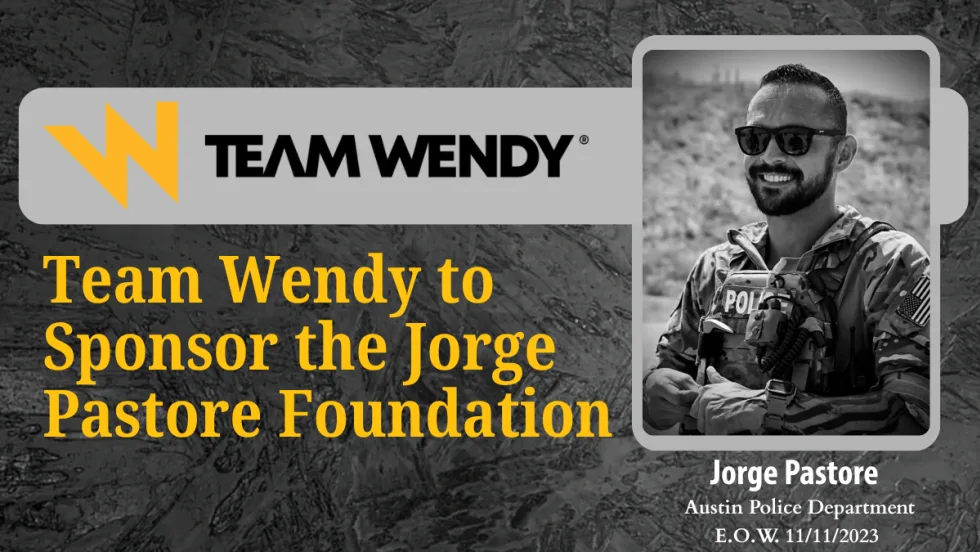
Team Wendy Announces Title Sponsorship of the Jorge Pastore Foundation
Team Wendy’s 3-year partnership with the Jorge Pastore Foundation expands access to programs that strengthen those who serve.
Read More →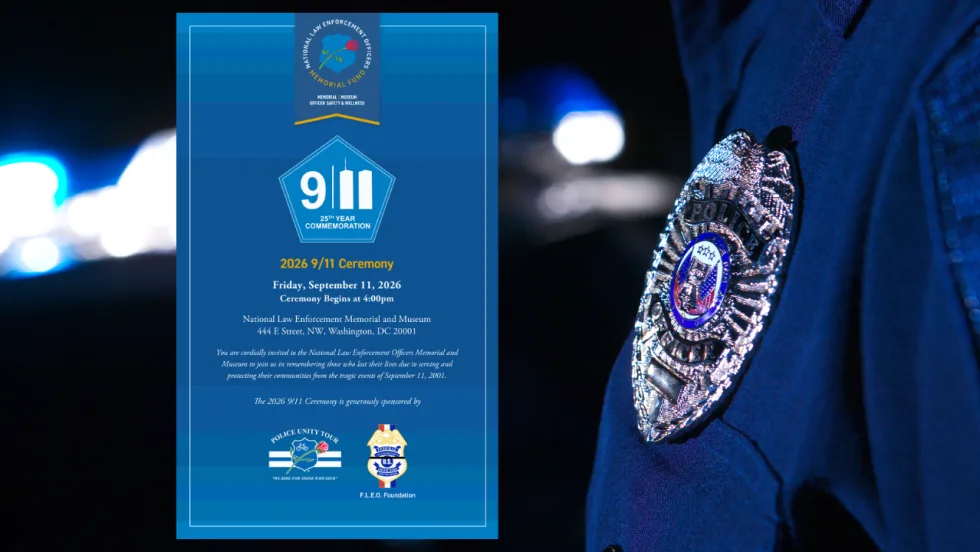
National Law Enforcement Memorial and Museum Hosting 9/11 25th-Year Commemoration Ceremony
The National Law Enforcement Memorial and Museum is hosting a 9/11 25th Year Commemoration Ceremony on Sept. 11 at 4 p.m.
Read More →
National Law Enforcement Officers Memorial Fund Announces June 2026 Officers of the Month
The National Law Enforcement Officers Memorial Fund (NLEOMF) named 15 officers of the Chico Police Department (California) as the Officers of the Month for June 2026 for their roles in responding to an active-shooter incident at a public library.
Read More →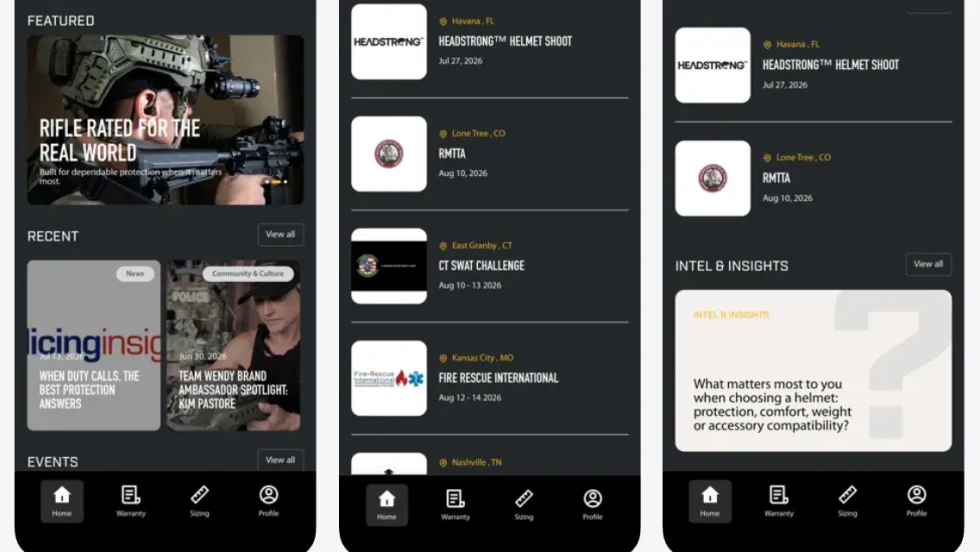
Team Wendy App Creates New Digital Hub for Helmet Owners
The Team Wendy Community App provides one location for warranty registration, size-fit tools, product updates, and community connection. For helmet owners, the new app creates a simpler path to the information and tools that matter most.
Read More →