



How To...Buy A Flashlight
A few pointers can help you find the best illumination tool to meet your needs on duty.

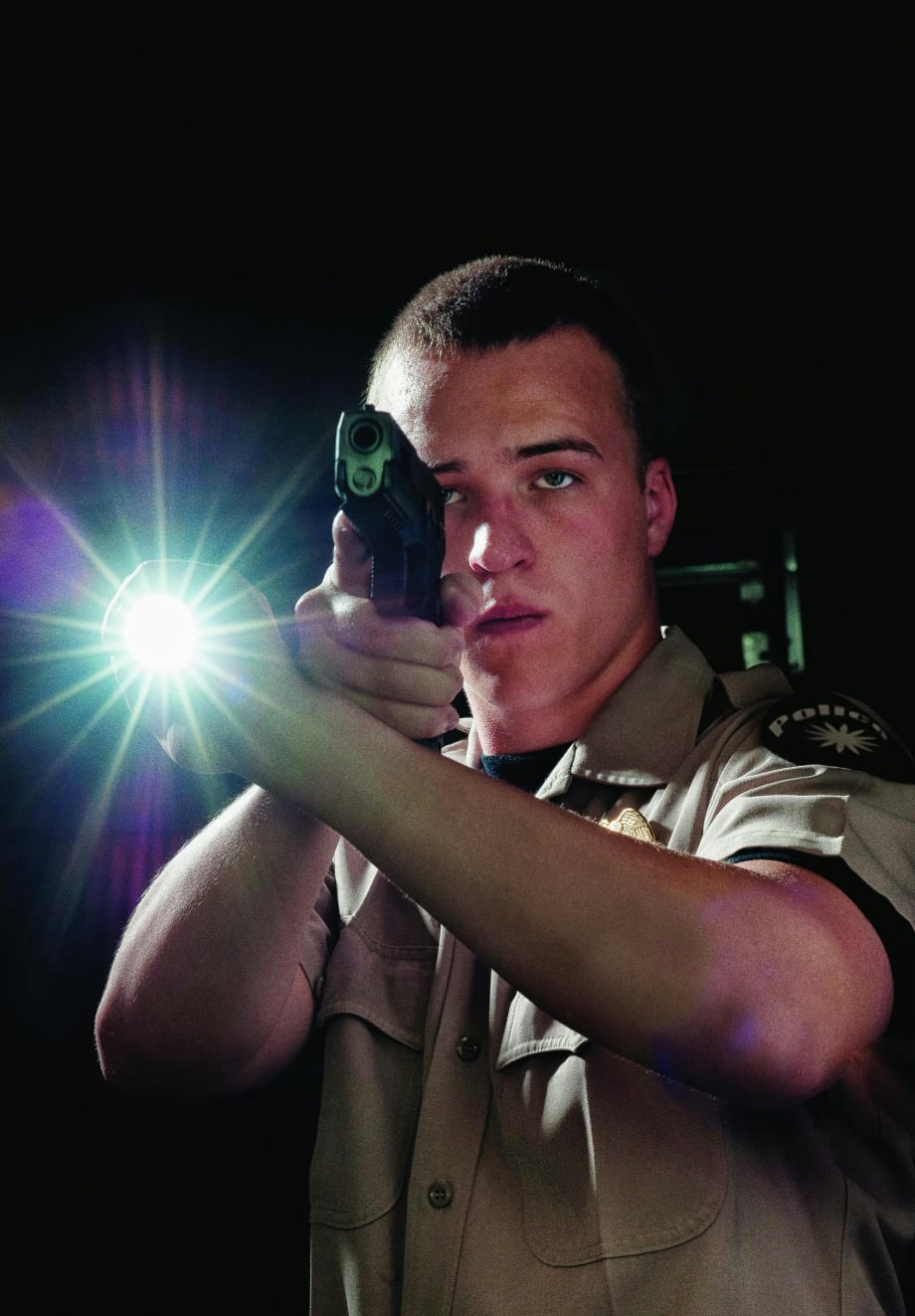
Test any flashlight by going through the motions of using it as you would on duty before you buy.
Photo: Getty Images
When you're looking to purchase a car, you might be tempted to purchase the first pretty, flashy model you see with a bunch of cool-sounding features. But then you risk ending up with a tiny sporty convertible when what you really wanted and needed was an SUV with enough room to haul your fishing gear and your best fishing buddies. The same holds true for your duty light.
Before you start shopping you need to understand a bit about flashlight features and what they can do for you. Then you can narrow down your options to a few contenders and compare them to find the one that best meets your needs. Otherwise you might end up with something you don't actually want or need. And finding a light source you can depend on when things go south is too important to mess up for lack of effort.
With that in mind, here are some tips to help narrow down your search.
1. Look beyond lumens. "You shouldn't always get caught up in lumens," warns Tim Taylor, Streamlight's director of law enforcement and sporting goods sales. "That seems to be all anybody can hear or see. But just as more horsepower doesn't always equal faster cars, you can have a lower lumen flashlight that works better than a higher lumen flashlight." Part of the puzzle is understanding the difference between lumens and candela. "Candela is really more about light on target, the distance it can reach. Lumens is just a rating that gives the output of a light," explains Taylor. "You can have a light with a lot of lumens that doesn't have a lot of light downrange."
The quality of the beam is important, too. The flashlight should produce a solid beam without imperfections. When you shine it against the wall, you shouldn't see any "holes" in the projected beam. If you do, those holes could be places where your light won't show you something lurking in the shadows. Or that deficiency could decrease the effectiveness of using your light in the eyes of a subject you're attempting to disorient for safety reasons.
2. Know what you want your light to do for you. If you're going to use it to search a warehouse or an open field you should look for a light that can go a fair distance, which requires more candela. If what you want is to disorient a subject in close proximity to you, you're better off looking for more lumens. But much of that depends on where you work. "The Tennessee Highway patrol might not look at the same light as an LAPD officer is going to use," says Taylor. "The city officer working mostly in streets or alleys is probably not going to encounter the same situations as the South Carolina Highway Patrol officer, who spends more time looking across fields or down a mountain."
Another consideration is if it's best to have multiple flashlights for different tasks. "Having the right tool for the right job is important. Not one for everything," suggests Andrew Wright, Surefire's public relations manager. "If you need something for high output immediately, we recommend having a tactical flashlight, and it goes to high output first. Or it's only high. If you need a light for administrative tasks, you can have a secondary light for that, a backup."
3. Consider flashlights that use rechargeable batteries only or are "dual-fuel." In traditional alkaline disposable batteries, you'll see a slow gradual reduction in the quality of light. Most law enforcement officers want their lights to put out the maximum amount of light for the entire time they're needed, which newer batteries can do. And then you just need backup batteries to put in when the batteries finally stop working. Plus, why buy a bunch of cheaper disposable batteries when you can reuse rechargeable batteries for much less money over time?
Most flashlights made for law enforcement that run on rechargeable batteries use the lithium ion type. "Lithium ion batteries are very robust," says Surefire's Wright. "They provide more runtime and longevity. You can very easily use them for a normal duty cycle at work and then charge them every night without overcharging because it's a protected circuit."
Then there are flashlights that allow you to use either rechargeable or disposable batteries. "An advantage to dual-fuel lights is if you're in the field, you can take out a rechargeable battery and drop in another rechargeable one or just a disposable battery if you need to get your light up and running," says Wright.
4. Strobe function isn't a necessity. "I wouldn't buy a tactical flashlight based on if it has a strobing function or not," says Santos. "You could just use a bright light in the eyes instead to disorient a subject." With that being said, if you're going to use a strobe and you've trained with it, go ahead and buy a flashlight with that feature. But make sure it has everything else you need as well.
"The strobe feature has its use and place. But if you're using it to disorient a subject before you go hands on, remember when you assess the situation that a strobe means the light is off 50% of the time, so it takes your eye twice as long to process what you're seeing," cautions Streamlight's Taylor. "We program our lights so the end user can decide. If you want strobe, you can have it. And if you don't, you can cut if off."
5. You need a light with switches in the right position with the right function for how you'll use the light. Ed Santos is the founder of Tactical Services Group and author of "Rule the Night, Win the Fight and Low-Light Combatives." Unsurprisingly, one of his biggest concerns with a flashlight's switches is how well they align with whichever low-light technique you prefer, such as Harries versus Ayoob. You'll need to be able to access the switch while holding your flashlight next to your service weapon. Will a tailcap switch on the tailend of the light or a bezel switch on the body be better?
Also consider whether your flashlight has a constant-on option that's easy to activate versus momentary-on, which would require you to hold the switch down as long as you need the light operational.
Some flashlights allow you to program the sequence of clicks that activates different functions through one switch. If that option is available, make sure you choose the best sequence for your use when you set your light up. And train with it so you know how it will work in the heat of the moment. Otherwise, make sure you're happy with the sequence the flashlight's switch or switches come with. "But I'm not a fan of multi-function buttons. I want the light to come on as bright as possible when it comes on, and stay that way all the time," Santos says. Decide which option best meets your needs before you settle on a light.
6. A weapon light is not a search light. This should go without saying, but for safety's sake, we'll mention it here. Thinking you don't need a dependable duty light because you have a weapon-mounted light on your sidearm is wrongheaded. "Weapon lights are great. But they're only to be used when you need the weapon, not just to look for something in a dresser drawer," says Taylor. "Your handheld light is to be used for searching."
7. There is no one ideal duty light that works for every officer. "Because we haven't found that ideal size patrol officer yet," quips Ed Santos. "Some of us have monster gorilla hands and others have small, petite hands, regardless of gender."
Finding a good fit depends on the size of the firearm issued, the size of the officer's hand, and the dexterity of the officer. If you have too big a light for your hand, it can be difficult to effectively manipulate.
8. The best way to test a light is to use it as you would on the job.Test it out in the showroom if you can, and also on a range if possible. If these options aren't available, you can watch YouTube videos to get an idea of how the flashlight is used and if it matches the size, weight, and functionality you're looking for.
Or use a realistic stand-in for your duty weapon. "If you're going to a place without a range, typically your agency will have a blue gun of the same model used on duty," shares Santos. "If you bring it with you on a shopping trip, you can do all the flashlight manipulations in a retail environment and get an idea of its use."
9. Durability and dependability are key. "Generally speaking, I'd look for an IPX 7 rating," says Wright. This means it's considered waterproof. If you drop an IPX7 rated flashlight in water up to 1 meter, or 3 feet, it is still going to work. "And a warranty is a good indicator of how much a brand trusts its product. Those two criteria are a good place to start," Wright adds.
"I'm biased, but I'd say quality is very important. You could be facing some life threatening circumstances in which you need to rely on your gear," says Surefire's Wright. "We've been doing this for 40 years and have a proven track record."
Santos agrees that quality is at the top of the list of criteria when buying a light, particularly in the longevity of switches, which can wear out quickly on poor quality lights. But that doesn't mean the light you buy has to be expensive. "Don't let the price be a governing factor. Don't count on a light because it's expensive. Don't discount a light because it has a low price," Santos says.
10. A light is worth nothing if you won't or can't use it. "Try to find the brightest light with the best distance and best runtime you can get out of those lumens. But it has to be useable," says Taylor.
More Patrol
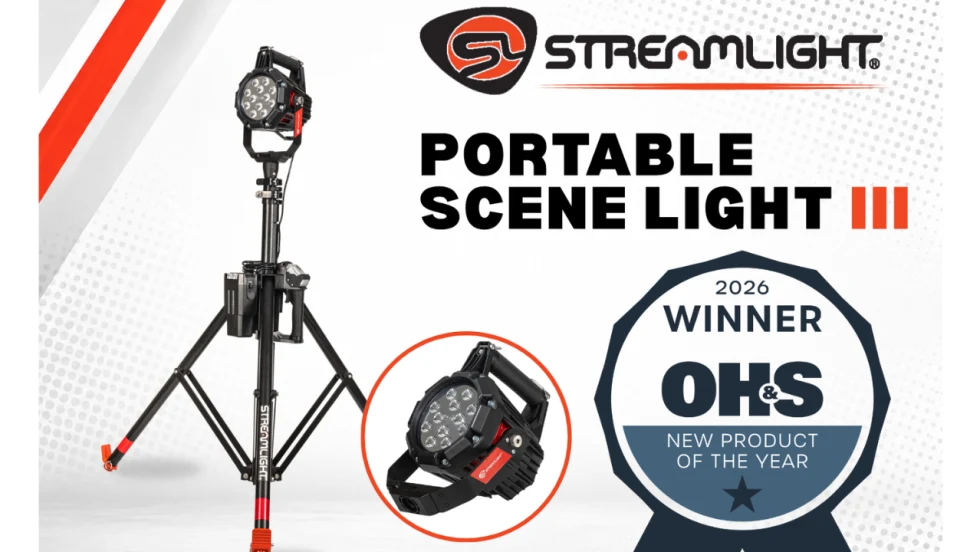
Streamlight Portable Scene Light III Wins 2026 OH&S New Product of the Year Award
Streamlight’s Portable Scene Light III has won the 2026 Occupational Health & Safety (OH&S) New Product of the Year Award in the Lighting category.
Read More →
Adept Armor Introduces Two New Rifle Plates
Adept Armor has launched two new Level IV ballistic plates, the Emperor and the Archon Mark 2, which brings Adept Armor’s new Quatroid ceramic to the high-threat, performance-value center of the range at 5.2 pounds.
Read More →
POLICE Product Test: Benchmade Bailout
The Benchmade Bailout is a slim, lightweight carry knife with a deep-ride pocket clip and comes in a variety of blade steels and scales. Here is a detailed review of the Taiga Green Bailout, released earlier this year.
Read More →
NLEOMF Announces July 2026 Officer of the Month
NLEOMF honored a Michigan deputy sheriff as the July 2026 Officer of the Month for rescuing a trapped driver from a burning vehicle following a Fourth of July crash.
Read More →
Streamlight to Showcase Newest Lighting Products at National Safety Council’s Safety Congress & Expo 2026
Streamlight will showcase its latest lights, including the Portable Scene Light III and the LiteBox 1Million, at the 2026 National Safety Council (NSC) Safety Congress & Expo.
Read More →
The 2027 World Police & Fire Games Set for Perth, Australia
The 2027 World Police & Fire Games (WPFG) will take place in Perth, Western Australia, from Friday, March 12 through Sunday, March 21, 2027.
Read More →
5.11 Partners with National Fallen Firefighters Foundation to Support #ForThe343
5.11 has joined the nationwide movement honoring the 343 New York City Fire Department firefighters lost on Sept. 11, 2001.
Read More →
Team Wendy Announces Title Sponsorship of the Jorge Pastore Foundation
Team Wendy’s 3-year partnership with the Jorge Pastore Foundation expands access to programs that strengthen those who serve.
Read More →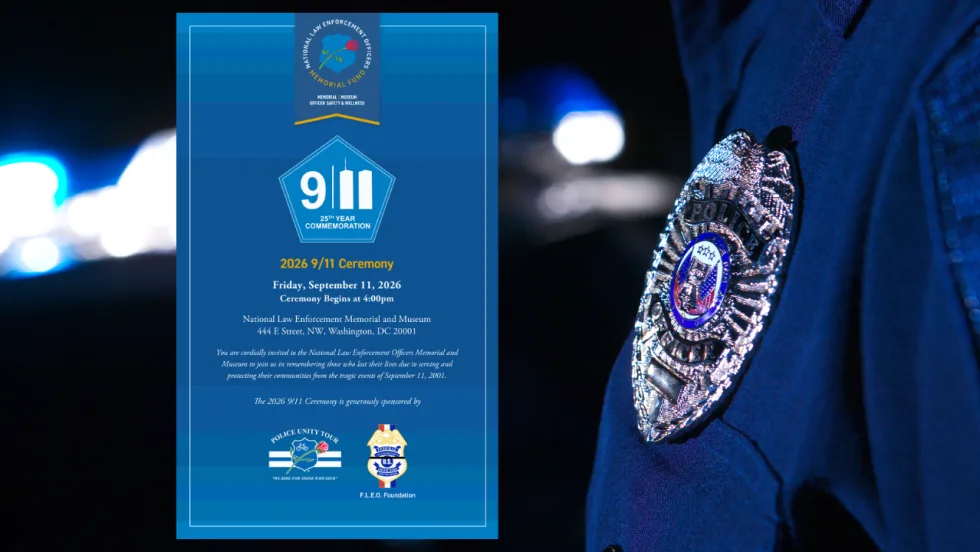
National Law Enforcement Memorial and Museum Hosting 9/11 25th-Year Commemoration Ceremony
The National Law Enforcement Memorial and Museum is hosting a 9/11 25th Year Commemoration Ceremony on Sept. 11 at 4 p.m.
Read More →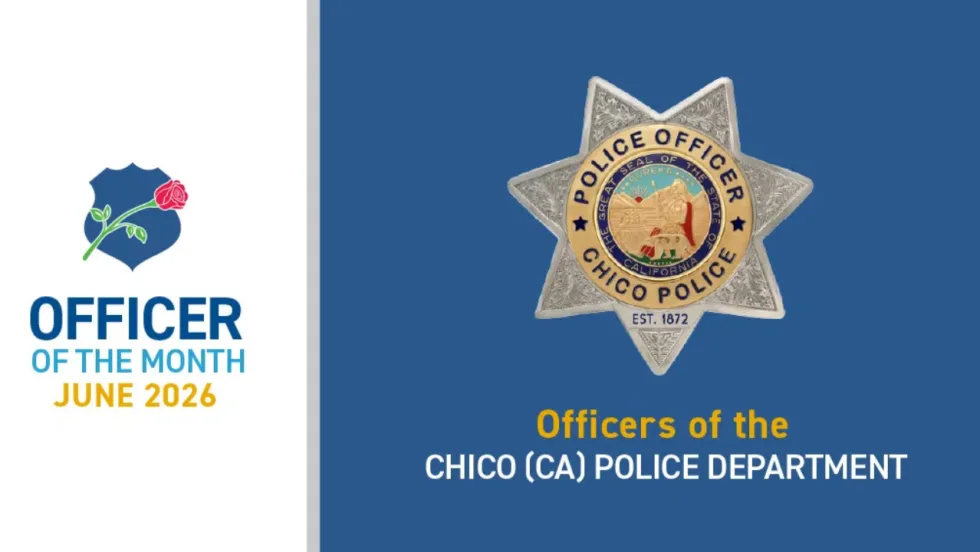
National Law Enforcement Officers Memorial Fund Announces June 2026 Officers of the Month
The National Law Enforcement Officers Memorial Fund (NLEOMF) named 15 officers of the Chico Police Department (California) as the Officers of the Month for June 2026 for their roles in responding to an active-shooter incident at a public library.
Read More →