



How To Work With Fire Rescue
It's important to communicate with firefighters and rescue personnel and not get in each other's way.

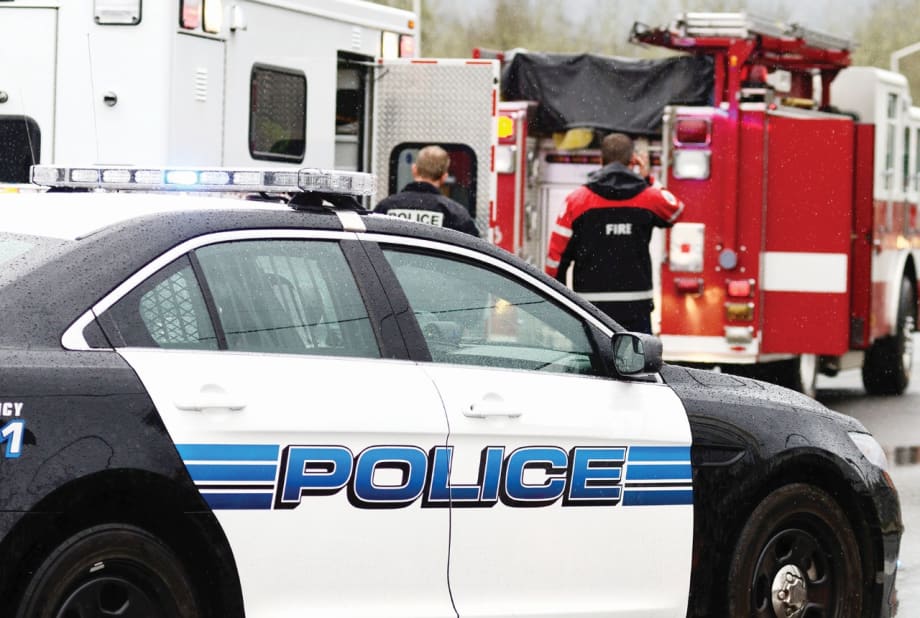
Be careful where you park your vehicle when fire rescue personnel are on scene. Photo: Getty Images
Unlike most jobs that are defined by a limited set of tasks and conditions, law enforcement officers serve in a multifunction and diverse capacity that is not easily covered by a few entries in an HR book. By the nature and demands of the job, law enforcement officers often find themselves crossing over into other fields. One such field is emergency medical or fire services, which is the primary realm of fire rescue. Because there can only be one tip of the spear, problems arise when both agencies are on scene trying to accomplish their individual objectives. Problems arise when there is little to no consideration for each other. It is possible for law enforcement and fire rescue to accomplish all tasks, individual and crossover, but only if they work together.
Why Conflicts Occur
Let's face it, both professions are full of people with Type A, get-it-done personalities. They are usually at their best in dangerous environments. Each group takes charge and gets things done, regardless of whose toes they must step on. Though this attribute is commendable, it is not without inherent pitfalls. When both police and fire rescue are on scene, whose mission has priority? And when this comes up, who decides when and where?
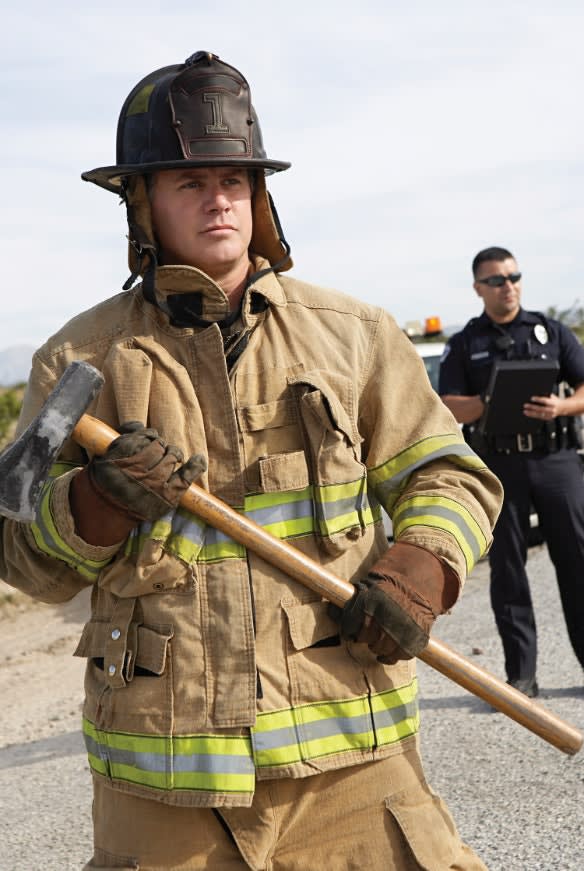
You may have seemingly opposing objectives on a call, but you can accomplish them if you work together. Photo: Getty Images
There are obvious individual objectives that are clearly defined. For example, law enforcement secures the scene while fire rescue fights a fire. It sounds easy enough, until you suspect an arson-homicide, and now it's a crime scene. You now have crossover objectives, because the crime scene must be protected and preserved. Accomplishing your objective is easier said than done when you're trying to stop a firefighter who is using an axe, stomping around in full gear, and hitting the place with thousands of gallons of water.
It's a recipe that guarantees a conflict unless these issues are worked out ahead of time or can be resolved by working together while on scene. For example, there are times when a road needs to be blocked by fire rescue emergency vehicles. However, there also comes a time when blocking the road becomes secondary. The rub comes from determining who gets to decide who opens the roadway. You can't think in terms of "my scene," but "our scene." Two quick examples and some thoughts on how to deal with them come to mind: parking and crime scenes.
Parking Concerns
One of the biggest law enforcement concerns with fire rescue is where they park their vehicles. Fire rescue looks at it from the standpoint that they are blocking traffic to keep their personnel safe. They also want to get close enough to use their gear. However good intentioned they are, there is always an element of "we park here because we can" mixed-in.
Take a car crash for example. The primary role of fire rescue is to provide emergency medical care, extract victims when necessary, and deal with any fire or hazardous material spills. Law enforcement secures the scene, investigates the crash, and opens traffic back up as soon as possible. You can see how the issue of when to open up traffic and who gets to decide can create a problem.
If fire rescue needs to close a portion of roadway, they should coordinate with law enforcement officers at the scene whenever possible. By working together, they can provide roadway safety and, more times than not, they can find a way to keep some type of traffic lane open.
Parking goes both ways, however. Law enforcement can't park near a fire hydrant and block its use. They also can't block fire rescue from coming in either. I have seen some crazy responses where there were so many patrol cars in the street that nothing was getting through. We need to park our vehicles strategically as well.
On a side note, you should never park close to any fire rescue apparatus. It only takes one experience of being wedged in between two fire trucks and you will never be careless with your parking again.
Don't think your uniform gives special rights either. After getting a refusal to move, I went and climbed in the cab of a fire truck and tried moving it myself. It went over like a lead balloon. If you've ever wondered, I can assure you that battalion chiefs yell just as loudly as patrol captains when they are upset.
What to Do About Parking
You need to learn that when fire rescue arrives, they are going to park in a way that helps them accomplish their mission. Basically that means they park wherever they want. In the beginning, you have to accept their judgment. When things start to wind down, or get to a point where you think it's time to make an adjustment, you can ask to have the vehicles repositioned.
However, it's still going to be up to them unless you have a lawful or exigent reason that overrides theirs. If they refuse, try to speak directly to their incident commander. See if they will agree to any adjustments. If not, get your supervisor in the loop. It may have to go higher even than them. Don't threaten with arrest unless it's your last recourse and you have a very good reason to back it up. Even when justified, doing so is never received well in the public eye. Be prepared to justify your actions.
As for being blocked in, pay attention to where you park. Stay away from fire rescue vehicles unless you are part of a staging area. When you arrive, try to anticipate where they will park their vehicles, and avoid that area. Your best tool in these circumstance is to think ahead. Include it as part of your response decision-making and save yourself a headache.
What to Do at a Crime Scene
Fire rescue personnel need to understand that maintaining the integrity of a crime scene is as important as anything they do. Everything they arrive on has the potential to be a crime scene. They should be mindful and preserve as much as they can. Hopefully through training and experience, they learn best practices with law enforcement in mind. They also have to realize their observations can be critical to an investigation.
At the risk of oversimplification, you need to communicate and get to know who you are working with. Talk to fire rescue personnel when you are not on a call and tell them what you need during one. If it's not great this time around, maybe you can make it better for the next. Joint training or workshops are a great idea. It seems the only time we train together is in some type of incident command class or the rare joint exercise.
During your investigation of the incident, make sure you include the fire rescue personnel's names and responding units in your report. Ask them if they disturbed anything in the performance of their duties and have them explain what. Ask them if they heard anything from witnesses or anyone they came in contact with. If they are transporting victims, ask them to save any clothing until you or a detective can get to the hospital. In essence, all rules of interviewing and evidence preservation apply.
With Them, Not Against Them
During my law enforcement career, I had very few problems with fire rescue. When I did, it was handled at the scene, except for one instance. I was the guy who got blocked in between two trucks. I parked behind one of their trucks and never thought that another would pull in behind me. If you work with fire rescue, instead of against them, you will have an easier time.
Amaury Murgado retired a senior lieutenant from the Osceola County (FL) Sheriff's Office with over 29 years of experience. He also retired from the Army Reserve as a master sergeant. He holds a Master of Political Science degree from the University of Central Florida.
More Patrol

Adept Armor Introduces Two New Rifle Plates
Adept Armor has launched two new Level IV ballistic plates, the Emperor and the Archon Mark 2, which brings Adept Armor’s new Quatroid ceramic to the high-threat, performance-value center of the range at 5.2 pounds.
Read More →
POLICE Product Test: Benchmade Bailout
The Benchmade Bailout is a slim, lightweight carry knife with a deep-ride pocket clip and comes in a variety of blade steels and scales. Here is a detailed review of the Taiga Green Bailout, released earlier this year.
Read More →
NLEOMF Announces July 2026 Officer of the Month
NLEOMF honored a Michigan deputy sheriff as the July 2026 Officer of the Month for rescuing a trapped driver from a burning vehicle following a Fourth of July crash.
Read More →
Streamlight to Showcase Newest Lighting Products at National Safety Council’s Safety Congress & Expo 2026
Streamlight will showcase its latest lights, including the Portable Scene Light III and the LiteBox 1Million, at the 2026 National Safety Council (NSC) Safety Congress & Expo.
Read More →
The 2027 World Police & Fire Games Set for Perth, Australia
The 2027 World Police & Fire Games (WPFG) will take place in Perth, Western Australia, from Friday, March 12 through Sunday, March 21, 2027.
Read More →
5.11 Partners with National Fallen Firefighters Foundation to Support #ForThe343
5.11 has joined the nationwide movement honoring the 343 New York City Fire Department firefighters lost on Sept. 11, 2001.
Read More →
Team Wendy Announces Title Sponsorship of the Jorge Pastore Foundation
Team Wendy’s 3-year partnership with the Jorge Pastore Foundation expands access to programs that strengthen those who serve.
Read More →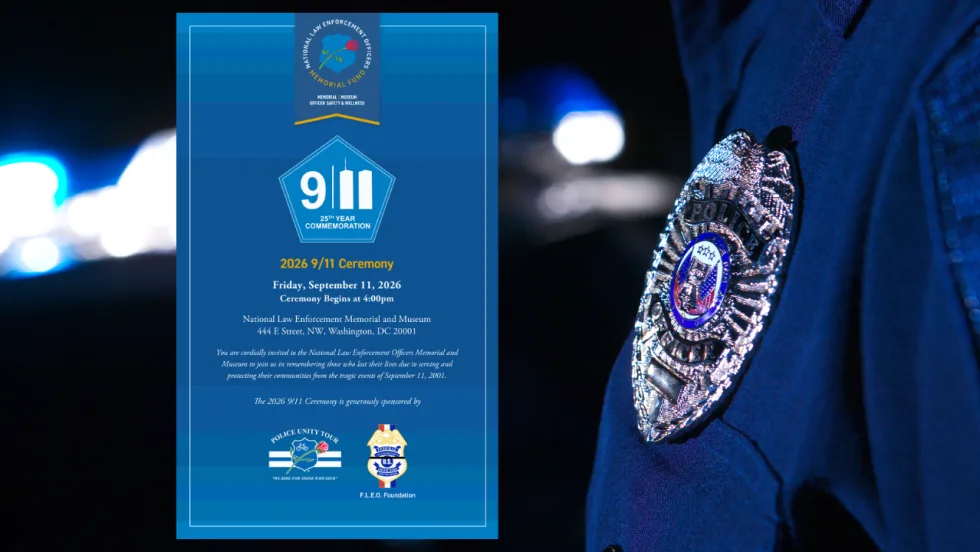
National Law Enforcement Memorial and Museum Hosting 9/11 25th-Year Commemoration Ceremony
The National Law Enforcement Memorial and Museum is hosting a 9/11 25th Year Commemoration Ceremony on Sept. 11 at 4 p.m.
Read More →
National Law Enforcement Officers Memorial Fund Announces June 2026 Officers of the Month
The National Law Enforcement Officers Memorial Fund (NLEOMF) named 15 officers of the Chico Police Department (California) as the Officers of the Month for June 2026 for their roles in responding to an active-shooter incident at a public library.
Read More →
Team Wendy App Creates New Digital Hub for Helmet Owners
The Team Wendy Community App provides one location for warranty registration, size-fit tools, product updates, and community connection. For helmet owners, the new app creates a simpler path to the information and tools that matter most.
Read More →