



How to Choose a Helicopter for Your Agency
If you're considering purchasing a helicopter for your agency, here are some topics you need to explore in your journey toward achieving flight operations.


Photo: Amaury Murgado
There has always been a two-sided argument with regard to using helicopters in law enforcement. The arguments for helicopters include the added value they bring to enforcement operations. The arguments against helicopters include cost factors and the negative impact they have on budgets. The question of value then becomes subjective and depends on what side of the argument you are on. Because perception is reality, perception ultimately becomes the driving force in decision-making.
If you are looking into the possibility of buying a helicopter at your agency, you need to consider both sides of the argument to come up with a balanced decision. You must include all the factors that apply to your situation. Picking the model, believe it or not, should be one of your last considerations. Here are some topics you need to explore in your journey toward achieving flight operations.
Mission
In general, helicopter operations fall under four main categories: emergency response, patrol duties, back-up, and pursuits. Within these categories, some aviation units have eWven more specific missions because of their location or special needs. Your first order of business is to define your mission and identify what it is you want the helicopter to do. In other words, you must determine the scope of your flight operations and match the helicopter's capabilities to them. Stay away from uninformed opinions and people who don't care how they spend taxpayer monies.
For example, every agency has its own unique set of geographical factors based on location, weather patterns, altitude above sea level, and types of terrain. Identifying factors like your desired flight time, how much payload you need to carry, and what types of auxiliary equipment you need will start you in the right direction. An agency that flies mostly at sea level in urban environments will have different considerations than one that flies mostly in high elevations and in mountainous terrain.
Training
Who will conduct your unit training is another key factor. Are you going to train in-house, contract out, or use a combination of both? Will you train your own pilots and hire from within your agency? Will you hire from outside your agency and use third party vendors for training? Will your pilots be sworn or civilian?
Training is not one of those areas you can skimp on if you want to develop an effective program. Some missions require continuous training, such as fire suppression. Flying a bucket into water and dumping it over a fire is serious business. It's not something you practice just once and then move on.
Maintenance
Maintenance is critical to successful flight operations. Everything is based on component hours a host of inspections must be done. They range from visual checks to taking the aircraft apart and having parts checked for tolerances and damage. Everything must be documented and the information must be made available upon request.
Maintenance is something else that you must decide whether to do in-house, contract out, or do a combination of both. Take this decision seriously to ensure the best care for your agency's aircraft. You can't think of helicopters like cars. If something goes wrong with a car, you can park it. If something goes wrong with a helicopter, it starts to fall from the sky.
Fuel
Logistics is another key factor for helicopter operations. This includes all types of oil, lubricants, and specific fuels. Without access to fuel, you are not going anywhere. Where are you going to get your fuel? Do you have access to military sales? Will you get it locally? Will you fuel up on site or have to go somewhere else? Will you have your own storage tanks? Will you have remote fueling capabilities? Are you going to share fueling points with other agencies?
Storage
Where are you going to store your helicopter? Some agencies have their own hangers and others share space with other aircraft. Your choice of storage facility goes hand in hand with your choice of how to handle maintenance operations. If you are doing your own maintenance then you need a place big enough to do your work in. Is also has to be big enough to store your spare parts. You also need space for your air crews. There has to be some type of office space for admin work and for the crews to hang out in between flights even if you plan on an on-call type of status.
Military Surplus
One of your biggest decisions will be whether to use military surplus or buy civilian (new or used). The federal 10-33 Program authorizes surplus equipment to be used by law enforcement agencies. It's a great way to get into flight operations because the initial cost of the helicopter involves a small transfer fee. I know of an agency that obtained four Bell OH-58 helicopters at a $500 transfer fee apiece. Considering that a used civilian version of the same helicopter (Bell 206 series) around the same age starts around $500,000 apiece, they got a great deal. In comparison, the cost of a used Bell 407, similar to those you see flying for news outlets, starts at a couple of million dollars. Keep in mind, those prices reflect a standard helicopter minus all the cop bells and whistles.
However, don't confuse the military surplus program with a free lunch. These used military birds need work done to them in order to bring them up to law enforcement flight standards. For example, a mere makeover with your logo and agency color scheme involves stripping the paint, applying corrosion coating, priming, and painting, which can easily cost $30,000 or more depending on what type of corrosion they find. There was a news story in January of 2015, about the Newark (NJ) Police Department getting two free helicopters (one flyable, the other for parts) at a cost of two million dollars when everything was said and done. Free is a relative term. It was still cheaper than a new more modern helicopter.
Parts for military surplus aircraft usually end up pennies on the dollar compared to buying new parts off the shelf. For example, I obtained a part for one of my former helicopters on a transfer from another agency. The same part new would have cost my agency $10,000. Keep in mind that military surplus parts are subject to availability and become harder to find as time goes on. If you can't find it used, you may have to buy it as a new surplus part. Still, for the most part, military surplus tends to be very cost effective. Just remember that like anything else there is a learning curve to the process.
Another consideration is political. Military surplus has received a bad name now due to negative stories in the media about the militarization of police. Some agencies are shying away from military surplus altogether.
Model
After you identify the role, mission, and basic logistical factors, you are ready to pick your model of helicopter. There are numerous manufacturers, which include but are not limited to, Bell, Eurocopter, MD, Robinson, and Sikorsky.
At this point my best advice for choosing a model of helicopter is to pick what you need and not what you want. Bigger is not better; and it comes with bigger costs. Match your mission with the right helicopter in its class.
Costs
When deciding on a model, you will come across cost per hour. This figure can be deceiving. It depends on what you want to include as factors. Manufacturers tend to use conservative figures in their brochures. For example, one company estimates that a certain model costs around $528 an hour to operate and a different model costs $250 an hour. But this is not necessarily accurate for your agency.
For planning purposes, I would add at least another 25% to their numbers to give you a more realistic number. No two agencies use their helicopters in the same way and there is nothing standard about costs. You either pay for the helicopter to fly or it sits in the hanger as a giant paper weight.
The scheduled maintenance is easy to plan for. You keep precise records and figure out in what budget year the major services will appear and plan for it. Since it is all based on timed parts, you can make educated estimates. It's usually during one of those planned inspections that someone finds something. It was my experience as an aviation unit supervisor that there were always unexpected surprises that caused unanticipated costs. Allow for such surprises in your budget.
Where to Get Help
There are two places I would contact to aid in your search for a helicopter. The first is the Airborne Law Enforcement Association (ALEA); the second, the nearest aviation unit to you.
ALEA is a one-stop shop for information. They have resources to help you with a startup program. They also offer a new unit supervisor course that will keep your unit on track. They also put on regional safety meetings and training. I can't recommend them enough. They were a valuable resource when I was first made responsible for four helicopters and one fixed wing at my former agency.
For your second source of information, finding an agency with an already existing aviation unit and job shadow the unit supervisor. Spend time asking questions and walk around their facilities. How do they handle their fuel issues? Who does their maintenance? How often do they conduct training? What are their duty hours? Come prepared to spend a while as it will be worth it in the end.
Final Thoughts
As I said earlier, perception is reality. Trying to figure out if the costs are worth it depends on the value you place on your intended results. What if because of having a helicopter you're able to find a lost child, you capture a murderer who was hiding in the woods, or you safely follow an armed bank robber until he runs out of gas? If I were the parent of the lost child, I would think the return on investment was pretty good. Remember that you don't have to go it alone. You can pair up regionally and share expenses between agencies. Where there is a will there is a way.
Any study that has ever been done on the subject shows agencies that use aviation assets are more effective than those that don't. A properly run aviation unit does make a difference in catching bad guys, increasing officer safety, and helps cut down on response times.
The question of drones always comes up when looking into helicopters. Though drones are making an inroads into law enforcement operations, helicopters are going to be around for a long time. There is no substitute for what a well-trained flight crew can do. If all you need is a set of eyes in the sky that may be a viable option if you can't afford a helicopter. Just remember drones can't backup officers or render first aid.
I will leave you with this; when I was working, our success rate was always better when we were flying. On days we couldn't fly because of bad weather, the flight crews were sorely missed.
Amaury Murgado retired a senior lieutenant from the Osceola County (FL) Sheriff's Office with over 29 years of experience. He also retired from the Army Reserve as a master sergeant. He holds a Master of Political Science degree from the University of Central Florida.
More Vehicle Ops
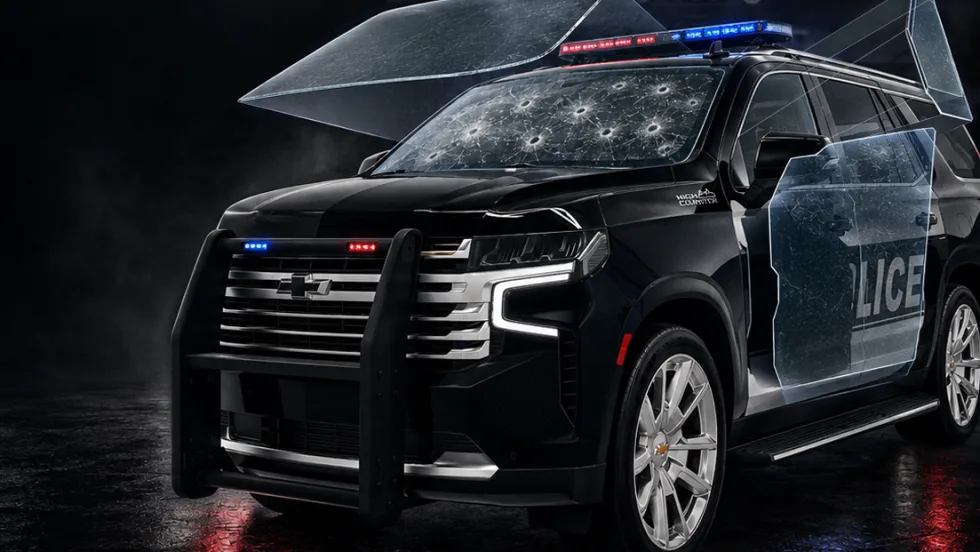
It’s an Ambush: How Ballistic Glass Redefines Patrol Vehicle Safety
Dana Safety Supply is setting a new standard for officer safety with windshields capable of withstanding multiple rounds and saving lives — and one Texas deputy is living proof.
Read More →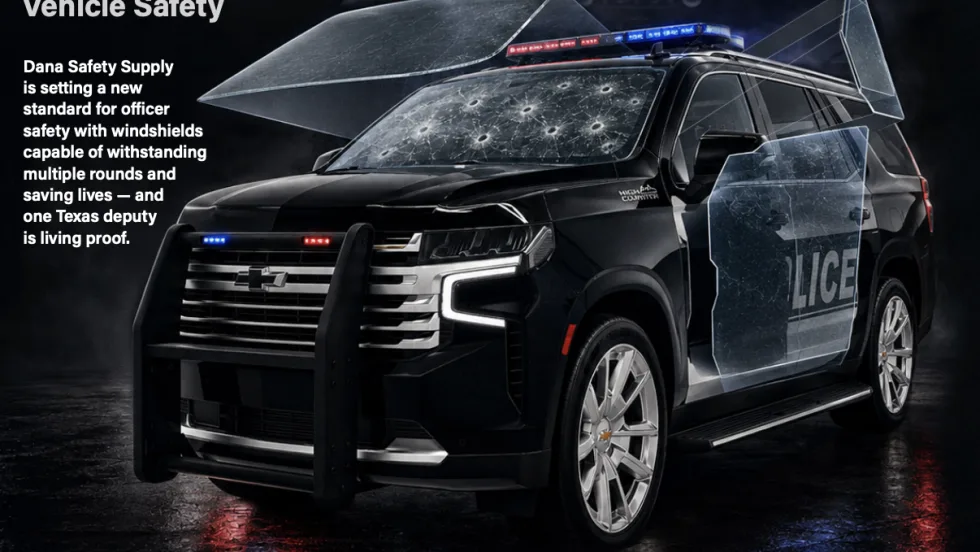
Dana Safety Supply’s BallisTech Vehicle Armoring Solutions
Dana Safety Supply is setting a new standard for officer safety with windshields capable of withstanding multiple rounds and saving lives.
Read More →
Ford Showcases 2028 Ford Expedition Police Responder
Ford showcased its 2028 Ford Expedition Police Responder, a full-size, pursuit-rated utility vehicle, at Police Fleet Expo this week. It comes standard with 4x4 and a 3.5-liter EcoBoost V6 producing 400 horsepower and 480 lb.-ft. of torque.
Read More →
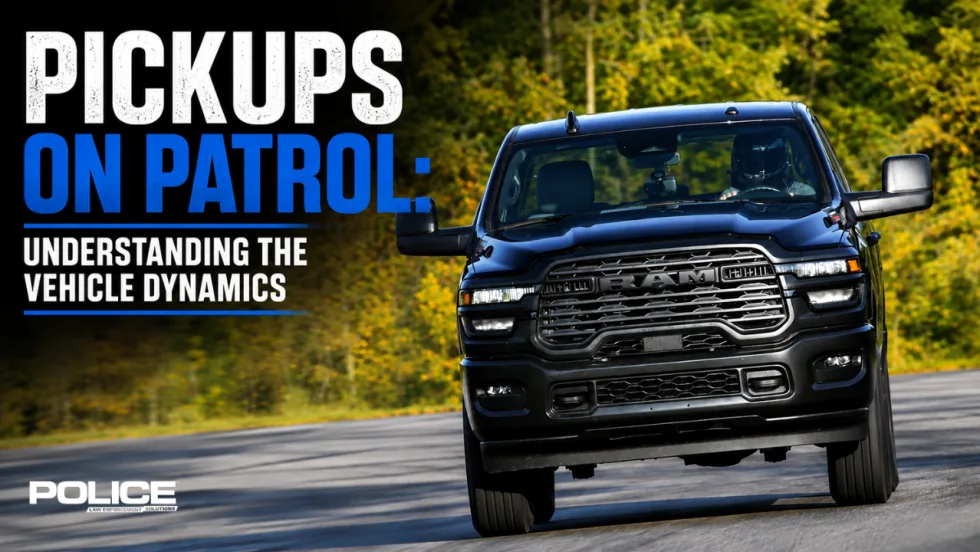
Pickups on Patrol: Understanding the Vehicle Dynamics
Pickup trucks are not new to patrol duties, but with the debut of the 2027 Ram 2500 Emergency Response Vehicle, they are getting larger and heavier. POLICE reached out to the Michigan State Police Precision Driving Unit to learn more about pickup truck handling, vehicle dynamics, and what officers need to know.
Read More →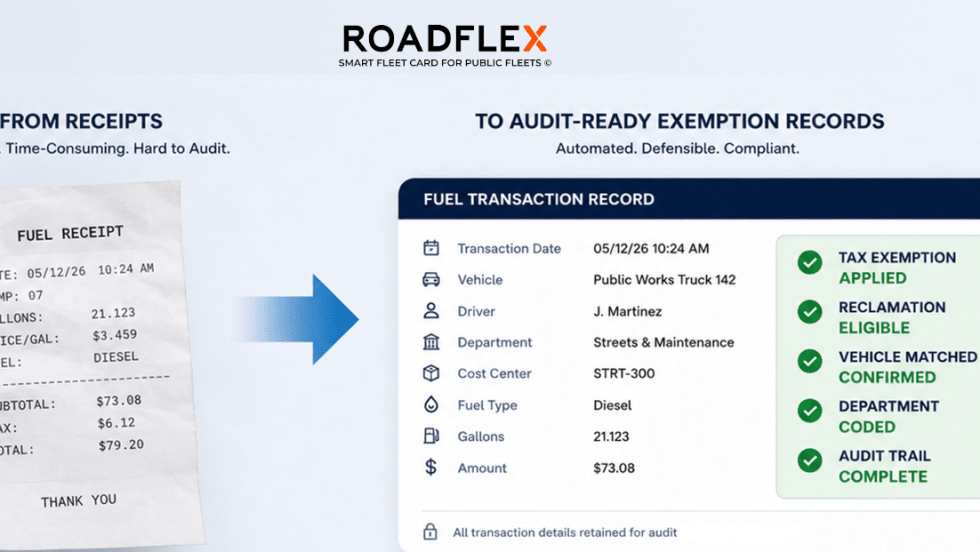
RoadFlex Brings Fuel Tax Compliance & Audit-Ready Reporting to Government Fleets
RoadFlex now offers its capabilities to help public-sector fleets streamline fuel tax exemptions, reclamation, reconciliation, and audit-ready reporting.
Read More →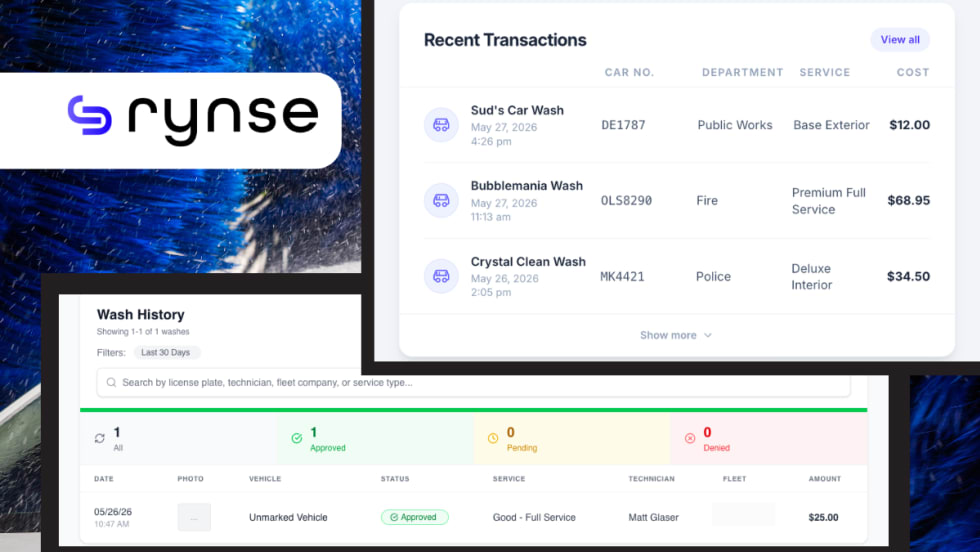
Rynse Awarded Cooperative Purchasing Contract, Expanding Nationwide Fleet Wash Access for Law Enforcement
Rynse has secured a 2026-2027 NCSA contract, giving law enforcement agencies nationwide fast-track access to its fleet wash network and management platform, which streamlines procurement, reduces administrative burdens, and helps fleets stay road-ready with greater oversight.
Read More →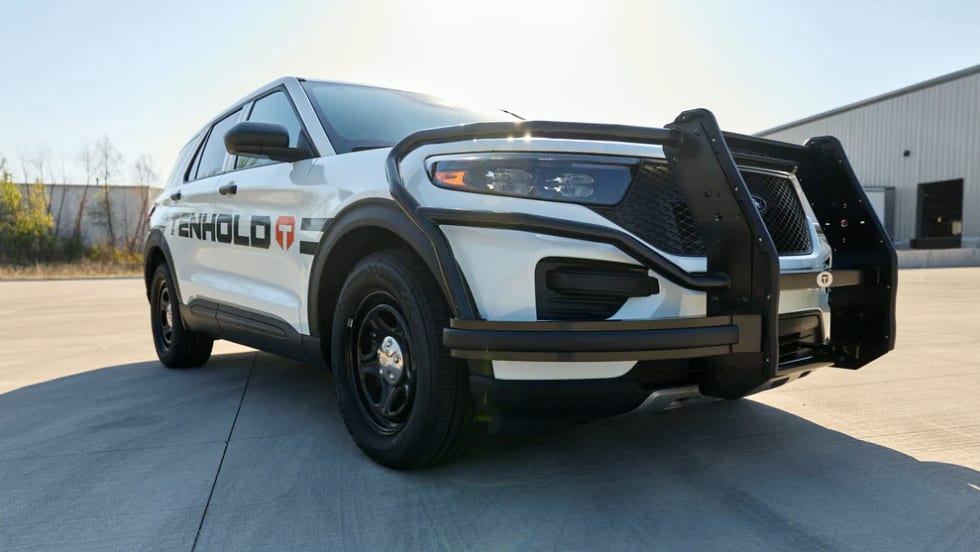
Tenhold Introduces Suppressor Gun Rack System
Tenhold, formerly Jotto Desk, provides next-generation vehicle systems for law enforcement and public safety and recently debuted its Suppressor Lock Head for its Weapon Mounting system.
Read More →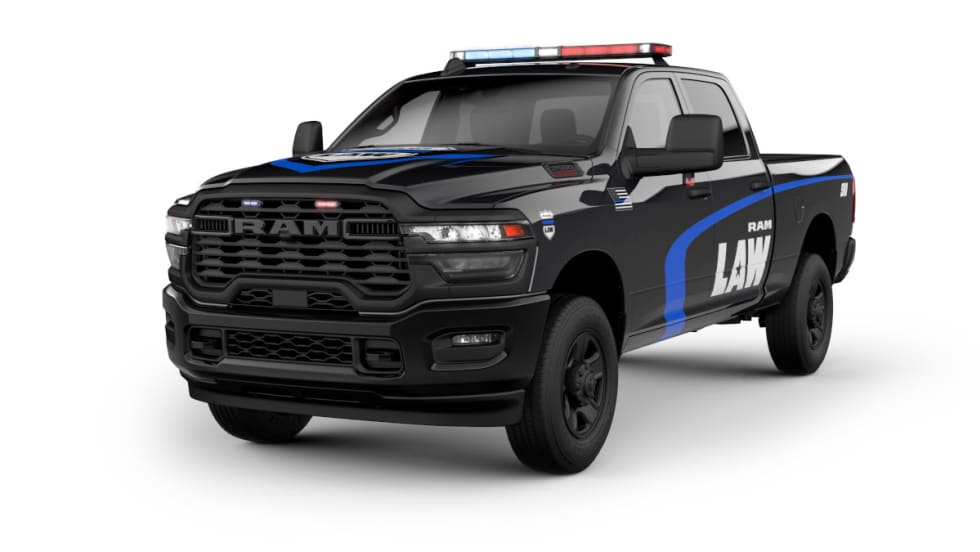
Ram Debuts Pursuit-Capable 2500 Emergency Response Vehicle
The 2027 Ram 2500 Emergency Response Vehicle is the first and only ¾-ton truck to complete the Michigan State Police vehicle trials, and Ram said it delivered outstanding performance in testing scenarios designed to replicate extreme real-world duty.
Read More →
Emergency Vehicle Upfitter LEHR Opens New Facility in New Jersey
LEHR’s new centralized upfitting facility in New Jersey consolidates operations to deliver faster turnaround times and enhanced fleet capacity for law enforcement agencies across the Northeast.
Read More →
North Carolina Sheriff’s Office Improves Fueling Reliability & Operational Control
The Madison County Sheriff’s Office overcame fuel management and accounting challenges by turning to RoadFlex to improve fueling reliability, visibility, and administrative control.
Read More →