



Helicopter Training In Law Enforcement
How we train is how we fight—or more broadly, how we perform under pressure. This also applies to helicopter pilots; how they train versus how they are expected to fly.

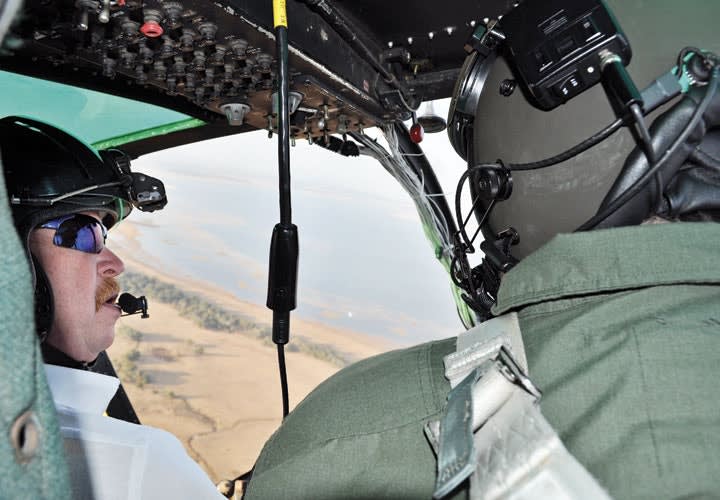
Photo courtesy of Amaury Murgado
My service in the Army gave me a great many tools for my career in law enforcement. Not everything that I learned crossed over well, but there were some core principles that did. One principle in particular applies to training; all types of training. I learned that how we train is how we fight—or more broadly, how we perform under pressure. There is no truer statement, and it's bolstered by the fact that my training has gotten me out of more crap than I care to remember. This also applies to helicopter pilots; how they train versus how they are expected to fly.
My job as special operations lieutenant includes managing my agency's aviation section. The Osceola County (Fla.) Sheriff's Office has four OH-58 light observation/attack helicopters that we keep flying through the Federal 1033 Program. I am not a pilot but I have maintained a love of helicopters since the days I used to jump out of them. In other words, it wasn't a hard decision for me to attend our bi-annual emergency procedures training. I couldn't think of a better way to observe and evaluate how my pilots performed than by flying with them and seeing firsthand how they react under emergency conditions.
From a trainer's perspective, what I found out after two days of intense flying surprised me. Apparently, if you're taking standard helicopter training, how you train is not how you fly. The current set of emergency procedures training leaves a lot to be desired for law enforcement aviation. They take pilots through only a cursory routine that leaves them on their own in a real-world emergency. In my mind, the principle of "how you train is how you fight" surely applies to more than just firearms and tactics.
Conventional Training
Every helicopter pilot receives emergency procedures training that includes flying with stuck tail rotor pedals, a loss of hydraulics, and demonstrating how to safely autorotate down. Autorotation is an exercise in the energy management of a spinning rotor to cushion your touchdown. The pilot must ensure the continued rotation of the rotor blades to support a controlled descent to the ground. That's a fancy way of saying if the engine fails, you have so many seconds to make a controlled landing or you turn into a lawn dart.
Typically, autorotation training involves an airport so you can do your emergency procedures on a runway. Because we have special skids on our OH-58s, we get to train better than most by performing an autorotation that glides forward toward the runway, touches down, and then skids to a stop. In a real emergency, it makes perfect sense if you are near a runway. My problem with this technique is that in the real world, there never seems to be a runway around when you need one.
Unconventional Training
Sgt. Harold Standridge is a former Army Blackhawk helicopter pilot and the aviation unit sergeant for the Marion County (Fla.) Sheriff's Office. Through an off-duty gig, he conducted my agency’s emergency procedures training. He started out with the typical set and then took my pilots to the next level. The premise for his training is that forward movement kills. He made a very convincing argument while using examples of recent helicopter crashes.[PAGEBREAK]It's a no-brainer…what works on a smooth runway will not always work somewhere else. Think about it: If the helicopter's skids get caught up on something, the helicopter will flip over. Sgt. Standridge trained our pilots in full down autorotation by teaching them to pick a spot, head there by any means possible (glide, corkscrew, left and right turns, etc.), flaring at the end to stop forward motion, leveling off, and bringing the bird straight down. While we never went all the way to the ground (the instructor would kick back power at the last minute), we still made all those twists and turns and flared at the end to a hover. Shy of crashing, it was as real as it gets.
I thought this type of training was the norm. I figured since we ground pounders use realism when we train, pilots must do the same. To my dismay, my 15 year plus pilots said it was the first time they had trained to this level. Let's face it; pilots fly in support of road patrol units. If the aircrew is flying a search pattern in a sub-division at 1,000 feet and the engine goes south, they have approximately 12 seconds to land. In a subdivision, that may very well mean setting down in someone's backyard. They need to train to that end, not do bare bones training that merely constitutes a check on some form.
Realistic Drills
In our primary drill, the instructor would cut engine power to simulate engine failure and pick a spot nearby. He would then twist and turn and do whatever it took to get there. He showed how to increase airspeed and gain distance. He made our helicopter dance, which gave us a deeper appreciation for the OH-58. When it was our pilots' turn they did quite well for the first time.
From a 1,000-foot orbit, the instructor would cut power to the engine and make the pilot count for two seconds to simulate the "WTF" factor. The pilot would then flare the helicopter by pointing the nose up to the sky, which made the helicopter feel like it was floating in the air. To make it more challenging, our instructor would pick out and call the spot. Next, the pilot would put the nose back down and do whatever maneuver he had to, to get the helicopter down to the chosen spot.
As the pilot got closer, the instructor would kick the power back up. The pilot would then flare the helicopter again, killing the forward momentum, and settle the helicopter to a hover over the target spot. We never actually came down all the way but it was close enough. After a few tries, all of my pilots was doing the maneuvers like they had been doing them all their lives. It was truly a tribute to their skill. They each walked away with a new confidence level. One of our pilots said that prior to this training, he was always left with doubts. This observation points to the fact that training should never leave anyone with doubts. Get this point now and help save lives: realistic training yields real world results.
It's All About the Instructor
Those that would argue against this level of helicopter training will say it's too dangerous and not worth the risk. It is true that between 1999 and 2005, law enforcement helicopter aviation suffered 86 accidents, of which 23 were from engine failure and an additional 14 were from autorotation training. I suggest these numbers encourage more training and not less. It's not the training but the skill level of the instructor that's the key. For two days and without question, Sgt. Standridge drove that point home for me. Through training all five of my pilots, we never had a mishap or even came close.
An article written by Keith Johnson, the current Airborne Law Enforcement Association safety program manager, suggests the same thing. In the association's Air Beat May/June 2010 magazine issue he wrote, "Most autorotation accidents occur when an instructor does not take control of the aircraft soon enough to avoid an accident. This is often the result of the instructor not having the skill and experience to avoid the mishap."
In these lean times, I hope that bean counters aren't placing budgets over critical training. The loss of human life, inherent property damage, and the accompanying lawsuit will far outweigh the cost of instruction. It’s the failure to train that results in the failure to perform.
Training is Everything
In September 2007, after reviewing crash data, the U.S. Joint Helicopter Safety Analysis Team submitted a report to the International Helicopter Safety Team that included a recommendation to "improve primary and recurrent autorotation training." I take that to mean they recommended doing more of this type of training and not less.
My experience has taught me that training is everything. The closer you train to real-world conditions the better prepared you will be to handle them. The reality is that whether you’re prepared or not, you're still responsible.
Amaury Murgado is a retired Army Reserve master sergeant with more than 30 years of martial arts training who currently serves as the special operations lieutenant for the Osceola County Sheriff’s Office in Kissimmee, Florida.
Related:
More Training
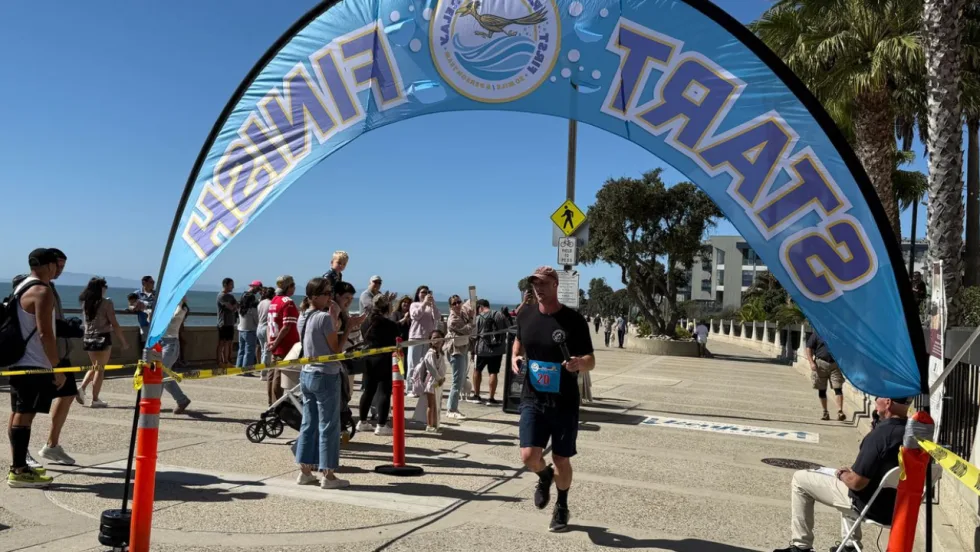
Registration Underway for Sixth Annual First Responders Relay
The California Police Athletic Federation’s annual First Responder Relay will welcome first responder teams from across the globe to compete along Ventura's scenic coastline on Oct. 11. Registration is underway.
Read More →
Vector Solutions Launches Comprehensive Online Dispatch Training Catalog for Emergency Communications Professionals
Vector Solutions’ new catalog of 35 expert-developed online courses can help emergency communication centers strengthen training, meet certification requirements, and simplify continuing education.
Read More →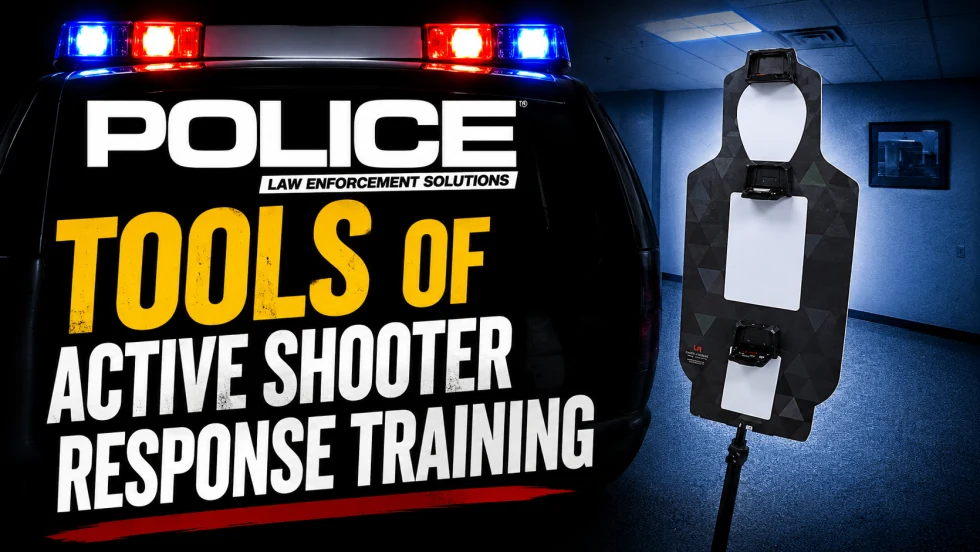
Tools for Active Shooter Response Training
What technologies help prepare officers for active shooter response situations? This behind-the-scenes look at law enforcement training explores shot simulators, smart firearms, laser target systems, and the tools used to build safer, more effective training environments.
Read More →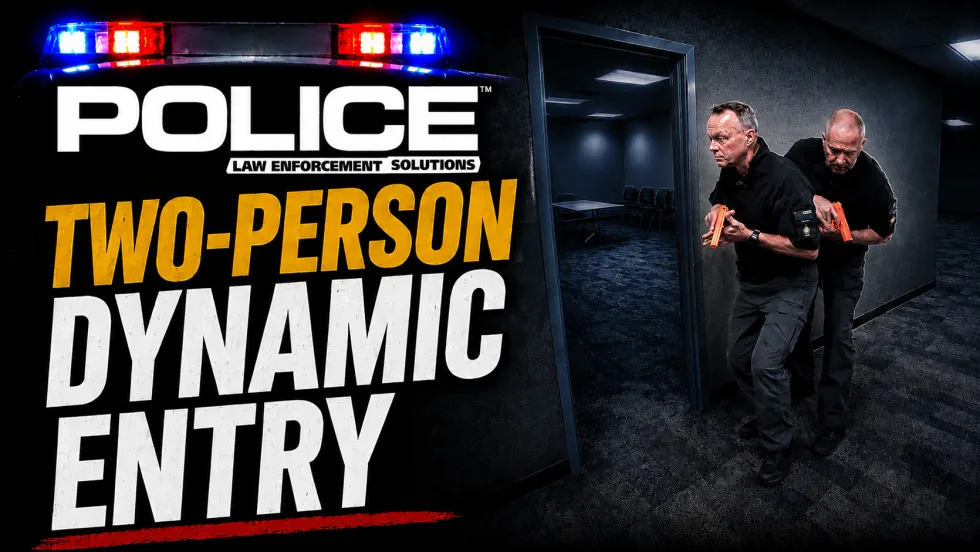
Two-Officer Tactical Doorway Entry Techniques
Entering a room during active-threat situations requires communication, coordination, and disciplined tactical movement. In this video, trainers from the United States Deputy Sheriff’s Association demonstrate critical room entry concepts, including fatal funnel awareness, team coordination, and safe tactical movement.
Read More →
High Compressed Ready Explained | Muzzle Control For Room Entry
In this video, Mike Willis, law enforcement national training and program director for the United States Deputy Sheriffs’ Association, demonstrates the high compressed ready position and discusses muzzle control during room entry.
Read More →
Why Attend the DroneSense Innovation Summit by Versaterm?
Let’s hear from Ryan Bracken, head of product, about why your agency should send someone to the first annual DroneSense Innovation Summit by Versaterm in April.
Read More →
Caswell Live Fire Spins Off from InVeris
Caswell Live Fire has spun off from parent company InVeris, coinciding with the 100th anniversary of Caswell’s founding. Over the past 100 years, Caswell has developed pioneering solutions that support military, law enforcement, and commercial clients worldwide.
Read More →
When Do You Transport a Wounded Officer Instead of Waiting for EMS?
Thumbnail for video series POLICE Topics, Tactics & Tips with a yellow headline that reads When Do You Transport a Wounded Officer Instead of Waiting for EMS?
Read More →
How to Pick Your High-Risk Stop Location for Tactical Advantage
Hear veteran trainer Mike Willis, of the United States Deputy Sheriff’s Association, explain several considerations that can help you wisely pick your best spot to initiate high-risk or felony traffic stops.
Read More →
Coffee Break with Police Experts: Using Your Patrol Vehicle for Cover
In this video, hear from Dustin Mowery, a product specialist at Team Wendy, as he discusses how to best use a patrol vehicle for cover.
Read More →