



He Flees: To Pursue or Not To, That Is the Question
A recent U.S. Supreme Court decision shielding police officers from being sued in federal court for deaths and injuries to innocent citizens resulting form high-speed chases should not be viewed as an invitation to law officers.

A recent U.S. Supreme Court decision shielding police officers from being sued in federal court for deaths and injuries to innocent citizens resulting form high-speed chases should not be viewed as an invitation to law officers.
It is useful for law enforcement professionals to learn from the experiences of others and not have to repeat them. I will share one of mine. I was a 25-year-old officer patrolling a rural area at 0300 hours on a September morning when a vehicle attracted my attention. It was a 1957 T-Bird in mint condition with out-of-state plates being driven slightly over the speed limit by a young male and it just "didn't look right." As I pulled behind him he immediately made me in his rear view mirror and when I activated my overhead light, he punched it.
His vehicle rapidly outdistanced me on a long straight-away but I kept him in sight until he went over a rise. When I topped that rise I found another vehicle literally broken in half and upside down in an intersection. I watched the woman passenger die and later I found her husband, still alive but seriously injured, some distance away. The young man I was chasing was still alive too but soon died.
The vehicle he was driving was not stolen, as I had suspected, and the only reason that he ran was because he was a rabbit with a hot car. The accident had occurred when he went through a stop sign at an estimated 130 mph and hit another other car approaching from his left with the right of way. Score: dumb kid dead, one innocent third party dead and another innocent third party crippled for life. Had I been driving a faster patrol vehicle, might I have been a statistic too?
High-speed pursuits are the most dangerous of all police activities for innocent citizens, regardless of the circumstances! In my example it was a rural setting at 0300 hours on a straight road with no one else around, except for the other vehicle that became an unwitting rolling roadblock for my pursuit.
Should those people have died? No. Could I have prevented their deaths? Yes. How? Discontinue the pursuit. When I became a chief of police 15 years later, I wrote one of the first-if not the first-restrictive pursuit policies. That policy remains unchanged today and there have been no pursuit deaths or injuries during the 23 years since it was adopted and followed in a metropolitan area police department.
Furthermore, there have been no adverse effects on either the clearance of crimes or traffic enforcement. That same policy, incidentally, has been cited in the two California appellate court cases of Payne vs. City of Perris and Berman vs. City of Daly City to establish judicially approved pursuit guidelines.
Pursuit Policies
There are three types of pursuit policies: judgmental, restrictive, and discouraging. Most agree that the restrictive model is the appropriate standard of care in requiring that the risks of the pursuit must be balanced against the need to immediately apprehend the suspect. The United States Supreme Court has noted, in their recent Lewis vs. Sacramento County decision, that "the police officer deciding whether to give chase must balance on the one had the need to stop a suspect and, on the other, the high-speed threat to everyone, be they suspects, their passengers, other drivers, or bystanders.
In other words, it must be so important to catch someone that you are justified at putting innocent third parties at risk of losing their lives. When making the decision to continue a pursuit, it may be sobering to imagine any innocent third party as being your own parent, wife or child because they always are someone's.
Consider, for instance, the horrifying experience of Choctaw, Okla., Police Chief John Whetsel: "In 1980, I lost my first wife and 2-year-old daughter (and almost lost Stacy my 4-year-old) as a result of an Oklahoma Highway Patrol trooper's pursuit of three motorcycles for minor traffic violations.
"Even though two of the riders soon pulled over to give up, the trooper continued pursuing the third motorcycle into a residential area and through an intersection obscured by tall weeds, proceeding through a stop sign at 100 mph. The trooper's vehicle struck and demolished my private vehicle driven by my wife who had just entered the intersection.
"I was dispatched to the accident scene to assist and was not aware until 15 minutes after my arrival that my family lay crushed in this carnage. There are no words to describe the trauma I went through."
Pursuit Crashes Unnecessary
Of the 121 individual pursuit accidents that I have personally examined over the last 12 years from throughout the U.S. and Canada, every single one of them would have been prevented if the pursuing officer had only followed the department's pursuit policy, whatever it was. In only one of those accidents, incidentally, was the pursuing officer held accountable for having violated the department's policy and therein lies the problem.
Administrative control of high speed pursuits is a four legged program and those legs are policy, training, supervision and accountability. If any of those legs are missing the program will fail. Nowadays, every police department has a policy, although the quality may vary widely between agencies.
Meaningful training in the policy is rare and, accordingly, it is not too surprising when it is not followed in actual practice. Most pursuit training is focused on how to drive fast under the controlled conditions of an emergency vehicle operation course. Little attention is given to when and when not to pursue.[PAGEBREAK]
Can you imagine a similar approach to firearms training? And, it must be remembered that no matter how well the police are trained to drive, none of that skill is transferred to the fleeing suspect.
Next, why supervision? Because, most policies rely upon the pursuing officers to exercise good judgment when it has been manifestly demonstrated that they often will not. If they did, most pursuits would be discontinued before they were terminated by deadly accidents.
The facts are that officers become caught up in the spirit of the chase, develop tunnel vision that makes them oblivious to what is going on around them and 96 percent focus on catching that s.o.b. if it's the last thing I ever do (unfortunately, it is for an average of 10.5 officers per year).
The objectively detached intervention of a well-trained sergeant is the best answer to an officer becoming emotionally invested in the outcome of a pursuit that should be stopped before it is too late. Expecting officers to voluntarily terminate pursuits is a near hopeless expectation because very few willingly or reasonably do so.
Finally, accountability sends the message that the policy is meant to be followed and there will be repercussions for not doing so. If everyone knows that the policy can be ignored with impunity, there is little incentive for compliance.
Guidelines and Requirements
There is an interesting 1991 judicial decision in Kishida vs. State of California wherein it was ultimately decided that, if a department adopted certain pursuit policy guidelines that were statutorily required for immunity from liability, there was no requirement that those guidelines actually be followed. Great news, right? Well, maybe not, if we look at the results.
California leads the nation with 23 percent of all police pursuit fatalities (Texas is a poor second with only 10 percent) and 42 percent of the dead are innocent third parties who just happened to be in the way. In the greater Los Angeles area alone, one out of every 3.5 pursuits ends in an accident, that number has been increasing annually and 25 percent more innocent third parties are being killed than the fleeing suspects. Any possible correlation here?
The fundamental question that is never asked in deciding whether or not to continue a pursuit is how are you going to make them stop if they won't? Think about it. There is no acceptable way to stop a pursued driver who just will not stop, so what is going to happen? The choices are that either the police discontinue the pursuit or there will be an accident in which there is a high likelihood that an innocent third party will be killed or injured.
The most common terminating event in an urban pursuit is an accident and that accident will most often occur at an intersection. Intersections are like the chambers in a revolver being used to play Russian roulette and sooner or later you are going to hit on a loaded one.
The difference is that, although the police are pulling the trigger, the gun is pointed at somebody else's head! While no officer would advocate shooting into a crowd to apprehend a fleeing misdemeanant, many will inexplicably chase a traffic violator through crowded urban intersections with equally deadly results.
Flawed Argument
The advocates of pursuit at any price argue that if pursuits are discontinued, everybody will run. That assertion is about as reliable as the debunked, but still believed, myth that everyone who runs from the police has committed some heinous crime that will miraculously become known just as soon as he is captured.
The fact is that most pursuits, by far, involve nothing more than a traffic violation. Further, 67 percent of those who flee from the police will always do so, but 70 percent will slow within two blocks on urban streets if the pursuit is discontinued.
Experience has long proven, of course, that most serious crimes are solved by serious police work and not by the lucky happenstance of a black-and-white stopping someone who has a freshly murdered body in the trunk.
Probably the most dangerous pursuit that can be undertaken is when a patrolling officer drives by the local "stop and rob" just in time to see a gunman driving away and who is now willing to take nay risk to avoid arrest. While contemplating that scenario, it may be worthwhile to consider the DUI pursuit as well.
Everyone agrees that the police have to take drunk drivers off of the street because they are dangerous. But, the same old problem arises when the impaired driver refuses to stop and the pursuit is on. Perhaps it should be asked if the DUI was more dangerous weaving his way home at 30 mph or if he suddenly became much more dangerous when driving in flat-out panic at 90 mph and running red lights while his eyes are glued to the rearview mirror?
Re-evaluate the Mission
"Protect and Serve" does not mean making already dangerous situations worse and unilaterally putting innocent citizens at risk of death or serious injury in the process. There can be no doubt that high-speed pursuit is deadly force in just another form and should be treated the same from both a policy and practice perspective.
There is little difference to a child victim, for example, between being shot on the playground by a classmate or run down in a school crosswalk by a shoplifter fleeing from the police, as has actually occurred as well. Both are tragedies but at least we can exercise some control over the events that the police themselves set in motion but then doggedly refuse to abandon until the foreseeable ending occurs.
Since all of the study data indicates that the problem of high-speed pursuit is becoming worse, rather than better, it may finally be time to realistically answer the question of "to pursue or not to pursue" with a little common sense and compassion for the innocent victims yet to come.
D.P. Van Blaricom served as a police officer for the city of Bellevue, Wash. for 29 years, and retired in 1985 after 11 years as chief of police. He has since worked as nationally recognized litigation expert and consultant in more than 750 police-related lawsuits, 117 of which have involved high-speed pursuit accidents.
More Vehicle Ops
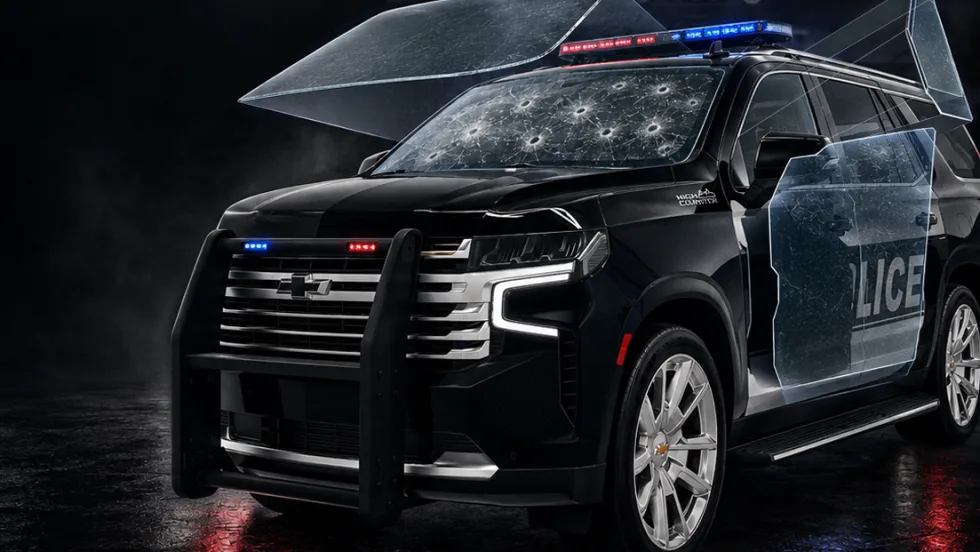
It’s an Ambush: How Ballistic Glass Redefines Patrol Vehicle Safety
Dana Safety Supply is setting a new standard for officer safety with windshields capable of withstanding multiple rounds and saving lives — and one Texas deputy is living proof.
Read More →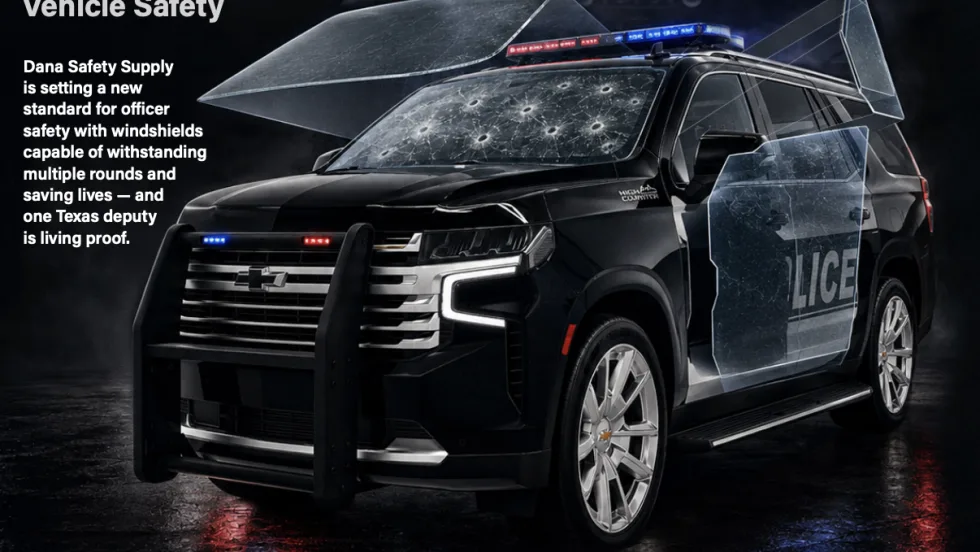
Dana Safety Supply’s BallisTech Vehicle Armoring Solutions
Dana Safety Supply is setting a new standard for officer safety with windshields capable of withstanding multiple rounds and saving lives.
Read More →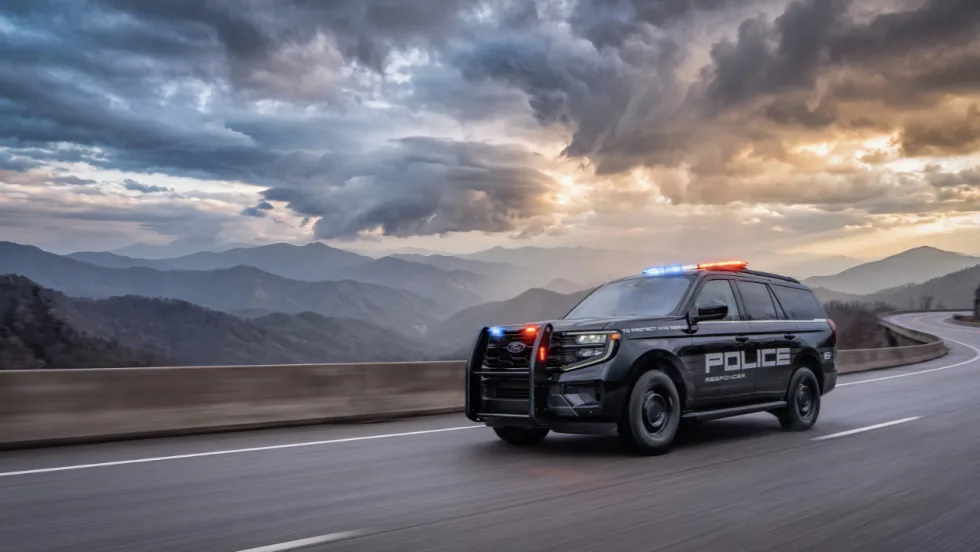
Ford Showcases 2028 Ford Expedition Police Responder
Ford showcased its 2028 Ford Expedition Police Responder, a full-size, pursuit-rated utility vehicle, at Police Fleet Expo this week. It comes standard with 4x4 and a 3.5-liter EcoBoost V6 producing 400 horsepower and 480 lb.-ft. of torque.
Read More →
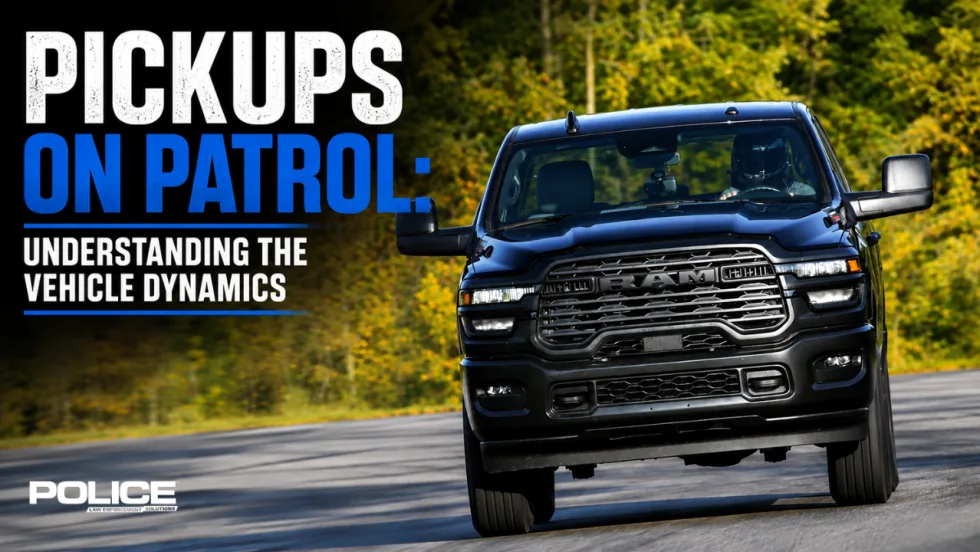
Pickups on Patrol: Understanding the Vehicle Dynamics
Pickup trucks are not new to patrol duties, but with the debut of the 2027 Ram 2500 Emergency Response Vehicle, they are getting larger and heavier. POLICE reached out to the Michigan State Police Precision Driving Unit to learn more about pickup truck handling, vehicle dynamics, and what officers need to know.
Read More →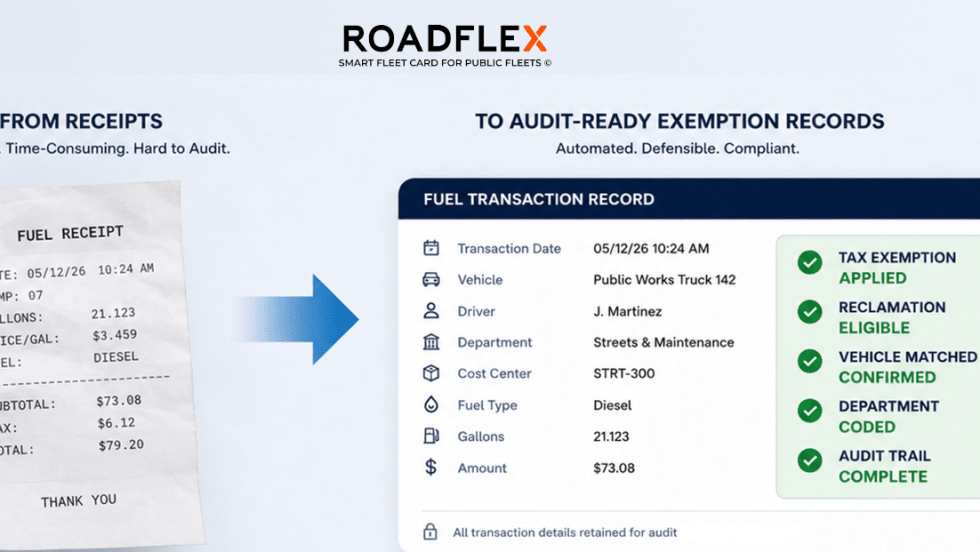
RoadFlex Brings Fuel Tax Compliance & Audit-Ready Reporting to Government Fleets
RoadFlex now offers its capabilities to help public-sector fleets streamline fuel tax exemptions, reclamation, reconciliation, and audit-ready reporting.
Read More →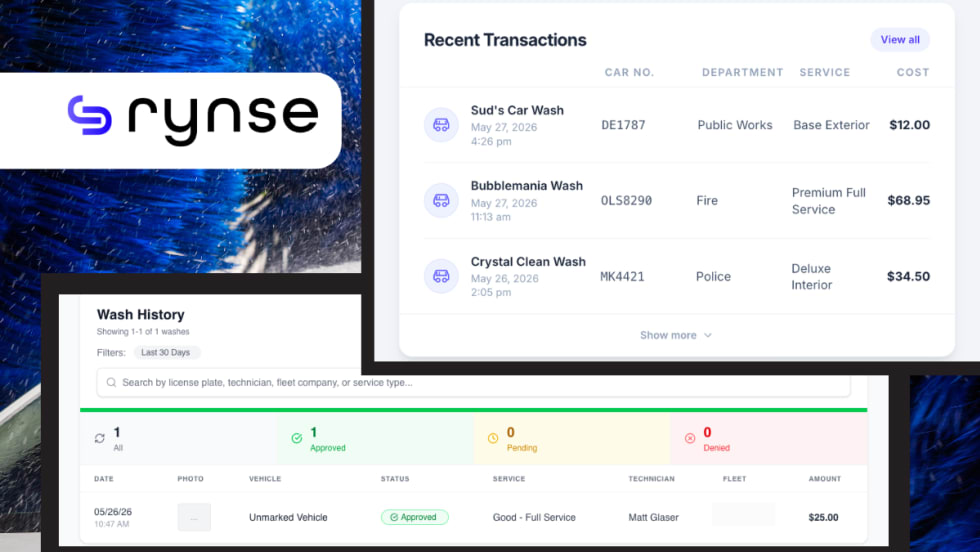
Rynse Awarded Cooperative Purchasing Contract, Expanding Nationwide Fleet Wash Access for Law Enforcement
Rynse has secured a 2026-2027 NCSA contract, giving law enforcement agencies nationwide fast-track access to its fleet wash network and management platform, which streamlines procurement, reduces administrative burdens, and helps fleets stay road-ready with greater oversight.
Read More →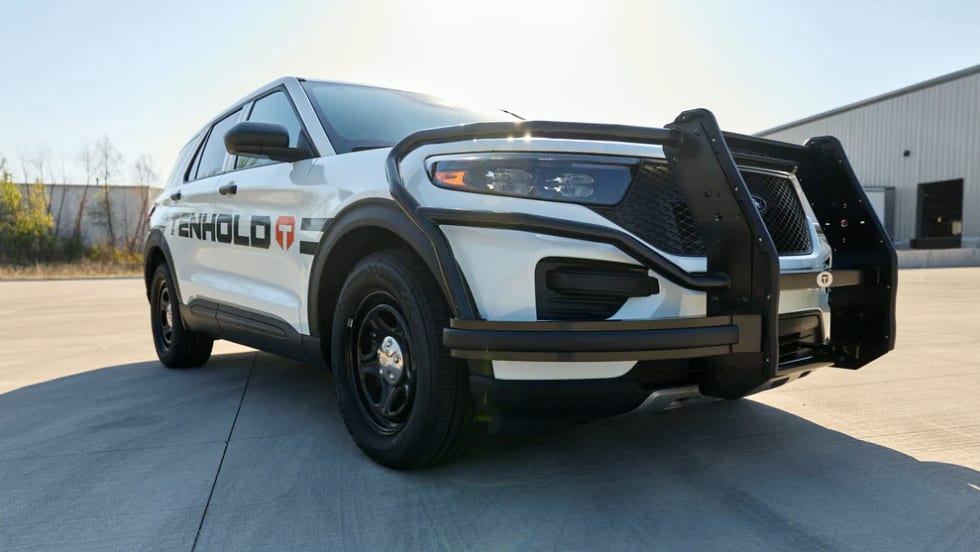
Tenhold Introduces Suppressor Gun Rack System
Tenhold, formerly Jotto Desk, provides next-generation vehicle systems for law enforcement and public safety and recently debuted its Suppressor Lock Head for its Weapon Mounting system.
Read More →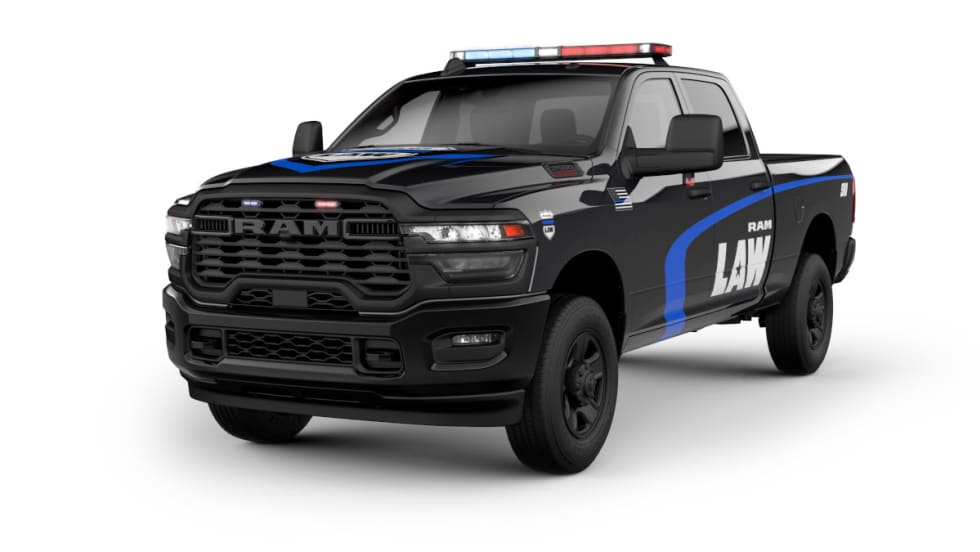
Ram Debuts Pursuit-Capable 2500 Emergency Response Vehicle
The 2027 Ram 2500 Emergency Response Vehicle is the first and only ¾-ton truck to complete the Michigan State Police vehicle trials, and Ram said it delivered outstanding performance in testing scenarios designed to replicate extreme real-world duty.
Read More →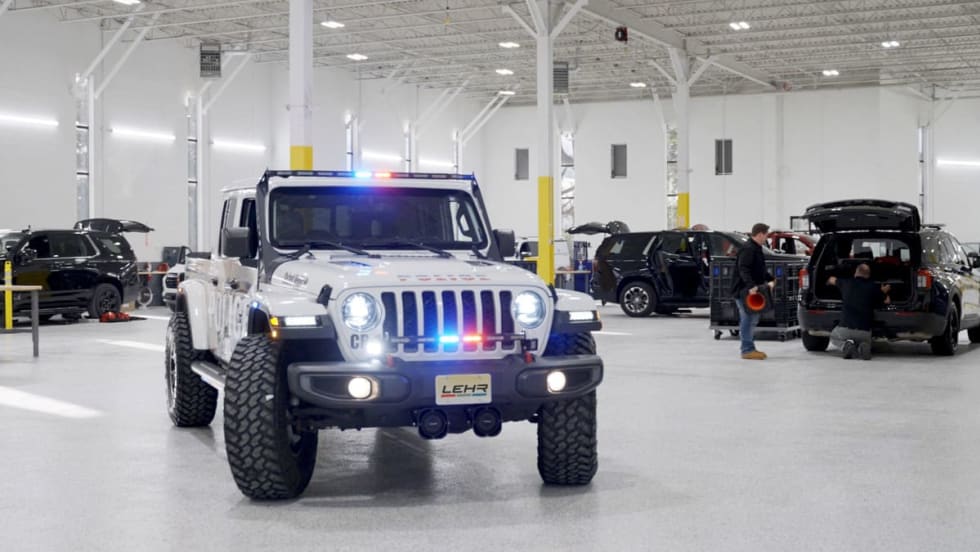
Emergency Vehicle Upfitter LEHR Opens New Facility in New Jersey
LEHR’s new centralized upfitting facility in New Jersey consolidates operations to deliver faster turnaround times and enhanced fleet capacity for law enforcement agencies across the Northeast.
Read More →
North Carolina Sheriff’s Office Improves Fueling Reliability & Operational Control
The Madison County Sheriff’s Office overcame fuel management and accounting challenges by turning to RoadFlex to improve fueling reliability, visibility, and administrative control.
Read More →