



Genetic Witness
What if you have unidentified remains and no clue as to who the person is? Or blood from a suspect, but no idea of who to look for? Snapshot DNA Phenotyping can analyze an unidentified person's DNA to create a picture of what he or she looks like.

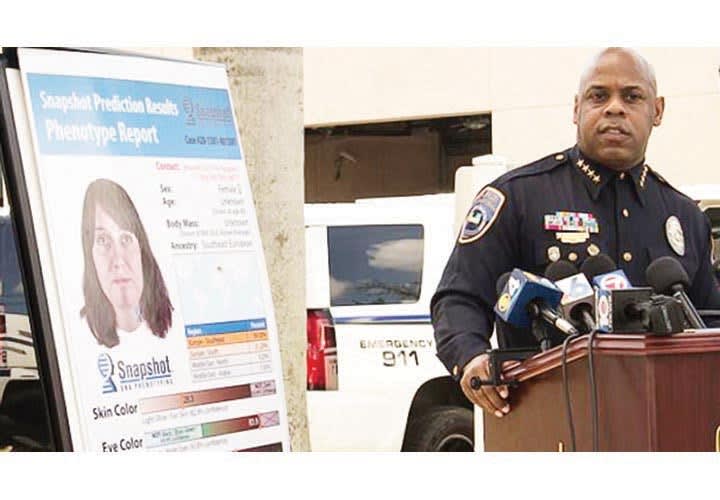
When detectives run out of investigative leads, they often turn to DNA. When you're talking about cold cases that have been unsolved for decades, this is often the only avenue left. But regardless of the timeframe, what if you've checked the DNA evidence from a crime against all databases and all known subjects and come up with nothing? What if you have unidentified remains and no clue as to who the person is? Or blood from a suspect, but no idea of who to look for?
That's typically where Parabon Nanolabs enters the picture, says Dr. Ellen Greytak, director of bioinformatics at Parabon. She helped lead the development of a technique called Snapshot DNA Phenotyping that can analyze an unidentified person's DNA to create a picture of what he or she looks like. And it can give investigators a new lead where there was none.
A detective will contact Parabon with information about a case involving DNA from an unidentified person, and Greytak and her team will evaluate whether there is enough DNA left to do a new analysis. If there is, Parabon coordinates with DNA Labs International or one of the other specially equipped labs they work with to receive the sample, extract DNA or clean up old DNA extracts from cold cases, and conduct a SNP panel. The lab then sends the results to Parabon, and Greytak and her team analyze the data to predict that person's physical appearance.
"We can't just use the STR analysis they've already developed," Greytak says. "We do a SNP analysis, so rather than the usual STR, we're looking for single-nucleotide polymorphisms, SNiPs or SNPs." The test generates a readout of close to a million SNP genotypes. But Parabon uses predictive models that read the raw data and compare them to known people with similar genomes to determine their likely appearance. It goes something like this: "OK, this person is a DG at this SNP, and in the thousands of people I've ever looked at, people who have DG at this SNP tend to have lighter eyes, for example," Greytak says. It can also provide a person's detailed ancestry.
But she and her team are careful to explain to investigators that the information derived from the analysis can only point them in the right direction, mainly by narrowing the focus of possible matches. The composite image provided on the last page of every analysis report is merely representative of a possible person that meets the criteria found in the DNA. The rest of the report details what traits to look for and the level of confidence for each finding.
For example, analysis of a DNA sample might show that the unidentified person most likely has blue eyes, but with only 80% confidence, whereas they have 99% confidence that the person does not have brown eyes. "So we might say the blue is more likely than green, so you would look at the blue-eyed people first. But still keep those green-eyed people on your list, because that's still possible," Greytak says.
Even when Parabon can predict aspects of a person's appearance with a high level of confidence, there are plenty of factors they have no way of predicting, such as age, weight, hairstyle, and whether a person has tattoos. "What we're going to produce at the end is not going to be a driver's license photograph of that person," Greytak says. "There's a lot of information that goes into appearance that's not written in the DNA sequence."
This process has helped generate new leads in numerous cases. For example, a profile and composite were created of one of two unidentified suspects in the 2013 double homicide of a Canadian retired couple living in Florida. In another case, a headless body was found in Galveston, TX. For decades, investigators had been looking for a Caucasian female, but Parabon was able to determine through DNA analysis that the unidentified woman was East Asian, and specifically Chinese. While such revelations are promising, they don’t guarantee a solved case.
"We've never had a case where the detective said, 'This wasn't worthwhile.' Because these are for cases where they have exhausted all the leads that they had, and are looking for something new to jumpstart it," says Greytak. "And suddenly it's like, 'Oh, well, I didn't need to be looking at this 95% of the population. Now I can focus on the remaining 5% of the population.'"
This technology is not limited to cold cases. Now more investigators are coming to Parabon with newer cases instead of waiting until years have passed. This can help law enforcement agencies find new possible leads before a trail has a chance to get cold. "I think that's a fantastic use of the technology. To right away say, OK, we're definitely looking for a white guy with light eyes or something like that where we can focus and not have to spend time looking at people who really don't match that DNA," Greytak enthuses.
She likens traditional DNA forensics to a fingerprint, which can only provide useful information if you can compare it to something and get a match. "We look at the DNA like a blueprint, containing all the information that built that person. So it's just a matter of figuring out what the DNA is saying about that person, and learning brand new information that you couldn't have gotten otherwise," Greytak says. "It's sort of like a genetic witness."
For More Information
More Technology

A police agency's guide to data-driven fleet management
Costs are rising and the public expects more transparency into how their tax dollars are spent. This e-book shows how police agencies can use fleet data to take control of fleet expenses while improving officer safety and demonstrating fiscal responsibility to the communities they serve.
Read More →
AI and analytics for law enforcement: Turning data into insights
Law enforcement agencies are managing more video, sensor data and digital evidence than ever before. Discover how AI and analytics can help turn that data into actionable insights that strengthen situational awareness, accelerate investigations and support more informed decisions.
Read More →
Vasco Electronics Adds Automatic Language Detection to Vasco Translator Q1
Vasco Electronics’ software update introduces hands-free language switching and expanded offline translation across 45 language pairs, empowering law enforcement, healthcare, and front-office enterprise teams
Read More →
North Miami Police Department Deploys Mark43
The North Miami Police Department has deployed Mark43 as part of its Five-Year Strategic Plan that represents its collective vision and goals for a more proactive police department, anchored by a core commitment to leveraging modern technology to enhance efficiency and public safety.
Read More →
Cellebrite Genesis for Enterprise Now Generally Available
Made available to the public sector in June, Cellebrite Genesis is serving a growing mix of national, regional, and local agencies worldwide, including some of the largest regional and metropolitan police departments. It is now available for enterprise organizations.
Read More →
2026 Vision FirstNet Users Summit to Host Emerging Leaders Training on Grassroots Advocacy for Public Safety
“Emerging Leaders Training: Understanding the Importance of Grassroots Advocacy for Public Safety," a session during the 2026 Vision FirstNet Users Summit, will offer a roadmap for unified advocacy at the federal level.
Read More →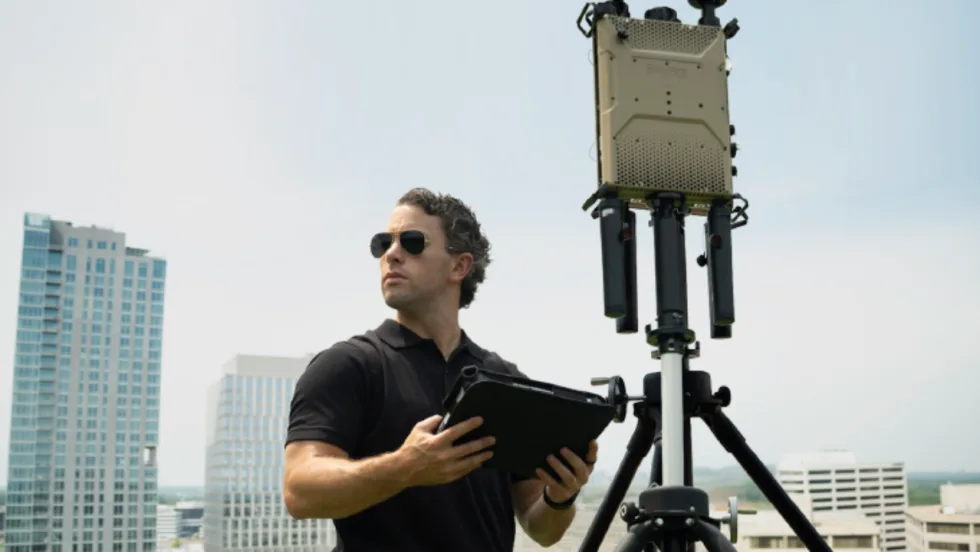
Motorola Solutions Completes Acquisition of D-Fend Solutions
Motorola Solutions has acquired D-Fend Solutions, an industry leader in counter-drone technology. This deal provides public safety and enterprise customers with access to advanced counter-unmanned aerial systems.
Read More →
ZeroEyes, Advantech & Camden Police Partner to Bring AI Gun Detection Technology to Delaware School District
ZeroEyes has partnered with Advantech and the Camden Police Department to deploy ZeroEyes’ AI gun detection and intelligent situational awareness platform at Delaware’s Caesar Rodney School District (CRSD).
Read More →
Leonardo U.S. Cyber & Security Solutions Introduces SignalTrace, the Next Evolution in Electronic Signature Detection Technology
SignalTrace reflects years of product refinement and a clearer expression of the technology’s purpose of recognizing and correlating electronic signatures in publicly broadcast wireless signals to reveal patterns, relationships, and trends that might otherwise go undetected.
Read More →
Pimloc Launches Secure File Sharing to Streamline Release of Redacted Video
Pimloc’s Secure File Sharing lets organizations deliver redacted video, audio, and documents through expiring, passcode-protected links, accelerating delivery while reducing security, compliance, and chain-of-custody risks.
Read More →