



Fatal Errors: Surviving Domestic Violence Calls
Veteran cops have always known that responding to a domestic altercation or assault is a high-risk assignment. The reasons for the danger are plentiful.


At about 6:15 a.m., two patrol officers were slain while handling a domestic disturbance. The officers responded to a residence where a 53-year old male was reportedly violating a restraining order. The officers were admitted to the home by the subject’s daughter, who directed them upstairs. When they opened the door to a bedroom, both were hit fatally with rounds from a .30-caliber rifle. The adult male subject then shot his wife, son, and each of the officers again before killing himself.
Veteran cops have always known that responding to a domestic altercation or assault is a high-risk assignment. The reasons for the danger are plentiful. One or both parties may be intoxicated. Weapons may be involved. Allies to the involved parties may try to intervene, with the officer caught in the middle.
The scene of a domestic violence assault or altercation is a dangerous enough place without having it made even more so by careless mistakes. Make a critical mistake here, and it could be your last. Some of these risky missteps—and their antidotes—include the following.
Not Using Cover Officers
A domestic violence assignment is never one to be handled solo. It is as simple as that. Too many officers have already died trying. A number of them had backup coming, but failed to wait for it to arrive before going into action. Very few had to act immediately in order to save a life. They simply chose to. Some of them died in the process.
All of the things that make a domestic violence call so dangerous—the frequent presence of emotions, alcohol, possible weapons—also dictate the absolute need for one or more backups to be on-scene before you tackle the problems you find there.
Granted, if you arrive to find someone being strangled to death right in front of you, immediate action is required whether help is there or not. Realistically, however, those scenarios seldom arise.
Much more often you have time to arrive, catch your breath, size up the situation from what you can hear or see from the outside, and wait for your backup help to get there. Then you and your cover can make a quick plan for defusing the problems you face.
Missing the Danger Signs
Officers have died on the scene of domestic altercations despite the presence of warning flags. These are the very same danger signals you learned as a rookie in officer safety class. They include such things as hands not visible, presence of alcohol, multiple offenders, threats against the police, weapons present, heightened emotions, and so on. You know from that same officer safety class that the detection of any of these red flags means that you are obliged to slow down, take stock of the situation, and, most often, alter your approach from what it otherwise would have been.
Staying sharp for the danger signs can save your life on the scene of a domestic violence call just as surely as it can protect you on the other assignments you handle. Remain constantly alert for the unseen danger, the next threat. It’s a good way to stay safe on an almost always violent crime scene.
Rushing
Cops drive too fast. They eat too fast. Some self-appointed experts would say that too many of them live that way, also. Whatever the case, the scene of a domestic crime is not the place to get in a big hurry. If you have made the decision to arrest somebody, there is likely no reason to rush into it before you have adequate help on-scene. The same holds true for rushing into the middle of a verbal domestic dispute before your backup is on scene.
Veteran officers have known for some time what rookies eventually learn on their own. Beyond the life-threatening events that require rapid response, many of the things that cops do on the job do not require great speed. Indeed, rushing too much can result in sloppy work that ultimately has to be done over. The vital difference would appear to be knowing when speed is truly required and when it may pose an additional hazard.
Avoiding the urge to rush when taking your time at a given task may be the wiser course of action. For instance, it makes little sense to rush the search of a domestic batterer you have just taken into custody. Working too fast here could lead to missing a weapon that eventually gets turned against you. Slow up and stay safe.
Missing Weapons
This error is not infrequently tied to the old “failure to watch their hands” safety sin. It’s their hands, or what they put in them, that can mean bad things for you. But watching out for weapons covers more than watching everyone’s hands. It also calls for you to remain alert for anything in your vicinity that someone who is thinking about launching an assault could grab with murderous intent. That’s why smart cops don’t interview domestic violence suspects in residential kitchens or garages. There are simply too many implements of destruction there. Your lookout for potential weapons should include makeshift weapons, too. As deadly as they can be, guns and knives are not the only objects that can be used to kill you. One unfortunate officer was beaten to death with a clothes iron. Another was clubbed fatally with a piece of firewood. A third died after his skull was fractured with a portable oxygen tank. Staying safe on a domestic violence call requires that you remain alert for anything that might be turned against you.
Poor Weapon Retention Practices
One thing that could be turned against you, of course, is your own sidearm. Some officers get in the practice of asking their dispatcher if there is a weapon involved in the call they are answering. The truth is, of course, that there is at least one weapon involved in every call you answer. Yours. If you get careless, it could end up in the hands of someone who is quite willing to use it on you.
There are a number of things you can do to keep your weapon out of the hands of a domestic violence perpetrator. Keep it snapped snugly into a good holster. Keep your gun side turned away from those you are dealing with. Be careful not to allow persons to stand within grabbing distance of any of your weapons, lethal or otherwise. Be aware of who is in your vicinity at all times. Keep your arm folded down over your weapon whenever possible. Practice weapon retention and recovery moves under the tutelage of a qualified instructor. Realize that if you are in a fight for control of your handgun, you are truly in a struggle for your life. You cannot afford to lose the battle.
Disregarding Potential Attackers
It has been talked about among peace officers for so long that by now it almost seems trite or an exaggeration. Unfortunately, it really can happen. A victim of continuing, chronic battering, most often a female, turns on the officer who has come to protect her from her attacker. Thoroughly immersed in the domestic abuse cycle, she defends her tormentor because she literally cannot see surviving without him. As a consequence, she is now on your back, flailing and clawing at the one person who is trying to help her.
This especially sad scenario really does happen on occasion. To keep it from happening to you, your wisest course of action is to keep an alert eye on everyone—victim included—at the scene of a domestic violence call. If you are the cover officer on the call, it’s your job to watch out for your partner if the victim appears about to become an offender, with a cop as the newest victim.
Bystanders also must be kept under close watch, as relatives and friends of the opposing parties can quickly translate verbal support into action against the “interfering” officers. The same holds true for neighbors and juvenile offspring of the primary players in the call. Knowing where all of the potential players on scene are located and their apparent demeanor can help ensure that you are ready to respond appropriately if an attack does materialize.
Not Controlling Surroundings
The scene of a domestic violence crime contains great potential for continuing or additional violence. A new attack could be instigated from virtually any quarter. As you already know, people besides the initial offender could launch it. Or the attacker could re-escalate into more violence even after the police are on-scene. If he sees he’s headed for jail, he may attack to avoid custody. Violence could even erupt on a scene where the attacker has fled before you arrived. The batterer may return unexpectedly to finish the job or attack the meddling cop who dared interfere in his private affairs and mess with his marital “property.”
The best way to avoid becoming a victim yourself is to remain supremely alert to everything going on around you at the scene of a domestic crime. To stay safe, you will need to control the environment. Freeze the scene to the extent feasible. Do not allow those present to wander in and out of your sight, such as into an adjacent room. If you do, somebody may return with something in hand that means bad news for you. Cops have died in just that way. Try to have agitated people sit down. Separate victim and suspect beyond each other’s sight. Attempt to persuade uninvolved others to leave the premises, assuming you do not need them as witnesses. Be sure your cover (and you should always have a cover on a domestic call) is watching out for you, too. Work as a team so that you can watch each other’s back at all times. Control is the key here. Survival mandates that you keep it on your side.
Gerald W. Garner, a 36-year veteran of law enforcement, is chief of the Fort Lupton (Colo.) Police Department. Garner has authored six books and more than 200 magazine and journal articles on law enforcement topics. A member of the Advisory Board for Police, he writes periodically on officer safety issues.
More Patrol

Streamlight Portable Scene Light III Wins 2026 OH&S New Product of the Year Award
Streamlight’s Portable Scene Light III has won the 2026 Occupational Health & Safety (OH&S) New Product of the Year Award in the Lighting category.
Read More →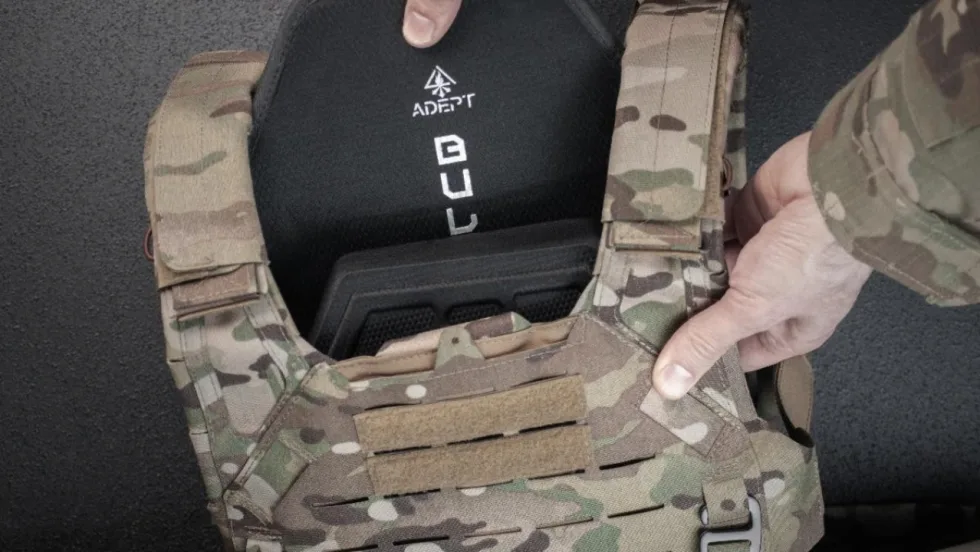
Adept Armor Introduces Two New Rifle Plates
Adept Armor has launched two new Level IV ballistic plates, the Emperor and the Archon Mark 2, which brings Adept Armor’s new Quatroid ceramic to the high-threat, performance-value center of the range at 5.2 pounds.
Read More →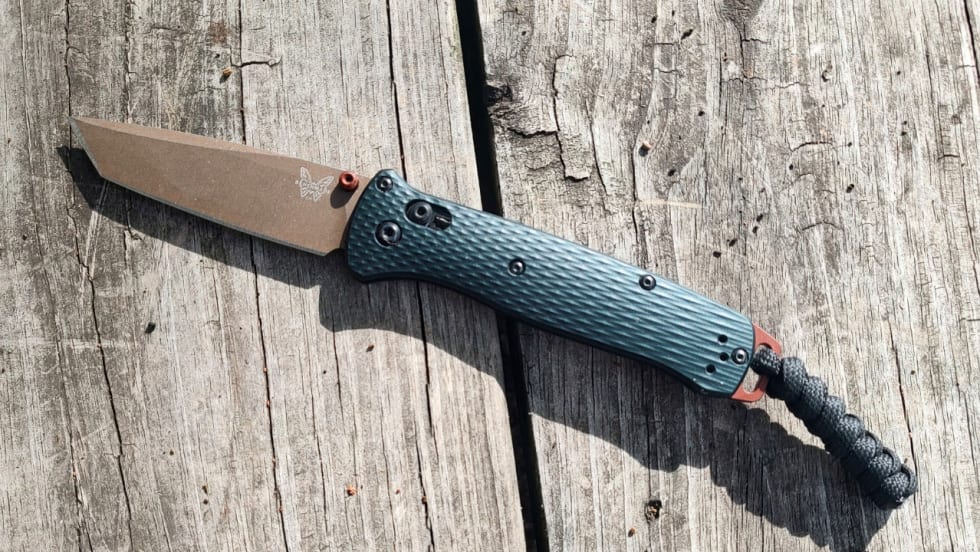
POLICE Product Test: Benchmade Bailout
The Benchmade Bailout is a slim, lightweight carry knife with a deep-ride pocket clip and comes in a variety of blade steels and scales. Here is a detailed review of the Taiga Green Bailout, released earlier this year.
Read More →
NLEOMF Announces July 2026 Officer of the Month
NLEOMF honored a Michigan deputy sheriff as the July 2026 Officer of the Month for rescuing a trapped driver from a burning vehicle following a Fourth of July crash.
Read More →
Streamlight to Showcase Newest Lighting Products at National Safety Council’s Safety Congress & Expo 2026
Streamlight will showcase its latest lights, including the Portable Scene Light III and the LiteBox 1Million, at the 2026 National Safety Council (NSC) Safety Congress & Expo.
Read More →
The 2027 World Police & Fire Games Set for Perth, Australia
The 2027 World Police & Fire Games (WPFG) will take place in Perth, Western Australia, from Friday, March 12 through Sunday, March 21, 2027.
Read More →
5.11 Partners with National Fallen Firefighters Foundation to Support #ForThe343
5.11 has joined the nationwide movement honoring the 343 New York City Fire Department firefighters lost on Sept. 11, 2001.
Read More →
Team Wendy Announces Title Sponsorship of the Jorge Pastore Foundation
Team Wendy’s 3-year partnership with the Jorge Pastore Foundation expands access to programs that strengthen those who serve.
Read More →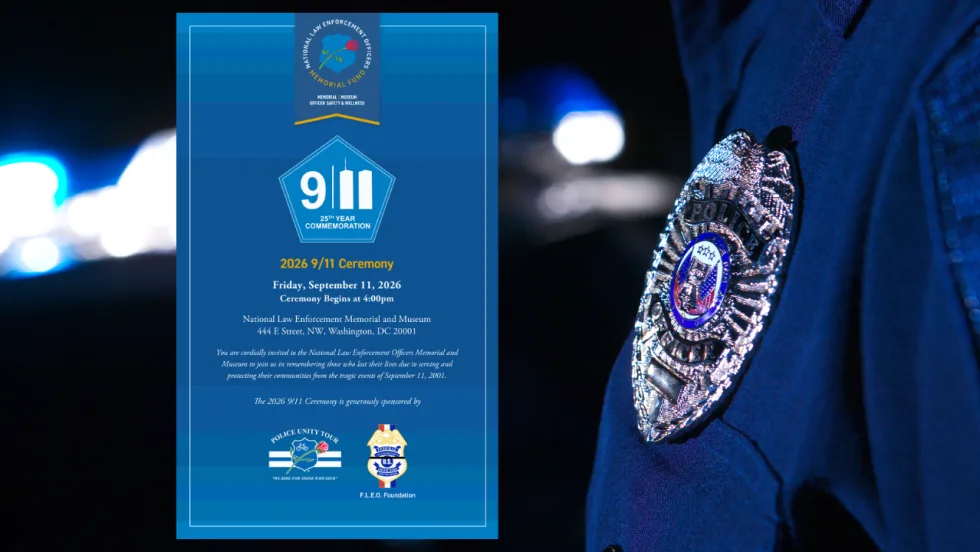
National Law Enforcement Memorial and Museum Hosting 9/11 25th-Year Commemoration Ceremony
The National Law Enforcement Memorial and Museum is hosting a 9/11 25th Year Commemoration Ceremony on Sept. 11 at 4 p.m.
Read More →
National Law Enforcement Officers Memorial Fund Announces June 2026 Officers of the Month
The National Law Enforcement Officers Memorial Fund (NLEOMF) named 15 officers of the Chico Police Department (California) as the Officers of the Month for June 2026 for their roles in responding to an active-shooter incident at a public library.
Read More →