



Faceless Cop Killers
Time after time, officers end up in dangerous situations where they perform simple tactical errors and take for granted that their lives are not endangered.

On the evening of March 7, 2003, at 2148 hours, an 18-year police veteran, Sgt. Marcus Young of the Ukiah (Calif.) Police Department, was responding to what would be considered a “routine” call. He was called to the local Wal-Mart to take a young, female shoplifting suspect into custody. Within seconds of placing the suspect into the back of the cruiser, Young was stabbed and shot four times (once in the face) by the suspect’s accomplice. Young managed to kill his attacker and he survived the assault.
Police trainers and administrators religiously review situations such as the Young incident, hoping to learn which tactics worked, which failed, where the officer went wrong, and how other officers can learn from the circumstances or mistakes.
All of this analysis is very valuable, but it often fails to pinpoint the most important factor in the incident. So time after time, officers end up in dangerous situations where they perform simple tactical errors and take for granted that their lives are not endangered.
Don’t get me wrong. I know that police work is dangerous. And you can certainly be killed or injured in the line of duty regardless of your tactical awareness and training.
But biased attitudes and beliefs that officers hold the longer they are on the job can also be a factor. Many cops believe their experience gives them the ability to size up the threat presented by any situation and that they know when a contact is safe and when it is not. Don’t bet your life on it.
According to the FBI’s 2002 “Officers Killed and Assaulted” report, there were 636 officers who died in the line of duty from 1991 to 2002. Sadly that’s not unusual. We’ve all heard such statistics.
However, before you gloss over that figure and assume that your brothers and sisters who were killed in the line of duty were inexperienced or just that their number came up, I suggest that you take a closer look at some of the more startling findings of the report. There is a deeper story that unfolds when you drill deep down into the meat of this report. And every cop should know it.
Veteran Cops Get Killed
The average length of time served by a police officer who was killed in the line of duty between 1991 and 2002 was 10 years. Take note of this, police veterans. You are more likely to be killed on the job than a rookie. And the primary reasons for this statistic are what I like to call the “Faceless Cop Killers,” complacency, assumptions, and the prejudgment of situations.
When a person first becomes an officer, he or she experiences a never-ending supply of adrenaline and excitement. Rookies are generally at a high level of awareness, enjoying the novelty of going from one call to the next, picking up any extra shift if they can. They totally immerse themselves in their chosen profession and their self-identity becomes the job itself.
But over time in an officer’s career, things subtly change. The job becomes “routine” and some officers begin to develop a sense of mastery over the quickpaced, chaotic calls that fill the workday. No longer experiencing the high or thrill of the job, veteran officers often begin to look down upon the rookies because of their enthusiasm without seeing the change in themselves.
Worse, sometimes these same veteran officers begin to develop tactically dangerous ideas that lead them to prejudge situations and categorize them as “routine” because of their experience on the job. Investigators often hear this when digging into the events of a critical incident. They interview a veteran cop and he or she describes the situation before everything went bad as “simply making a routine stop.”
Unknown Risk
Somewhere along the way some veteran officers forget their basic law enforcement training that teaches them there are only two types of stops: “high risk” and “unknown risk.” Referring to a traffic stop as “routine” is a key indicator of complacency, either by an individual officer or by an agency as a whole.
Prejudging a traffic stop, or any type of police activity, as low or no risk to the officer is an extremely dangerous and neglectful mindset. This dangerous mindset can only lead to officers unnecessarily exposing themselves to imminent danger, such as underestimating the potential danger from a teenager or a female subject.
How many times have we heard the horror stories after critical incidents where officers were responding to “routine” or mundane situations that ended up with an officer down? Assuming or prejudging a situation before you know what is really happening limits your tactical response capability. You’ve already made up your mind and limited your cognitive responses. The combination makes you unprepared for the dynamic realities of a violent encounter.
Combating Complacency
So how do we, as officers, prevent complacency from interfering with our performance on the job? How do we make changes in our daily activities to prevent ourselves or fellow officers from becoming one of the “statistics”?
Step one is self-honesty. As officers, trainers, or administrators, we need to honestly examine and evaluate ourselves. Have we allowed complacency to creep into any facet of our daily lives, thinking, and routines? Do we engage in realistic and relevant training that goes beyond the departmental mandated qualifications and licensing requirements?
It is human nature to develop certain levels of complacency within our daily lives and professional careers and rest on the laurels of our achievements and experience. It is also this very human tendency that can expose us to avoidable danger on the job.
Step two is actively seeking change. Once we have identified which areas we have grown complacent in, we can begin to develop action plans to change this behavior.
Perhaps all you will have to do is to remember to treat each encounter as a potentially life-threatening experience. Thinking about how your life is on the line in every encounter should help you keep your tactical skills sharp.
The Training Factor
But maybe you don’t have the proper tactical skills to begin with. Maybe your agency hasn’t trained you properly to avoid complacency.
Often, trainers and administrators know a change is needed in their agency’s training regimen, but they assume that because of budgetary limitations that nothing can be done to improve it. Such an attitude can get cops killed.
The role of the trainer and the administrator, first and foremost, is to always provide the tactical edge to their officers. Lack of funding should not prevent any agency from providing its officers with current, realistic, and relevant training. Just answer the bean counters with one word: liability.
If a department does not supply its officers with adequate training, it’s exposing itself to potentially devastating lawsuits. Also, with effort and creativity, administrators and trainers can overcome most, if not all, budgetary constraints.
Individual Effort
Regardless of the training provided by your agency, it’s really up to you to transform your mindset and remain alert to threats. Being aware of possible threats and having the tactical skills to counter them will help you defeat complacency and go home in one piece at the end of your shift.
Every day, officers throughout the United States are killed or injured because they underestimate a situation or make false assumptions based on what is perceived as “routine.” All too often, officers are surprised when a teenager, elderly person, or small female becomes combative and offers severe resistance.
Obviously, officers are injured through the malicious violent actions of the criminal suspects and the weapons they use, but there are other factors that contribute to officer deaths and injuries, and those factors are the officer’s mindset and attitude. Your mindset can help you survive on the street or it can set you up for dangerous failure.
By being honest with your self-evaluations, you can identify the areas where you have become complacent and begin to change your attitudes, actions, and beliefs. This will help give you a tactical edge on the street.
More Patrol

Adept Armor Introduces Two New Rifle Plates
Adept Armor has launched two new Level IV ballistic plates, the Emperor and the Archon Mark 2, which brings Adept Armor’s new Quatroid ceramic to the high-threat, performance-value center of the range at 5.2 pounds.
Read More →
POLICE Product Test: Benchmade Bailout
The Benchmade Bailout is a slim, lightweight carry knife with a deep-ride pocket clip and comes in a variety of blade steels and scales. Here is a detailed review of the Taiga Green Bailout, released earlier this year.
Read More →
NLEOMF Announces July 2026 Officer of the Month
NLEOMF honored a Michigan deputy sheriff as the July 2026 Officer of the Month for rescuing a trapped driver from a burning vehicle following a Fourth of July crash.
Read More →
Streamlight to Showcase Newest Lighting Products at National Safety Council’s Safety Congress & Expo 2026
Streamlight will showcase its latest lights, including the Portable Scene Light III and the LiteBox 1Million, at the 2026 National Safety Council (NSC) Safety Congress & Expo.
Read More →
The 2027 World Police & Fire Games Set for Perth, Australia
The 2027 World Police & Fire Games (WPFG) will take place in Perth, Western Australia, from Friday, March 12 through Sunday, March 21, 2027.
Read More →
5.11 Partners with National Fallen Firefighters Foundation to Support #ForThe343
5.11 has joined the nationwide movement honoring the 343 New York City Fire Department firefighters lost on Sept. 11, 2001.
Read More →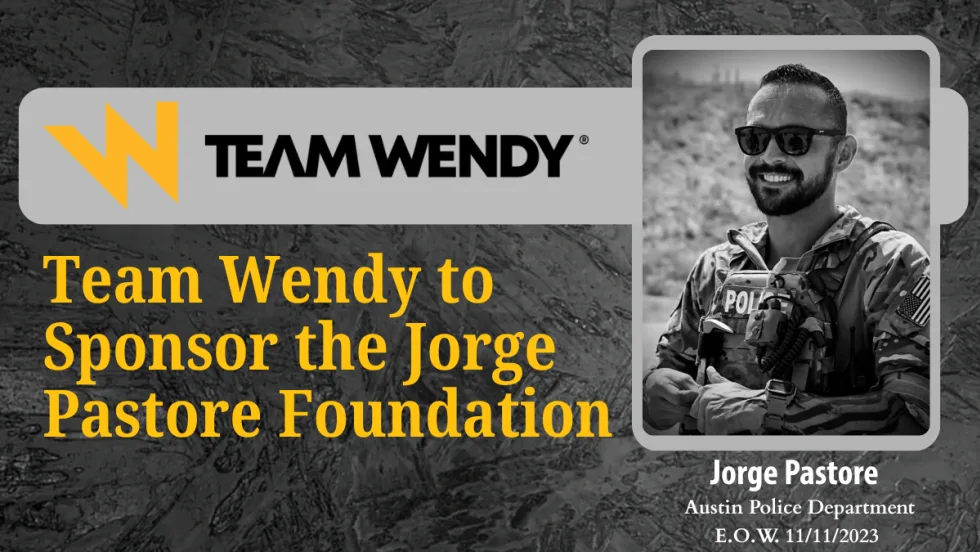
Team Wendy Announces Title Sponsorship of the Jorge Pastore Foundation
Team Wendy’s 3-year partnership with the Jorge Pastore Foundation expands access to programs that strengthen those who serve.
Read More →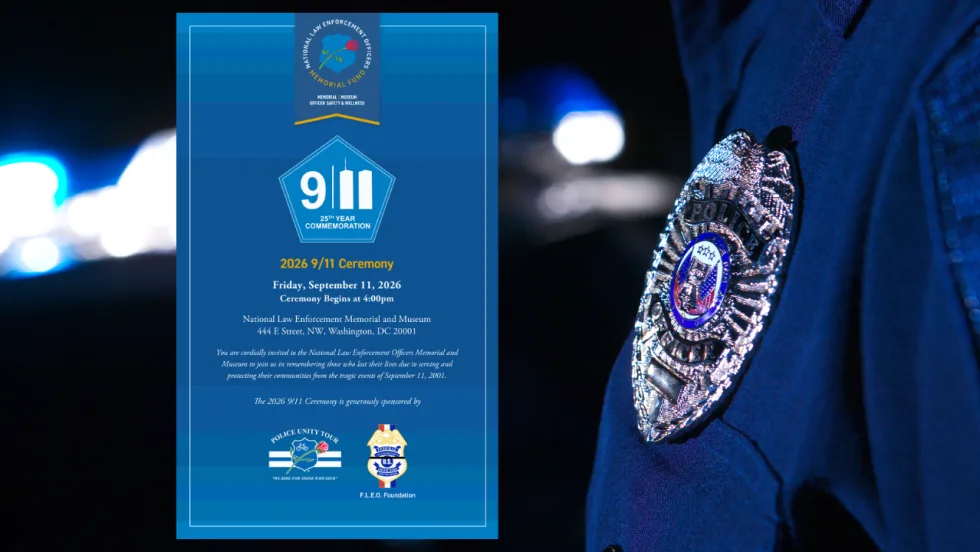
National Law Enforcement Memorial and Museum Hosting 9/11 25th-Year Commemoration Ceremony
The National Law Enforcement Memorial and Museum is hosting a 9/11 25th Year Commemoration Ceremony on Sept. 11 at 4 p.m.
Read More →
National Law Enforcement Officers Memorial Fund Announces June 2026 Officers of the Month
The National Law Enforcement Officers Memorial Fund (NLEOMF) named 15 officers of the Chico Police Department (California) as the Officers of the Month for June 2026 for their roles in responding to an active-shooter incident at a public library.
Read More →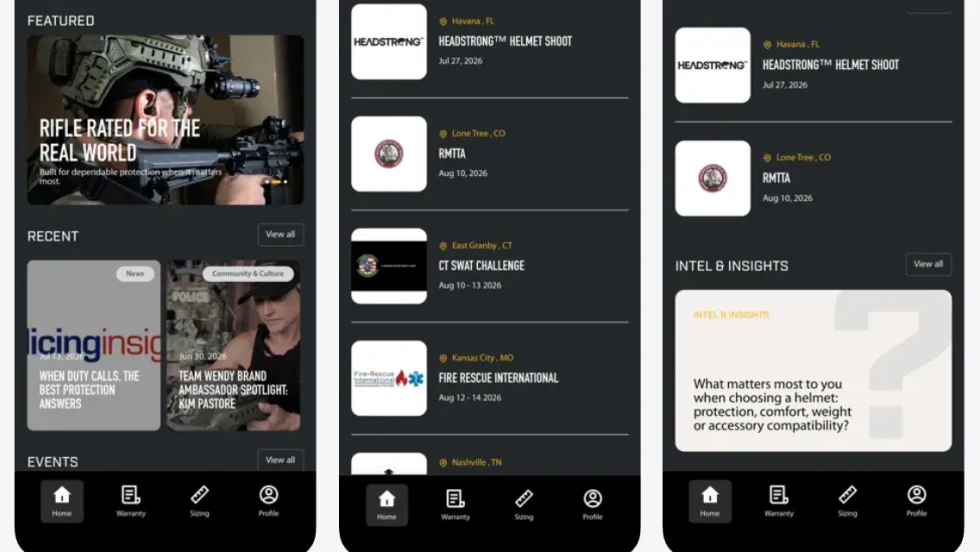
Team Wendy App Creates New Digital Hub for Helmet Owners
The Team Wendy Community App provides one location for warranty registration, size-fit tools, product updates, and community connection. For helmet owners, the new app creates a simpler path to the information and tools that matter most.
Read More →