



Expanded Definition of "Search"
When the government, in an attempt to get information, "trespasses" on any of the items specifically listed in the Fourth Amendment ("persons, houses, papers and effects"), this constitutes a "search," whether or not there is any infringement of a suspect's legitimate expectation of privacy.

Photo: Vince Taroc
In the March 2012 edition of POLICE Magazine, I wrote about the GPS-tracking decision in U.S. v. Jones. Maybe when you read that article you noticed that a majority of the U.S. Supreme Court analyzed the issue of whether or not GPS installation and tracking constituted a Fourth Amendment "search" in different terms than we're used to seeing.
Instead of asking whether the surveillance in that case violated Jones's reasonable expectation of privacy, the court used a different approach, saying that when the government, in an attempt to get information, "trespasses" on any of the items specifically listed in the Fourth Amendment ("persons, houses, papers and effects"), this constitutes a "search," whether or not there is any infringement of a suspect's legitimate expectation of privacy.
This is a fundamental revision—and expansion—of the constitutional inquiry into whether police actions do or do not amount to a "search." The Jones ruling has implications for admissibility of evidence in criminal cases, and potential police liability in civil cases, far beyond the issue of justifying the installation and monitoring of GPS tracking devices on suspects' vehicles.
The Jones Rationale
From basic academy on, law enforcement officers since 1967 have been taught the Katz test of analyzing "search" issues: did police conduct violate the suspect's reasonable expectation of privacy? If not, there is no "search" in the constitutional sense, and no warrant or exception is required in order to justify the action taken. (Katz v. U.S.) In Jones, the majority said that ever since Katz, the court had "deviated" from the original approach to interpreting the Fourth Amendment, under the mistaken impression that Katz had substituted a new test for the earlier test, which analyzed whether there had been a governmental "trespass" (intrusion) on persons, houses, papers or effects to obtain information. The Jones majority said that both tests still applied: "The Katz reasonable-expectation-of-privacy test has been added to, not substituted for, the common-law trespassory test. Jones's Fourth Amendment rights do not rise or fall with the Katz formulation." (U.S. v. Jones)
What do these statements in Jones mean? They mean that there are now two ways for you to engage in a Fourth Amendment "search:" (1) by infringing upon a person's reasonable expectation of privacy (even without any trespass to his person, houses, papers, or effects); and (2) by physically touching or occupying his person, houses, papers, or effects (even without any violation of a reasonable expectation of privacy). In other words, actions that would not have been a "search" under the Katz test may now be considered a "search" under the Jones test.
The Jones Fallout
The early responses from the federal appellate courts show that lower courts understand the significant expansion of the Fourth Amendment's reach (and the corresponding limitation on warrantless investigative steps) resulting from Jones. Here are a few examples from around the country:
• "As the Supreme Court recently clarified in Jones, the Katz 'expectation of privacy' test extends the traditional reach of the Fourth Amendment. But nothing in Katz requires courts to apply the reasonable expectation of privacy standard in addition to finding that the subject of the search was 'persons, houses, papers or effects.' Katz did not narrow the Fourth Amendment’s scope, but instead extended it." (U.S. v. Duenas, Guam.)
• "Where the government physically occupies private property for the purpose of obtaining information, that is a 'search' within the meaning of the Fourth Amendment." (U.S. v. Perea-Rey, California—suppressing evidence based on agents' "trespass" into a carport in which the trial court had found defendant had no reasonable expectation of privacy).
• "After Jones, there are now two ways in which the government's conduct may constitute a 'search' implicating the Fourth Amendment. First, a 'search' occurs when the person can claim a justifiable, reasonable or legitimate expectation of privacy that has been invaded by government action. Second, a Fourth Amendment 'search' also occurs where the government physically occupies private property for the purpose of obtaining information." (Free Speech Coalition v. Holder, Pennsylvania—reinstating a civil suit for alleged Fourth Amendment violations under the Jones test.)
• "Thus, Jones established, or perhaps reiterated, that there are two ways to analyze a 'search' issue: a traditional common-law property rights test and the Katz/reasonable-expectation-of-privacy test." (U.S. v. Johnson, Louisiana.)
• "Reviving the Supreme Court's historical focus on property rights and common-law trespass, Jones explained that the court's more recent reasonable-expectation of privacy test from Katz had been added to, not substituted for, the common-law trespassory test." (U.S. v. Barraza-Maldonado, Minnesota.)
• "It had long been understood that a search occurs when an expectation of privacy that society considers reasonable is infringed. In Jones, though, the Supreme Court explained that Katz is not the exclusive test. The Fourth Amendment now clearly protects against trespassory searches concerning those items (persons, houses, papers and effects) that it enumerates." (U.S. v. Patel, Louisiana.)
• "The Fourth Amendment applies when government officers violate a person's reasonable expectation of privacy. In addition, the Fourth Amendment embodies a particular concern for government trespass upon the areas (persons, houses, papers and effects) the Fourth Amendment enumerates." (Patel v. Los Angeles—different Patel.)
Enough? As these examples show, the message of Jones has been heard loudly and clearly by appellate courts. As criminal defense attorneys, civil plaintiffs' attorneys, and trial judges confront opportunities to apply the broader Jones holding to novel situations, we can expect to see a range of rulings condemning steps that were previously considered lawful.
For example, even though a person has no reasonable expectation of privacy in the odors emanating from his house into the air, would it now be a trespassory search for narcotics officers to bring a K-9 to the front door for a sniff? (This issue was scheduled for argument before the Supreme Court on Oct. 31, 2012, in Florida v. Jardines. Decision can be expected before June 2013, and we will cover it here.)
Rewriting the Rules and Rethinking Your Practices
Most years, we get about a half-dozen significant criminal and civil-liability rulings from the U.S. Supreme Court. Most of these decisions simply apply clearly established definitions and principles to different sets of circumstances. Only occasionally does a decision represent a major revision of the basic constitutional rules. Jones v. U.S. was just such a major revision. By expanding the test of what constitutes a Fourth Amendment "search," Jones created many new grounds for criminal defendants to argue for the suppression of evidence, as well as many new grounds upon which to sue police officers for alleged constitutional violations. It would be unwise for law enforcement officers and others in the criminal justice system to overlook this new departure.
Jones makes it necessary for police civil advisers, command staff, officers, and prosecutors to reconsider activities that did not qualify as "searches" under the Katz "expectation of privacy" test but might be held to be "searches" under the Jones trespassory test. As the recent appellate decisions quoted above illustrate, courts are already applying Jones to suppress evidence and to allow civil suits that had been dismissed under the Katz rule. The "search" rules have changed.
Devallis Rutledge is a former police officer and veteran prosecutor who currently serves as special counsel to the Los Angeles County district attorney. He is the author of 12 books, including "Investigative Constitutional Law."
More Patrol
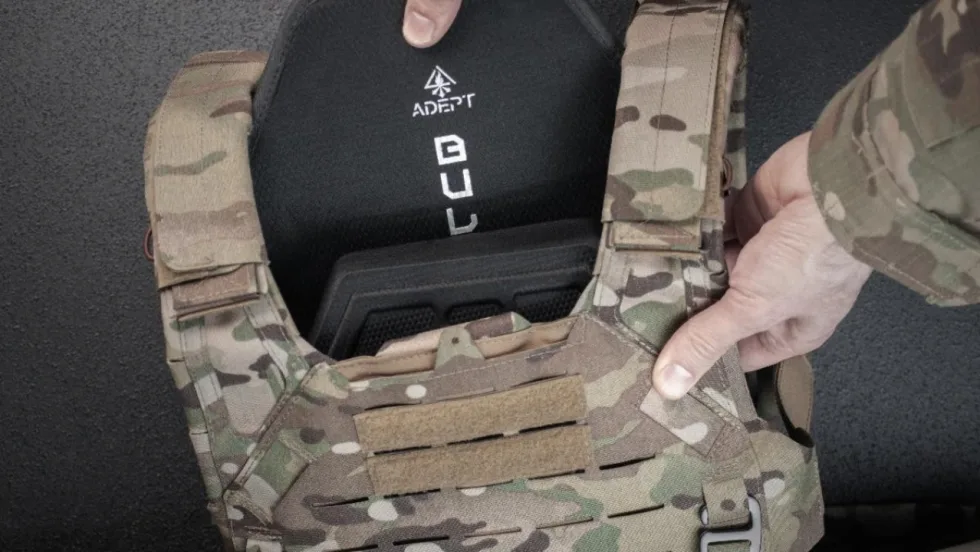
Adept Armor Introduces Two New Rifle Plates
Adept Armor has launched two new Level IV ballistic plates, the Emperor and the Archon Mark 2, which brings Adept Armor’s new Quatroid ceramic to the high-threat, performance-value center of the range at 5.2 pounds.
Read More →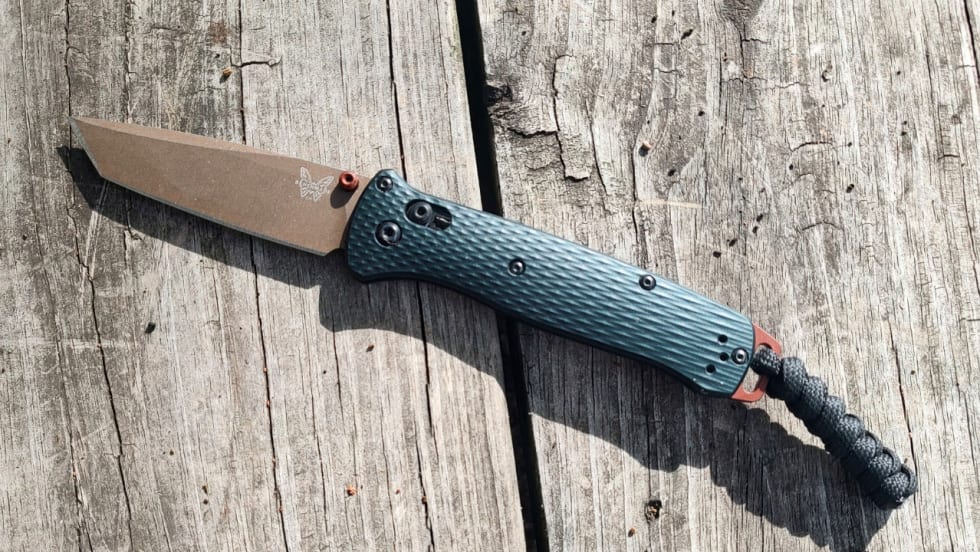
POLICE Product Test: Benchmade Bailout
The Benchmade Bailout is a slim, lightweight carry knife with a deep-ride pocket clip and comes in a variety of blade steels and scales. Here is a detailed review of the Taiga Green Bailout, released earlier this year.
Read More →
NLEOMF Announces July 2026 Officer of the Month
NLEOMF honored a Michigan deputy sheriff as the July 2026 Officer of the Month for rescuing a trapped driver from a burning vehicle following a Fourth of July crash.
Read More →
Streamlight to Showcase Newest Lighting Products at National Safety Council’s Safety Congress & Expo 2026
Streamlight will showcase its latest lights, including the Portable Scene Light III and the LiteBox 1Million, at the 2026 National Safety Council (NSC) Safety Congress & Expo.
Read More →
The 2027 World Police & Fire Games Set for Perth, Australia
The 2027 World Police & Fire Games (WPFG) will take place in Perth, Western Australia, from Friday, March 12 through Sunday, March 21, 2027.
Read More →
5.11 Partners with National Fallen Firefighters Foundation to Support #ForThe343
5.11 has joined the nationwide movement honoring the 343 New York City Fire Department firefighters lost on Sept. 11, 2001.
Read More →
Team Wendy Announces Title Sponsorship of the Jorge Pastore Foundation
Team Wendy’s 3-year partnership with the Jorge Pastore Foundation expands access to programs that strengthen those who serve.
Read More →
National Law Enforcement Memorial and Museum Hosting 9/11 25th-Year Commemoration Ceremony
The National Law Enforcement Memorial and Museum is hosting a 9/11 25th Year Commemoration Ceremony on Sept. 11 at 4 p.m.
Read More →
National Law Enforcement Officers Memorial Fund Announces June 2026 Officers of the Month
The National Law Enforcement Officers Memorial Fund (NLEOMF) named 15 officers of the Chico Police Department (California) as the Officers of the Month for June 2026 for their roles in responding to an active-shooter incident at a public library.
Read More →
Team Wendy App Creates New Digital Hub for Helmet Owners
The Team Wendy Community App provides one location for warranty registration, size-fit tools, product updates, and community connection. For helmet owners, the new app creates a simpler path to the information and tools that matter most.
Read More →