



ECDs and Use-of-Force Law
A recent decision by the U.S. Court of Appeals for the Fourth Circuit, which applies to five states, emphasizes the use of TASERs as tools for protection, not for compelling compliance.

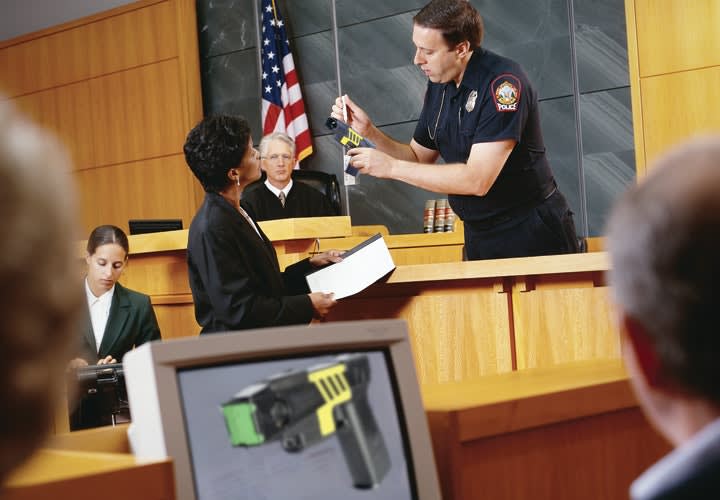
Law enforcement's use of electronic control devices (ECDs) such as TASERs continues to garner public accusations of excessive and unnecessary use. Cases like the 2012 death of Phillip Coleman, who was reportedly tased multiple times by Chicago police while in custody and later died (although the official cause of death is an allergic reaction to medication), have sparked public outcries over the excessive use of ECDs by police.
It's hard to find agreement on when ECDs should be used. Police agencies, courts, community members, social activists, and civil rights attorneys disagree about the appropriate use of these devices.
And a recent decision by the U.S. Court of Appeals for the Fourth Circuit, which applies to five states—Maryland, Virginia, West Virginia, North Carolina, and South Carolina—may further muddy the law on ECD use as well as the qualified immunity of police officers. It emphasizes the use of TASERs as tools for protection, not for compelling compliance.
The Case
On Jan. 11, the Fourth Circuit Court of Appeals handed down its decision in the case Estate of Armstrong v. Village of Pinehurst. In this case, three Pinehurst, NC, police officers were sent to take Ronald Armstrong into custody on an involuntary commitment order. Armstrong was a mentally ill individual who had been a danger to himself but no one else.
The officers found Armstrong on the side of a road where he was eating grass and displaying other erratic behavior. Officers attempted to take Armstrong into custody but he was able to grab onto a nearby pole and resist arrest. It is undisputed by his estate that he kicked one of the officers while resisting and was not complying with commands to submit to arrest. However, he was never deemed to be dangerous to others nor attacking the officers.
Officers, along with help from nearby security guards, were eventually able to place Armstrong in restraints. This was not before one of the officers "drive stunned" Armstrong several times. This use of a TASER was—according to Armstrong's attorneys—an unconstitutional seizure violating the Fourth Amendment. The estate's argument relied on the fact that the ECD was used solely to gain compliance and not protect anyone stating, "Armstrong was only offering stationary and non-violent resistance."
The Ruling
The Fourth Circuit ruled that the officers had qualified immunity from prosecution because they were acting as public officials. But the reason they had qualified immunity was not that they did the right thing. Rather, the court found them safe from prosecution because they did not have sufficiently clear guidance about how ECDs should have been used (or not used) in this situation.
While ruling the officers did not have proper guidance, the court proceeded to provide that guidance for the future.
The court stated, "TASERs may only be deployed when a police officer is confronted with an exigency that creates an immediate safety risk and that is reasonably likely to be cured by using the TASER."
What It Means
During the trial, the plaintiff's attorney stated: "This solidifies what everyone in the public thinks should be happening: When you are unarmed and no threat, you should not be subject to force."
However, to police officers, the outcome of this case means something entirely different. Officers may interpret this ruling to mean that when someone resists a lawful arrest, command, or court order, officers are expected to stand by and do nothing but try to talk a subject into compliance or wait until the situation has escalated to the point of immediate danger and risk of life or safety.
More problematic, despite the Fourth Circuit's ruling, there is no agreement on what should happen when an officer uses an ECD and whether or not the use of an ECD entitles an officer to qualified immunity.
Qualified Immunity Precedents
Qualified immunity is a long-standing legal principle in which the U.S. Supreme Court (SCOTUS) recognizes that police officers must make immediate judgment calls without the benefit of extended legal reflection. Courts have long recognized the complexities of an arrest and the ever-present risk that officers will need to use force to take someone into custody.
Qualified immunity is intended to prevent officers from fearing legal repercussions when they are faced with using such force; however, officers must still not violate a person's constitutional rights.
The law of qualified immunity is well settled in the sense that there is a two-pronged test to determine whether an officer should be entitled to qualified immunity. The test is provided in Saucier v. Katz, 533 U.S. 194, which essentially found there are two steps to determining qualified immunity.
First, the courts must review the facts in a light most favorable to the plaintiff that the officer's conduct violated the Fourth Amendment.
The second prong of the test is the area which the judicial circuits seem to disagree over. The second prong of the test essentially says that if the Fourth Amendment is violated, it must also be shown that the officer knew that his or her conduct was illegal in the specific situation at hand when the force was being used.
This second prong elicits the most confusion on ECD usage. In the Anderson case, the Fourth Circuit "ties permissible ECD use to situations that present some exigency that is sufficiently dangerous to justify the force."
Officers are left with several questions:
When then is it appropriate to use an ECD?
What exactly constitutes an appropriate exigency?
Whose call is it to determine whether or not something is "sufficiently dangerous" to warrant the use of force?
Interestingly enough, SCOTUS has already stated in Graham v. Connor, 490 U.S. 396 that "the calculus of reasonableness must embody allowance for the fact that police officers are often forced to make split-second judgments—in circumstances that are tense, uncertain, and rapidly evolving—about the amount of force that is necessary in a particular situation." This opinion and many others tend to show that SCOTUS favors the long-standing "reasonableness" test to determine if use of force was properly applied in a Fourth Amendment context.
The Sixth Circuit has emphatically stated that "If a suspect actively resists arrest and refuses to be handcuffed, officers do not violate the Fourth Amendment by using a TASER to subdue him." This was decided in Hagans v. Franklin County Sheriff's Office, 695 F.3d 509.
Policy and Training Concerns
It is incumbent upon administrative and training staff to review their use-of-force policies, specifically as they relate to ECD use. This is paramount for agencies in the five states covered by the Fourth Judicial Circuit because essentially what the court has done is make a very fine distinction in the appropriateness of force. The court distinguishes between the force being used when someone is actively attacking or creating a dangerous situation versus passive force when someone only poses a risk to themselves and is non-compliant.
Essentially, law enforcement leaders should evaluate the following concerns regarding the use of ECDs in their policies:
Where does your current use-of-force policy place ECDs? Are they deemed an intermediate weapon or somewhere above that, but just below deadly force?
What have been the prevailing opinions of your jurisdiction when ECDs have been deployed? Are you only required to look at the reasonableness of the use? Or does your jurisdiction seem to make distinctions in ECD use and other types of non-lethal tools as a per se standard before even considering whether the use might be viewed as reasonable? Here is when you are blessed to have knowledgeable legal counsel in this area of the law.
Evaluate your situational training with ECDs. A class where officers shoot stationary targets and perhaps are exposed to the effects of an ECD is insufficient. Incorporate situational training into your ECD program.
Teach and remind officers to use their common sense and training on de-escalation tactics before resorting to an immediate deployment of the ECD. Likewise, train them never to be so afraid of the courtroom that they let themselves or others be hurt.
Officers need to ask themselves, "Is the subject being dangerously aggressive or are they presenting a risk of serious injury or death to anyone including themselves?" Next ask, "Is the person being a danger to themselves or others in their non-compliance?"
Protection Not Compliance
While it may conflict with the training that law enforcement receives, agencies must train officers to think of ECDs as a tool for protection, not one to simply gain compliance. Officers must realize that training practices and laws change over time and they must be cognizant of the salivating attorneys waiting to file suit every time an ECD is used. Sadly, the Fourth Circuit Court's decision just gave them more justification to do so.
Moreover, many officers are going to be asking, "What do I do with a person resisting arrest but not really creating an exigency that is sufficiently dangerous to justify the force?" While officers should defer to their agency policies and their common sense, remember there are other methods and tools to help gain compliance of a subject.
Outside of officer presence and verbal command, an officer could use empty-hand control or some other less-than-lethal technique to gain control of a situation. Applying a joint lock, hold, or pressure-point technique may do the trick. It may take the application of an alternate less-than-lethal device such as chemical spray or the strike of an impact weapon. Officers just need to ensure they have followed proper use-of-force protocol as dictated by their policies and not limited their force skillset to only ECDs.
Finally, officers should be aware that acts of omission as a public servant can and do carry the same amount of liability as intentional overt actions. While it is true that acts of omission are typically not as litigated, they are nonetheless just as meritorious. It is logical that many officers will have concerns about not taking action that results in someone harming themselves, especially a mentally ill subject. Take solace in the fact that in the Armstrong case the Fourth Circuit gave law enforcement protection when this argument arises. The Fourth Circuit said, "when a seizure is intended solely to prevent a mentally ill individual from harming himself, the officer effecting the seizure has a lessened interest in deploying potentially harmful force."
It will be interesting to see how this statement is argued by an attorney similarly situated as the one in the Armstrong case, especially where the police use force which proves to be ineffective and an ECD could have prevented the subject from harming themselves or others.
Christopher L. McFarlin has more than 15 years of experience across all components of the criminal justice system, from serving as a detention and law enforcement officer to being a state prosecutor, criminal defense attorney, and judge. He currently serves as a faculty member with American Public University System's School of Security and Global Studies and the American Military University. He holds active commissions as a reserve law enforcement officer and summary court magistrate for the state of South Carolina. For more information on policy review and development, you can contact him at Christopher.McFarlin73@mycampus.apus.edu.
More Patrol

Team Wendy Introduces the EXFIL Endurance Ballistic Helmet, Engineered to Reduce the Burden of Extended Wear
Team Wendy has launched its EXFIL Endurance, a new lightweight ballistic helmet engineered to deliver protection, comfort, and fit during demanding, extended operations.
Read More →
The First Responders Children’s Foundation National First Responders Day Roll Call of Heroes Ceremony Returns to Times Square, NYC
First Responders Children’s Foundation (FRCF), in collaboration with T-Mobile, will host the Roll Call of Heroes ceremony in Times Square to commemorate National First Responders Day on Wednesday, Oct. 28. During the event, FRCF will present 18 Hero Awards.
Read More →
Streamlight to Showcase Newest Lighting Products for Law Enforcement Professionals at IACP 2026
Streamlight will showcase its newest lights for law enforcement at the International Association of Chiefs of Police Annual Conference & Expo. Featured lights will include the TLR-3 X, the PolyTac 1X, and more.
Read More →
Streamlight Portable Scene Light III Wins 2026 OH&S New Product of the Year Award
Streamlight’s Portable Scene Light III has won the 2026 Occupational Health & Safety (OH&S) New Product of the Year Award in the Lighting category.
Read More →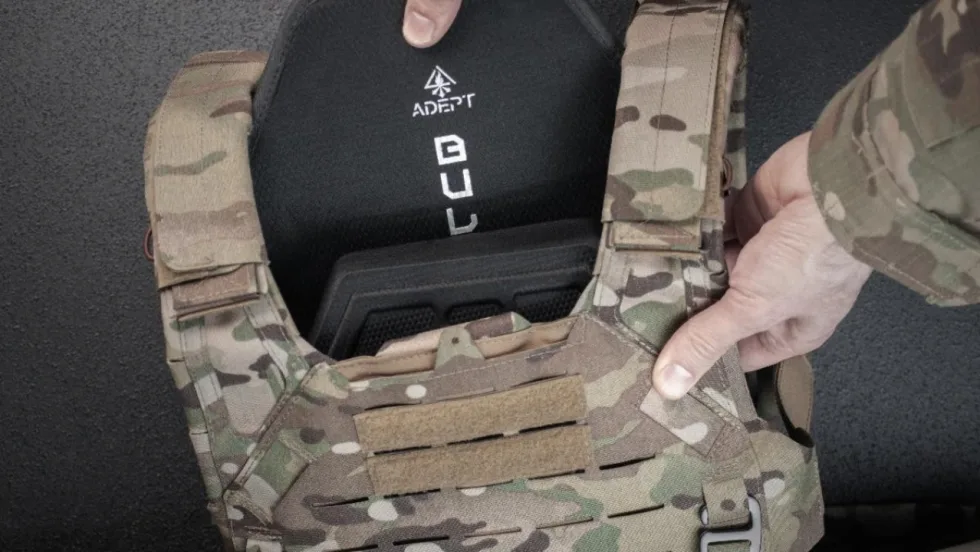
Adept Armor Introduces Two New Rifle Plates
Adept Armor has launched two new Level IV ballistic plates, the Emperor and the Archon Mark 2, which brings Adept Armor’s new Quatroid ceramic to the high-threat, performance-value center of the range at 5.2 pounds.
Read More →
POLICE Product Test: Benchmade Bailout
The Benchmade Bailout is a slim, lightweight carry knife with a deep-ride pocket clip and comes in a variety of blade steels and scales. Here is a detailed review of the Taiga Green Bailout, released earlier this year.
Read More →
NLEOMF Announces July 2026 Officer of the Month
NLEOMF honored a Michigan deputy sheriff as the July 2026 Officer of the Month for rescuing a trapped driver from a burning vehicle following a Fourth of July crash.
Read More →
Streamlight to Showcase Newest Lighting Products at National Safety Council’s Safety Congress & Expo 2026
Streamlight will showcase its latest lights, including the Portable Scene Light III and the LiteBox 1Million, at the 2026 National Safety Council (NSC) Safety Congress & Expo.
Read More →
The 2027 World Police & Fire Games Set for Perth, Australia
The 2027 World Police & Fire Games (WPFG) will take place in Perth, Western Australia, from Friday, March 12 through Sunday, March 21, 2027.
Read More →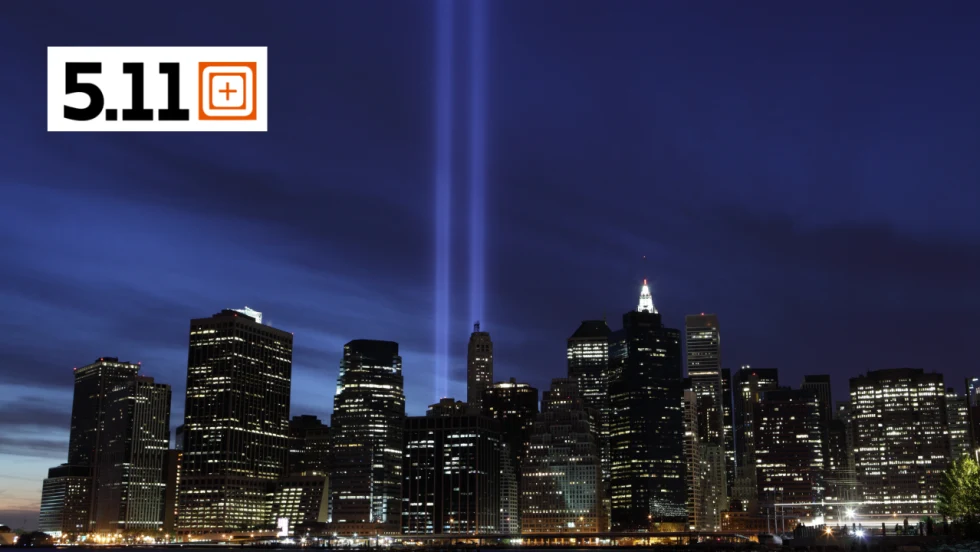
5.11 Partners with National Fallen Firefighters Foundation to Support #ForThe343
5.11 has joined the nationwide movement honoring the 343 New York City Fire Department firefighters lost on Sept. 11, 2001.
Read More →