



Duct Tape Your Troubles Away
tk

The subject enters a busy camera store. Store employees are occupied waiting on customers. The subject, who has just smoked crack cocaine and drank malt liquor, begins to act out. He takes his fists and smashes out a glass display case, grabbing a camera. The subject continues to pick up more photography equipment. A store clerk activates the armed robbery alarm. Police units are dispatched and they coordinate a tactical approach. On entering the store they are faced with a violently resisting suspect, fueled by cocaine-induced paranoia. As the Watch Commander I drove to the incident, after hearing that three units had arrived and then called for more assistance. These extra police units had arrived before I did.
Upon my arrival I observed the classic "pile on." The subject was being restrained by the body weight of the officers who were lying on top of him. The store was in disarray. Several employees and customers were frightened. The suspect, even though his movements were limited, was bowing his back up to get free from being pinned. His legs were still kicking wildly.
I knew from past work as an EMT that leaving any suspect in this position may lead to trouble. It would be awhile before he detoxifies. The combined body weight of the officers will prohibit the expanding of his diaphragm for proper respiration. This can be a life threatening event. When coupled with an unknown amount of recreational chemicals consumed, he can be a candidate for a medical emergency. An in custody death scenario can be the result.
Now, what to do you do? This is a real life situation, one that is faced frequently by officers throughout the country. Police encountering perpetrators under the influence of cocaine that are violently resisting officers can result in officers injured, the suspect injured, higher degrees of force used, complaints of excessive force, and the possibility of an in custody death. Several departments with similar incidents have had in custody death occurrences. They may not have done anything wrong. But, the aftermath consisting of citizens outcries, media coverage, and legal defense can take a toll on a department and its officers. If steps can be taken to avoid this type of situation, why not take them?
The watch commander directs one of the corporals to retrieve from his car, an equipment bag and to bring him the roll of duct tape. The situation had gotten worse, when one officer had attempted to use OC Spray in the confined area of the camera shop. Several officers are suffering from the effects. The corporal returns with the roll of common hardware store duct tape, (the silver-gray "100 mph tape" that we all use about the house). The commander, a defensive tactics instructor, directs the restraint of the suspect, who is still wildly thrashing about.
Several years ago, I had a conversation with Cpt. Gary Klugiewicz of the Milwaukee County Sheriffs' Office. Cpt. Klugiewicz is a nationally known defensive tactics guru as well. The conversation led to the temporary restraining of subjects under extreme conditions. One example was of a prisoner that had an arm in an orthopedic cast or a prosthetic device. A local sheriff's office had a prisoner escape from the doctor's office visit. He was not handcuffed for this medical visit due to having his arm in a cast. We discussed the virtues of using duct tape on the cast or device wrapping it to the clothing, not the skin. It is cost effective, low impact, and requires little training time.
In 1995 the Savannah Police Department invited Dr. Darrell Ross of East Carolina University to lecture their defensive tactics instructors. Dr. Ross conducted a class on in-custody death situations and suggested refraining from "hog tying" resisting suspects. The decision for the dashing young watch commander was simple, combines these two tactics to avoid injury/death and safely control the resistant actions. In 1996 this concept was taught to the Savannah (GA) Police Dept. in its yearly defensive tactics update training for an emergency use in extreme situations.
The corporal was directed to tape over the suspects trousers above the knee. This was done with several overlapping wraps. This prevented the "scissor" action of the legs. The second wrap was above the ankles, on the high tops of his basketball shoes and socks. The resistance is stopped. The suspect was "log rolled" over on his back, and sat up on his buttocks. He was still cursing and spitting with anger, but now controlled easily with one officer to steady him.
The suspect was checked by local EMS, still intoxicated, but well for his misadventures. Officers stood him up and helped him bunny hop to the police van for transport. The crowd that had gathered began to applaud with approval of the arrest and humane treatment of the suspect by the police.
The use of duct tape seems radical to some. Its application to a suspect in unusual circumstance can be seen as good tactics. This is not an everyday procedure! I do not think the equipment manufacturers will be tooling up for basket weave duct tape carriers for the duty belt. I can see this is subject for misuse and possible prisoner abuse if not tempered. The arrest and control of resisting suspects is a high liability topic. The use of this adaptive and innovative practice but must be used judicially.
Applications
Like the use of any piece of equipment, duct tape requires two things . . . proper training and authorization. Before you go to the hardware store there has to be training. How hard can it be to roll off tape? It is not that simple, your staff needs to understand how to apply, when to apply, safety, and tactics involved in application. Finally, is this response authorized by management?
The application will be over clothing and never on skin if possible. The biggest problem with application directly to the skin is removal. The body hair will be pulled, along with loose skin, scabs, or open wounds and the general discomfort of removal. If the clothes are loose fitting or baggy, you will need to gather the fabric up tight to get a good hold on the limbs. If the suspect has a plastic cast or a prosthetic device, it can be taped over these items. The tape will have to wrap around the torso if an arm or around the other leg if a leg. In addition there are two important points. First, avoid excessive movement of the limb due to its medical condition. Second, be extremely careful because a cast or mechanical arm could be a great weapon for a resisting subject.
A very important concern here is not to cut off circulation in the extremities. I always recommend medical attention for prisoners following a violent encounter. Because of the unknown levels of toxicity of unknown chemicals, injuries that were sustained before or during the encounter, and may not cause pain now due to intoxication. Monitoring afterwards requires evaluation by medical personnel. The trip to the emergency room is the best policy of all. It is far easier to treat a controlled suspect immediately, rather than wait for him to become a plaintiff.
In training you will have to train officers on how to check the pulse of either the foot or hand. To check the pulse in the hand, the officer will have to locate the radial pulse (thumb side) of the wrist. This will allow the officer to check for proper blood flow to the hands and prevent damage. For the feet, there are three pedis pulse sites: dorsal on top of the foot, medial on the inside and lateral on the outside. During training, instruct the officers on how to take a pulse from all four sites. It is important for them to check more than once when the suspect is restrained by tape. It is very important to document this action as well in a use of force report. If you are honest and articulate the circumstances, about suspects' actions, your actions, why you responded in the manner that you did, and follow-up, the humane side of the procedure will be recognized. Most important, remember what your FTO taught you "if it is not in the report, it did not happen." The secret to countering legal challenges or complaints is to be honest.
When to apply this technique will be defined by departmental directives (SOP's). I would further recommend that it be applied after receiving a field supervisor's approval. The wild kicking actions of a violently resisting suspect can be controlled by this method, but I would not recommend this for a drunk having a temper tantrum. Every agency has an officer that is problematic and we all know examples of this. It is for this reason I recommend that this requires an okay from a street commander. Otherwise, some officer may wrap someone up like a Christmas present.
These tactics require at least three officers to duct tape. Two officers will find the procedure difficult, if not impossible. In situations where there are two or more officers involved in immediate contact with the suspect, an additional officer will be the one to actually apply the tape. This officer is fresh to the conflict (not exhausted) and should give verbal direction to the other officers and provide cover from others that may be gathering. The supervisor should view this event and provide ongoing direction, requesting medical attention or special transport requests. How is the suspect placed in this position? In real world policing, somehow we often end up on the ground. If the subject is still on their feet, a takedown that you are confident with is suggested. Quick and decisive action is a must!
This practice can be an economical and logical approach to violent resisting behavior. Every year departments have patrol vehicles damaged by kicking detainees. Officers are injured by kicking suspects and occasionally assaulted by an orthopedic cast. It is not recommended that most prisoners are to be duct taped, just those falling into special categories. This use should be governed by departmental directive and supervised to prevent prisoner abuse. There are products made for these circumstances. One which immediately comes to mind is RIPP Restraints. This product line is adapted to law enforcement and corrections usage. They offer a variety of soft restraints that can be applied quickly and safely. They even will customize products to fit your particular needs and offer training in its usage. I recommend that your agency invest in an alternative system such as RIPP as a regular practice for every day and special transports. However, in extreme circumstances where other main stream devices or systems are not available, try "ducting." Remember, there are training, supervisory, medical, and tactical concerns to be addressed before this happens.
More Training
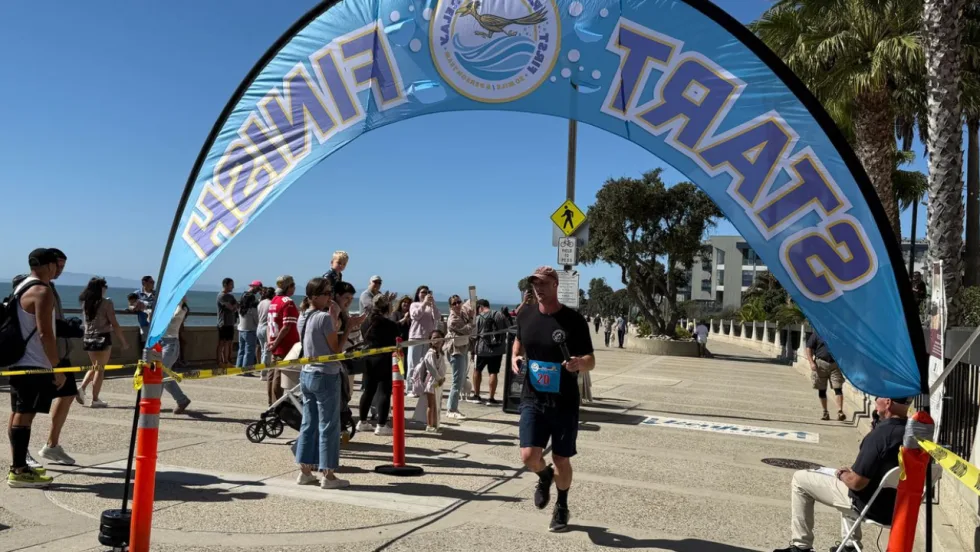
Registration Underway for Sixth Annual First Responders Relay
The California Police Athletic Federation’s annual First Responder Relay will welcome first responder teams from across the globe to compete along Ventura's scenic coastline on Oct. 11. Registration is underway.
Read More →
Vector Solutions Launches Comprehensive Online Dispatch Training Catalog for Emergency Communications Professionals
Vector Solutions’ new catalog of 35 expert-developed online courses can help emergency communication centers strengthen training, meet certification requirements, and simplify continuing education.
Read More →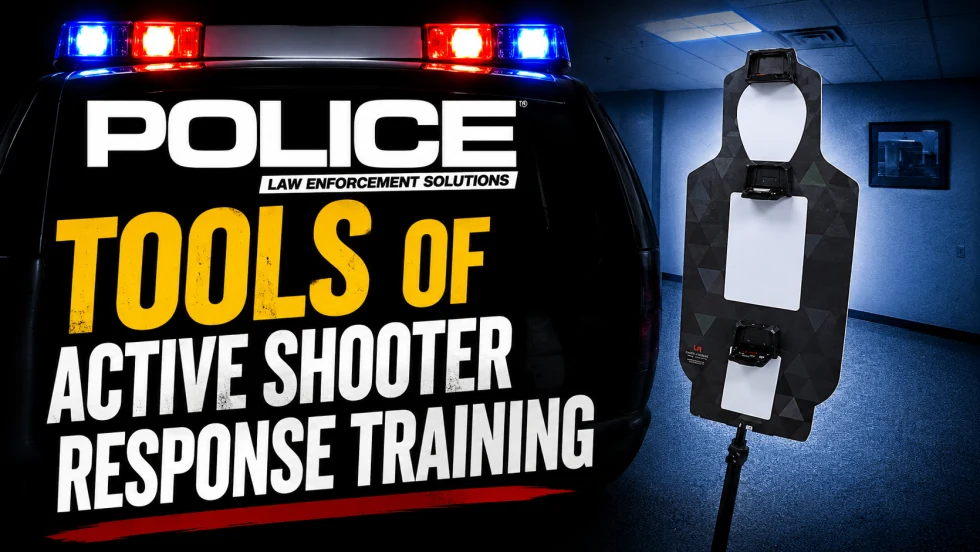
Tools for Active Shooter Response Training
What technologies help prepare officers for active shooter response situations? This behind-the-scenes look at law enforcement training explores shot simulators, smart firearms, laser target systems, and the tools used to build safer, more effective training environments.
Read More →
Two-Officer Tactical Doorway Entry Techniques
Entering a room during active-threat situations requires communication, coordination, and disciplined tactical movement. In this video, trainers from the United States Deputy Sheriff’s Association demonstrate critical room entry concepts, including fatal funnel awareness, team coordination, and safe tactical movement.
Read More →
High Compressed Ready Explained | Muzzle Control For Room Entry
In this video, Mike Willis, law enforcement national training and program director for the United States Deputy Sheriffs’ Association, demonstrates the high compressed ready position and discusses muzzle control during room entry.
Read More →
Why Attend the DroneSense Innovation Summit by Versaterm?
Let’s hear from Ryan Bracken, head of product, about why your agency should send someone to the first annual DroneSense Innovation Summit by Versaterm in April.
Read More →
Caswell Live Fire Spins Off from InVeris
Caswell Live Fire has spun off from parent company InVeris, coinciding with the 100th anniversary of Caswell’s founding. Over the past 100 years, Caswell has developed pioneering solutions that support military, law enforcement, and commercial clients worldwide.
Read More →
When Do You Transport a Wounded Officer Instead of Waiting for EMS?
Thumbnail for video series POLICE Topics, Tactics & Tips with a yellow headline that reads When Do You Transport a Wounded Officer Instead of Waiting for EMS?
Read More →
How to Pick Your High-Risk Stop Location for Tactical Advantage
Hear veteran trainer Mike Willis, of the United States Deputy Sheriff’s Association, explain several considerations that can help you wisely pick your best spot to initiate high-risk or felony traffic stops.
Read More →
Coffee Break with Police Experts: Using Your Patrol Vehicle for Cover
In this video, hear from Dustin Mowery, a product specialist at Team Wendy, as he discusses how to best use a patrol vehicle for cover.
Read More →