



Does Community Policing Work?
If there is a sacred cow grazing in the field of law enforcement, it can be named in two words: community policing.

If there is a sacred cow grazing in the field of law enforcement, it can be named in two words: community policing. Mayors and town councils clamor for it. Police chiefs endorse it. However, many of these people have no real clear idea of what constitutes community policing and what benefit, if any, it might bring to their cities. Worse, they may not realize that the secret to the success of a community-policing program is the capabilities of patrol officers.
It's a good bet that if an agency hasn't formally instituted community-based policing programs, it has at least incorporated the lexicon into department operations. What were once known as patrol officers have become Neighborhood Contact Officers or Community Oriented Police Enforcement Officers, charged with the sometimes-fuzzy tasks of taking "ownership" of a problem, "coordinating resources," and "facilitating" its resolution.
All of this bureaucratic speak leaves many officers asking the key question: What ever happened to crime fighting?
Individual Initiative
Advocates of community policing say that crime fighting is incorporated into the goals of the community policing concept. They also say that when implemented properly, community policing emphasizes the individual initiative of patrol officers, not the strategies of bureaucrats.
"With community policing, the officer is the organizer," says Bruce Benson, a former deputy chief at the Flint (Mich.) Police Department-the acknowledged birthplace of the U.S. community-oriented policing (COP) movement. "It's amazing what officers will do with their own skills and own time, if they have some control.
"Officers can see their accomplishments, and what they haven't accomplished, and can see new approaches," says Benson, who is now an associate professor at the Michigan State University School of Criminal Justice. "I don't know of any research that shows just patrol and response reduces crime...but if you do [community-policing style] problem solving, the cops have to solve the problem."
"Nobody on Patrol"
It's true that there is little or no research to show that traditional patrol policing reduces crime. Of course, what proponents of community policing often fail to mention is that pretty much the same can be said about community policing. It's hard to find other-than-anecdotal research that documents the ability of community-oriented policing to reduce crime rates over an extended time period.
In New York City, for example, COP-style efforts are credited with contributing to the city's well-publicized plummeting homicide rate, down from 2,245 murders in 1990 to 983 in 1996. But other factors were also at work, including an improving U.S. economy, declining prevalence of crack cocaine use, and a reduction in the size of the crime-prone adolescent-male population. There was also a surge in tax revenue that enabled the Big Apple to deploy some 5,000 new officers onto city streets between 1990 and 1994. No one reasonable is saying that there are no benefits associated with community-oriented police work. But COP may not be the be all and end all of law enforcement that it's been made out to be.
There's certainly nothing wrong with encouraging officers to leave the isolation of radio patrol cars, and interact with appreciative, law-abiding citizens, not just criminals. And just plain common sense tells us that when officers sponsor neighborhood meetings and walk their beats, the relationships that they build with the locals make it more likely that citizens will approach them and work with them when they are witnesses to or victims of a crime.
However, some departments make the mistake of enacting operational changes based on enthusiasm and theory, rather than the real-world opinions and experiences of rank-and-file officers themselves.
It's something that Ron DeLord, a former Dallas-area patrol officer and detective and current president of the Combined Law Enforcement Association of Texas (CLEAT), has seen happen repeatedly. Departments create attractive new and specialized assignments, without considering how personnel shifts will impact bread-and-butter patrol duties, or even how they fit in with seniority issues, civil service rules, or union contracts.
"Patrol is the forgotten division," DeLord says. "My premise [about community policing] is you have to start first by asking questions like: How does this impact patrol? Do I have enough people to do this? What do the officers think? And does it have an [actual] impact on crime? But in the United States, police chiefs just don't want to start finding out from the rank and file what the impact is going to be."
CLEAT, which represents almost 15,000 members and sponsors nearly 100 affiliated locals, is Texas' largest police union and is well positioned to monitor trends in the state. "When community policing started in Houston, it was called Neighborhood Oriented Policing (NOP), and the joke was that it stood for 'Nobody on Patrol'," he says. "[Management] pulled so many police officers off the street that the patrol division was overwhelmed with trying to keep up with the call load."
Country COP, City COP
How a community-oriented policing program is implemented often depends upon the location of the agency involved and the number of cops it can field. Big cities are generally strapped for budget and for officer labor, which means their community policing programs are sometimes an afterthought. In contrast, some departments, particularly those in towns and smaller cities, advocate infusing community-policing practices into all police-public interactions.
At one department, for example, officers perform daily telephone "beat checks" with community leaders. To some cops that may sound like a pain. But others like it. At least one officer on this department makes the calls from home, even if he is on sick leave. Another department directs officers to stop at homes with moving vans out front, to distribute police business cards and welcome new residents to the neighborhood.
Other departments, however, are finding success in acknowledging that COP policing moves at a different speed than radio-driven patrol work and that both types of policing deserve support.
The Phoenix Program
In the early 1980s, the Phoenix Police Department experimented with a business-centered community policing effort. Over the years, it grew to include not only business owners, but property owners, tenants, special interest groups, and neighborhood associations. "In our department, the decision to go to community-based policing was not an issue that was grabbed by our management team and shoved down our throats," says R.C. "Jake" Jacobsen, president of the Phoenix Law Enforcement Association, a police union that represents 2,500 uniformed officers.
Jacobsen, a 28-year veteran of the Phoenix PD, cites the Phoenix experience as a model for other agencies that want patrol officers to embrace community-oriented policing programs. "Community policing has to have complete buy-in from the people who are going to implement the program: street officers."
In Phoenix, each precinct squad is assigned a Community Action Officer (CAO), who serves as the direct point-of-contact person for neighborhood residents and others. Each squad also fields a Neighborhood Enforcement Team (NET), which actually implements crime-fighting or crime-prevention activities. Each team is comprised of six to seven uniformed officers, plus a sergeant.
Phoenix patrol officers were involved in the COP process via union representatives, who helped craft CAO and NET job descriptions, helped create a testing process, and monitor seniority and other fairness issues associated with the new positions. Patrol officers and detectives are encouraged to use NET as a resource for expanded investigations, follow-up monitoring, and in-the-field patrol backup.
The Phoenix PD's NET activities are wide ranging. They include surveillance, sting operations, extensive witness interviewing, and narcotics buy-bust campaigns. They also include such community-oriented policing projects as conducting classes on how to form a neighborhood association, teaching neighbors how to recognize drug houses, and educating people about how they can prevent auto theft.
"[The Phoenix program] has the potential for making the patrol officer's job a little easier," Jacobsen says. "If patrol officers rolling on a radio call notice that the burglary they are responding to is the fourth burglary in this week [in the area], they know where to go with it. They contact the CAO, and know someone is going to look into it."
Moreover, ties forged with community groups in Phoenix-the fifth-largest city in the nation-continue long after neighborhood meetings and crime-prevention classes are over.
"It's an amazing thing, to go to our city council meetings and see these community leaders fighting for police, standing with me to keep police programs that positively affect their neighborhoods," Jacobsen says. "If they didn't feel their voice was being heard, we wouldn't see the kind of support we see in Phoenix."
Phoenix PD management also acknowledges that comprehensive community-based policing strategies move at an entirely different speed than time-sensitive call-and-response patrol work.
"There will always be that demand for immediate response," Jacobsen says. "You try to approach everything from community-based policing standards, but the reality is if you're trying to work on quality-of-life issues and involving the community, you have to take a longer-term approach.
"Some problems you can solve in a week; some will take longer. That has nothing to do with response time. That's just the way it's understood here."
Geographical Policing
When the Boise (Idaho) Police Department decided to institutionalize community policing practices, it moved from a traditional, time-based policing model to a geography-based one and divided the city into 10 geographic service areas.
Each region has its own Neighborhood Contact Officer (NCO), who is located at conveniently placed area substations and is part of a larger Neighborhood Service Team (NST) comprised of sworn officers and civilians. The teams provide in-the-field investigations and other services tailored to needs in specific regions of the Pacific Northwest's third-largest city.
Earlier this year, the NST system swung into action to combat an area vandalism spree that caused $20,000 in damaged property over a two-week period. The effort involved not just property-crimes detectives, but also school resource officers, crime-prevention and bike-patrol officers and, of course, vigilant neighborhood residents.
The culprits, a handful of baseball-bat-wielding juvenile males who bashed vehicles and windows as they drove past, were eventually identified and arrested.
Nothing New
Perhaps the aspect of community-oriented policing that irritates patrol officers the most is that it gives bureaucrats and administrators credit for common sense police work. The problem, according to community policing advocates, is that the patrol programs of some police agencies have prevented cops from acting on their instincts and communicating better with the people they serve.
"True community policing is what law enforcement was doing, without calling it that, 50 to 60 years ago," notes Boise PD Capt. William L. Bones. "When we got into cars, we tried to become more and more efficient with officers. It became all about how many calls can we get to and that has taken away the interaction with people. The idea behind community policing is to build that back up, and to help people take responsibility for their own neighborhoods."
Boise PD recognizes that laying the foundation for effective community policing-networking with housing development authorities, school officials, sanitation workers, social-service providers who work with specialty populations like the homeless and immigrant refugees, and other groups-takes time, says COPS unit Capt. Jim Kerns.
"Our NCOs have the ability to work with all the resources we have in the city to prevent and mitigate return calls for service," Kerns says. "The people of this city love their NCOs and would not want to see those people go away. And patrol officers would not want to see them go away, either, because they help solve the long-term problems that go along with our job. They handle the problems you can't handle in one call."
With Enough Cops
One agency that addressed manpower issues up front was the Suffolk County (N.Y.) Police Department, which services 1.1 million people in southeast New York.
"First, you have to define community policing for your particular community because it means different things for different communities," says Suffolk County Lt. Ted Nieves. "We realized right away, due to the size of our police district, that we had a lot of different needs for different areas, which is why we decentralized the community policing effort-each precinct commander could do what he saw fit."
Suffolk County's Community Oriented Police Enforcement (COPE) officers are assigned to precincts, and are responsible for activities in that specific geographic area. Like Boise and Phoenix PD community officers, they generate intelligence, solicit suggestions, and respond to complaints from a variety of sources, including patrol officers.
COPE officers also work to determine whether another, non-police agency, can best handle an issue. For example, each township has its own noise ordinance, and code enforcement officers are empowered to investigate, document violations, and issue citations. Police officer presence is not necessary.
"The [patrol] officers do get satisfaction from being freed up from these chronic problems on a daily basis," Nieves said. "It gives them an ability to deal with more serious crimes and root out some of the more 'heavy' crimes in the community."
More Than Public Relations
However a police department decides to implement COP principles, one piece of advice remains the same, from small Minnesota farm towns to exploding Sunbelt mega-cities. "I think some police departments get misled when they don't have a full understanding of community policing, and see it primarily as community relations," says Benson, the former Flint PD deputy chief. "I'm a great believer in real community policing, not just handing out lollipops and hotdogs and not merely riding a bike or walking around a neighborhood. I'm talking about having geographic ownership, where the officer 'owns' his or her own beat, and the citizens 'own' their officer."
"We ought to take a hard look at what we are doing to make the community safer, and how much of the [publicity] 'show' can we take out of it," agrees CLEAT's DeLord. "Start by sitting down with the people who are out there every day. If you just create it up on the Fifth Floor, and it never makes it out to the stations, and is just announced, how effective is that going to be?"
More Patrol
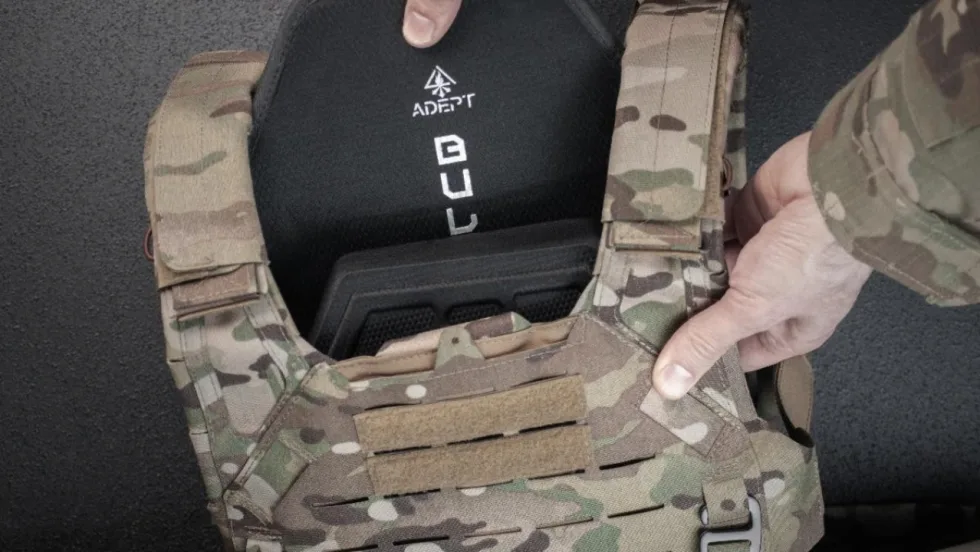
Adept Armor Introduces Two New Rifle Plates
Adept Armor has launched two new Level IV ballistic plates, the Emperor and the Archon Mark 2, which brings Adept Armor’s new Quatroid ceramic to the high-threat, performance-value center of the range at 5.2 pounds.
Read More →
POLICE Product Test: Benchmade Bailout
The Benchmade Bailout is a slim, lightweight carry knife with a deep-ride pocket clip and comes in a variety of blade steels and scales. Here is a detailed review of the Taiga Green Bailout, released earlier this year.
Read More →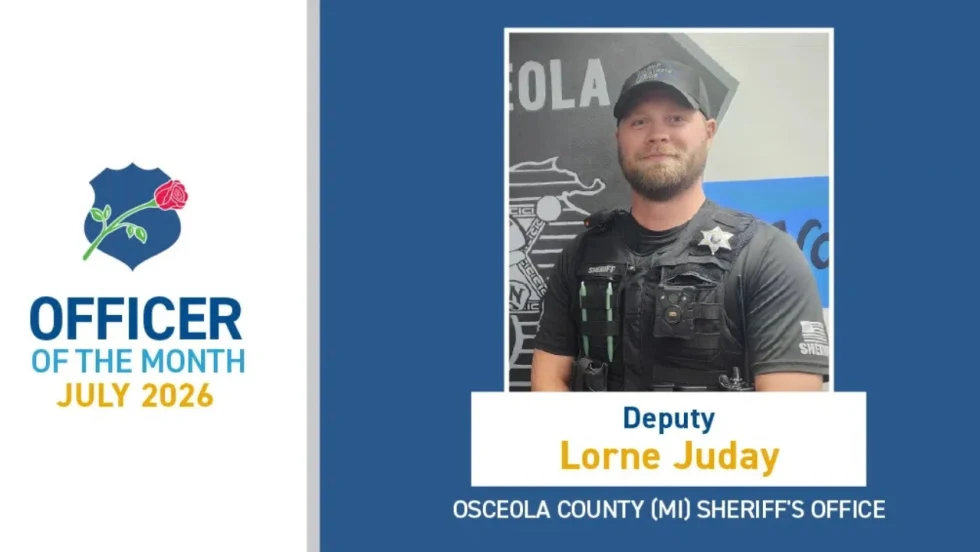
NLEOMF Announces July 2026 Officer of the Month
NLEOMF honored a Michigan deputy sheriff as the July 2026 Officer of the Month for rescuing a trapped driver from a burning vehicle following a Fourth of July crash.
Read More →
Streamlight to Showcase Newest Lighting Products at National Safety Council’s Safety Congress & Expo 2026
Streamlight will showcase its latest lights, including the Portable Scene Light III and the LiteBox 1Million, at the 2026 National Safety Council (NSC) Safety Congress & Expo.
Read More →
The 2027 World Police & Fire Games Set for Perth, Australia
The 2027 World Police & Fire Games (WPFG) will take place in Perth, Western Australia, from Friday, March 12 through Sunday, March 21, 2027.
Read More →
5.11 Partners with National Fallen Firefighters Foundation to Support #ForThe343
5.11 has joined the nationwide movement honoring the 343 New York City Fire Department firefighters lost on Sept. 11, 2001.
Read More →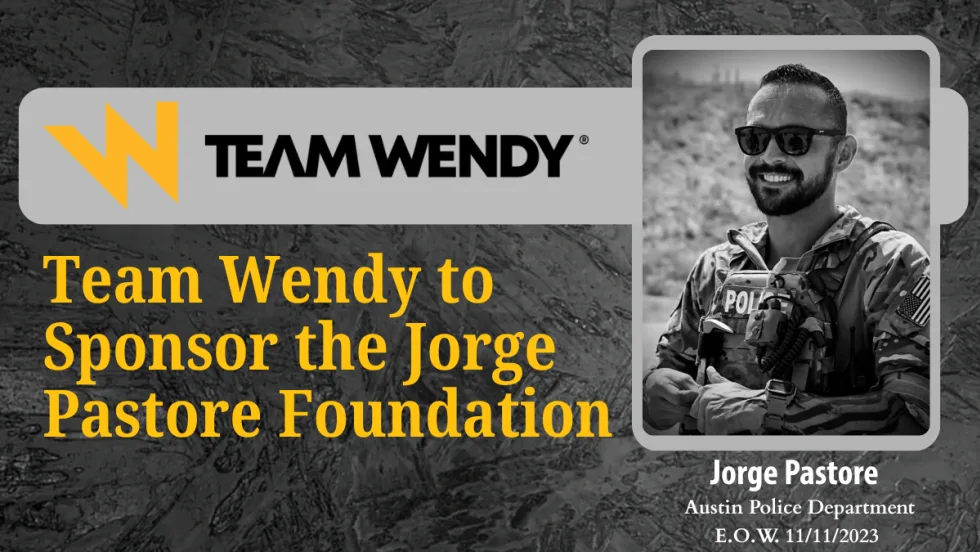
Team Wendy Announces Title Sponsorship of the Jorge Pastore Foundation
Team Wendy’s 3-year partnership with the Jorge Pastore Foundation expands access to programs that strengthen those who serve.
Read More →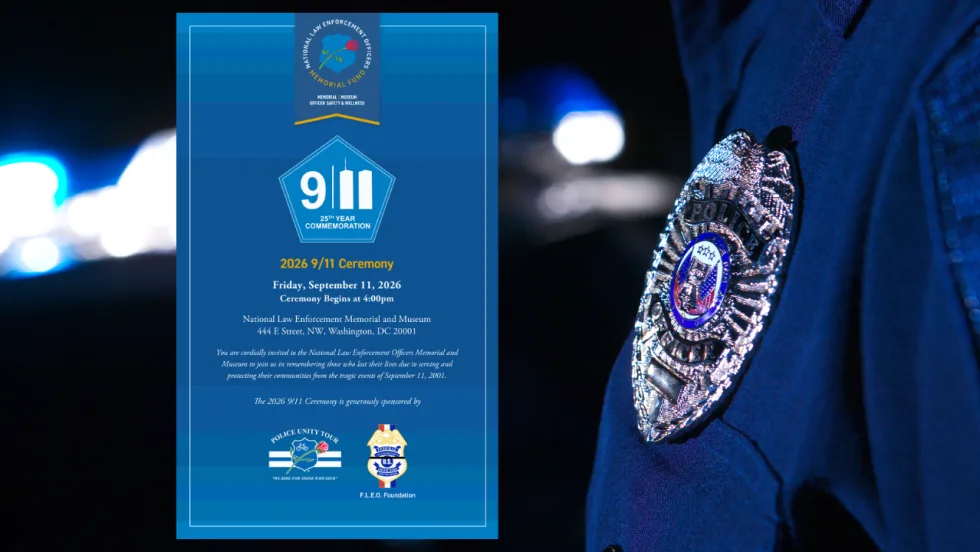
National Law Enforcement Memorial and Museum Hosting 9/11 25th-Year Commemoration Ceremony
The National Law Enforcement Memorial and Museum is hosting a 9/11 25th Year Commemoration Ceremony on Sept. 11 at 4 p.m.
Read More →
National Law Enforcement Officers Memorial Fund Announces June 2026 Officers of the Month
The National Law Enforcement Officers Memorial Fund (NLEOMF) named 15 officers of the Chico Police Department (California) as the Officers of the Month for June 2026 for their roles in responding to an active-shooter incident at a public library.
Read More →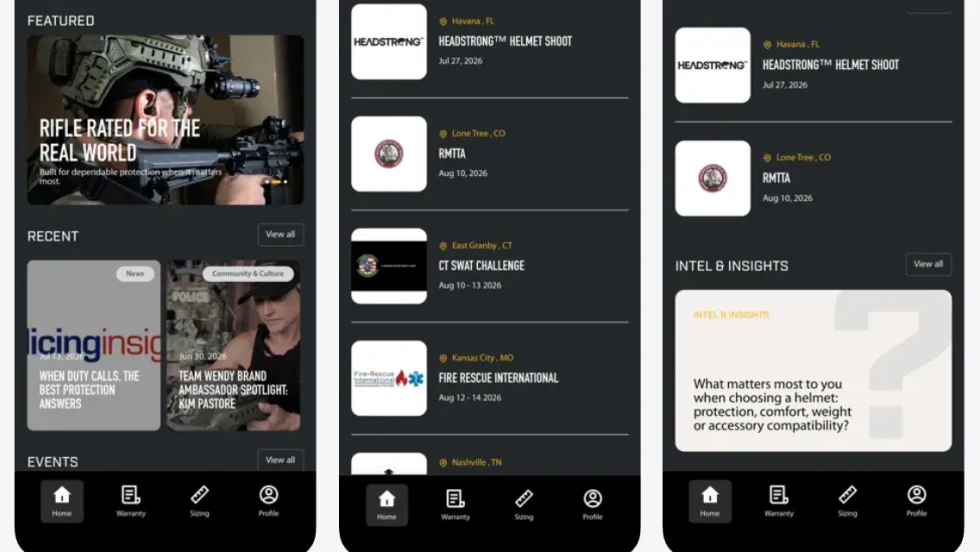
Team Wendy App Creates New Digital Hub for Helmet Owners
The Team Wendy Community App provides one location for warranty registration, size-fit tools, product updates, and community connection. For helmet owners, the new app creates a simpler path to the information and tools that matter most.
Read More →