



Detecting Drugged Driving
The legalization of marijuana has led to a major increase in drugged driving, which means police need new tools like Abbott Labs’ SoToxa to detect impairment.


Photo: Getty/KALI9
The medical use of cannabis is legal, with a doctor’s recommendation, in 36 states. The recreational use of cannabis is legal in 16 states, with more considering legislation. There is little known about the number of people who are taking advantage of this sea change in the law—many speculate that the number of people “using” marijuana hasn’t changed a whole lot.
What many—especially those in public safety such as police, EMS, and fire—can state with certainty, however, is that vehicle collisions where marijuana intoxication was a factor have increased substantially in recent years.
Stoned Driving Statistics
In 2016, the National Highway Traffic Safety Administration (NHTSA) Fatality Analysis Reporting System (FARS) found that drugs were present in 43.6% of fatally injured drivers with a known drug test result. Cannabis was the most commonly found drug in the systems of drug-positive fatally injured drivers with more than 41% of them testing positive for some form of cannabis.
A host of public and private sector organizations require that employees be “sober” while on the job. But in the current environment of legal weed existing drug testing methods have become inadequate. Consequently, an emergent industry has grown up to provide rapid cannabis testing that can be used by employers and by law enforcement. One of the greatest needs is a reliable tool that law enforcement can use to address the problem of detecting impairment on the roads due to marijuana use.
A Growing Problem
One of the leading companies working on developing accurate and rapid drug testing technologies for use by law enforcement is Abbott Laboratories. The company produces the SoToxa Mobile Test System.
“Unfortunately, the true magnitude of the drug-impaired driving problem is not known due to a lack of drug testing,” says Erin Holmes, director of global road safety for Abbott. “While states do a good job of testing fatally and seriously injured drivers for the presence of alcohol, drug testing rates are far lower. Despite there being limitations in the fatality data, a variety of studies are painting a picture that shows drug-impaired driving is increasing. What’s true is that thousands of innocent lives are lost every year to this entirely preventable behavior.”
There are several different sources that can be consulted for statistics on the impact of marijuana usage on highway safety. They include fatality and injury data, roadside surveys, and studies examining drug-impaired driving in states that have legalized recreational cannabis. While there are recognized limitations in fatality data, one consistent finding is that cannabis is the most commonly detected drug—aside from alcohol—in the systems of fatally injured drivers and drivers involved in fatal crashes.
Holmes explains, “It is common for cannabis to be used in combination with other substances, which can produce significantly greater impairment and increase crash risk. Cannabis-impaired driving, in particular, is a problem that warrants immediate action.”
NHTSA’s National Roadside Survey (NRS) measures the extent of drug-impaired driving in this country. The most recent NRS was conducted in 2013-2014, and found that 22.5% of weekend nighttime drivers tested positive for illegal, prescription, or over-the-counter medications with 12.6% of these drivers testing positive for Delta-9 tetrahydrocannabinol or THC (the main psychoactive ingredient in cannabis). Comparing results between the 2007 and 2014 NRS, it was found that the percentage of drivers testing positive for THC increased by 48% over that seven-year span (from 8.6% to 12.6%).
Holmes notes further that CDC data found that in 2018, approximately 12 million people aged 16 and older reported driving under the influence of cannabis in the past year. That bears repeating because it is clear evidence of the need for stoned driving detection technology. Approximately 12 million people ages 16 and older reported driving under the influence of cannabis in the past year.
Holmes says the state with the most robust drug-impaired driving data is Washington.
“Following the legalization of recreational cannabis in 2012, numerous studies have been conducted to determine whether this policy decision led to an increase in cannabis-impaired driving. The Washington Traffic Safety Commission (WTSC), AAA Foundation for Traffic Safety, Pacific Institute for Research and Evaluation (PIRE), and others have conducted analyses examining the prevalence of cannabis-impaired driving and trends over time,” she says.
According to data collected by Abbott over the ensuing years, the AAA Foundation for Traffic Safety has conducted several studies in Washington to determine whether cannabis-impaired driving increased following the legalization of recreational cannabis. A study released in 2020 found that the percentage of drivers involved in fatal crashes who tested positive for cannabis doubled since the state legalized the drug for recreational use. The percentage of drivers who tested positive for THC increased from about 9% in the five-year period before legalization to approximately 18% in the five years afterward. Roughly 1 in 5 drivers involved in fatal crashes in 2017 tested positive for THC.
“This data is merely a snapshot, but it demonstrates that drug-impaired driving is a significant problem,” Holmes says. “Cannabis-impaired driving, in particular, is a common and increasing behavior as is the incidence and seriousness of polysubstance-impaired driving which often involves THC and alcohol.”
Cannabis Detection

SoToxa from Abbott Laboratories can detect the presence of THC in the oral fluid of a user. This can determine if a driver has smoked or vaped a cannabis product recently enough to be impaired. Methods used to determine alcohol impairment do not work for cannabis because THC remains in the bloodstream much longer than alcohol.
Abbott developed SoToxa to address the growing public health and safety concern of drug-impaired driving, Holmes says. “No roadside drug test can claim to be 100% accurate, which is why we recommend confirmatory lab testing before a conviction is secured. However, SoToxa is the most advanced and reliable testing-tool available to law enforcement today. Knowing that SoToxa provides reliable and highly accurate results gives police and policymakers the confidence they need to make decisions in the interest of public safety.”
According to Abbot—and they obviously have a vested interest in making such a statement—SoToxa is “the most accurate, reliable, and practical on-site drug screening method available for roadside use.”
The technology is portable, lightweight, and fits within the palm of an officers hand which makes it ideal for use in the field.
“As officer safety is an important consideration, SoToxa is designed to be easy to use and the collection of the oral fluid (saliva) sample is done by the suspect to maintain a safe distance,” the company says in written documents.
A collection device includes a simple saliva swab that allows for the collection of the oral fluid in less than a minute. Once the sample is obtained, the officer inserts it into a cartridge and the portable analyzer. In under five minutes, the analyzer interprets and determines the test outcomes, which eliminates the subjectivity of visually interpreted results. SoToxa will alert the officer if the driver is positive or negative for six common drug classes—amphetamines, benzodiazepines, cannabis, cocaine, methamphetamine, and opiates.”
Numerous law enforcement agencies are currently using SoToxa to enhance impaired driving investigations and identify drivers under the influence of drugs.
Abbott says that SoToxa is very different from a blood or hair test for drug usages. It’s much more immediate, so it only measures the presence of active drugs in order to protect public safety and aid law enforcement officers following the legalization of cannabis for recreational use. “An incredibly important distinction is that SoToxa measures only the active presence of drugs. This means that the window of detection is short and only drugs that have been used within the last few hours will produce a positive result,” Holmes says. “For example, if cannabis is smoked or vaped, the drug will be present within minutes in the oral fluid. SoToxa would simply measure the presence of THC based on a cutoff level. A common concern related to cannabis use is that the drug can be detected in the body for days and sometimes weeks after consumption. With oral fluid screening, this is not an issue as SoToxa only tests for active THC as opposed to inactive metabolites.”
Holmes adds that SoToxa is part of Abbott’s mission to improve public safety. “At Abbott, we believe in the freedom to get behind the wheel without the fear of impaired drivers and the poor judgements they make,” she says. “This is why Abbott is creating the tools to keep us safe and secure, no matter what changes in drug policies and decimalization come down the road.”
Doug Wyllie is contributing web editor for POLICE.
More Technology
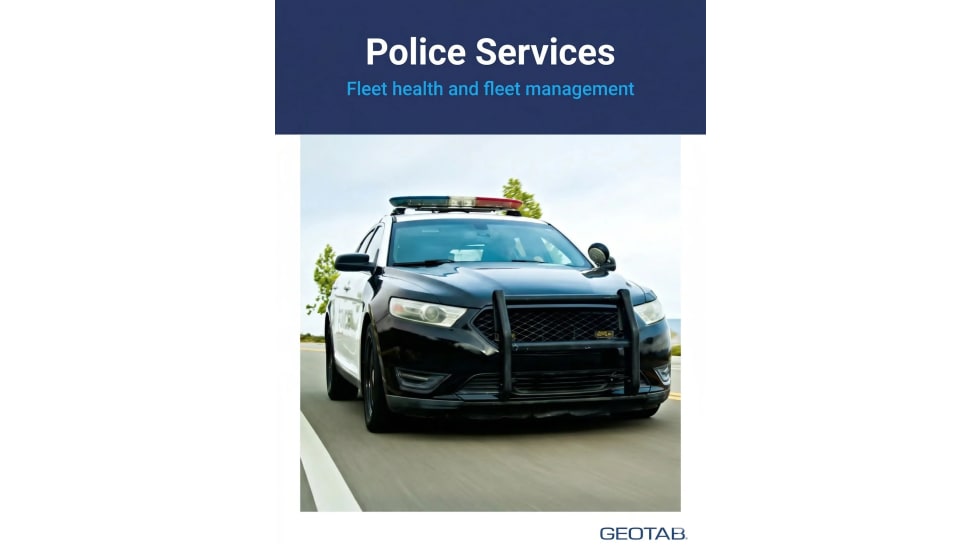
A police agency's guide to data-driven fleet management
Costs are rising and the public expects more transparency into how their tax dollars are spent. This e-book shows how police agencies can use fleet data to take control of fleet expenses while improving officer safety and demonstrating fiscal responsibility to the communities they serve.
Read More →
AI and analytics for law enforcement: Turning data into insights
Law enforcement agencies are managing more video, sensor data and digital evidence than ever before. Discover how AI and analytics can help turn that data into actionable insights that strengthen situational awareness, accelerate investigations and support more informed decisions.
Read More →
Vasco Electronics Adds Automatic Language Detection to Vasco Translator Q1
Vasco Electronics’ software update introduces hands-free language switching and expanded offline translation across 45 language pairs, empowering law enforcement, healthcare, and front-office enterprise teams
Read More →

North Miami Police Department Deploys Mark43
The North Miami Police Department has deployed Mark43 as part of its Five-Year Strategic Plan that represents its collective vision and goals for a more proactive police department, anchored by a core commitment to leveraging modern technology to enhance efficiency and public safety.
Read More →
Cellebrite Genesis for Enterprise Now Generally Available
Made available to the public sector in June, Cellebrite Genesis is serving a growing mix of national, regional, and local agencies worldwide, including some of the largest regional and metropolitan police departments. It is now available for enterprise organizations.
Read More →
2026 Vision FirstNet Users Summit to Host Emerging Leaders Training on Grassroots Advocacy for Public Safety
“Emerging Leaders Training: Understanding the Importance of Grassroots Advocacy for Public Safety," a session during the 2026 Vision FirstNet Users Summit, will offer a roadmap for unified advocacy at the federal level.
Read More →
Motorola Solutions Completes Acquisition of D-Fend Solutions
Motorola Solutions has acquired D-Fend Solutions, an industry leader in counter-drone technology. This deal provides public safety and enterprise customers with access to advanced counter-unmanned aerial systems.
Read More →
ZeroEyes, Advantech & Camden Police Partner to Bring AI Gun Detection Technology to Delaware School District
ZeroEyes has partnered with Advantech and the Camden Police Department to deploy ZeroEyes’ AI gun detection and intelligent situational awareness platform at Delaware’s Caesar Rodney School District (CRSD).
Read More →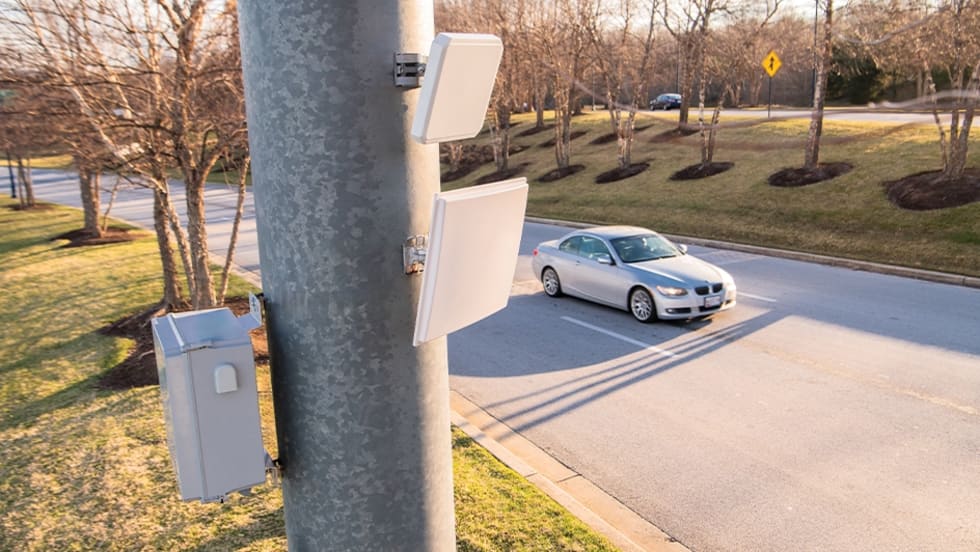
Leonardo U.S. Cyber & Security Solutions Introduces SignalTrace, the Next Evolution in Electronic Signature Detection Technology
SignalTrace reflects years of product refinement and a clearer expression of the technology’s purpose of recognizing and correlating electronic signatures in publicly broadcast wireless signals to reveal patterns, relationships, and trends that might otherwise go undetected.
Read More →
Pimloc Launches Secure File Sharing to Streamline Release of Redacted Video
Pimloc’s Secure File Sharing lets organizations deliver redacted video, audio, and documents through expiring, passcode-protected links, accelerating delivery while reducing security, compliance, and chain-of-custody risks.
Read More →