



Data Tactics
To counter arguments of the media and activists, we need to do a better job capturing and sharing data on attacks against us.

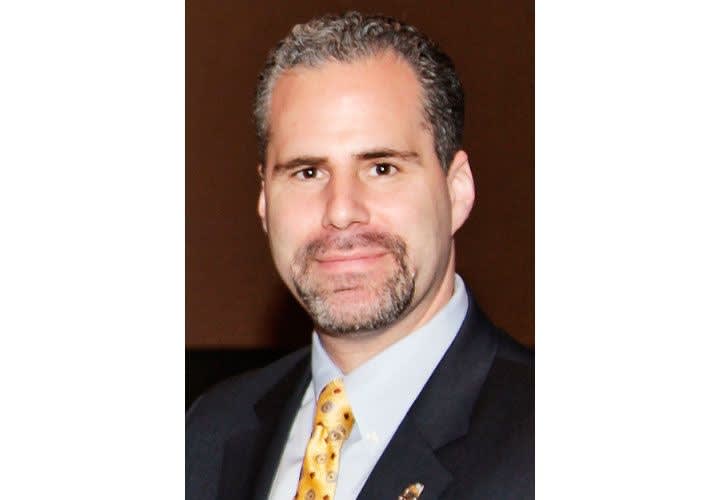
Jon Adler
On Jan. 29, PoliceMag.com's newsletter OnTarget reported that a subject attempted a gun grab on NYPD Officer Magna Kamara who was working a security detail for the Grammy Awards. Fortunately, the subject failed and Officer Kamara prevailed. She was injured when the subject reportedly threw a laptop computer at her, but she prevailed.
This incident left me wondering how many gun grab incidents occurred in the preceding year. Unfortunately, my data quest did not yield an answer. I found this disconcerting since the biased news media routinely discharges data like lethal ammunition aimed at law enforcement. Law enforcement, alternatively, is great at capturing criminals, but not data.
Capturing gun grab data would serve law enforcement in two ways. First, it would aid us in refining weapon retention training and tactics. Second, it would support law enforcement messaging in combating the mythology of the harmless "unarmed man."
While we don't have data reflecting gun grab attempts, there is data that indicates the number of officers who were killed feloniously with their own firearms after gun grabs. According to the National Law Enforcement Officers Memorial Fund's Law Enforcement Officer Fatalities Report, three officers were fatally shot with their own firearms last year.
And law enforcement does do a good job of recording the number of assaults against officers. According to the FBI's 2016 Law Enforcement Officers Killed and Assaulted (LEOKA) report, criminals assaulted 57,180 law enforcement officers that year. Based on the biased news media reports involving officer use of force, one would expect that the majority of assaultive criminals employed some form of weapon in attacking an officer. To the contrary, the LEOKA report indicates that the so-called unarmed subject was responsible for 78% of the assaults committed against law enforcement. Yet this goes unspoken during the media's hindsight critiques of an officer's use of force against unarmed subjects. If we don't do our best to gather accurate data and educate the law-abiding public regarding who's committing these assaults against law enforcement, then we're passively empowering that false media narrative.
The current culture suggests that the unarmed man has free passage to take an unlimited number of swings, kicks, bites, and headbutts against officers, and the officers' only recourse is to magically reposition themselves out of harm's way. We can't accept this as a cultural norm.
Each year, participating law enforcement departments contribute crime data to the FBI's Uniform Crime Report (UCR). In an attempt to expand on the data capture capacity of this report, the Department of Justice initiated the National Incident Based Reporting System (NIBRS). The goal of this system is to capture more comprehensive "incident and arrest information" for different categories of offenses. I'm not sure if NIBRS will capture gun grab attempts, noncompliance with verbal commands, and additional behavior data associated with the assaultive conduct of the unarmed man, but the system is only as good as the number of law enforcement departments and agencies contributing to it. Without the data, law enforcement can't educate the public effectively on use of force encounters and law enforcement trainers won't have the information they need to update training methods and tactics to focus on officer safety and survival.
So why can't law enforcement capture all the field data it needs? First, a law enforcement officer shouldn't be required to have a dozen complex passwords for accessing different systems to input use-of-force and/or arrest data. There is a screaming need to centralize the data collection through one database. This includes capturing both arrest and use-of-force information. If technology has progressed to the point where vehicles will soon be operating without a human driver's control, then the technology also exists where relevant information could be input and captured via one database.
While NIBRS may not be perfect, it's the best system available that will enable law enforcement to capture a wider array of important data. Of course, there is an associated cost attributed to becoming NIBRS compliant, but law enforcement partners can accomplish this through different grant options. NIBRS will only yield a benefit to law enforcement if a sufficient number of departments contribute to the data input.
Body armor may protect law enforcement from bad guy bullets, but data can protect officers from lethal anti-cop rhetoric. If we recognize the value of data tactics, law enforcement can improve its officer safety-based training and empower its narrative.
More Patrol

Adept Armor Introduces Two New Rifle Plates
Adept Armor has launched two new Level IV ballistic plates, the Emperor and the Archon Mark 2, which brings Adept Armor’s new Quatroid ceramic to the high-threat, performance-value center of the range at 5.2 pounds.
Read More →
POLICE Product Test: Benchmade Bailout
The Benchmade Bailout is a slim, lightweight carry knife with a deep-ride pocket clip and comes in a variety of blade steels and scales. Here is a detailed review of the Taiga Green Bailout, released earlier this year.
Read More →
NLEOMF Announces July 2026 Officer of the Month
NLEOMF honored a Michigan deputy sheriff as the July 2026 Officer of the Month for rescuing a trapped driver from a burning vehicle following a Fourth of July crash.
Read More →
Streamlight to Showcase Newest Lighting Products at National Safety Council’s Safety Congress & Expo 2026
Streamlight will showcase its latest lights, including the Portable Scene Light III and the LiteBox 1Million, at the 2026 National Safety Council (NSC) Safety Congress & Expo.
Read More →
The 2027 World Police & Fire Games Set for Perth, Australia
The 2027 World Police & Fire Games (WPFG) will take place in Perth, Western Australia, from Friday, March 12 through Sunday, March 21, 2027.
Read More →
5.11 Partners with National Fallen Firefighters Foundation to Support #ForThe343
5.11 has joined the nationwide movement honoring the 343 New York City Fire Department firefighters lost on Sept. 11, 2001.
Read More →
Team Wendy Announces Title Sponsorship of the Jorge Pastore Foundation
Team Wendy’s 3-year partnership with the Jorge Pastore Foundation expands access to programs that strengthen those who serve.
Read More →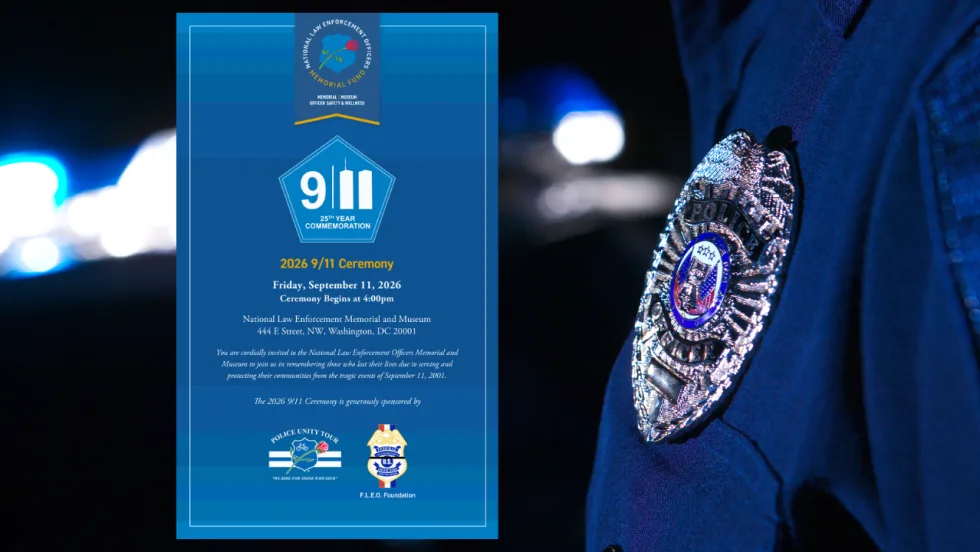
National Law Enforcement Memorial and Museum Hosting 9/11 25th-Year Commemoration Ceremony
The National Law Enforcement Memorial and Museum is hosting a 9/11 25th Year Commemoration Ceremony on Sept. 11 at 4 p.m.
Read More →
National Law Enforcement Officers Memorial Fund Announces June 2026 Officers of the Month
The National Law Enforcement Officers Memorial Fund (NLEOMF) named 15 officers of the Chico Police Department (California) as the Officers of the Month for June 2026 for their roles in responding to an active-shooter incident at a public library.
Read More →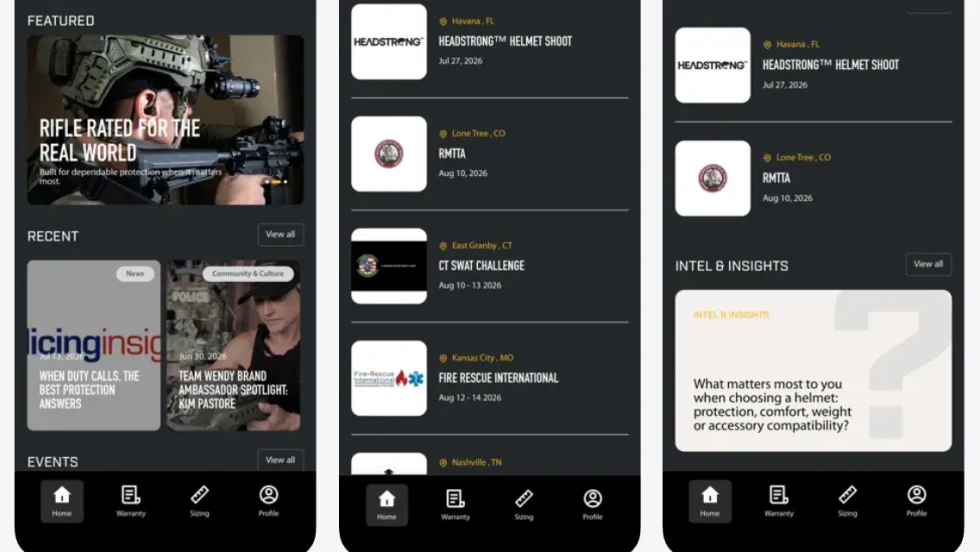
Team Wendy App Creates New Digital Hub for Helmet Owners
The Team Wendy Community App provides one location for warranty registration, size-fit tools, product updates, and community connection. For helmet owners, the new app creates a simpler path to the information and tools that matter most.
Read More →