



Crime: A Perfect Storm
America's rising crime rate is being driven by early release of violent prisoners, ineffective handling of criminal aliens, and the prosecution of police officers for doing their jobs, which makes officers hesitant to do their jobs.

This year violent crime statistics are climbing in numerous American cities. Homicides are up 19% in Atlanta over last year, 22% in Chicago, 25% in Dallas, and 35% in Washington, D.C. Even more alarming are the stats for St. Louis, which has seen the murder stats pop 58% and Baltimore now up 62%. Even in many of the cities where the murder rate is not climbing, the number of shootings is. Which means the local bad guys are throwing more bullets at each other and at innocents, and the medical professionals are somehow keeping the "targets" alive.
You can put a hundred experts in a room and ask them why blood is running faster in America's streets this year than last year and get a hundred different answers. But I believe we are seeing the formation of a perfect storm, a set of small elements combining into a monster.
America's rising crime rate is being driven by early release of violent prisoners, ineffective handling of criminal aliens, and the prosecution of police officers for doing their jobs, which makes officers hesitant to do their jobs.
If you need a laboratory to study what happens when you start emptying out prisons and jails, just look at California. Faced with massive prison and jail overcrowding, California has been releasing prisoners faster than any other state. In 2013 the U.S. Supreme Court forced the release of 10,000 California inmates, and the state has released some 46,000 prisoners since 2006. Not all of these prisoners have been the local weed dealer who got popped before the state pretty much legalized the stuff. Violent criminals, even murderers, are getting out, and Californians are suffering for it.
They are not alone. Jail overcrowding is a problem in numerous states, and it's putting some bad and unstable people back on the streets. Consider the case of Guaymar Cabrera Hernandez, 24 (but looks 50 in his photos), of Hyattsville, Md. On Aug. 21, Hernandez was released from jail where he was placed on a disorderly conduct charge. By the end of the day, he was charged with carjacking, armed robbery, and first-degree assault.
Of course, not everybody being granted early release from prisons and jails is a danger to the public. But recidivism is high. Which means the more we release, the more crime and the more danger to law enforcement.
The second factor that I see driving a rising crime rate in many of America's cities is the criminal alien population.
With the rise of Donald Trump and his anti-illegal immigration plan on the political scene and the murder of Kathryn "Kate" Steinle in San Francisco by a man who was wanted on an immigration hold and released according to sanctuary city policy, the criminal alien issue has been politicized to the point of absurdity. And that makes it hard to find objective information. But some cold, hard federal statistics are available.
In a 2011 report, the government accounting office—probably the least politically influenced of all government bodies—wrote that as of fiscal 2010 some 350,000 state and federal inmates were criminal aliens imprisoned for something other than an immigration offense and half of them have been convicted of class one crimes. I'll let you draw your own conclusions from these figures. But some crime is not homegrown.
The final element in our perfect storm of rising crime rates is the anti-police movement that has arisen in this country since the Aug. 9, 2014, officer-involved shooting and killing of Michael Brown in Ferguson, Mo. The anger toward police operations is clearly affecting some officers and changing the way they do their jobs. It's no coincidence that the cities seeing the highest increases in homicides in 2015 are St. Louis (Ferguson is part of the metropolitan area) and Baltimore. Officers in these cities have been beaten down by rioting and demonstrations against law enforcement, and some are now reportedly reticent to take overt action. Officers in other cities are also hesitating to act for fear of finding themselves the star of a legal and career nightmare. One Alabama officer, who was pistol-whipped with his own duty weapon, even admitted that he hesitated to shoot the unarmed black man who was attacking him because of fear of being prosecuted.
Three days before I wrote this column, Black Lives Matter released a set of 10 demands for reforming American police operations. One of the demands is the end of "broken windows," proactive policing. I believe we have seen that in action this summer. And it doesn't bode well for the future. A storm is on the horizon.
More Patrol

Adept Armor Introduces Two New Rifle Plates
Adept Armor has launched two new Level IV ballistic plates, the Emperor and the Archon Mark 2, which brings Adept Armor’s new Quatroid ceramic to the high-threat, performance-value center of the range at 5.2 pounds.
Read More →
POLICE Product Test: Benchmade Bailout
The Benchmade Bailout is a slim, lightweight carry knife with a deep-ride pocket clip and comes in a variety of blade steels and scales. Here is a detailed review of the Taiga Green Bailout, released earlier this year.
Read More →
NLEOMF Announces July 2026 Officer of the Month
NLEOMF honored a Michigan deputy sheriff as the July 2026 Officer of the Month for rescuing a trapped driver from a burning vehicle following a Fourth of July crash.
Read More →
Streamlight to Showcase Newest Lighting Products at National Safety Council’s Safety Congress & Expo 2026
Streamlight will showcase its latest lights, including the Portable Scene Light III and the LiteBox 1Million, at the 2026 National Safety Council (NSC) Safety Congress & Expo.
Read More →
The 2027 World Police & Fire Games Set for Perth, Australia
The 2027 World Police & Fire Games (WPFG) will take place in Perth, Western Australia, from Friday, March 12 through Sunday, March 21, 2027.
Read More →
5.11 Partners with National Fallen Firefighters Foundation to Support #ForThe343
5.11 has joined the nationwide movement honoring the 343 New York City Fire Department firefighters lost on Sept. 11, 2001.
Read More →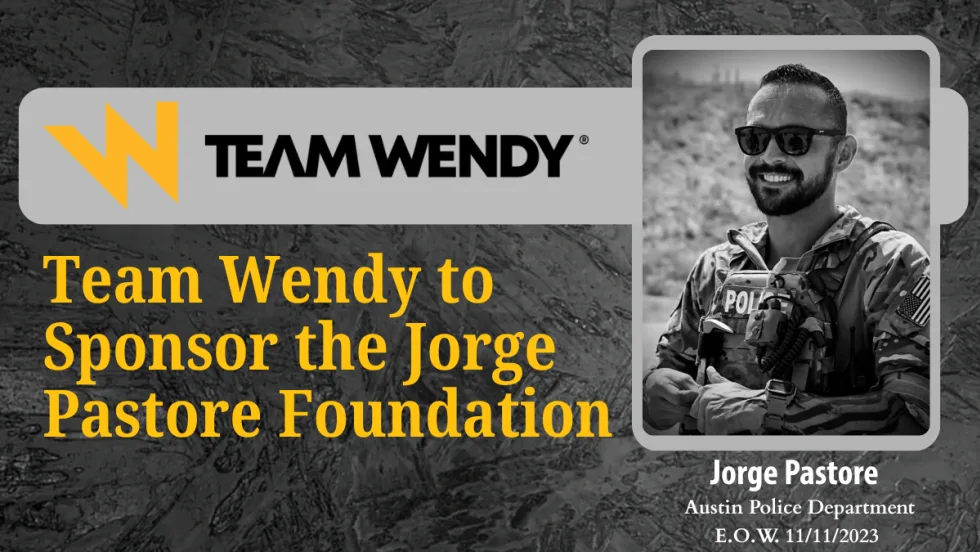
Team Wendy Announces Title Sponsorship of the Jorge Pastore Foundation
Team Wendy’s 3-year partnership with the Jorge Pastore Foundation expands access to programs that strengthen those who serve.
Read More →
National Law Enforcement Memorial and Museum Hosting 9/11 25th-Year Commemoration Ceremony
The National Law Enforcement Memorial and Museum is hosting a 9/11 25th Year Commemoration Ceremony on Sept. 11 at 4 p.m.
Read More →
National Law Enforcement Officers Memorial Fund Announces June 2026 Officers of the Month
The National Law Enforcement Officers Memorial Fund (NLEOMF) named 15 officers of the Chico Police Department (California) as the Officers of the Month for June 2026 for their roles in responding to an active-shooter incident at a public library.
Read More →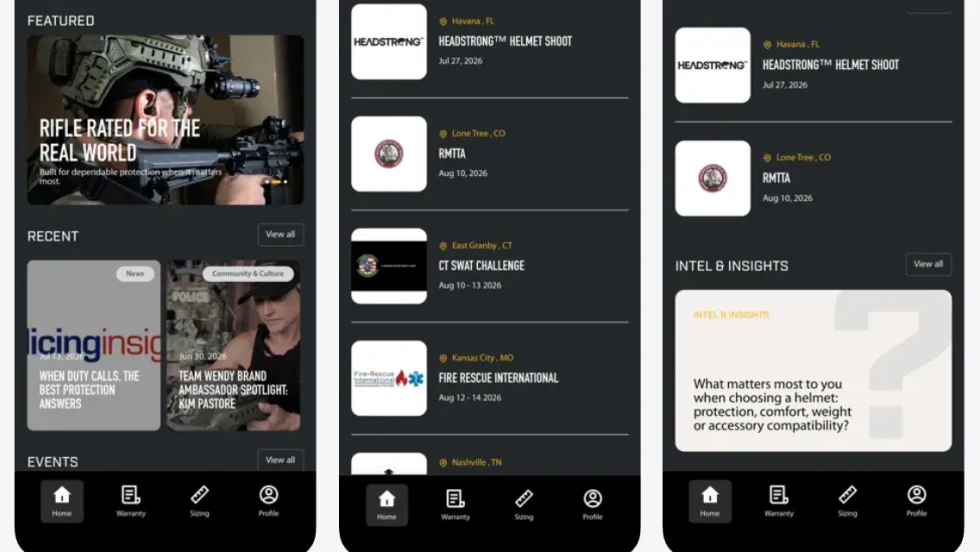
Team Wendy App Creates New Digital Hub for Helmet Owners
The Team Wendy Community App provides one location for warranty registration, size-fit tools, product updates, and community connection. For helmet owners, the new app creates a simpler path to the information and tools that matter most.
Read More →