



Cops Provided a Way to Learn Proper Wildfire Response
The Ready, Set, Go! materials point out the critical role law enforcement plays when an evacuation from a wildfire is needed. Information is provided both in a detailed, yet concise, video as well as a flyer, which IAFC suggests can be kept in patrol cars.

Patrol officers never know where the next dispatch will lead, but in the case of being an early responder to a wildfire cops need to be prepared. The International Association of Fire Chief’s (IAFC) is working to better educate police officers on just how to approach responding to wildfires.
The IAFC Ready, Set Go! Program (RSG) has partnered with the National Sheriffs’ Association (NSA) and the International Association of Chiefs of Police (IACP) to enhance law enforcement officers’ safety and understanding of their critical role during wildland fire events.
The Ready, Set, Go! materials point out the critical role law enforcement plays when an evacuation from a wildfire is needed. Information is provided both in a detailed, yet concise, video as well as a flyer, which IAFC suggests can be kept in patrol cars. In the video, officers share critical considerations their peers need to know.
The instructional video stresses implementation of LCES during any wildfire response. The acronym stands for lookouts, communications, escape routes, and safety zones.
Tips associated with LCES are:
Lookout — Each responder has a share of the lookout responsibilities and should speak up when they see a situation that deems a “watch out,” which is a change in the situation that is going to impact operations and life safety.
Communications — Team members need to know which frequencies they are operating on and strive to communicate as much as possible, providing situational updates whenever necessary.
Escape Routes — Identify escape routes on arrival. If you do not already know your escape routes, get an update from incident command, and identify these locations on a map.
Safety Zones — Identify your safety zones since those will be used if your escape routes are compromised. Safety zones are areas where people can get out of harm's way without having to use a shelter.
When an officer first arrives in the area of a wildfire, he or she should always remember to take certain actions initially. Step one is to notify dispatch, thereby making sure the incident has been reported.
“Then look at your surroundings to ensure your safety. You may need to consider alerting the public, facilitating rescues, ordering additional resources, guiding evacuees out of the hazard area, directing traffic, and protecting the scene. Check in with your dispatch or supervisor to provide situational awareness updates and to receive further direction,” the training video instructs.
Many of the points highlighted in the video are clearly spelled out on the flier the IAFC hopes officers will keep and use. It simply breaks Ready, Set, Go! principals down into simple considerations.
Learn More: Disaster Preparation & Response Guide
Ready
The Ready portion of RSG lets officers know what they should understand about wildfires.
Understand basic fire behavior, including concerns of radiant heat when homes are close together, the tendency for convected heat to travel up a hillside, and the threat of flying embers than may cause spot fires. Be sure to watch out for spot fires that ignite along evacuation routes.
Consider any possible arson investigation and know the significance of crime scene preservation and witness interviews.
Understand how law enforcement fits into the Incident Command System (ICS). The first-arriving officer, whether police or fire, is the initial incident commander until relieved by a more qualified person. Then, work according to the plan created by the unified incident command and understand local evacuation terminology and procedures.
Set
The Set portion of RSG focuses on providing officers a better understanding of situational awareness when confronting a wildfire and evacuation. Tips include:
Be aware of pending weather situations, in particular warm and dry conditions with low humidity and higher winds.
Basic PPE should be at hand. That includes making sure your vehicle is fueled, having a bandana and goggles, and staying hydrated, plus other considerations that provide for your safety.
Understand what to do if you are first on scene. First report the fire, and then ensure your life safety and the safety of the public. Protect the area where the fire began and use your body-worn camera (BWC) to document the scene.
Ensure communications and an overwatch while remembering that you may not be able to rely on communications such as sell towers if they lose power. The best option is your mobile radio, but make sure you know what frequencies are in use regarding the fire response.
Know your area by driving and becoming familiar with the road conditions. Be aware of dead-end roads and make sure you look out for your primary and secondary escape routes before they are needed. Also make note of any citizens in the area that may have special needs in the event of an evacuation.
Provide the public with updates and keep citizens apprised on evacuation zones and care facilities.
Go
The Go element of RSG provides officers with instructions on how to facilitate evacuation of the public. The RSG for Law Enforcement materials break these suggestions into three components:
Evacuation – As the fire is contained the public will want to return to their homes, but make sure there is a re-entry plan developed before allowing the public to return.
Get out now, meaning officers need to know the difference between an evacuation order where you assist residents and an order where you abandon evacuation efforts.
What to do if caught in the fire. Flying embers can cause a fire ahead of you, leaving you trapped. Smoke can also pose visibility challenges and affect breathing. First, communicate your situation and location if you cannot escape and then consider sheltering in place until the fire front passes. Your patrol vehicle or a non-flammable structure may be a safe refuge. If trapped inside your vehicle, keep it running with the air conditioning operating in the recirculate mode. If you do not keep the vehicle running, it may not restart when needed.
Learn More: When Disaster Strikes: Equipping Your Fleet for Survival and Recovery
More Patrol

Adept Armor Introduces Two New Rifle Plates
Adept Armor has launched two new Level IV ballistic plates, the Emperor and the Archon Mark 2, which brings Adept Armor’s new Quatroid ceramic to the high-threat, performance-value center of the range at 5.2 pounds.
Read More →
POLICE Product Test: Benchmade Bailout
The Benchmade Bailout is a slim, lightweight carry knife with a deep-ride pocket clip and comes in a variety of blade steels and scales. Here is a detailed review of the Taiga Green Bailout, released earlier this year.
Read More →
NLEOMF Announces July 2026 Officer of the Month
NLEOMF honored a Michigan deputy sheriff as the July 2026 Officer of the Month for rescuing a trapped driver from a burning vehicle following a Fourth of July crash.
Read More →
Streamlight to Showcase Newest Lighting Products at National Safety Council’s Safety Congress & Expo 2026
Streamlight will showcase its latest lights, including the Portable Scene Light III and the LiteBox 1Million, at the 2026 National Safety Council (NSC) Safety Congress & Expo.
Read More →
The 2027 World Police & Fire Games Set for Perth, Australia
The 2027 World Police & Fire Games (WPFG) will take place in Perth, Western Australia, from Friday, March 12 through Sunday, March 21, 2027.
Read More →
5.11 Partners with National Fallen Firefighters Foundation to Support #ForThe343
5.11 has joined the nationwide movement honoring the 343 New York City Fire Department firefighters lost on Sept. 11, 2001.
Read More →
Team Wendy Announces Title Sponsorship of the Jorge Pastore Foundation
Team Wendy’s 3-year partnership with the Jorge Pastore Foundation expands access to programs that strengthen those who serve.
Read More →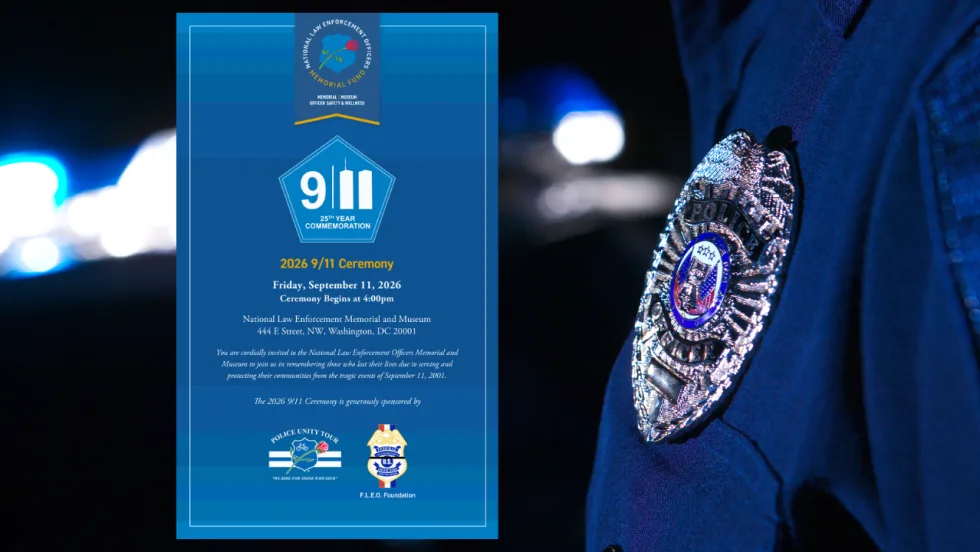
National Law Enforcement Memorial and Museum Hosting 9/11 25th-Year Commemoration Ceremony
The National Law Enforcement Memorial and Museum is hosting a 9/11 25th Year Commemoration Ceremony on Sept. 11 at 4 p.m.
Read More →
National Law Enforcement Officers Memorial Fund Announces June 2026 Officers of the Month
The National Law Enforcement Officers Memorial Fund (NLEOMF) named 15 officers of the Chico Police Department (California) as the Officers of the Month for June 2026 for their roles in responding to an active-shooter incident at a public library.
Read More →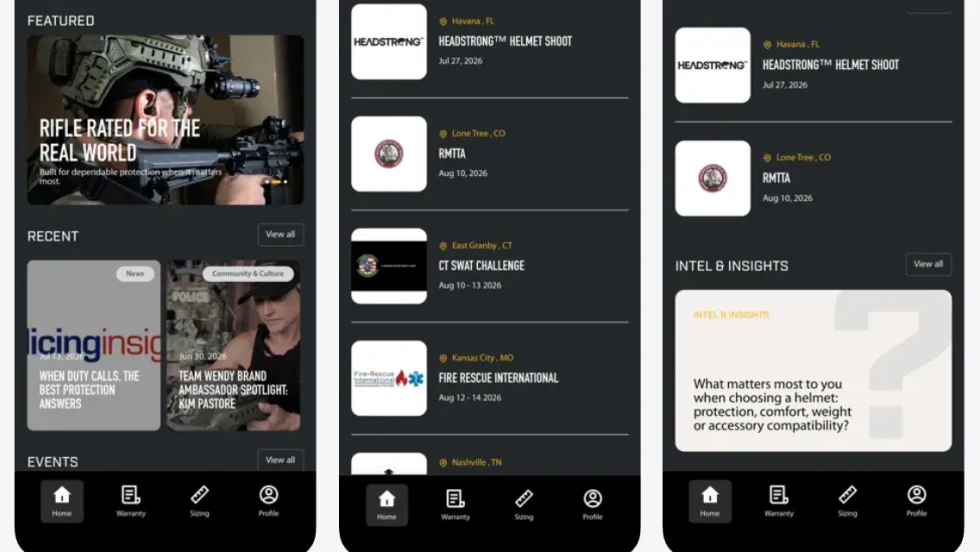
Team Wendy App Creates New Digital Hub for Helmet Owners
The Team Wendy Community App provides one location for warranty registration, size-fit tools, product updates, and community connection. For helmet owners, the new app creates a simpler path to the information and tools that matter most.
Read More →