



Cops are Not Ninjas
Understand that the law throughout this country is that officers are permitted to use objectively reasonable force under the totality of the circumstances, and that means they do not have to use deadly force only if nothing else would work.


photo: iStockphoto.com
Recent high-profile events involving law enforcement officers have created a climate of scrutiny and debate focused on use of force by officers and how officers are trained.
Serious concerns should resound about the implications of this politically charged dialog and the concepts that are being considered. It appears in some respects that the stage has already been set and a course charted and that we are being steered to an outcome by a discussion that is problematic and that places law enforcement officers, their agencies, and the communities they serve at great risk.
The theme of such discussions seems to be that American policing is bad. The conclusion is that the nation is plagued by bad cops who practice bad tactics because of bad training. While there is certainly room for improvement, this broad brush of condemnation of an entire profession is akin to the stereotyping that we purport to abhor in this country.
Some criticism has been directed at the teaching of the concept commonly known in law enforcement training circles as the "21-foot rule." The belief among the media and activists is that, as a result of officers being taught the 21-foot concept, those same officers are overreacting to edged-weapon assaults. The 21-foot safety zone is essentially a reactionary gap concept that has been taught to law enforcement personnel since the early 1980s.
But now based on somebody's bent perspective, there appears to be a proposal that American law enforcement officers must learn to step up and take on knife-wielding suspects like their counterparts do in the United Kingdom rather than shooting before the suspect can close with the knife and attack. There are so many things wrong with that idea that there is almost nothing to say in response. You can give almost anyone a magic marker or a training knife and very likely with little skill, knowledge, or training that person will easily demonstrate the danger of attempting empty hand disarming tactics against an edged-weapon assault.
In the media we hear almost zero support for officers and the overwhelming number of good cops that every day put themselves in harm's way. The media has focused on the bad cop syndrome and blanketed the airwaves with the "epidemic of police abuse." It appears some have validated that campaign with either silence or calls for dangerous compromises to officer safety in response to the supposed "epidemic" of officers using lethal force on people who represent no or little threat in the eyes of the public, the media, and the activists.
The truth is that officers are doing a great job, and the stats support that fact. Even the media's own behavior supports this fact, as "bad" cops and questionable incidents make the headlines. These incidents make the headlines because they are the unacceptable exceptions, which makes them news. Notice that reporters do not flock to scenes of the vast majority of American officers doing their jobs with professionalism and without controversy because that is the norm and it is not news.
Of course, the desire to avoid controversy does not mean we should be telling officers that to improve public relations we now expect them to wrest knives away from suspects or run backwards away from charging suspects because it worked out OK a time or two.
Of primary concern are the public's expectations. The facts are that officers in the United States do not receive training on edged-weapon defense and disarming that would make them even reasonably safe in attempting such maneuvers. Nationwide, officers on average receive limited or no hands-on physical skills training on an annual basis.
Law enforcement officer standards and training directors can attest to the challenges agencies face just providing mandated training and the core critical skills. The result is that hands-on physical combat training is marginalized in law enforcement training programs. Make no mistake: trained ninjas with Wyatt Earp gun-fighting skills that can talk their way out of anything and perform surgery in the streets would be great, but we all know that is not the reality for American law enforcement.
As an experienced law enforcement defensive tactics trainer, use-of-force expert, and trial lawyer with 29 years of experience representing law enforcement, I am very familiar with the issues at hand. I work closely with numerous agencies on such issues on a daily basis and train thousands of officers on use-of-force issues. What I know is that officers typically do a great job of doing their job. But they often have a difficult time explaining things like what went into their tactical decision-making and how they complied with policy and the law. We will not make that any easier for them by creating long-winded use-of-force policies that they will somehow be expected to internalize and articulate. We will not improve the public's confidence in our officers by creating expectations that contradict the laws our officers have been told apply to their actions.
Yes, officers should have a reverence for human life—the lives of all humans, including the lives of the community members they serve, the suspects they deal with, and their own lives as well. Telling officers we expect them to take unnecessary risks, risks the law does not require them to take, and risks that we have in no way trained them to overcome is irresponsible and inappropriate. Suggesting that we have failed in American law enforcement because we teach officers that a firearm is the appropriate response to an edged-weapon assault is preposterous.
Understand that the law throughout this country is that officers are permitted to use objectively reasonable force under the totality of the circumstances, and that means they do not have to use deadly force only if nothing else would work. They do not have to get stabbed trying to disarm a suspect. They are allowed to use reasonable force to stop that from potentially happening. And while officers are not required to retreat from a threat, they frequently do just that after making split-second decisions about whether allowing a suspect such latitude and opportunities will endanger not only the officer's life, but also the lives of others.
Certainly I am an advocate for distance and cover and slowing things down when we can. Additional officers and resources are wonderful options as well. However, we need to keep in mind that the policies, practices, and rules that we advocate and suggest be put in place are applied across the board to agencies of various sizes and resources and to officers of various and wide-ranging fitness and skill levels. That is why the Supreme Court and the other courts across this country issue guidelines and rules that encompass "the totality of the circumstances" and not absolutes.
Finally, I suggest not only do we need to remind the community and the media that American law enforcement officers are overwhelmingly doing a great job and that they want to protect and serve with honor and integrity. We also need to explain to them that officers need the members of the communities that they serve to help them. That help comes in the form of better understanding of the limitations that officers face and what the public has a right to expect. That understanding, however, does not and should not include that officers will be wresting knives away from individuals who are having a bad day.
Mildred K. "Missy" O'Linn is a partner in the Los Angeles office of Manning & Kass, Ellrod, Ramirez, Trester LLP where she represents law enforcement agencies and officers. A former officer, O'Linn is a certified law enforcement trainer.
More Training
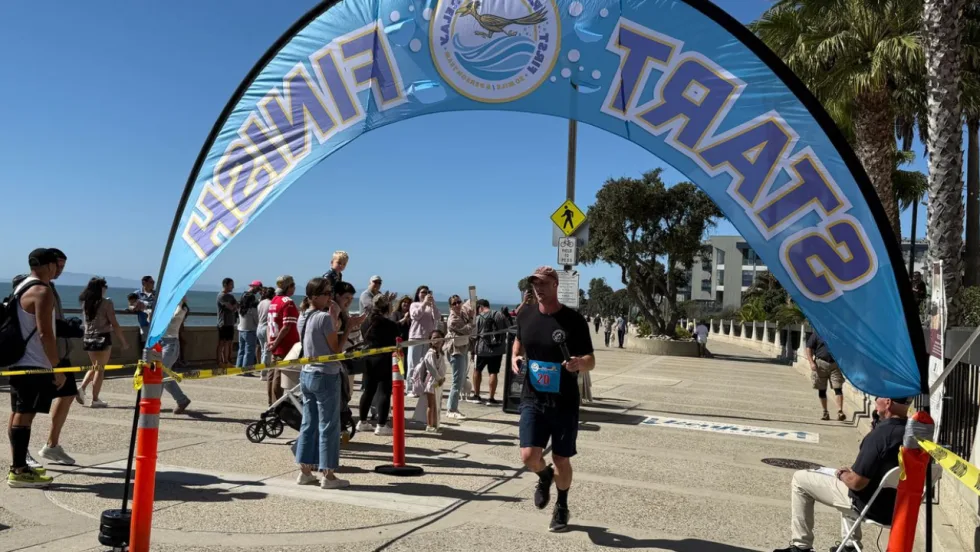
Registration Underway for Sixth Annual First Responders Relay
The California Police Athletic Federation’s annual First Responder Relay will welcome first responder teams from across the globe to compete along Ventura's scenic coastline on Oct. 11. Registration is underway.
Read More →
Vector Solutions Launches Comprehensive Online Dispatch Training Catalog for Emergency Communications Professionals
Vector Solutions’ new catalog of 35 expert-developed online courses can help emergency communication centers strengthen training, meet certification requirements, and simplify continuing education.
Read More →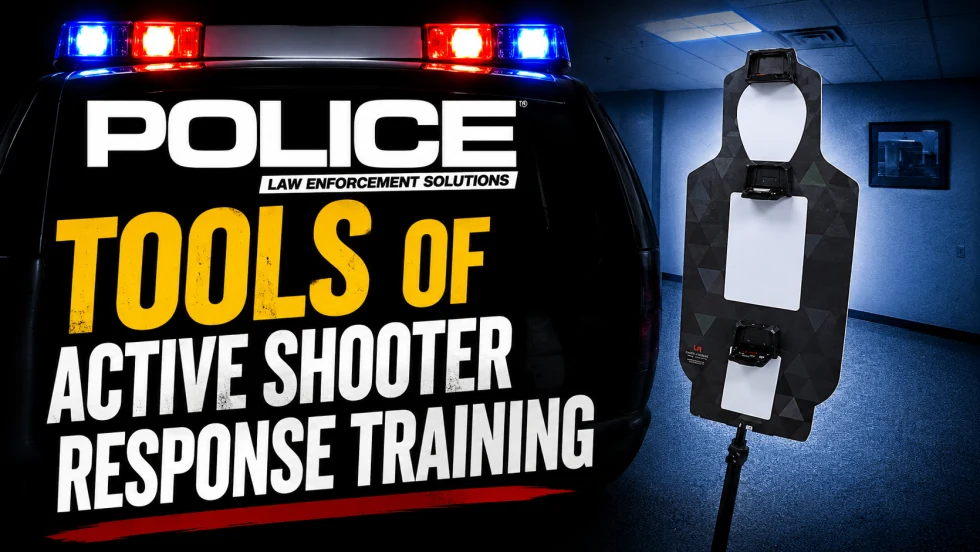
Tools for Active Shooter Response Training
What technologies help prepare officers for active shooter response situations? This behind-the-scenes look at law enforcement training explores shot simulators, smart firearms, laser target systems, and the tools used to build safer, more effective training environments.
Read More →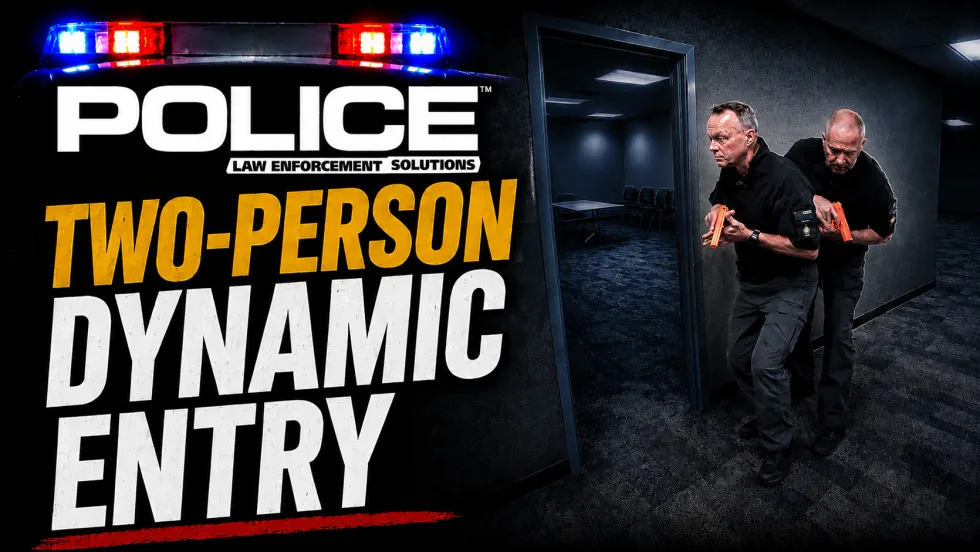
Two-Officer Tactical Doorway Entry Techniques
Entering a room during active-threat situations requires communication, coordination, and disciplined tactical movement. In this video, trainers from the United States Deputy Sheriff’s Association demonstrate critical room entry concepts, including fatal funnel awareness, team coordination, and safe tactical movement.
Read More →
High Compressed Ready Explained | Muzzle Control For Room Entry
In this video, Mike Willis, law enforcement national training and program director for the United States Deputy Sheriffs’ Association, demonstrates the high compressed ready position and discusses muzzle control during room entry.
Read More →
Why Attend the DroneSense Innovation Summit by Versaterm?
Let’s hear from Ryan Bracken, head of product, about why your agency should send someone to the first annual DroneSense Innovation Summit by Versaterm in April.
Read More →
Caswell Live Fire Spins Off from InVeris
Caswell Live Fire has spun off from parent company InVeris, coinciding with the 100th anniversary of Caswell’s founding. Over the past 100 years, Caswell has developed pioneering solutions that support military, law enforcement, and commercial clients worldwide.
Read More →
When Do You Transport a Wounded Officer Instead of Waiting for EMS?
Thumbnail for video series POLICE Topics, Tactics & Tips with a yellow headline that reads When Do You Transport a Wounded Officer Instead of Waiting for EMS?
Read More →
How to Pick Your High-Risk Stop Location for Tactical Advantage
Hear veteran trainer Mike Willis, of the United States Deputy Sheriff’s Association, explain several considerations that can help you wisely pick your best spot to initiate high-risk or felony traffic stops.
Read More →
Coffee Break with Police Experts: Using Your Patrol Vehicle for Cover
In this video, hear from Dustin Mowery, a product specialist at Team Wendy, as he discusses how to best use a patrol vehicle for cover.
Read More →