



Controlling Lawsuit Risks
Some law enforcement activities are more likely than others to generate citizen complaints, tort claims, and lawsuits (use of deadly or serious force, for example). But even routine detentions, searches, and arrests also present civil liability risks. What can you do to reduce the chances of becoming a defendant in a lawsuit?


Some law enforcement activities are more likely than others to generate citizen complaints, tort claims, and lawsuits (use of deadly or serious force, for example). But even routine detentions, searches, and arrests also present civil liability risks. What can you do to reduce the chances of becoming a defendant in a lawsuit?
Staying Current
Officers receive comprehensive indoctrination on the basics of arrest, search, and seizure during academies and in-service training, but there is a career-long need to continue to update that information. And the reason for this need is easy to understand: the law is constantly changing.
New legislation and new case decisions come out continually and either reverse or modify existing law. An officer who has no ongoing plan for keeping current with these changes is at greater risk for civil liability because he or she is more likely to be basing actions on outdated concepts of law.
Most jurisdictions require their officers to undergo a minimum number of hours of continuing professional training each year. Seminars, conferences, broadcasts, publications (including “Point of Law” columns), Internet study, taped programs, and other training vehicles also provide updates to keep officers current on changes in the law. Whatever your personal or departmental program may include, the best insurance against civil liability will always be knowing and following the latest pronouncements on the constitutional and statutory limits placed on your police powers.
But there’s more you can do.
Heck v. Humphrey
Roy Heck was convicted of manslaughter and given a 15-year sentence. From prison, he tried to file a civil rights suit against law enforcement officials, accusing them of violating his constitutional rights during the investigation and prosecution of the case. When the matter reached the U.S. Supreme Court, a rule was announced that can often be invoked to bar certain lawsuits against police.
The court noted that there is a “strong judicial policy against the creation of two conflicting resolutions arising out of the same or identical transaction.” Also, the only means for attacking the validity of a criminal conviction is by direct appeal or habeas corpus in the criminal courts.
For these reasons, the court ruled that a person who has been convicted of a crime cannot undermine the validity of his conviction by obtaining a contrary result in a civil suit. In other words, if a criminal jury has found someone guilty beyond a reasonable doubt, a civil jury cannot be allowed to find that he was not guilty by a preponderance of evidence.
The court explained that where a conviction has not been reversed on appeal, expunged by executive order, or called into question by issuance of a writ of habeas corpus, no suit can be maintained based on the same events if “a judgment in favor of the plaintiff would necessarily imply the invalidity of his conviction or sentence.”
For example, suppose you arrest someone for resisting or obstructing an officer in the lawful performance of his or her duties, and the person pleads guilty or is convicted at trial of that offense. As long as the conviction has not been overturned, this person cannot sue you for illegal detention, false arrest, excessive force, or false imprisonment. If you had committed any of these acts, you would not have been in the lawful performance of your duties; the guilty plea or conviction establishes that you were obstructed while lawfully performing your duties; therefore, Heck bars the lawsuit.
However, if the plaintiff claimed you used excessive force after completing the arrest, this suit would not be barred because success on this claim is not necessarily inconsistent with the conviction. This is a key point that you need to understand. You can lawfully arrest someone and thereafter subject him to excessive force, so there would be no inconsistency between this claim and a conviction for resisting arrest. Also, if you arrested someone for drugs (for example), his conviction would bar any suit for false arrest but not for excessive force because drug possession does not have the element of lawful performance of official duties.[PAGEBREAK]
The result of the Heck ruling is that you can increase your protection against civil liability by doing everything legally possible to secure the filing of charges against your arrestees by the prosecutor or grand jury and furnishing sufficient admissible evidence to allow the prosecutor to obtain a conviction on at least one of the appropriate charges. (Note: Where the facts warrant, conviction on a charge that includes the element of lawful performance of your official duty gives the additional protection against most force claims.)
Devenpeck v. Alford
A recent Supreme Court opinion in a civil liability case may sometimes provide additional protection in cases not barred by Heck.
Jerome Alford was arrested by officers of the Washington State Patrol on charges of unlawfully taping conversations during a vehicle stop. When Alford pointed out that a state court of appeals had previously issued a decision declaring that such taping was not illegal (again illustrating the need for ongoing update training), the trial court dismissed the charges, and Alford filed suit against both officers for false arrest.
One of the defenses raised by the officers was that even if there was no probable cause to arrest Alford for illegal taping, they could have arrested him for impersonating an officer or obstructing an officer. Since there was probable cause to arrest for other offenses, there should be no liability for false arrest.
The Ninth Circuit federal court rejected this defense and held that officers could only rely on P.C. to arrest for a different offense if that offense were “closely related” to the booking charges actually specified by the arresting officers. Since impersonating or obstructing did not relate to the charge of unlawful taping, the Ninth Circuit ruled the officers liable to possible damages on retrial.
However, the Supreme Court unanimously reversed the Ninth Circuit. Citing a number of its previous rulings, explaining that probable cause is to be objectively determined without regard to the officer’s subjective analysis, the court said that an officer’s “subjective reason for making the arrest need not be the criminal offense as to which the known facts provide probable cause.” In other words, even if you make a mistake and arrest for a crime for which you lack P.C., the arrest is still good (meaning any resulting evidence is still admissible, and no liability attaches for false arrest) as long as you or the prosecutor or your civil attorney can identify some offense for which you did have probable cause at the time of arrest.
Using Heck and Devenpeck
Local charging policies should be observed when you refer cases to the prosecutor or grand jury, of course. But to the extent allowable, you may want to consider making a general practice of identifying every criminal offense supported by the evidence when you arrest someone and requesting that all appropriate charges be filed.
This could increase the chances of prosecution and conviction for at least one crime, invoking the Heck shield. And even if no successful prosecution is obtained in a particular case, the identification of multiple offenses as to which you had P.C. to arrest should help discourage frivolous lawsuits for false arrest and imprisonment.
Devallis Rutledge, a district attorney special counsel, is a former police officer and civil liability advisor.
More Patrol

Team Wendy Introduces the EXFIL Endurance Ballistic Helmet, Engineered to Reduce the Burden of Extended Wear
Team Wendy has launched its EXFIL Endurance, a new lightweight ballistic helmet engineered to deliver protection, comfort, and fit during demanding, extended operations.
Read More →
The First Responders Children’s Foundation National First Responders Day Roll Call of Heroes Ceremony Returns to Times Square, NYC
First Responders Children’s Foundation (FRCF), in collaboration with T-Mobile, will host the Roll Call of Heroes ceremony in Times Square to commemorate National First Responders Day on Wednesday, Oct. 28. During the event, FRCF will present 18 Hero Awards.
Read More →
Streamlight to Showcase Newest Lighting Products for Law Enforcement Professionals at IACP 2026
Streamlight will showcase its newest lights for law enforcement at the International Association of Chiefs of Police Annual Conference & Expo. Featured lights will include the TLR-3 X, the PolyTac 1X, and more.
Read More →
Streamlight Portable Scene Light III Wins 2026 OH&S New Product of the Year Award
Streamlight’s Portable Scene Light III has won the 2026 Occupational Health & Safety (OH&S) New Product of the Year Award in the Lighting category.
Read More →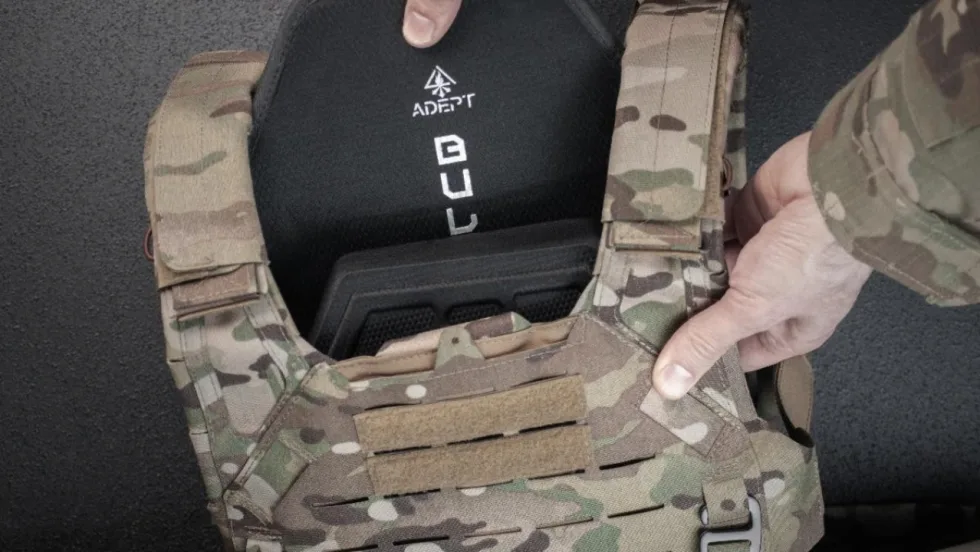
Adept Armor Introduces Two New Rifle Plates
Adept Armor has launched two new Level IV ballistic plates, the Emperor and the Archon Mark 2, which brings Adept Armor’s new Quatroid ceramic to the high-threat, performance-value center of the range at 5.2 pounds.
Read More →
POLICE Product Test: Benchmade Bailout
The Benchmade Bailout is a slim, lightweight carry knife with a deep-ride pocket clip and comes in a variety of blade steels and scales. Here is a detailed review of the Taiga Green Bailout, released earlier this year.
Read More →
NLEOMF Announces July 2026 Officer of the Month
NLEOMF honored a Michigan deputy sheriff as the July 2026 Officer of the Month for rescuing a trapped driver from a burning vehicle following a Fourth of July crash.
Read More →
Streamlight to Showcase Newest Lighting Products at National Safety Council’s Safety Congress & Expo 2026
Streamlight will showcase its latest lights, including the Portable Scene Light III and the LiteBox 1Million, at the 2026 National Safety Council (NSC) Safety Congress & Expo.
Read More →
The 2027 World Police & Fire Games Set for Perth, Australia
The 2027 World Police & Fire Games (WPFG) will take place in Perth, Western Australia, from Friday, March 12 through Sunday, March 21, 2027.
Read More →
5.11 Partners with National Fallen Firefighters Foundation to Support #ForThe343
5.11 has joined the nationwide movement honoring the 343 New York City Fire Department firefighters lost on Sept. 11, 2001.
Read More →