



Consent to Search
In a motor vehicle, it may not always be clear who has authority to grant permission for a search.

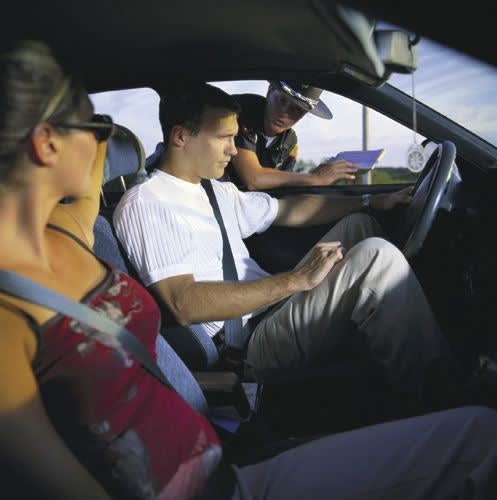
You don't need a search warrant if a suspect gives consent to a search. But the individual giving consent must have authority over the area or belongings in question. What happens during a motor vehicle stop if you're given consent to search by someone who only "appears" to have the authority? A recent New Hampshire case offers some insight.
In State v. Sawyer, 147 N.H. 191, 784 A.2d 1208 (2001), a city officer stopped a vehicle for speeding. The vehicle contained three people: the driver and two passengers. Upon approaching the car, the officer detected a strong, fresh odor of marijuana coming from the interior.
When the officer asked, the driver said he had just come from a drinking establishment, but when given a field sobriety test, he passed. The officer then asked him if there were any drugs or weapons in the vehicle, and he said there were not. Asked if the officer could search the vehicle, the driver said, "Yes, absolutely." The officer then asked the two passengers to get out of the vehicle and conducted the search.
On the floor behind the driver, the officer found a black nylon bag with rigid sides, of the type used to hold cassette tapes and CDs. He noted a strong odor of marijuana coming from the area near the bag. He picked the bag up, sniffed it, and found that the odor was coming from the bag; so he unzipped it and found several Baggies of marijuana inside.
At this point, the three vehicle occupants were handcuffed, and one of the passengers asked why this was happening. The officer told him it was because there were drugs in the car. One of the other passengers-the defendant-stated, "They don't have anything to do with this." The officer asked, "Who does have something to do with this?" and the defendant replied, "I do. It's mine." At that point he was informed of his Miranda rights.
Apparent Authority
At trial, the defendant filed motions to suppress the evidence. One motion claimed that the driver had no right to consent to a search of the bag, which belonged to the defendant-passenger.
This marked the first time that the New Hampshire Supreme Court had been asked to rule whether a driver may validly consent to a warrantless search of the personal effects of a passenger. In this case, there was no claim that the driver had actual authority or joint ownership of the defendant's bag. Rather, the question was whether in the minds of the officers the driver had "apparent authority" to consent to a search of the bag.
The doctrine of "apparent authority" validates a search if the police reasonably but mistakenly believe the party consenting has the authority to do so. The U.S. Supreme Court has not yet applied the doctrine of apparent authority to automobile searches, but lower federal courts and some state courts have already done so. Courts that have already decided the issue have engaged in fact-specific inquiries. Generally, under the doctrine, the search is legal if, under the totality of the circumstances surrounding it, it is objectively reasonable for the officers to believe the suspect had consented.
Applying this doctrine to the facts of the case at issue, the New Hampshire court found that it was reasonable for the officer to search the passenger's zipper bag.
The officer made it clear, up front, that he was looking for drugs, so it was logical for him to believe he had consent to search containers inside the car that might contain drugs. In addition, the bag could have reasonably belonged to the driver and was a type that often is used to hold cassette tapes and CDs. It was found on the seat behind the driver, and there was nothing to alert the officer that the bag belonged to anyone other than the driver.
Further, there was no tag on it; it was a common type of container, and nobody denied ownership or claimed ownership of it. And finally, neither the driver nor the passenger objected to the search or attempted to withdraw their consent when the officer picked up the bag and sniffed it. So the circumstances were not ambiguous enough to require the officer to inquire further before opening the bag.
Reasonable Consent
The situation would have changed if, during the search of the vehicle, the passenger had blurted out that the bag in the vehicle belonged to him and not to the driver who gave consent. Since the passenger remained silent, this was one indication that either he did not own the property, or did not object to the search. But remember, the "totality" analysis does not necessarily always end with the passenger's silence.
For example, it was found not objectively reasonable in one recent case for the police to believe that they had consent from a male driver to search a woman's handbag that they found on the back seat, where there was only one woman passenger in the car. They should have made further inquiry. State v. Friedel, 714 N.E.2d 1231 (Ind. Ct. App. 1999). The woman passenger's consent could not be implied from her silence or failure to object, because she was never asked.
Another factor to consider is if the passenger abandoned the property prior to the search. For example, it was reasonable for an officer to search a backpack that a passenger left in a vehicle and did not attempt to exercise control over until the police found drugs and questioned him about it. State v. Friedel, supra.
But in another case, it was not reasonable for an officer to believe he had consent to search a fanny pack where the passenger who owned it merely obeyed the officer's request to place it on the floorboard and step from the vehicle. Brown v. State, 789 So. 2d. 1021 (Fla. Dist. Ct. App. 2001).
The general rule of thumb is that an officer may search containers inside a vehicle for which he or she has received a lawful consent to search as long as it is reasonable to believe that the container in question belongs to the person giving consent (usually the driver).
In practice, it may be hard to anticipate under what circumstances a court will find that an officer's belief is reasonable under the law. It would be a good practice to ask questions about the ownership of any closed containers that in any way seem as though they might belong to other passengers in the vehicle. If a container is claimed by a passenger, consent to search should be obtained from its owner, or, when possible, a search warrant should be obtained.
John A. Stephen is deputy commissioner for the New Hampshire Department of Safety and has served as assistant attorney general in the New Hampshire Department of Justice, where he was a state prosecutor of homicide-related crimes.
Adapted from the "Officer's Search and Seizure Handbook (2002 State-to-State Case Summaries Supplement)" published by LexisNexis. For more information on the Officer's Handbook Series, visit www.lexisnexis.com/lawenforcement/
More Patrol

Streamlight Portable Scene Light III Wins 2026 OH&S New Product of the Year Award
Streamlight’s Portable Scene Light III has won the 2026 Occupational Health & Safety (OH&S) New Product of the Year Award in the Lighting category.
Read More →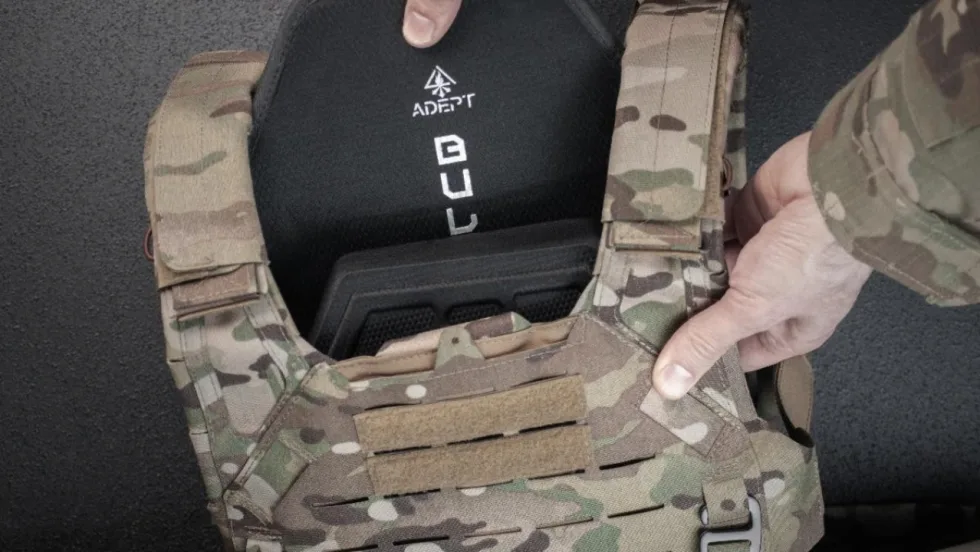
Adept Armor Introduces Two New Rifle Plates
Adept Armor has launched two new Level IV ballistic plates, the Emperor and the Archon Mark 2, which brings Adept Armor’s new Quatroid ceramic to the high-threat, performance-value center of the range at 5.2 pounds.
Read More →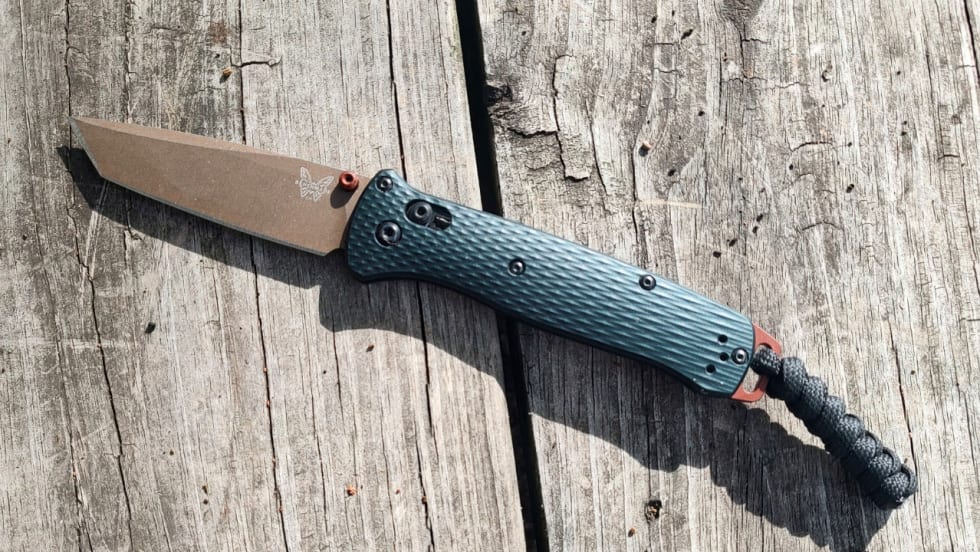
POLICE Product Test: Benchmade Bailout
The Benchmade Bailout is a slim, lightweight carry knife with a deep-ride pocket clip and comes in a variety of blade steels and scales. Here is a detailed review of the Taiga Green Bailout, released earlier this year.
Read More →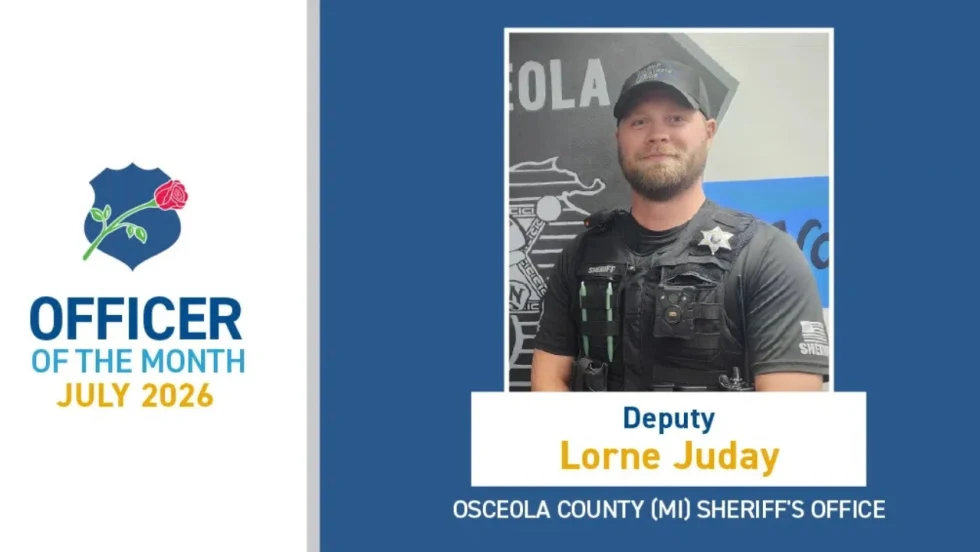
NLEOMF Announces July 2026 Officer of the Month
NLEOMF honored a Michigan deputy sheriff as the July 2026 Officer of the Month for rescuing a trapped driver from a burning vehicle following a Fourth of July crash.
Read More →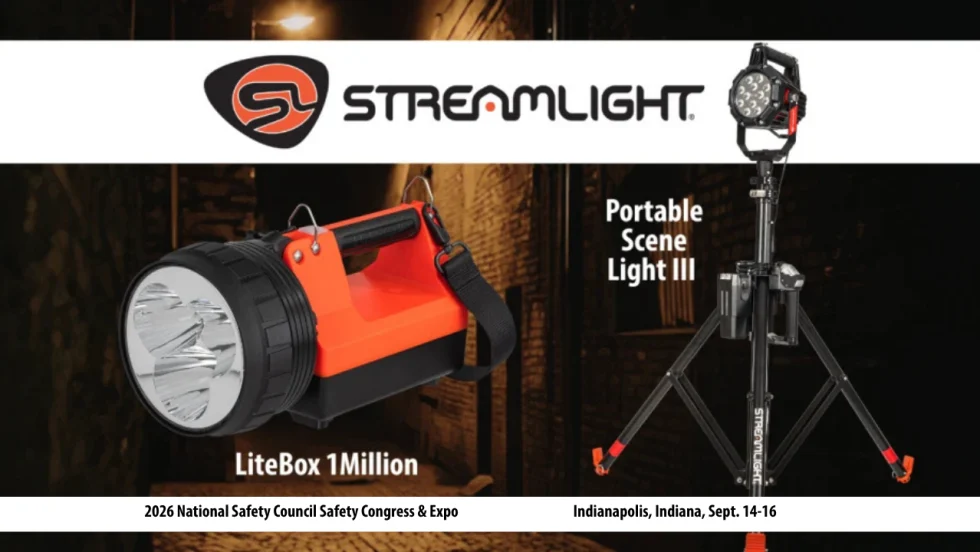
Streamlight to Showcase Newest Lighting Products at National Safety Council’s Safety Congress & Expo 2026
Streamlight will showcase its latest lights, including the Portable Scene Light III and the LiteBox 1Million, at the 2026 National Safety Council (NSC) Safety Congress & Expo.
Read More →
The 2027 World Police & Fire Games Set for Perth, Australia
The 2027 World Police & Fire Games (WPFG) will take place in Perth, Western Australia, from Friday, March 12 through Sunday, March 21, 2027.
Read More →
5.11 Partners with National Fallen Firefighters Foundation to Support #ForThe343
5.11 has joined the nationwide movement honoring the 343 New York City Fire Department firefighters lost on Sept. 11, 2001.
Read More →
Team Wendy Announces Title Sponsorship of the Jorge Pastore Foundation
Team Wendy’s 3-year partnership with the Jorge Pastore Foundation expands access to programs that strengthen those who serve.
Read More →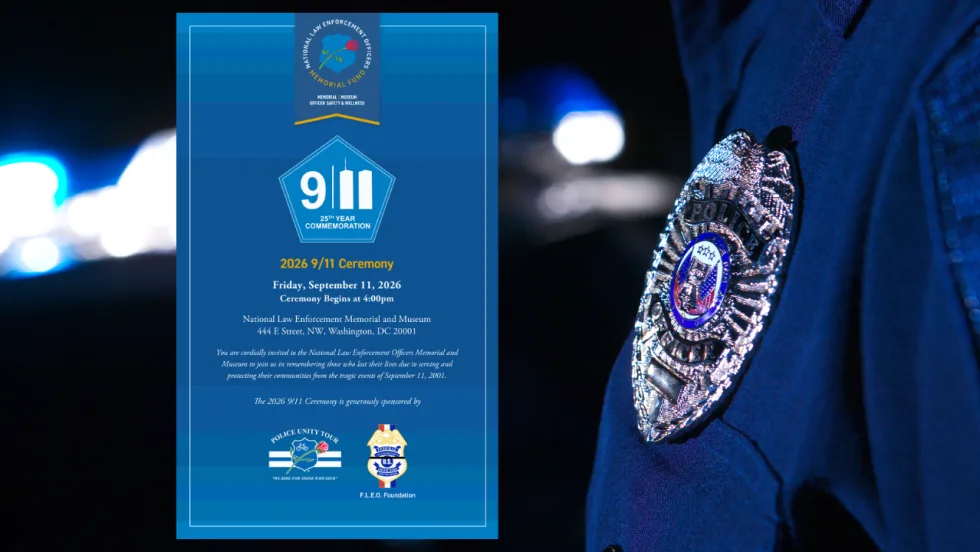
National Law Enforcement Memorial and Museum Hosting 9/11 25th-Year Commemoration Ceremony
The National Law Enforcement Memorial and Museum is hosting a 9/11 25th Year Commemoration Ceremony on Sept. 11 at 4 p.m.
Read More →
National Law Enforcement Officers Memorial Fund Announces June 2026 Officers of the Month
The National Law Enforcement Officers Memorial Fund (NLEOMF) named 15 officers of the Chico Police Department (California) as the Officers of the Month for June 2026 for their roles in responding to an active-shooter incident at a public library.
Read More →