



Cloth Handles for Arrest and Control
If you know how to take advantage of what a suspect wears, you can use these handles to help get him or her into handcuffs.

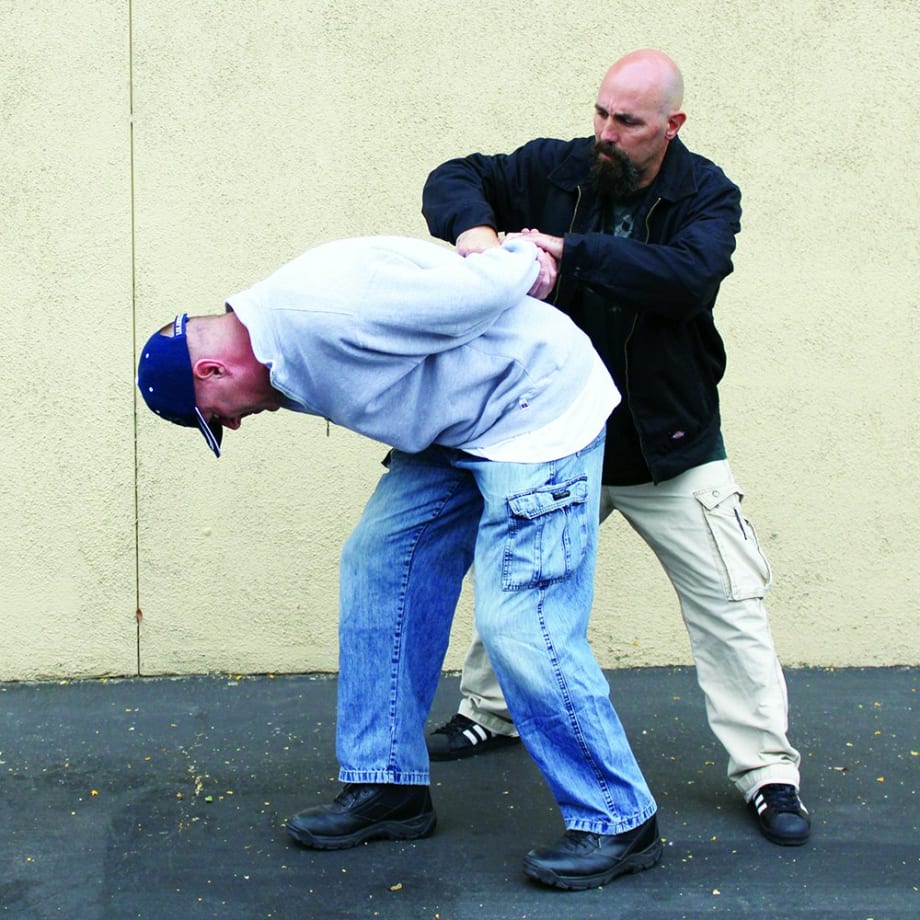
Grabbing the bill of a suspect's cap is one of many methods of taking advantage of clothing during an arrest. (Photo: POLICE File)
When making an arrest, you should always be looking for an advantage you can use against the suspect, so that you can bring him or her under control quickly with reasonable force using techniques permitted by your agency's policy.
One advantage you can leverage against suspects is to use what they are wearing against them. Think of the things a suspect wears on his or her body as "cloth handles" for arrest and control. Cloth handles include sleeves, collars, belts, pockets, baseball caps, backpacks, and watchbands. (Technically, most watchbands today are plastic, leather, or metal, not cloth. But watchbands are useful "handles" so I include them in the category of "cloth handles.")
As we dive into this topic we're assuming the suspect is both aggressive and wearing clothes. Also, remember he or she may try to use what you are wearing against you.
OK. Let's start our discussion on how to approach and arrest suspects. Then we'll talk about how to use cloth handles. And then we'll wrap it up with a look at how to use hinge points.
The Approach
Approach the suspect in a field interview stance. Have a good posture with one foot slightly behind the other with your gun side away from the suspect. Both of your hands should be together up in front of you. This gives you easier access to your tools.
(Avoid putting your hands in your pockets or leaning against something unless you are undercover and want to avoid looking like a law enforcement officer.)
Project a confident command presence with intermittent eye contact and keep checking for concealed weapons.
Stand 10 to 12 feet away from the suspect and begin sizing him or her up. Look for signs that you may be in for a fight. These include nervousness, hands moving, eyes that keep looking toward a certain location, and indicators of mental illness.
Talk Them into Jail
Talk to a suspect calmly, seriously, yet friendly enough for him to accept being handcuffed. You want to set him at ease so he doesn't make any sudden moves.
Here's some sample one-liners to help you talk the bad guy into your handcuffs.
Do me a favor, keep your hands down at your side, out of your pockets where I can see them.
I don't want you scaring me.
I just want to have a polite conversation.
Nobody's going to jail.
I'm just trying to see what's going on here.
How's it going?
What brings you out in this mean, dark alley tonight? (make him laugh)
If you're outnumbered use brain not brawn. Take some deep breaths. Don't let your ego get you into a dire situation just because you didn't call for backup. Just contain and control as you call and wait for backup to arrive. Usually time is on your side.
Using Cloth Handles
Sleeves — Step to one side of the suspect as you grab his sleeve near his wrist, and grab near the back of his elbow. Then explosively turn your body as you yank him downward. (You could put one of your hands on top of his head to keep him down.) Then order him to put his hands behind him, palms together like he's praying. Then handcuff him. (Carry at least two pairs of handcuffs. Put one on before removing one that's too tight.)
If he has a short sleeve shirt, grab the end of his sleeve and his collar to yank him downward to handcuff him.
Handcuff him while he's leaning over or bring him up against a wall or vehicle as a controlling agent. The ground is OK, but it can be hard for you to get back up and you could get kicked or stomped if other bad guys arrive.
Don't put your foot in between the suspect's feet. He can drop and twist his legs against one of your legs to lock you up and take you down. Once you begin moving a suspect into a position to handcuff him, keep him moving so he's off balance, even if you must change the direction you're moving him. The idea is that he's continually trying to catch up to you, but he can't if you quickly get him into handcuffs.
Collars — Step to the side of the suspect as you grab his collar and wrist (two points of contact for better leverage and so he can't slip out of his shirt or jacket) and yank him downward. Then bring his wrist up behind him and command him to put his other hand behind him to put handcuffs on him. In some cases, for example if he's tall, you may want him to go to his knees. To achieve this stomp your foot on the back of his knee. Then cuff him.
Another way to use the collar is to reach from the front and grab the back of his collar and pull him downward to handcuff him.
Belts — Have the suspect turn around and put his hands on his head. Then step forward and grab his belt or waistline and the back of his collar. Press him into a wall or vehicle then order him to put his hands behind him to cuff him.
If there's no wall or vehicle, push forward on his waistline at the same time you yank downward on the back of his collar to make him go to his knees to be handcuffed. (If you step on the back of one of his knees, it will make it easier for him to go down to his knees.)
While he's on his knees there are two things you can do for more control. Have him cross his feet and/or step on the bottom of one of his shoes. This will help you pin him to the ground and greatly limit his movement. You'll also have a better sense if the suspect is trying to move.
Remember, if you're wearing a duty belt, the suspect could grab it to throw you down.
Pockets — From the front, quickly reach out and grab the suspect's shirt pocket, stepping back as you yank him forward and downward. Grab his nearest wrist and bring it up behind him. Then order him to bring his other arm behind him.
A different variation is that you could use his pants pocket, if it's visible. Quickly reach forward to grab both his pants pocket and his collar, yanking him downward. In this position, you may end up pinning his arm against his side. Just order him to get his arms behind him.
Baseball Caps — Quickly step toward his side, grab the bill of his hat and his wrist as you yank the bill downward. This will lean him far forward and enable you to get behind him to handcuff him.
Backpacks — Step forward to one side of the suspect and grab the large strap of his backpack. This will give you great leverage as you step backward and yank him downward. As he goes down, grab his nearest wrist and bring it up behind him and then order him to put his other hand behind him for handcuffing.
As you are handcuffing the suspect you'll have to decide when to remove the backpack. It might be after you finish handcuffing him.
From the rear, order him to put his hand on his hand, then grab his backpack and use it to pull him down to the ground. He will be in the seated position, so then roll him over onto his belly to handcuff him.
Watchbands — If the suspect is wearing a watch and he turns to get away, grab his watchband and grab the back of his elbow with your other hand, then bring his arm up behind him. Then order him to bring his other arm back for cuffing.
Hinge Points
If the suspect is already handcuffed and seated, but then he suddenly stands up and won't sit back down, use his hinge points to quickly make him sit.
From the front, blast an open palm into one of his shoulders a split second before doing it to his other shoulder. (This unhinges his balance using his shoulders.) He will sit right back down.
A variation of this is to use your open palm into his shoulder and his opposite hip. (diagonally across)
From the rear, grab and yank one shoulder backward slightly before doing the same to his other shoulder.
Caution: Don't grab the suspect by the handcuffs to control him. He could twist his arms and pinch you or lock up your arms.
Greg McNamee is a narcotics investigator in Southern California with 22 years on the force.
Al Abidin has 35 years of self-defense experience; teaching, speaking, and writing for the law enforcement community. He has produced self-defense training DVDs, which are available at www.AlAbidin.org.
More Patrol

Adept Armor Introduces Two New Rifle Plates
Adept Armor has launched two new Level IV ballistic plates, the Emperor and the Archon Mark 2, which brings Adept Armor’s new Quatroid ceramic to the high-threat, performance-value center of the range at 5.2 pounds.
Read More →
POLICE Product Test: Benchmade Bailout
The Benchmade Bailout is a slim, lightweight carry knife with a deep-ride pocket clip and comes in a variety of blade steels and scales. Here is a detailed review of the Taiga Green Bailout, released earlier this year.
Read More →
NLEOMF Announces July 2026 Officer of the Month
NLEOMF honored a Michigan deputy sheriff as the July 2026 Officer of the Month for rescuing a trapped driver from a burning vehicle following a Fourth of July crash.
Read More →
Streamlight to Showcase Newest Lighting Products at National Safety Council’s Safety Congress & Expo 2026
Streamlight will showcase its latest lights, including the Portable Scene Light III and the LiteBox 1Million, at the 2026 National Safety Council (NSC) Safety Congress & Expo.
Read More →
The 2027 World Police & Fire Games Set for Perth, Australia
The 2027 World Police & Fire Games (WPFG) will take place in Perth, Western Australia, from Friday, March 12 through Sunday, March 21, 2027.
Read More →
5.11 Partners with National Fallen Firefighters Foundation to Support #ForThe343
5.11 has joined the nationwide movement honoring the 343 New York City Fire Department firefighters lost on Sept. 11, 2001.
Read More →
Team Wendy Announces Title Sponsorship of the Jorge Pastore Foundation
Team Wendy’s 3-year partnership with the Jorge Pastore Foundation expands access to programs that strengthen those who serve.
Read More →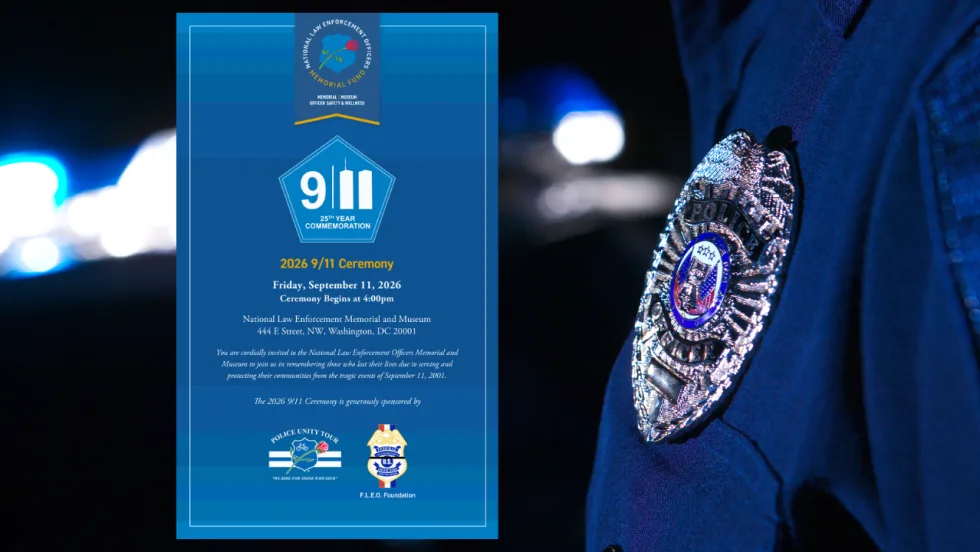
National Law Enforcement Memorial and Museum Hosting 9/11 25th-Year Commemoration Ceremony
The National Law Enforcement Memorial and Museum is hosting a 9/11 25th Year Commemoration Ceremony on Sept. 11 at 4 p.m.
Read More →
National Law Enforcement Officers Memorial Fund Announces June 2026 Officers of the Month
The National Law Enforcement Officers Memorial Fund (NLEOMF) named 15 officers of the Chico Police Department (California) as the Officers of the Month for June 2026 for their roles in responding to an active-shooter incident at a public library.
Read More →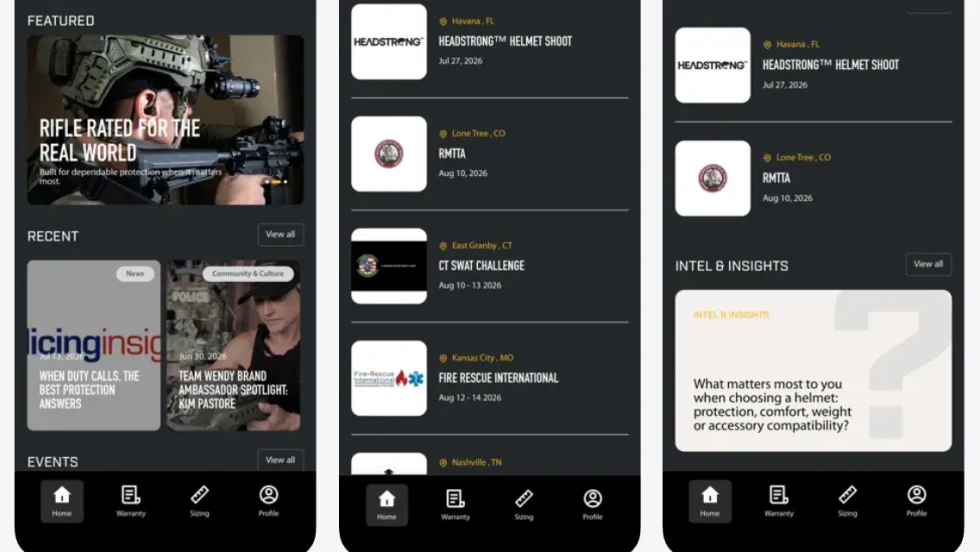
Team Wendy App Creates New Digital Hub for Helmet Owners
The Team Wendy Community App provides one location for warranty registration, size-fit tools, product updates, and community connection. For helmet owners, the new app creates a simpler path to the information and tools that matter most.
Read More →