



Cell Phone Sense
"Cell phones allow us to go beyond the capabilities of the radio and allow us to communicate with each other and the public. When a cell phone is assigned to an officer, they have voice mail, messaging and Internet access. It frees them up from being in the office."

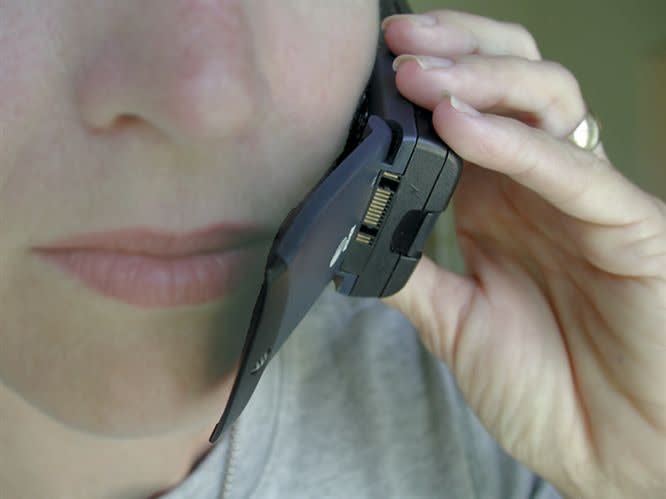
An agitated father grabbed his two children from their mother and sped south on Interstate 5 through San Diego County, heading for Mexico. Luckily for the children, he also grabbed his cell phone. Several officers with the San Diego Police Emergency Negotiation Team were able to safely corner him in a strip mall just north of the border. No shots were fired. No bullhorns were used. The team called his cell phone and convinced him to surrender and release the children after a two-hour discussion.
Each of the 25 detectives of the San Diego Police Department's Emergency Negotiations Team has use of a cell phone during their assignments, reports Sgt. Joe Molinowski of the San Diego Police Department. "Cell phones allow us to go beyond the capabilities of the radio and allow us to communicate with each other and the public. When a cell phone is assigned to an officer, they have voice mail, messaging and Internet access. It frees them up from being in the office."
Meanwhile, several officers from Olympia, Washington, had to leave the office and trail a drug-related homicide suspect on a chase down several sections of the same I-5 corridor, all the way to Huntington Beach, California. The pursuit ended at a residence in Huntington Beach, where they were able to peacefully arrest the suspect and retrieve $400,000 in cash. Lieutenant Steve Oderman of the 70 officer Olympia, Washington Police Department gives credit to their use of Nextel cellular phones.
"The Nextel phones have a two-way radio system built in and it is a secured network," he explained. "All the way down the 1-5 corridor, our officers were able to talk to each other without having to worry about our conversations being scanned by outsiders and also talk to the Huntington Beach Detectives."
These days, there is hardly a beat cop out there who doesn't have a cell phone - either personally owned or department issued - stowed in a handy location. So how did we ever get along without them, anyway?
A Trend, Indeed
Clearly, cell phones are becoming critical parts of the tool kit for law enforcement agencies across the country, but exact numbers are still not available.
The North American Wireless Report, released August 16, 2001 by eMarketer.com, forecasts that cell phone subscribers in the United States will surpass 150 million users by the year 2004. The Yankee Group, a research company and consulting firm in Boston, estimates that 28 million Americans will be using wireless phones for data, email messaging and Internet browsing by 2002.
In addition, there are no statistics available from The Association of Public Safety Communications Officials, or APCO, according to Woody Glover, Director of 911 Programs and Communications Center Operations. "Cell phones have been out there for quite some time, and agencies have been using them to varying degrees," he admits. "I don't have any statistics about how widespread it is."
Harlin McEwen, a retired police chief who oversees telecommunications issues for the International Association of Chiefs of Police, or IACP, agrees. "They are widely used, but as far as I know, nobody has ever attempted to figure out how many are using them."
Technology Primer
Cell phone technology actually grew from the expansion of the basic two-way radio system. Mobile units call into one, central base station over a radio frequency. The earliest version of the car phone, or radiotelephone, was actually just a two-way radio that connected with a central operator, who then connected the call to the city's landline phone system. In 1983, the first analog cell phone system went into use in Chicago. It divided the city into CELLS, with hundreds of "base stations," or towers, throughout the city, which then connected the calls to the city's phone system.
TDMA, CDMA, and FDMA are the three common technologies used by the cell phone networks for transmitting information, and there are currently no phones able to work on all three networks. Time Division Multiple Access (TDMA) and Code Division Multiple Access (CDMA) are the most common forms of digital transmission, followed by the older, analog Frequency Division Multiple Access (FDMA). TDMA means that each call is assigned a portion of time on a designated frequency. CDMA gives a unique code to each call and spreads it over all of the available frequencies. FDMA puts each analog call on a separate frequency. Multiple-access means that more than one user can use each cell in the system.
So Many Phones ...
When the industry was in its infancy, the FCC ruled that every market must be served by at least two carriers, in order to encourage competition and fair pricing. Each carrier offers different rates, service plans and equipment. In addition, the technology changes on a daily basis. What is state of the art today can be obsolete by tomorrow.
The major service providers around the country include Verizon, AT&T Cellular, Sprint, VoiceStream and Nextel. The phones are manufactured by a constantly changing array of companies. Today, Nokia is the largest manufacturer of cell phones by volume. They are followed by an alphabet of international firms: Audiovox, Bosch Telecom, Denso, Ericsson, Kyocera, LGIC, Mitsubishi, Motorola, NEC, NeoPoint, Panasonic, Philips, Samsung, Sanyo, Siemens and Sony. The phones can be priced anywhere from $15 to $1,000, depending on the make, model and how they are marketed.
"The general public may actually not ever learn about the full capabilities of their phones," admits Ericsson designer Sarandin Kaloderopoulos, at the company's headquarters in Sweden. Some of those features include voice messaging, caller ID, call waiting, call conferencing, voice activation, e-mail and even Internet access and downloading capabilities. The systems in Japan and Europe are already far ahead of the US. Their systems provide color LCD screens, text messaging and even cartoon characters and color, streaming video.
While most service providers offer discounts to government employees, there are not many cell systems specially designed for use by law enforcement. This came to the attention of Charles Kopp, an authorized dealer for Verizon Wireless in San Diego, and past vice president of the San Diego Crime Commission. According to Kopp, "In San Diego, there are four service providers and there are no cellular phones that will work on all the systems." After identifying the problem, he worked with the San Diego Crime Commission to develop the Crime Hotline Service, or Star System. Members of the entire San Diego area law enforcement community can now make direct calls to the California Highway Patrol, Sheriff's Department and the City Police Department with no airtime charges over Verizon Wireless. Pretty handy, wouldn't you say?
911 Services
By a mandate from the FCC, all cell phones in the US must now offer one-button 911 calling, which pass all 911 calls through to an emergency response agency. According to MapInfo of Troy, New York, last year 911 received approximately 150 million calls, of which 45 million were from wireless phones.
This, however, can also be a source of problems, according to Glover of the IACP. "The one-button dialing has impacted most operations. Many of them get a high percentage of misdials from wireless phones. The operator can't be sure right away, so they wait and listen, just in case someone is really in trouble." He is concerned because of the time and resources it takes away from real emergencies.
In addition to the one-touch 911 service, all cellular carriers must now also offer automatic location information, or ALI services, due to a recent FCC ruling. The FCC Wireless E911 rules, Phase II, were developed following a proposal from APCO.
E911 stands for "enhanced" cellular service, and calls for ALI-capable phones by the end of 2004.
There are many more details that must be addressed as the technology advances, notes McEwen of IACP. "As a police officer, I say it is a great tool." However, he adds, "... one problem is with the Nextel phones. They have a built-in delay with their push-to-talk, so 'don't shoot' can sound like 'shoot.'" In addition, the Nextel systems have frequencies that are too close to those used by the police radios and sometimes they cause interference. "The cellular industry has not given public safety agencies any priorities in the use of the air waves. When there is a crisis, the cellular system crashes. In the critical minutes right after the Oklahoma City bombing, the cellular system was overburdened. An FBI investigator could not get an open line on his cell phone in order to answer a page. A city councilman who was standing nearby just happened to receive a call on his cell from his brother-in-law in Florida, who in turn called the FBI in Washington from his home phone and then conferenced all the calls together." The police and fire need to talk," McEwen adds. "In a crisis situation like an earthquake, the police and fire have to be able to talk."
Molinowski of San Diego is quick to point out that cell phones will never replace the radios. "The radios still serve a real purpose. They are used for dispatching and the cell phones are just an adjunct." McEwen adds, "Generally, people who have been in the business for years know that cell devices will not replace traditional police radios."
In order to start a dialogue between government users and the commercial wireless industry, the Cellular Telephone Industry Association has initiated the formation of the Federal Wireless Users Forum, or FWUF. The group hopes to identify the special needs of federal government wireless users, to promote education about wireless technology, as well as participate in policy and standards activities.
The Future?
With duty belt manufacturers making cases specifically designed to hold cell phones on Sam Browne belts, it seems cops have adapted to this handy technology in droves. The additional safety, convenience and practicality of a cell phone on duty just plain makes sense on today's mean streets. Make sure to take some time to learn to take advantage of all the features of today's advanced phones and systems but like anything battery-powered, don't make your cell phone your last option!
For More Information:
The APCO website, at www.apcointl.org, contains a section devoted to interesting stories about 911 service.
For more information about the Crime Hotline Star Service, call Charles Kopp, 888-793-3663, or email at charlesbkopp@aol.com.
For very detailed explanations about the workings of cell phones, check out www.howstuffworks.com/ cell-phone.htm
This informative site contains links to every phone company, cellular service provider and cell phone manufacturer currently available.
Cellular Telephone Industry Association, at 202-785-0081, or www.ctia.com
Jo'el Roth has called on most of the cell phone manufacturers as a sales engineer of electronic components and knows her way around radios and batteries and such. She currently talks on her cell phone while driving rental cars as she travels the country selling electronics (unless she's writing articles for POLICE).
More Technology
A police agency's guide to data-driven fleet management
Costs are rising and the public expects more transparency into how their tax dollars are spent. This e-book shows how police agencies can use fleet data to take control of fleet expenses while improving officer safety and demonstrating fiscal responsibility to the communities they serve.
Read More →
AI and analytics for law enforcement: Turning data into insights
Law enforcement agencies are managing more video, sensor data and digital evidence than ever before. Discover how AI and analytics can help turn that data into actionable insights that strengthen situational awareness, accelerate investigations and support more informed decisions.
Read More →
Vasco Electronics Adds Automatic Language Detection to Vasco Translator Q1
Vasco Electronics’ software update introduces hands-free language switching and expanded offline translation across 45 language pairs, empowering law enforcement, healthcare, and front-office enterprise teams
Read More →
North Miami Police Department Deploys Mark43
The North Miami Police Department has deployed Mark43 as part of its Five-Year Strategic Plan that represents its collective vision and goals for a more proactive police department, anchored by a core commitment to leveraging modern technology to enhance efficiency and public safety.
Read More →
Cellebrite Genesis for Enterprise Now Generally Available
Made available to the public sector in June, Cellebrite Genesis is serving a growing mix of national, regional, and local agencies worldwide, including some of the largest regional and metropolitan police departments. It is now available for enterprise organizations.
Read More →
2026 Vision FirstNet Users Summit to Host Emerging Leaders Training on Grassroots Advocacy for Public Safety
“Emerging Leaders Training: Understanding the Importance of Grassroots Advocacy for Public Safety," a session during the 2026 Vision FirstNet Users Summit, will offer a roadmap for unified advocacy at the federal level.
Read More →
Motorola Solutions Completes Acquisition of D-Fend Solutions
Motorola Solutions has acquired D-Fend Solutions, an industry leader in counter-drone technology. This deal provides public safety and enterprise customers with access to advanced counter-unmanned aerial systems.
Read More →
ZeroEyes, Advantech & Camden Police Partner to Bring AI Gun Detection Technology to Delaware School District
ZeroEyes has partnered with Advantech and the Camden Police Department to deploy ZeroEyes’ AI gun detection and intelligent situational awareness platform at Delaware’s Caesar Rodney School District (CRSD).
Read More →
Leonardo U.S. Cyber & Security Solutions Introduces SignalTrace, the Next Evolution in Electronic Signature Detection Technology
SignalTrace reflects years of product refinement and a clearer expression of the technology’s purpose of recognizing and correlating electronic signatures in publicly broadcast wireless signals to reveal patterns, relationships, and trends that might otherwise go undetected.
Read More →
Pimloc Launches Secure File Sharing to Streamline Release of Redacted Video
Pimloc’s Secure File Sharing lets organizations deliver redacted video, audio, and documents through expiring, passcode-protected links, accelerating delivery while reducing security, compliance, and chain-of-custody risks.
Read More →