



Battered Women: Why Do They Stay?
She walks into the police station, pregnant, and with two children in tow. Her face is swollen, her hair matted with blood. In an enraged voice she tells the police that she is tired of being beaten, wants her boyfriend arrested, and promises to prosecute this time. Although they have heard all of this five times before, the police nevertheless take pictures and her statement, suspecting all along that the case will never see the inside of a courtroom.

She walks into the police station, pregnant, and with two children in tow. Her face is swollen, her hair matted with blood. In an enraged voice she tells the police that she is tired of being beaten, wants her boyfriend arrested, and promises to prosecute this time. Although they have heard all of this five times before, the police nevertheless take pictures and her statement, suspecting all along that the case will never see the inside of a courtroom.
Sound familiar? Unfortunately, the above scenario is all too common. As a former police officer and assistant prosecutor I always had trouble understanding why battered women remain in abusive relationships. For instance, while working as a uniformed officer, it was quite common for the female victim to demand that I arrest her assailant. But during the process of effecting that arrest, she would often turn on me as if I were the bad guy. Moreover, after working as an assailant prosecutor, I became even more surprised when the victim not only demanded that the charges against her abuser be dropped, she would even go so far as testifying on his behalf.
After several of these episodes, it came as no surprise that police, prosecutors, and judges would often wonder why they even bothered. Besides, if she is really being abused, why does she stay?
The Battered Woman Syndrome
There is one particular theory that helps to explain the behavior of battered women and why they act in ways which are contrary to their own interests. That theory is known as the "Battered Woman Syndrome" and it remains one of the most popular theories in criminal cases today. First introduced by Dr. Lenore Walker in 1979, the syndrome consist of two separate parts:
I. Cycle of Violence
The cycle of violence has three distinct phases: The first phase, tension building, is characterized by the abuser subjecting the woman to verbal abuse and possibly some minor battering. The victim responds to his behavior by pacifying him in an attempt to prevent escalation.
The relationship then progresses to the second phase, the acute battering incident, and this is where the woman is "subjected to brutal violence" to the point of either causing death or severe injuries. Following this violent outburst, the cycle of violence moves into the third phase. It is during this phase that the abuser becomes apologetic and will often promise never to do it again. Unfortunately, the battered woman believes his promise and soon discovers that this third phase is really the beginning of the first all over again.
II. Learned Helplessness
After being subjected to recurring cycles of violence in her home, the battered woman becomes psychologically unable to leave. In effect, she has become a hostage in her own home and sees her chances at escape as hopeless.
Learned helplessness was originally discovered by Dr. Martin Seligman, an experimental psychologist. Several years ago, Seligman placed dogs in cages and subjected them to a continuing series of electrical shocks. The dogs, unable to avoid the shocks and unable to escape, "became passive and stopped trying to resist."
Walker subsequently incorporated this discovery and theory into the battered woman syndrome and, taken with the cycle of violence, it helps to explain why a battered woman does not leave.
However, according to Lisa Estrella, a licensed social worker at the Tarrant County Women's Shelter, in Arlington, Texas, even if a woman could leave, that does not mean that the violence from her abuser would end. This cautionary note is echoed by Staci Bobrofsky of the Council Against Domestic Assault (CADA). "The question: 'Why don't battered women just leave? ' is based on the incorrect assumption that leaving will end the violence. It also assumes that the family home is not hers, but his, and he has the right to drive her out of it." She added, "There are many reasons why a woman who is battered may stay in an abusive relationship." Reasons cited by Bobrofsky include lack of resources and social support, false hope that her partner will change, shame, the batterer's destruction of ties with family and friends, and lack of child care and support from courts or other criminal justice personnel. She also noted, "More battered women are murdered while attempting to flee from their abusers than at any other time." Consequently, instead of asking why she stays, we should, as Bobrofsky put it, "begin asking the question 'why doesn't he stop hitting her?'"
But even if she does leave, officers may discover that she has returned to her abuser. Estrella said that battered women often "leave and return several times before they are finally able to leave for good."[PAGEBREAK]
Other Victims
But women are not the only victims of domestic violence. So are their children. According to the Council Against Domestic Abuse (CADA), it is estimated that one-half of the "men who beat their partners also abuse their children." Moreover, children form an abusive environment "are more likely to become victims or perpetrators of abuse" themselves.
According to CADA, even if children are not themselves physically or verbally assaulted, they could learn that such assaultive behavior is a "way of life" and may repeat the violence.
What Can the Police Do To Help?
Estrella, who both teaches and rides with officers on patrol, says there are many things that the police can do to help battered women and their families, three of which are:
1. Believe the victim. It is understandable for police officers to questions the veracity of a victim who claims to have been assaulted by her spouse or boyfriend and then becomes the first in line to defend him from the police or even post his bail. But such conduct is completely consistent with the behavior of a battered woman. She no doubt realizes that her abuser will eventually be released and what better way, in her mind, to reduce the severity of the next assault than by coming to his aid?
2. Be personally aware of the resources that exist in the community. One of the best ways to gain first-hand knowledge about the many resources that exist for battered women would be to call the National Domestic Abuse Hotline at (800) 799-SAFE. This is a 24-hour, seven-day-a-week hotline which has up-to-date information on the resources for battered women in your area. These resources can range from a listing of shelters for battered women and their children, pet shelters, legal resources, and possibly even the finds for relocation.
Estrella highly recommends that police officers carry around color photographs of shelter rooms, this dispelling any concerns that the shelter is not a livable location.
3. Encourage the victim to call the police when she needs assistance. Battered women often feel shame or embarrassment for "bothering the police," particularly if they have dropped charges against the abuser in the past. A battered woman needs to hear from the police that they are concerned for her and her children's safety, that it is no bother. If officers suspect that the children are also being abused, child protective services should be contacted immediately.
Estrella encourages officers to explain the cycle of violence to the victim and how the abuse will only get worse. She recalled a case where the police had made multiple calls to one location, leaving their card and information concerning domestic violence intervention each time. Eventually, those police cards began to stack up and it was their physical presence that ultimately led to the victim's call for help and her leaving an abusive relationship.
Conclusion
Domestic violence is a crime like any other crime of violence, it is just more complex because it involves intimates instead of strangers. Police officers have played a significant role in breaking the cycle of violence and can help tremendously in the future. For additional information and assistance, police officers are encouraged to call (800) 799-SAFE. Ms. Estrella would be glad to answer any of your questions. She can be contacted by telephone or e-mail her through her agency's Website at www.womensshelter.org.
Editor's Note: Due to space limitations, we were unable to reprint all of the author's references. Interested readers can access the references relating to the battered woman syndrome (BWS) by e-mailing the author or consulting a derivative article which concerns the battered woman syndrome and its applicability to the laws of evidence: Stephen J. Ziegler, Applying 804(b)(3) and the battered woman syndrome to domestic violence cases: Is the jury the only one that needs to be educated? , Court Review, 33:15-23 (1996). The author's e-mail address: sziegler@wsu.edu.
Stephen Ziegler was a police officer for 11 years before becoming an attorney. He is currently enrolled in a Ph.D. program in political science at Washington State University. He is an occasional contributor to POLICE.
More Patrol
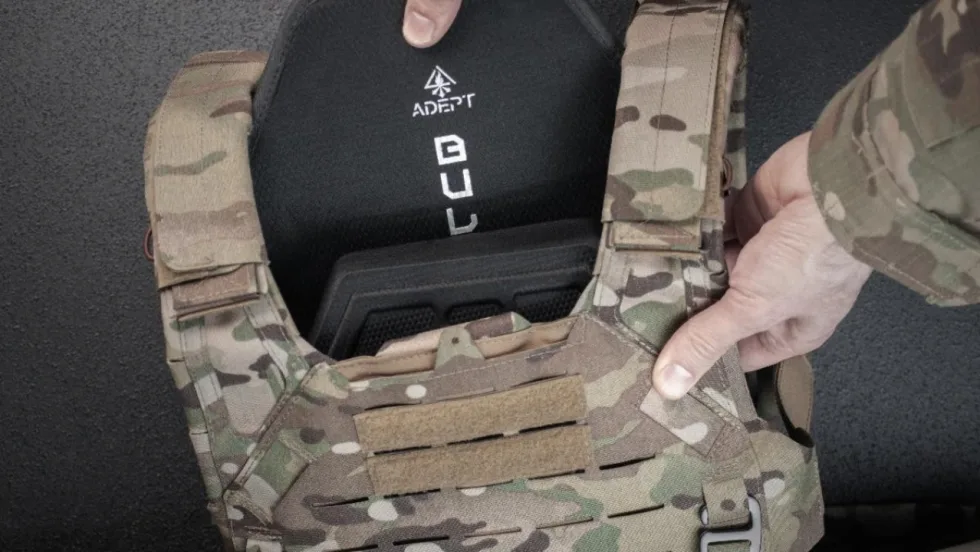
Adept Armor Introduces Two New Rifle Plates
Adept Armor has launched two new Level IV ballistic plates, the Emperor and the Archon Mark 2, which brings Adept Armor’s new Quatroid ceramic to the high-threat, performance-value center of the range at 5.2 pounds.
Read More →
POLICE Product Test: Benchmade Bailout
The Benchmade Bailout is a slim, lightweight carry knife with a deep-ride pocket clip and comes in a variety of blade steels and scales. Here is a detailed review of the Taiga Green Bailout, released earlier this year.
Read More →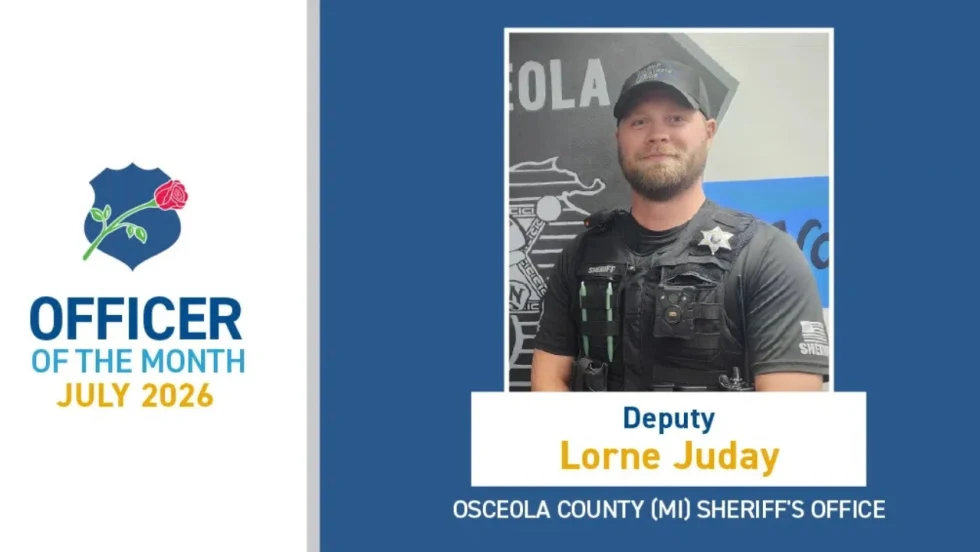
NLEOMF Announces July 2026 Officer of the Month
NLEOMF honored a Michigan deputy sheriff as the July 2026 Officer of the Month for rescuing a trapped driver from a burning vehicle following a Fourth of July crash.
Read More →
Streamlight to Showcase Newest Lighting Products at National Safety Council’s Safety Congress & Expo 2026
Streamlight will showcase its latest lights, including the Portable Scene Light III and the LiteBox 1Million, at the 2026 National Safety Council (NSC) Safety Congress & Expo.
Read More →
The 2027 World Police & Fire Games Set for Perth, Australia
The 2027 World Police & Fire Games (WPFG) will take place in Perth, Western Australia, from Friday, March 12 through Sunday, March 21, 2027.
Read More →
5.11 Partners with National Fallen Firefighters Foundation to Support #ForThe343
5.11 has joined the nationwide movement honoring the 343 New York City Fire Department firefighters lost on Sept. 11, 2001.
Read More →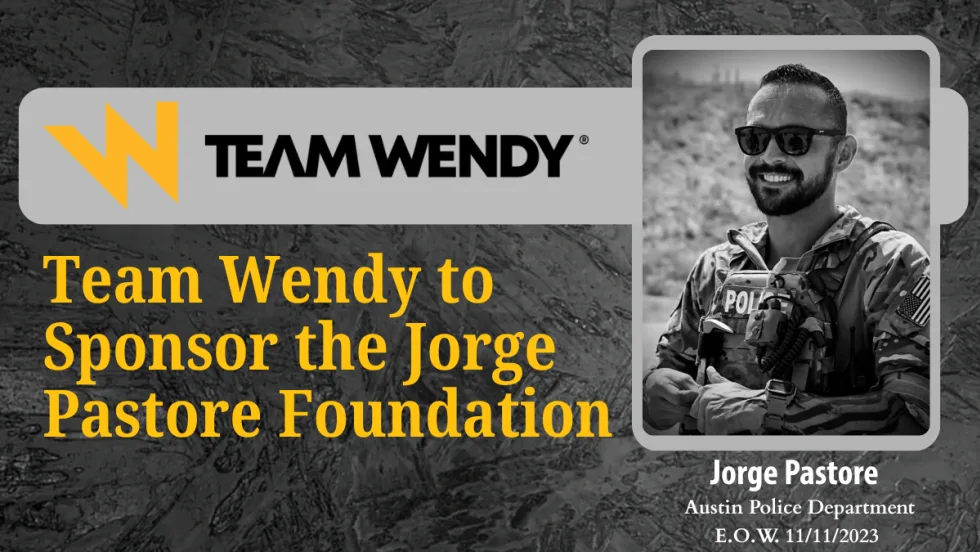
Team Wendy Announces Title Sponsorship of the Jorge Pastore Foundation
Team Wendy’s 3-year partnership with the Jorge Pastore Foundation expands access to programs that strengthen those who serve.
Read More →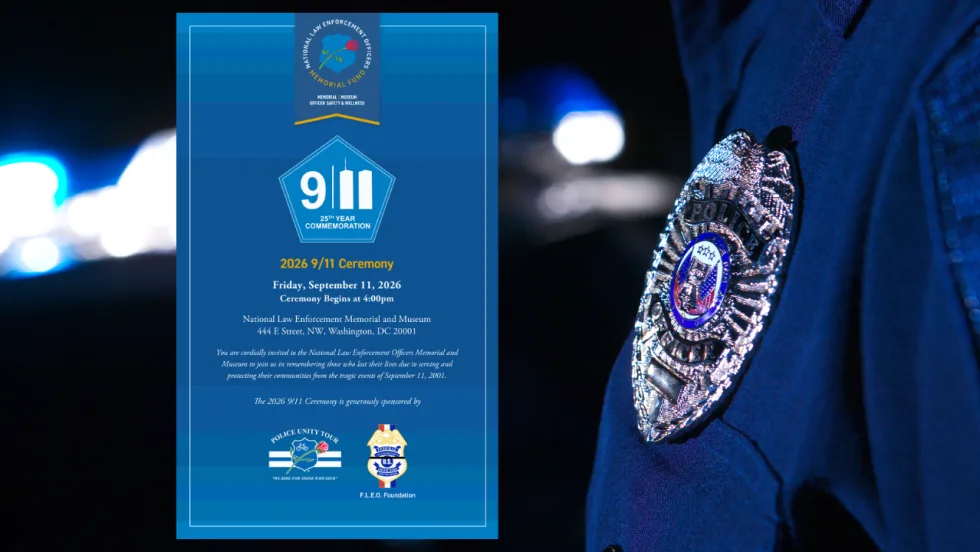
National Law Enforcement Memorial and Museum Hosting 9/11 25th-Year Commemoration Ceremony
The National Law Enforcement Memorial and Museum is hosting a 9/11 25th Year Commemoration Ceremony on Sept. 11 at 4 p.m.
Read More →
National Law Enforcement Officers Memorial Fund Announces June 2026 Officers of the Month
The National Law Enforcement Officers Memorial Fund (NLEOMF) named 15 officers of the Chico Police Department (California) as the Officers of the Month for June 2026 for their roles in responding to an active-shooter incident at a public library.
Read More →
Team Wendy App Creates New Digital Hub for Helmet Owners
The Team Wendy Community App provides one location for warranty registration, size-fit tools, product updates, and community connection. For helmet owners, the new app creates a simpler path to the information and tools that matter most.
Read More →