



9/11: 10 Years After
The ghosts of the Twin Towers and the victims of the 9/11 attacks in New York City, at the Pentagon, and on United Flight 93 still loom over law enforcement. They loom both as an indictment of the lost opportunities to have prevented 9/11 and as an omnipresent reminder of a need for vigilance.

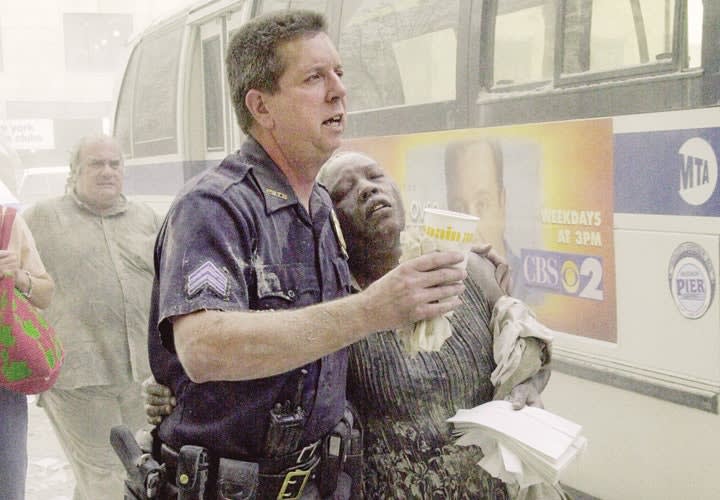
Sgt. Marty Duane of the Port Authority Police Department was one of the many first responders who helped rescue people at the World Trade Center on 9/11. Photo: Newscom.
For those living in the shadows of flight corridors, the absence of planes in the skies in the days following September 11, 2001, did not go unnoticed. And when flights resumed, not everyone was comfortable seeing them. Some Americans had become aircraft phobic, fearful that at any moment some commercial airliner might be commandeered and transformed into a guided missile.
The immediate costs of the 9/11 attacks were readily apparent once the smoke and dust had cleared: 3,000 people killed, billions of dollars lost, our national sense of invulnerability shaken. The 102 minutes of airborne horrors that permanently changed our landscape and scarred our emotional psyche also inaugurated a war on terror that continues to this day. And this war is different than any other in our history. It is fought by soldiers abroad and law enforcement officers at home. A decade on, it is not unusual to see officers patrolling subways and metro rails with automatic rifles and K-9s.
There are those who contend that the damages inflicted by the 24 terrorists that day have ultimately been surpassed by our own responses to that day's attacks — that many of America's greatest principles have been usurped in the name of protecting them. Critics indict many of the protective measures undertaken as reactionary and opportunistic, and they cite statistics that illustrate an American is as likely to die of a terrorist attack as a lightning strike. Defenders of these measures use those same statistics to bolster justification of their need and efficacy.
Whatever appraisal history eventually accords America's response to the catastrophic events of 2001, its dramatic impact on law enforcement during the last decade would be difficult to exaggerate.
National Security
The ghosts of the Twin Towers and the victims of the 9/11 attacks in New York City, at the Pentagon, and on United Flight 93 still loom over law enforcement. They loom both as an indictment of the lost opportunities to have prevented 9/11 and as an omnipresent reminder of a need for vigilance.
Congress and the White House have acted on that need, passing numerous acts and resolutions in their joint attempt to address gaps in national security. With passage of the USA PATRIOT (Uniting and Strengthening America by Providing Appropriate Tools Required to Intercept and Obstruct Terrorism) Act in October 2001, a number of obstacles that had historically hamstrung federal, state, and local law enforcement agencies in their fight against both domestic and foreign terrorism were suddenly removed. The PATRIOT Act meant that requests for wiretaps, pen registers, traps, and trace devices were granted with unprecedented ease.
Law enforcement can now search e-mail and telephone communications in addition to medical, financial, and library records with unprecedented ease. The PATRIOT Act also expanded the practice of using National Security Letters, a form of administrative subpoena that requires certain people, groups, or companies to provide documents about U.S. citizens without the use of a warrant.
Although the PATRIOT Act gets more press, The Homeland Security Act, passed a little more than a year after 9/11, was perhaps more consequential. It enabled the most sweeping reorganization of federal agencies since the National Security Act of 1947, which led to the formation of the U.S. Department of Defense. The creation of the U.S. Department of Homeland Security (DHS) brought together 22 agencies from a broad cross-section of the federal government to work together to fulfill its mission "to develop and coordinate the implementation of a comprehensive national strategy to secure the United States from terrorist threats or attacks."
While subject to their fair share of controversy, the PATRIOT Act and the Department of Homeland Security-along with the other legislation and funding appropriations that followed-produced a wide variety of changes that have directly affected state and local law enforcement.
Alan Ferguson, retired Border Patrol agent, appreciates the focus that was placed on immigration issues after 9/11. Immediately following the attacks, U.S. immigration agents experienced a level of concern not seen since the Iran hostage crisis and DEA agent Enrique Camarena's kidnapping in the 1980s.
"America had been caught with its pants down and we didn't know what was coming next," Ferguson recalls.
To enhance its enforcement capabilities along the nation's borders, the U.S. Immigration and Customs Enforcement Agency (ICE) established formal partnerships with state and local agencies. These agencies can now choose to have their personnel trained and authorized to carry out immigration enforcement within their own jurisdictions. Multi-level agency cooperation is also utilized to apprehend and disrupt the activities of transnational street gang members and fugitive aliens, helping to meet the mission objectives of all agencies involved.
Following 9/11, the Central Intelligence Agency (CIA) and Federal Bureau of Investigation (FBI) — both spared from incorporation into the Department of Homeland Security — have focused their missions in support of the war on terror.
Due in part to post-9/11 fallout and stinging rebukes of America's intelligence community, the FBI shifted its focus from countering drugs to countering terror, reforming itself from a reactive agency to one that actually prevents crimes.
The Bureau's Joint Terrorism Task Forces (JTTF), which were established in the 1980s, doubled in number after 9/11. Representatives on the JTTFs include members from the FBI; the Department of Homeland Security; the U.S. armed forces; federal, state, and local law enforcement; the Federal Bureau of Prisons, and transportation authorities.
Independently, the CIA and FBI have greatly enhanced their interagency communications and intelligence sharing — between themselves and among other federal, state, and local law enforcement agencies — ending decades of squabbling over ownership of information and data. It is a paradigm shift that has largely been emulated throughout the profession.[PAGEBREAK]
The Power of the States
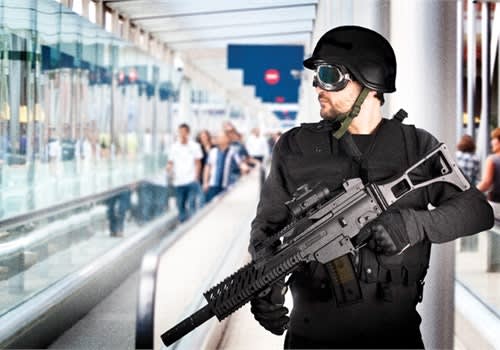
Perhaps the largest shift in law enforcement culture since 9/11 has been made at the state level. Many post-9/11 initiatives placed additional enforcement responsibilities squarely on the collective shoulders of state law enforcement agencies. Tasked with the protection of state borders, ports of entry, and key transportation corridors, many states have developed specialized services that are often shared with smaller police agencies. It is not uncommon for state SWAT, K-9, aero, and marine units to work alongside municipal and federal agencies in both routine police work and in the prevention of terrorism.
The DHS has called upon individual states to coordinate federal funding to local units, requiring the states to provide additional personnel to jointly participate in a variety of homeland security programs. State agencies often act as liaisons between federal and local departments, particularly in rural areas where other regional resources are not available.
In addition to routine patrol of interstates and highways, state troopers work hand-in-hand with federal and local agencies to identify and report suspicious activities related to homeland security, immigration, and public health.
On the Streets
Along with incidents such as Columbine, 9/11 expedited a radical shift in first responder protocol. No longer would officers necessarily wait for SWAT to deploy before engaging active shooters. The 9/11 attacks demonstrated the need for patrol officers to possess the training and resources required to quickly and effectively respond to terrorist threats.
In addition, potential terrorist targets within local jurisdictions such as ports of entry, key transportation corridors, and nuclear facilities require greater manpower to maintain security. Local law enforcement agencies have had to shift greater numbers of sworn personnel to patrol these areas.
Unfortunately, much of the federal funding for homeland security does not support the hiring of sworn personnel, so local agencies have had to shift personnel from existing programs or hire civilian analysts. This, coupled with the economic downturn, has required agencies to make difficult decisions in paring down some programs in favor of homeland security. Still, public pressure to maintain or even improve routine crime fighting has not wavered. In addition, the pressure on local agencies to maintain individual civil rights has never been higher.
To maximize the effectiveness of their personnel, expertise, and resources, many local agencies have adopted an all-crimes/all-hazards approach to law enforcement. A study by the RAND Corporation concluded that many agencies are shifting priorities away from problem-centric specialized units such as gang or drug details to more collaborative fronts. In this manner, expertise gained by any one unit is shared with a number of local, state, and federal agencies to incorporate homeland security measures into routine crime fighting and reporting.
Bringing federal, state, and local agencies together is not only a top-down proposition. Since 9/11 all levels of law enforcement are more likely to reach out to one another to accomplish their common goals. David Narkevicius of the International Association of Counter-terrorism Security Professionals cites an emergency response agreement between the Navy and local law enforcement agencies as an example of this cooperation. The agencies and the Navy protect a 10-mile swath of land that contains a Navy flight test area, the nation's largest liquid natural gas plant, and a large nuclear plant.
"We train together. We have helicopters that the local county sheriffs can't afford. We can bring those into play very quickly because we have an entire test squadron of helicopters at the base. We can transport local SWAT teams to the nuclear plant or just about anywhere," Narkevicius says.
Intelligence Sharing
Albert Einstein is famously quoted as saying, "Information is not knowledge." In the world of law enforcement, however, lack of information can be dangerous. After 9/11, the CIA and FBI responded to criticisms about their lack of security intelligence sharing. The federal government's response to such criticisms has been the National Incident Management System (NIMS).
Implemented in 2004, NIMS provides information from law enforcement agencies at all levels regarding incidents that may affect national security or emergency management, regardless of size, location, or complexity. Departments that receive certain types of federal funding are required to implement extensive training for all department personnel in order to receive NIMS certification.[PAGEBREAK]
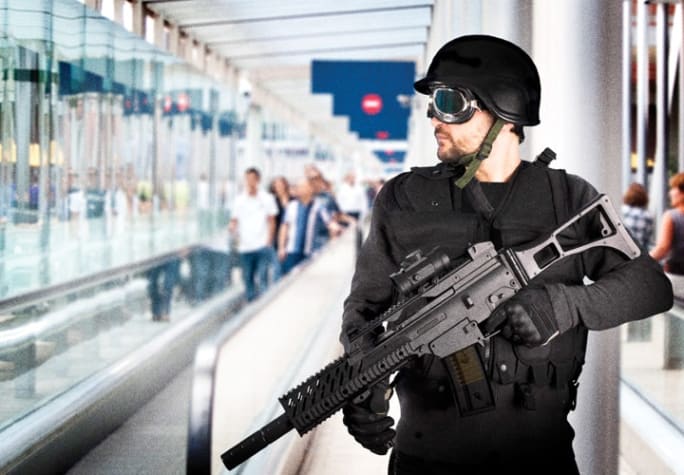
Photo: iStockphoto.com.
According to Narkevicius, intelligence sharing has improved, but standardized protocols continue to be a challenge.
"In the military, we have classified data that's marked confidential, secret, or top secret, that's controlled for our intelligence channels. The problem with sharing intel with law enforcement is that "law enforcement sensitive" doesn't really map to our classified scales, so we couldn't always distribute data," he says. "But now that they've put in the unified intelligence centers, the military has actually been sharing more of that data with law enforcement. The Border Patrol has access to sensors and things that previously were military-only, and we can get that data to the people who can actually respond to it. So that's been very beneficial."
To build on data collection techniques that have been utilized for years by local law enforcement, the Nationwide Suspicious Activity Reporting Initiative provides another clearinghouse for reporting and sharing information about suspicious activities by people within the United States.
Finding the Money
Law enforcement has traditionally relied on a hierarchical availability of funding for its activities. If the local government did not provide funding, limited resources may have been available at the state or federal levels. In the post-9/11 era, law enforcement agencies at all levels have learned to navigate the vast ocean of funding possibilities made possible by federal and state legislation.
Through the Department of Homeland Security and the Federal Emergency Management Agency (FEMA), a number of programs have been developed during the past decade to funnel much-needed federal money to state and local agencies. Billions of dollars have been provided to law enforcement agencies through programs with names like the State Homeland Security Program, the Urban Areas Security Initiative, the Law Enforcement Terrorism Prevention Program, and the Port Security Grant Program. While such funding has availed agencies the means to develop homeland security capabilities, dozens of other funding opportunities have also allowed for the procurements of specialized equipment, tactical and anti-terrorism training, enhanced local and regional SWAT teams, enhanced border control efforts, improved protection of transit systems, improved crisis response and emergency assistance, enhanced cybersecurity systems, and bolstered community policing programs. The sheer volume of grant opportunities available is dizzying.
In order to understand and respond to the influx of grants, agencies have had to develop expertise in not only grant proposal writing and submission, but in long-term reporting and management of the grants they receive.
Sid Heal, nationally recognized weapons expert and a retired commander from the Los Angeles County Sheriff's Department, recalls the influx of counter-terrorism and homeland security funds in the early years following 9/11.
"Things that we'd been wanting for years all of a sudden became available," Heal says. "Things that were literally science fiction to us-in many cases, things that were already being used by the military-all of a sudden had a market in law enforcement because we had grant money to buy them."
The current trend in federal granting for homeland security has been to provide smaller grants for more focused purposes. As a result, agencies may have a more difficult time finding the right grant opportunity to meet their needs. Heal believes that law enforcement agencies will find a way around this problem.
"One of the byproducts that we see coming down the line here is that a lot of this stuff that was bought up by the tens of thousands will be military surplus in a year or two, and we'll be able to get them for less," Heal adds. "So even departments that didn't have a lot of money will be able to get things they'd only dreamed about."
Armed with specialized tools with which to fight terrorism, law enforcement agencies have had to develop equally specialized expertise in the use and training of this enhanced equipment. From biometric monitoring used at airports and ports of entry to ground- and air-based sensors used by border patrols, law enforcement personnel have unprecedented opportunities to engage in advanced training.
Working Hand in Hand
Another change in law enforcement post 9/11 is that agencies are more willing to develop regional mutual aid programs. Neighboring local agencies that had previously complained about the lack of coordination when responding to crimes at their jurisdictional borders have since realized the need for greater communication and coordination in dealing with potential terrorist acts.
Heal explains that perhaps the biggest challenge in bringing disparate agencies together has been the evolution of the National Incident Management System. "There's roughly 17,800 local law enforcement agencies in the United States. Every single one of them is autonomous. That means they can buy whatever they want to buy and use it in whatever manner. There are no standards, and in many cases there are not a lot of protocols, so you can be right next door to a neighboring jurisdiction and not be able to talk to them. The ideal from the federal government has been [to develop] patches and bridges and ways that allow everybody to do their own thing and simply be able to connect them as we need them," he says.
To facilitate the collection, analysis, and dissemination of information among agencies, DHS established a series of regional fusion centers. Typically operated by state agencies with support from local and federal personnel, each agency brings its own areas of expertise to the table to share with regional partners. Fusion centers have the added advantage of targeting terrorist threats that are specific to that region. There are now more than 70 fusion centers located in every state across the nation.
It has taken every bit of the past decade to pull all of the nation's law enforcement resources together in its fight against terrorism. The good intentions of Congress, the White House, the Department of Homeland Security, and other federal agencies during the early years following 9/11 were compromised by indecision and the enormity of the task at hand. After several years of dedicated work by countless individuals and organizations, the promise of a unified law enforcement approach to counter-terrorism is starting to take shape.
The success of domestic and international law enforcement partnerships to foil at least 39 terror plots since 9/11 is one indicator that things are moving in the right direction, but much work remains to be done.
More Patrol

Adept Armor Introduces Two New Rifle Plates
Adept Armor has launched two new Level IV ballistic plates, the Emperor and the Archon Mark 2, which brings Adept Armor’s new Quatroid ceramic to the high-threat, performance-value center of the range at 5.2 pounds.
Read More →
POLICE Product Test: Benchmade Bailout
The Benchmade Bailout is a slim, lightweight carry knife with a deep-ride pocket clip and comes in a variety of blade steels and scales. Here is a detailed review of the Taiga Green Bailout, released earlier this year.
Read More →
NLEOMF Announces July 2026 Officer of the Month
NLEOMF honored a Michigan deputy sheriff as the July 2026 Officer of the Month for rescuing a trapped driver from a burning vehicle following a Fourth of July crash.
Read More →
Streamlight to Showcase Newest Lighting Products at National Safety Council’s Safety Congress & Expo 2026
Streamlight will showcase its latest lights, including the Portable Scene Light III and the LiteBox 1Million, at the 2026 National Safety Council (NSC) Safety Congress & Expo.
Read More →
The 2027 World Police & Fire Games Set for Perth, Australia
The 2027 World Police & Fire Games (WPFG) will take place in Perth, Western Australia, from Friday, March 12 through Sunday, March 21, 2027.
Read More →
5.11 Partners with National Fallen Firefighters Foundation to Support #ForThe343
5.11 has joined the nationwide movement honoring the 343 New York City Fire Department firefighters lost on Sept. 11, 2001.
Read More →
Team Wendy Announces Title Sponsorship of the Jorge Pastore Foundation
Team Wendy’s 3-year partnership with the Jorge Pastore Foundation expands access to programs that strengthen those who serve.
Read More →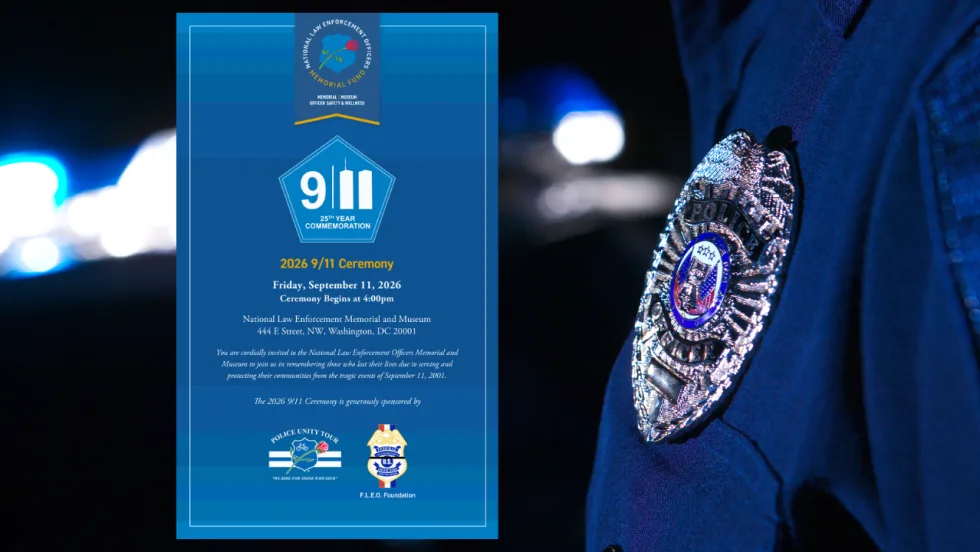
National Law Enforcement Memorial and Museum Hosting 9/11 25th-Year Commemoration Ceremony
The National Law Enforcement Memorial and Museum is hosting a 9/11 25th Year Commemoration Ceremony on Sept. 11 at 4 p.m.
Read More →
National Law Enforcement Officers Memorial Fund Announces June 2026 Officers of the Month
The National Law Enforcement Officers Memorial Fund (NLEOMF) named 15 officers of the Chico Police Department (California) as the Officers of the Month for June 2026 for their roles in responding to an active-shooter incident at a public library.
Read More →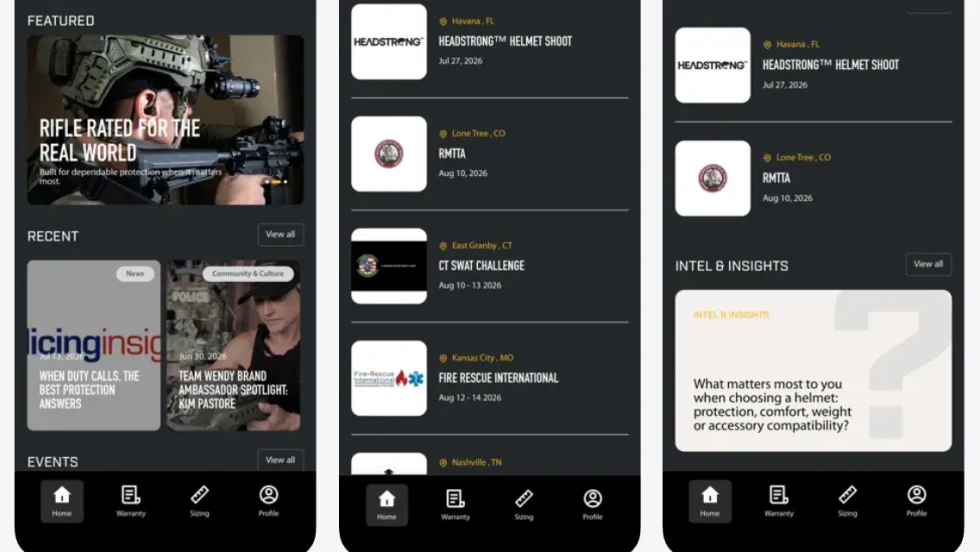
Team Wendy App Creates New Digital Hub for Helmet Owners
The Team Wendy Community App provides one location for warranty registration, size-fit tools, product updates, and community connection. For helmet owners, the new app creates a simpler path to the information and tools that matter most.
Read More →