



The Chief’s Family
The Chief's Special family carries on its legacy of concealability, reliability and comfort.

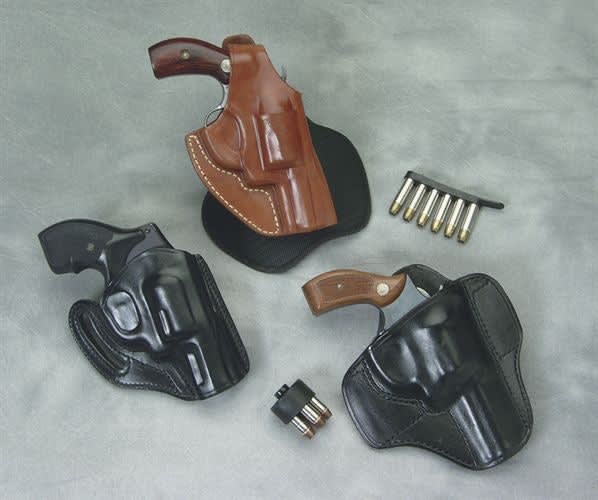
Because of its compact size, with the right holster the Chief’s Special class of revolvers are perfect choices for concealed carry. (Clockwise from top) Gould & Goodrich 807 padded holster; Don Hume H721; Galco Cover Six cross draw.
For most of the 20th century, Colt and Smith & Wesson engaged in heated competition to dominate the American police handgun market. In 1926, Colt introduced its Detective Special revolver, which, at 21 ounces with a two-inch barrel, proved an instant hit with plainclothes officers and for off-duty carry. S&W responded with a two-inch version of its Military & Police revolver although it was never as popular. But this all changed when S&W introduced a new revolver at the 1950 I.A.C.P. annual meeting.
The Chief's Special Was Born
Christened the .38 Chief's Special, it was similar to S&W's earlier I-frame revolvers, except the frame and cylinder were lengthened and beefed up to handle five rounds of full power .38 Special ammunition - in a package weighing only 19 ounces. It was available with the choice of a two- or three-inch barrel fitted with round or square-butt grips. While some continued to champion the Colt's higher cartridge capacity, the Chief's Special became the hottest item on the U.S. police handgun market.
Two years later, the Chief's Special AirWeight was introduced with an aluminum frame and cylinder, reducing weight to 10 3/4 ounces. Problems with high-pressure ammunition resulted in the substitution of a steel cylinder in 1954, increasing the weight to 12 ounces.
Between 1952 and 1966, a number of changes to the lockwork, frame and barrel were incorporated into the design. In 1957, S&W switched to a numerical model system and the Chief's Special and AirWeight became, respectively, the Model 36 and Model 37. 1952 also saw the introduction of the concealed hammer Centennial (Model 40/42 alloy/steel frame) followed in 1957 by the Bodyguard (Model 38/49 alloy/steel frame) with a shrouded hammer. In 1967, at the request of the NYPD, a heavy barreled, three-inch version of the Chief's Special was produced and later that year was made a catalog item.
The Springfield firm hit pay dirt again in 1965 with their Model 60, which combined the features of the Model 36 with 100% stainless steel construction.
Higher Performance
Around 1990 S&W began offering J-frame revolvers rated for .38 Spl +P ammunition and the following year introduced the Model 940, which used the 9mm Luger cartridge in full moon clips. 1995 saw the introduction of the Model 640, the first J-frame capable of handling the .357 Magnum cartridge. In 1999, new ground was broken again when S&W introduced the Model 331 and 332 (.32 H&R Magnum) and Model 342 and 337 (.38 Spl+P). These used titanium cylinders and internal parts mated with alloy frames and composite barrels to pare unloaded weight to a feathery 10.7 to 12 ounces.
S&W's J-frame revolvers handily survived the wholesale switch to semiauto pistols by American police. Their small size, light weight and powerful cartridges make them perfect for a backup gun carried in a trouser or jacket pocket or concealment holster, and they are especially suited for use with ankle holsters. Today, a large number of agencies still authorize the J-frame snubbie as primary, backup and/or off duty guns.
But the story doesn't end here. In 2001, S&W unveiled the Models 340 Sc, 340PD Sc, 360 Sc and 360 Kit Gun Sc with cylinders made from a new, superlight alloy known as Scandium. This change reduced the weight by an additional 20% while still allowing it to handle the powerful .357 Magnum cartridge.
Carrying Convenience
With the proper holster, a Chiefs Special-type revolver can be carried concealed all day in complete comfort. This means that, unlike larger handguns, it will most likely be with you when it's needed. Modern .38 Spl+P cartridges provide more than adequate power with only moderate recoil while the .357's abilities as a fight stopper don't even need to be rehashed here. Although, the latter cartridge's heavy recoil and muzzle flash would call for a greater degree of expertise on the part of the shooter.
The continuing popularity of S&W J-frame revolvers is not difficult to fathom. First of all, they represent the smallest, lightest handguns available chambered for serious defensive cartridges. In addition, they provide all the revolver's positive features such as ease of operation, foolproof loading and unloading (which can be visually verified), it can be kept loaded for as long as you like and it displays an ammunition tolerance approaching 110%! Perhaps most important, if they don't go "bang" when you pull the trigger, there are no slides to retract, magazines to change, decocking/safety levers or buttons to push, pull or squeeze. You just pull the trigger again!
Paul Scarlata says he still likes the little guns but says the twitch he developed after firing the .357 is beginning to become less noticeable these days. He doesn't spill his coffee nearly as much.
Shooting S&W's Model 360 Sc .357 Magnum Revolver ... Ouch!
Shortly after I finished my report on the Chief's Special family of revolvers, S&W's Ken Jorgensen provided me with a sample of the newest member of the family: the Model 360 Sc Scandium.
Let me explain to the techno-junkies among us that Scandium is an element located between calcium and titanium on the Periodic Table of Elements. It was first refined from the mineral Euxenite by a Swedish chemist in 1879. In the 1970s, the Soviets discovered that if a small amount was combined with aluminum it created an alloy with great tensile strength, enhanced superplastic performance, greater fatigue resistance and pressure containment. The Soviets used it in the construction of jet aircraft and missiles.
Engineers at S&W found that the Scandium/aluminum alloy was lighter than titanium but had a tensile strength and fatigue resistance superior to both titanium and steel. Did I mention that Scandium is also very light?
Moving right along, S&W combined a Scandium alloy frame with a cylinder and internal parts made of titanium to produce a revolver weighing a mere 12 ounces but capable of standing up to the pressures generated by the .357 Magnum cartridge! In fact, their Model 360 Sc is the lightest handgun in the world chambered for this potent cartridge.
Other than its light weight, the only thing anyone well versed in the mysteries of the Chief's Special line of revolvers will find surprising about the Model 360 Sc is the new key-activated trigger/hammer lock located above the cylinder release.
I began my test firing of the 360 Sc with a selection of .38 Spl+P ammunition loaded with 110, 125 and 130 gr. JHP bullets. While recoil was "sharp" it proved a very controllable - and pleasingly accurate - little revolver and, at seven yards, it proved easy to keep all of my rounds centered in the higher scoring zones of a combat target.
Fire And Brimstone
I then loaded the 360 Sc with some .357 Magnum ammunition. After touching off the first round, I lowered the revolver and took a deep breath, whereupon my photographer remarked, "Now that was impressive!"
All in all I fired a total of 10 rounds of .357 ammo out of the lightweight Smith and it didn't get any easier. While it proved to be an accurate revolver, the amount of recoil generated greatly hindered my ability to fire fast follow-up shots.
In conclusion, I found S&W's new Scandium revolver to be a quality item that, when loaded with .38 Spl+P ammunition, proved to be accurate and controllable. But that being said, the amount of recoil generated when firing .357 ammunition was at a very high level and proved painful after a while. For this reason I would suggest that anyone planning on carrying a Scandium revolver loaded with Magnum cartridges obtain a high degree of practice with it beforehand. In addition, I believe a larger set of grips would improve recoil control without adversely hindering concealability.
More Weapons
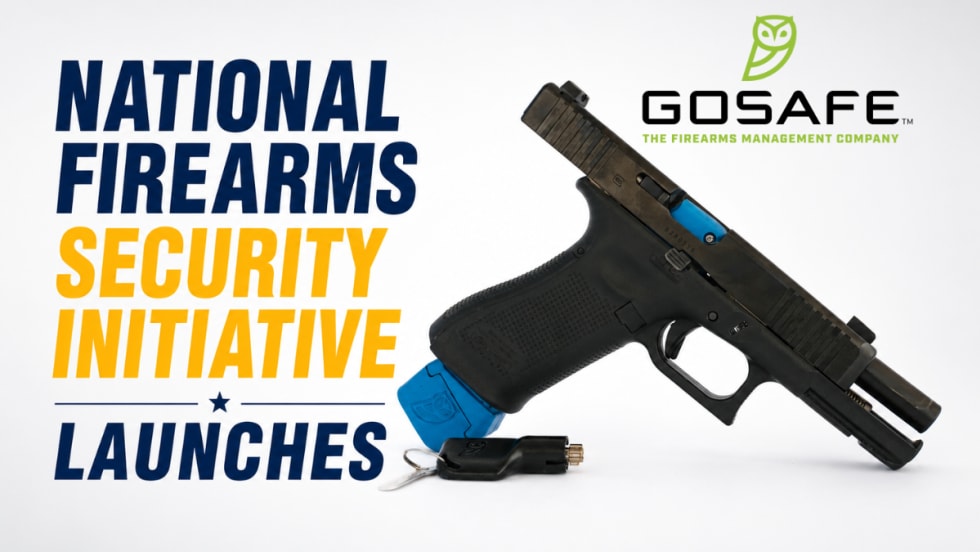
GOSAFE Technology Announces Public Safety Initiative Focused on Firearm Security and Risk Reduction
GOSAFE Technology’s new initiative provides support for agency-level solutions around secure firearm storage, vehicle-storage risks, off-duty firearm security, firearm accountability, and the public safety consequences that may result when firearms are stolen, lost, improperly secured, or diverted from lawful possession.
Read More →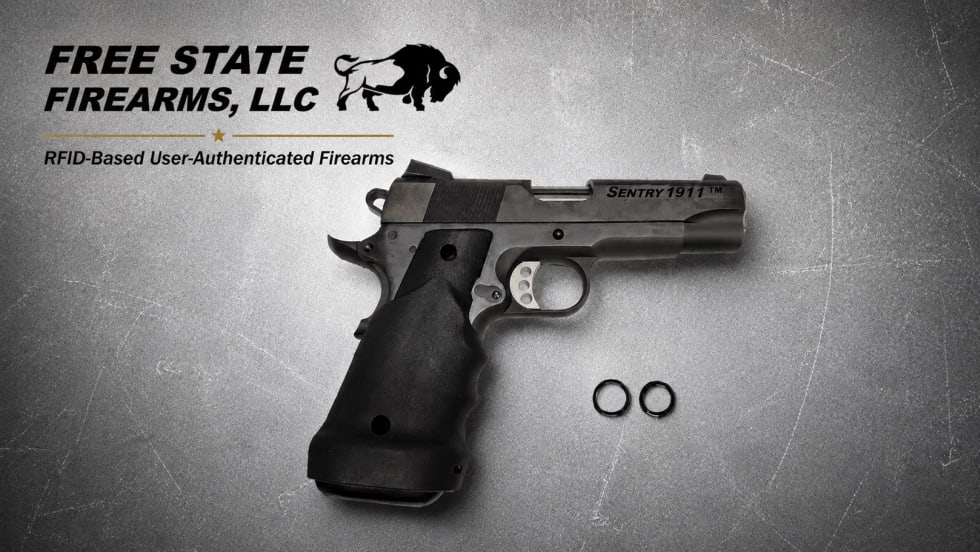
Texas Sheriff’s Office Deploys RFID-Based User-Authenticated Firearm for Prisoner Transport Operations
A sheriff’s office in Texas is now using RFID-based user-authenticated firearms, from Free State Firearms, for prisoner transfer and transport operations.
Read More →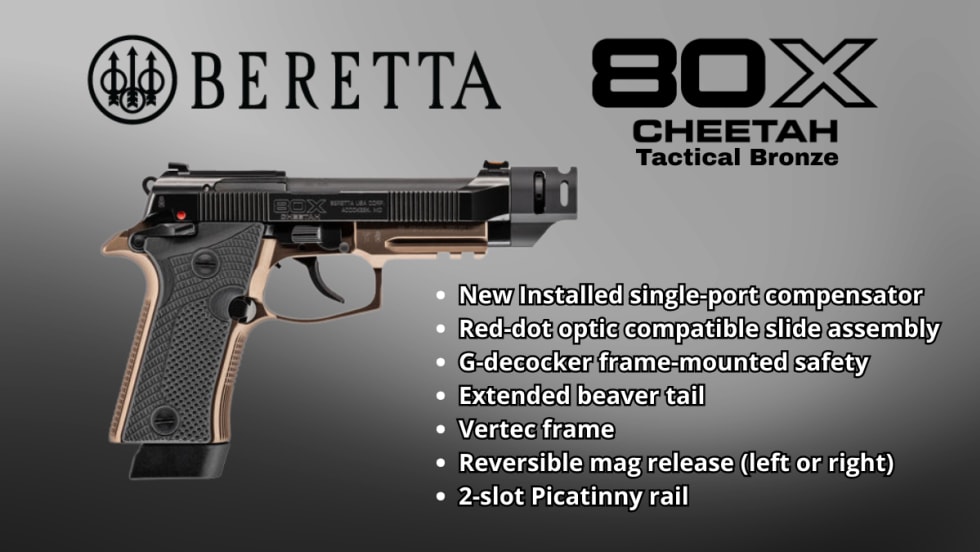
Beretta Introduces the 80X Cheetah Tactical Bronze
Beretta has launched the 80X Cheetah Tactical Bronze, which features a fiber-optic front sight, a serrated rear sight, and a Picatinny rail for accessory mounting, and ships with three 15-round extended magazines.
Read More →
Wrap Raises $5 Million to Restart Domestic Manufacturing & Advance R&D
With new funding, Wrap Technologies will restart domestic manufacturing, advance validated R&D programs into commercialization, and responsibly accelerate early growth initiatives aligned with rising demand for non-lethal response capabilities.
Read More →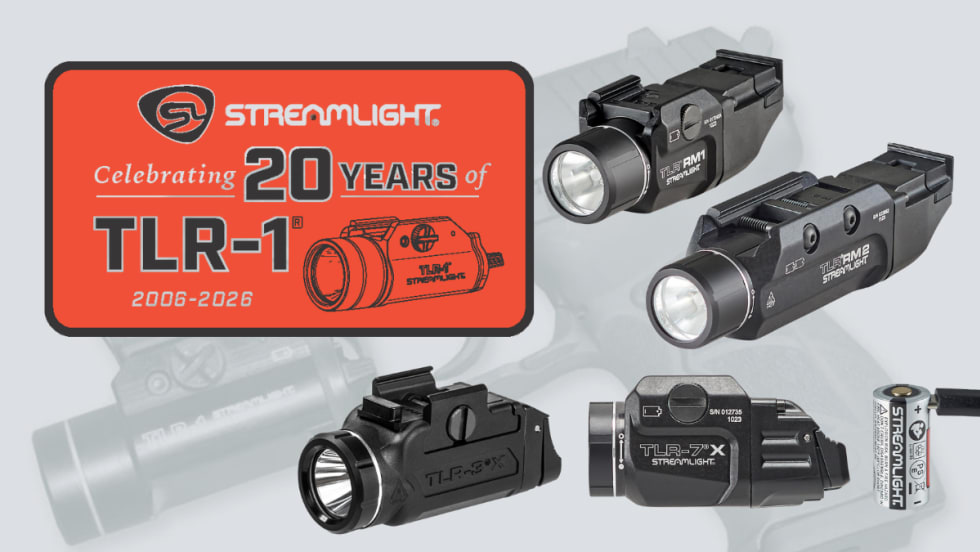
Streamlight Celebrates the 20-Year Anniversary of the TLR Series
This year, Streamlight marks two decades of weapon-mounted lighting innovation with the 20th anniversary of the TLR-1.
Read More →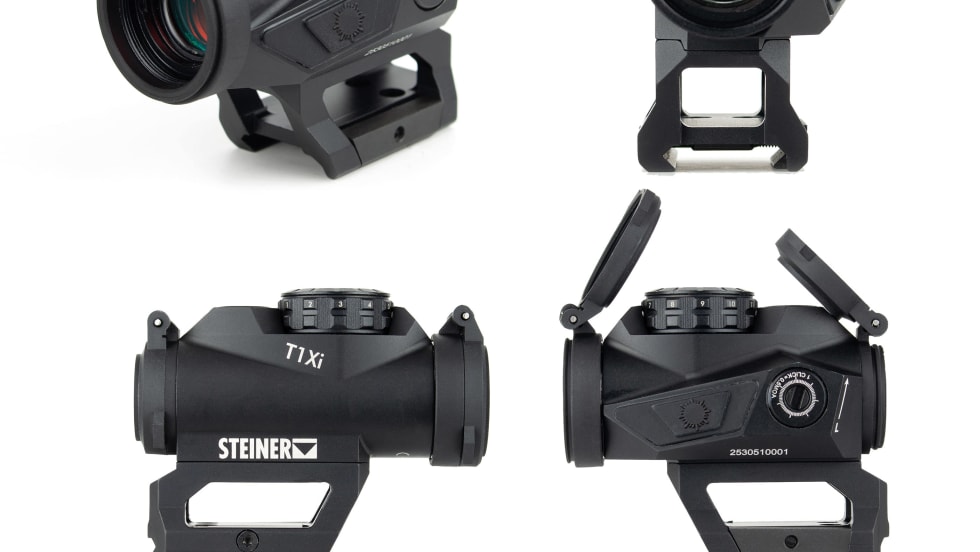
Steiner’s T1Xi Selected as Top Performer in Texas DPS Optic Evaluation
Steiner Optics’ T1Xi was selected as the top-performing red dot in the recent Texas Department of Public Safety optic evaluation.
Read More →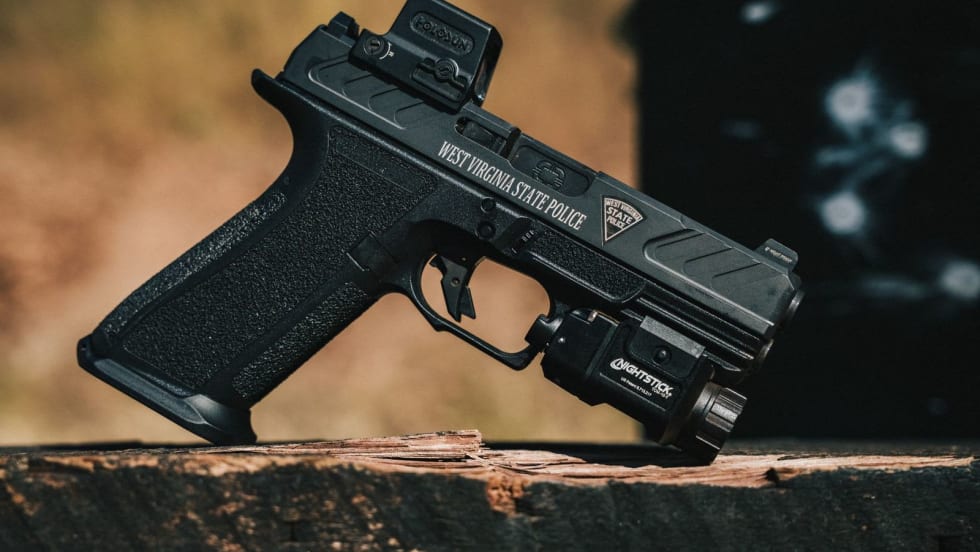
Shadow Systems Selected as Exclusive Pistol Provider for West Virginia State Police
Shadow Systems will provide 700 XR920 crossover pistols for West Virginia State Police troopers and 80 CR920X high-capacity subcompact pistols for the Bureau of Criminal Investigation.
Read More →
Aimpoint Celebrates 50 Years of Innovation and Excellence in Sighting Technology
Aimpoint is marking its 50th anniversary in 2025, celebrating five decades of red dot innovation trusted by military, law enforcement, and tactical professionals worldwide.
Read More →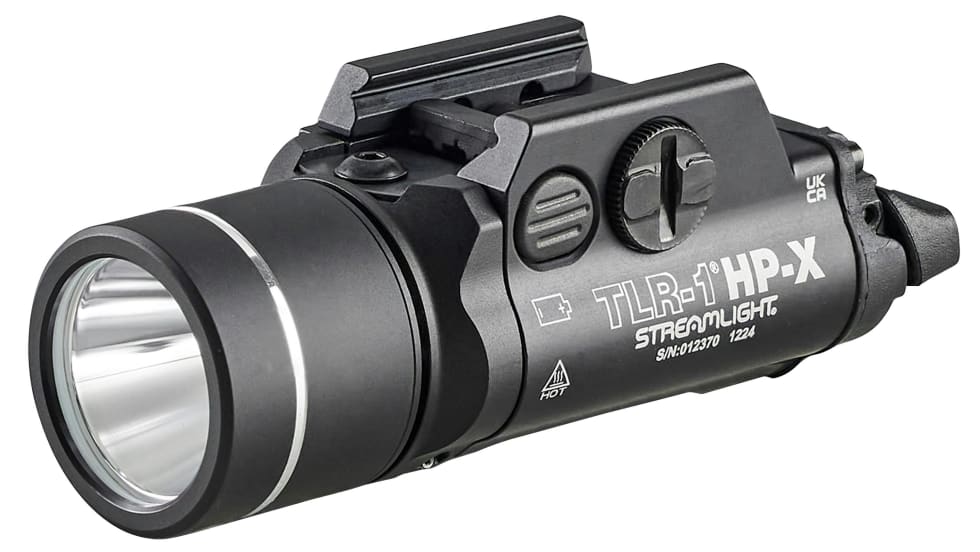
Streamlight Introduces Long-Range Handgun Light
“Our newest weapon light provides an industry-leading level of candela for handguns, giving users enhanced visibility under low light conditions, such as when searching a dark alley,” said Streamlight President Michael F. Dineen.
Read More →
Georgia Sheriff Warns Criminals They Face Felony Charges for Having Glock Switches
This device by itself, regardless if it is installed on a slide or not, is classified by the ATF to be a machine gun, which is illegal to possess,” the Bibb County Sheriff’s Office said.
Read More →