



Remington Arms Model 7615 Police Rifle
In keeping with its tradition of supplying police officers with easy-to-use, rugged long guns built for specific police applications, Remington recently introduced the Model 7615 pump-action rifle that's being marketed as a patrol rifle for agencies that can't carry so-called "assault" weapons outside of tactical units.

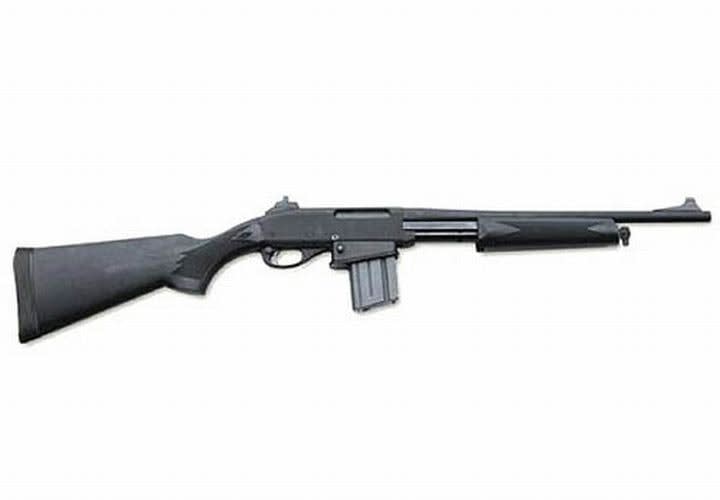
Remington Arms has had a long, distinguished, and mutually beneficial relationship with America's law enforcement community. The company (known as "Big Green" in some circles for its green corporate identity) dominates the police shotgun market with its Model 870 pump gun.
In keeping with its tradition of supplying police officers with easy-to-use, rugged long guns built for specific police applications, Remington recently introduced the Model 7615 rifle. The Model 7615 is a pump-action rifle that's being marketed as a patrol rifle for agencies that can't carry so-called "assault" weapons outside of tactical units.
A Growing Demand
Unlike in many foreign nations, in the United States police are looked upon as officers who enforce civil laws and not members of some para-military gendarmerie. For this reason, the vast majority of American law enforcement agencies have traditionally steered clear of presenting a para-military image with the uniforms and weapons available to their street cops.
Accordingly, American police officers have traditionally been armed with a handgun, a revolver back in the day and more recently a semi-auto pistol. From the beginning, officers often found themselves in situations where the iron on their hip was not enough to respond to a threat. A handgun is useful as a defensive weapon and badge of rank, but it is, in fact, a very poor offensive weapon and, of course, it offers the user very limited range.
This is why law officers in America have always carried both long guns and pistols. Back in the days of the Wild West, the traditional long arm of the town marshal or sheriff was a lever-action carbine such as the Winchester 30-30. These short, handy, rapid-fire weapons remained popular with police well into the 1960s. But with the increase in violent crime in the 1920s, some police agencies gravitated toward more powerful weapons such as the Remington Model 8 rifle.
The turbulent 1960s saw increased interest in equipping officers with some kind of long arm, but police administrators chose instead to create special tactical teams and arm them with rifles, limiting patrol officers to shotguns and pistols.
That philosophy started to change after the watershed moment for contemporary police firepower: the North Hollywood bank robbery and shootout.
Every cop now on duty is very familiar with what happened that day. Two men robbed a bank while wearing body armor and shot it out with officers of the Los Angeles Police Department for nearly an hour. The robbers were armed with full-auto military rifles, the cops with semi-auto pistols and ammo that could not pierce the bad guys' armor. Thousands of rounds were expended, but the incident didn't end until officers from the SWAT team showed up with heavier weapons and killed both robbers.
North Hollywood, Columbine, and other active-shooter incidents have led many American law enforcement agencies to permit their officers to have rifles on patrol. Some agencies limit access to these weapons to patrol supervisors. Other agencies restrict their officers' firepower to pistol caliber carbines, which give the officers better range than they would have with their sidearms, but don't have the armor piercing capability of rifles. And still other agencies issue or allow their officers to purchase and carry AR-15s.[PAGEBREAK]
Non-Threatening Design
Among agencies that refuse to let their officers carry patrol rifles, one of the primary concerns is public relations. Local administrators and politicians don't like the idea of their cops carrying military weapons. These agencies need a short, handy rifle with suitable range, accuracy, and firepower but without the threatening appearance of a military-style rifle. Remington's new Model 7615 Police Rifle meets these requirements.
Readers familiar with Remington products have probably already ascertained by its name that the Model 7615 is based upon Big Green's popular Model 7600 pump-action rifle. The 7615 and the 7600 both feature a machined steel receiver, removable box magazine, and rotating bolt with four lugs that lock into matching recesses in the barrel extension. The bolt assembly rides inside a bolt carrier attached to twin action bars, which are mounted to the forearm.
As the forearm is pulled to the rear, lugs on the inside of the bolt carrier mate with helical grooves on the bolt turning and unlocking it and allowing it to move rearward, extracting and ejecting the spent case and cocking the hammer. Moving the forearm forward chambers the next round, and turns and locks the bolt. The forearm moves on a tube attached to the front of the receiver and does not bear on the barrel.
Any cop who has ever shot a Model 870 Remington pump shotgun knows exactly how to shoot the Model 7615. Its controls and operating drill are identical to those of the nearly ubiquitous Remington police shotgun, which means agencies that adopt the weapon will not have to spend much of their increasingly precious training funds teaching officers how to use the rifle.
Out of the Box
The 7615 is available chambered for either the .223 Remington (5.56mm NATO) or .308 Winchester (7.62mm NATO) cartridges. Remington kindly supplied me with a .223 caliber version to evaluate.
Taking it out of the box and eyeballing it, I realized very quickly that the Model 7615 offers a number of unique features that make it especially suitable for police operations.
For example, the Model 7615's 16.5-inch barrel makes it a short, fast-handling rifle that's easy to maneuver in and out of a patrol car. The 7615 is also, in many ways, cop-proof. It's high-impact polymer stock and forearm not only save weight but are resistant to abuse, environmental extremes, and oils and solvents. And its sights are outstanding, especially if you've shot a Model 870 shotgun. The Model 7615 comes with Wilson Combat Ghost Ring/XS sights that allow fast target acquisition accuracy and are rugged to the extreme.
My favorite feature of the Model 7615 is its M-16-type detachable box magazine, which aids fast loading and unloading. I've used a Model 7600 for deer hunting for years, so I didn't expect any surprises in this rifle. But I really was thrilled to see this detachable M-16-type magazine.
The Model 7615 has been engineered to accept M-16 magazines by fitting the receiver with a special housing. The housing is located where the generously flared mouth of the receiver ensures fumble free reloading. Equally well designed is the magazine release button on the right side of the weapon. This configuration makes it easy for the shooter to remove the magazine and reload quickly.
Range Time
OK, enough looking at the gun; it's time to shoot it.
Test firing was performed with .223/5.56mm ammunition from Remington, Winchester, IMI, and Federal, with bullets running the gamut from 62 to 69 grains in weight. Besides the 10-round magazine that came with the rifle, I brought along several 20 round M-16 magazines to check the rifle's feeding reliability.
On the 100-yard range, I trekked out to the backstop and set up a series of targets. Then, shooting across sandbag rests, I proceeded to fire three five-shot groups with each brand of ammunition. It took a few rounds to discover that the Model 7615 was shooting a bit to the right but, as I had forgotten to bring my tool kit with me (oh right, like you never forget anything?), I was unable to adjust the ghost ring sight. This in no way affected the actual group results, so I proceeded to send projectiles downrange.
It should be pointed out that at this distance the front sight covered the entire target, but careful centering allowed me to shoot some very respectable five-shot groups, ranging from two inches to slightly over three inches. While a smaller bead up front, or smaller aperture at the rear, would no doubt tighten the groups, I found such performance more than acceptable for an iron-sighted, combat rifle.
During the same range session, I loaded up a pair of M-16 magazines and proceeded to send rounds toward a USPSA target at 50 yards. Firing offhand as fast as I could obtain a sight picture, I went through 40 rounds of ammunition at a fairly rapid clip. (Man! did the barrel ever get hot.) I am happy to report that the 7615 fed, chambered, and ejected cartridges as fast as I could shuck that forearm back and forth. While not actually necessary in a rifle of this weight, chambered for the .223, the recoil pad was very useful as it kept the rifle secure on the shooter's shoulder when operating the pump action.
Try as I might, I could not find anything negative to say about Remington's Model 7615 Police Rifle. Light, handy, accurate, and simple to use, the Model 7615 just makes a lot of sense as a patrol car rifle for those situations in which the officer's pistol or a shotgun are not adequate.
Paul Scarlata has served as an auxiliary police officer and writes for several firearms publications.
More Weapons
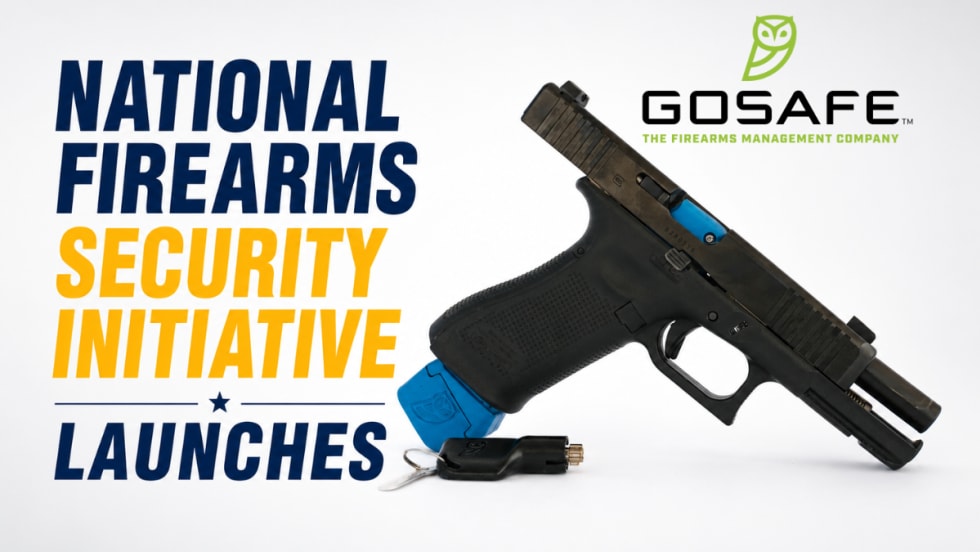
GOSAFE Technology Announces Public Safety Initiative Focused on Firearm Security and Risk Reduction
GOSAFE Technology’s new initiative provides support for agency-level solutions around secure firearm storage, vehicle-storage risks, off-duty firearm security, firearm accountability, and the public safety consequences that may result when firearms are stolen, lost, improperly secured, or diverted from lawful possession.
Read More →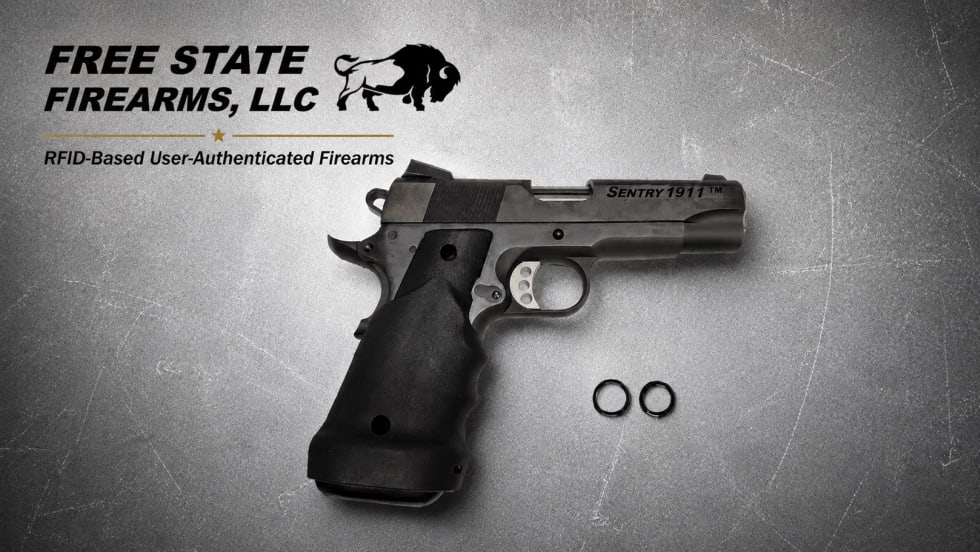
Texas Sheriff’s Office Deploys RFID-Based User-Authenticated Firearm for Prisoner Transport Operations
A sheriff’s office in Texas is now using RFID-based user-authenticated firearms, from Free State Firearms, for prisoner transfer and transport operations.
Read More →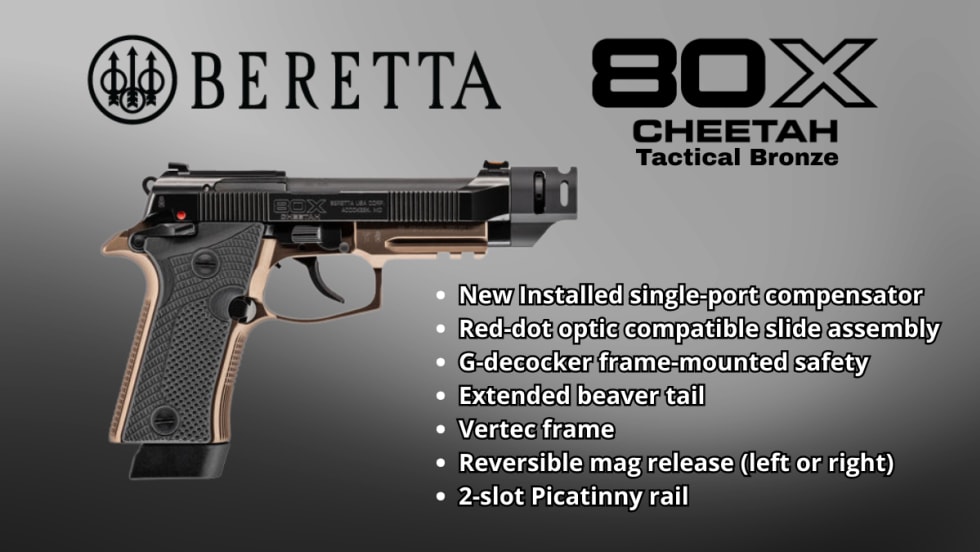
Beretta Introduces the 80X Cheetah Tactical Bronze
Beretta has launched the 80X Cheetah Tactical Bronze, which features a fiber-optic front sight, a serrated rear sight, and a Picatinny rail for accessory mounting, and ships with three 15-round extended magazines.
Read More →
Wrap Raises $5 Million to Restart Domestic Manufacturing & Advance R&D
With new funding, Wrap Technologies will restart domestic manufacturing, advance validated R&D programs into commercialization, and responsibly accelerate early growth initiatives aligned with rising demand for non-lethal response capabilities.
Read More →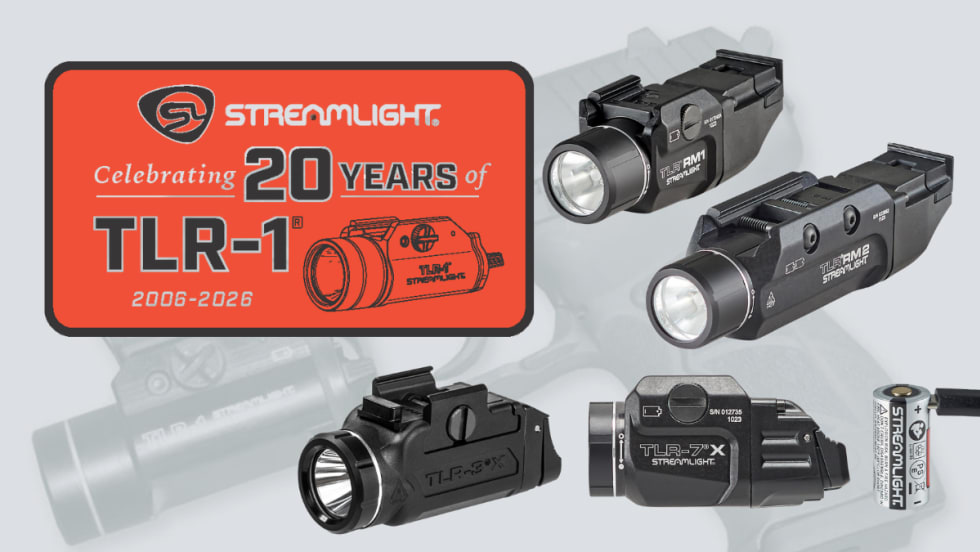
Streamlight Celebrates the 20-Year Anniversary of the TLR Series
This year, Streamlight marks two decades of weapon-mounted lighting innovation with the 20th anniversary of the TLR-1.
Read More →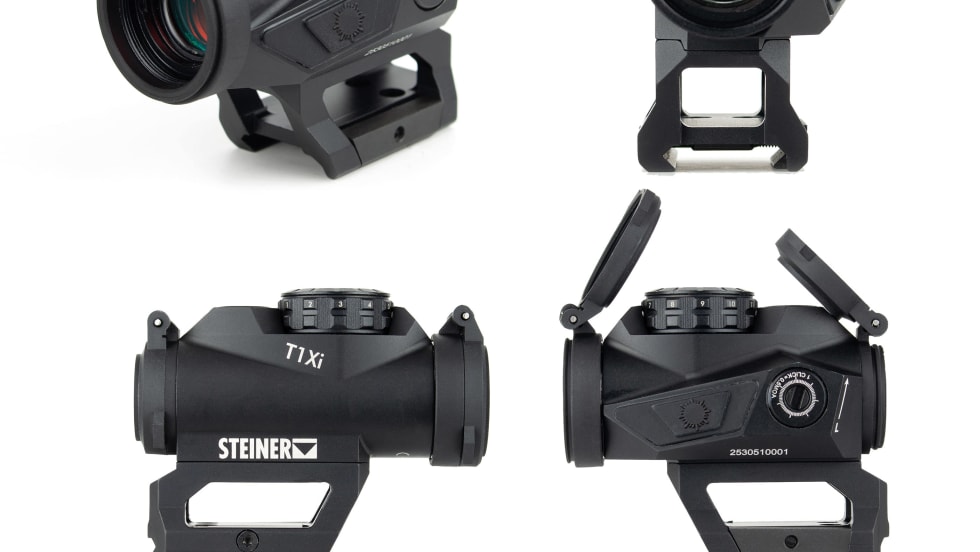
Steiner’s T1Xi Selected as Top Performer in Texas DPS Optic Evaluation
Steiner Optics’ T1Xi was selected as the top-performing red dot in the recent Texas Department of Public Safety optic evaluation.
Read More →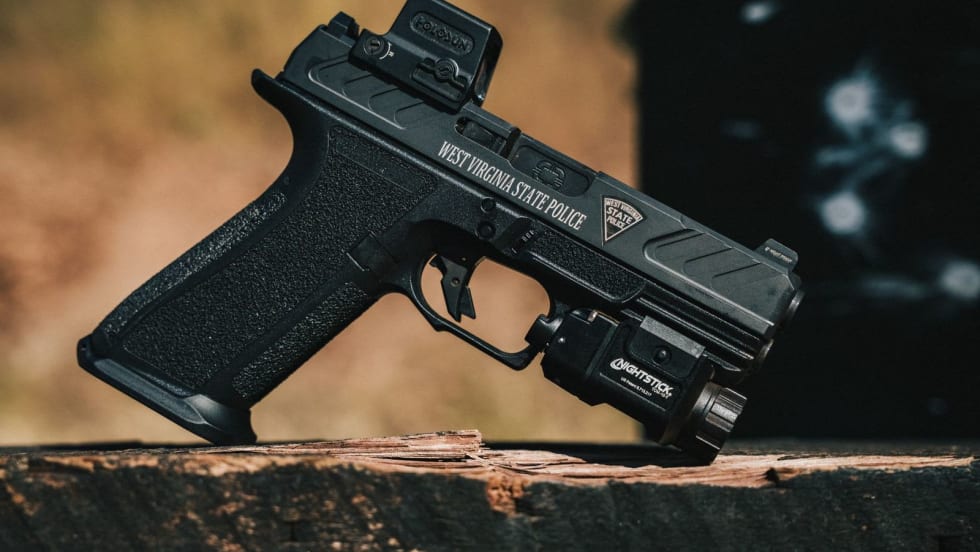
Shadow Systems Selected as Exclusive Pistol Provider for West Virginia State Police
Shadow Systems will provide 700 XR920 crossover pistols for West Virginia State Police troopers and 80 CR920X high-capacity subcompact pistols for the Bureau of Criminal Investigation.
Read More →
Aimpoint Celebrates 50 Years of Innovation and Excellence in Sighting Technology
Aimpoint is marking its 50th anniversary in 2025, celebrating five decades of red dot innovation trusted by military, law enforcement, and tactical professionals worldwide.
Read More →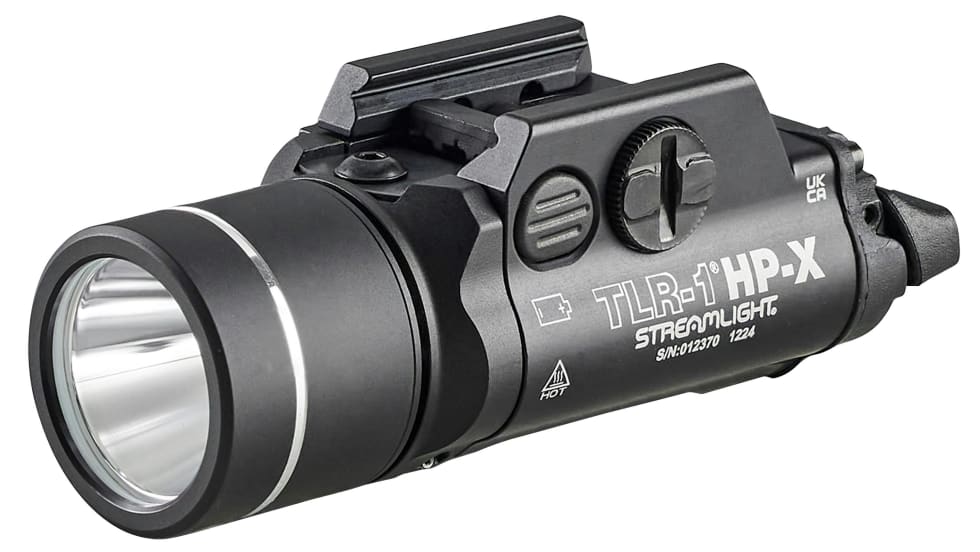
Streamlight Introduces Long-Range Handgun Light
“Our newest weapon light provides an industry-leading level of candela for handguns, giving users enhanced visibility under low light conditions, such as when searching a dark alley,” said Streamlight President Michael F. Dineen.
Read More →
Georgia Sheriff Warns Criminals They Face Felony Charges for Having Glock Switches
This device by itself, regardless if it is installed on a slide or not, is classified by the ATF to be a machine gun, which is illegal to possess,” the Bibb County Sheriff’s Office said.
Read More →