



Sabre Defence XR15A3 Massad Ayoob Elite Rifle
Prolific firearms writer, weapons instructor, and law enforcement officer Massad Ayoob has spent his professional career analyzing the dynamics of police work. Now Sabre Defence, a relatively new manufacturer of AR-15-style weapons, has introduced the Massad Ayoob XR15A3 Elite Rifle. Built in collaboration with the famed expert, the carbine has all of the features that savvy law enforcement officers need and want.

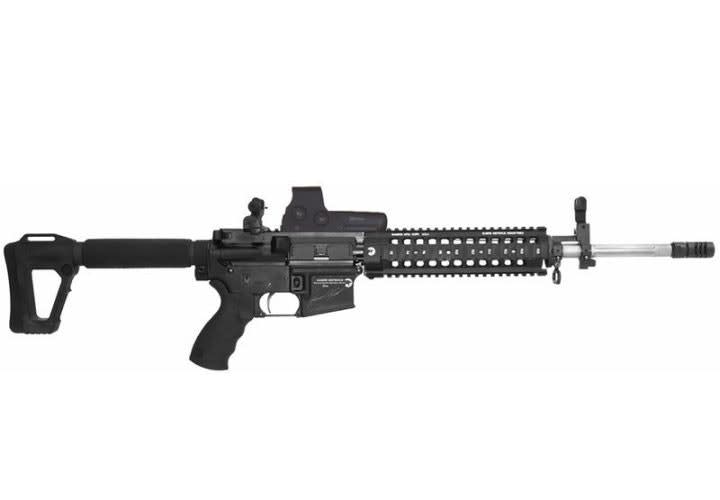
Prolific firearms writer, weapons instructor, and law enforcement officer Massad Ayoob has spent his professional career analyzing the dynamics of police work. Now Sabre Defence, a relatively new manufacturer of AR-15-style weapons, has introduced the Massad Ayoob XR15A3 Elite Rifle. Built in collaboration with the famed expert, the carbine has all of the features that savvy law enforcement officers need and want.
Saber Defence
Sabre Defence has been building AR-15-style rifles at its manufacturing plant near London for years. The guns are bought primarily by law enforcement agencies and contractors. They are also still legal to own in countries like France, Spain, Germany, and the Netherlands. But recently the company has become more prevalent in the United States.
Owner Guy Savage was looking for a source for barrels when he found RAMO in bankruptcy court three-and-a-half years ago. Eight years of systematic dismantling of our military by the Clinton administration had cost the Nashville-based barrel maker its bread-and-butter military contracts.
Savage purchased the company, nothing really more than a building and some machinery. His timing couldn’t have been better. The war in Iraq and actions in Afghanistan have created enough demand for Savage to now employ more than 70 full-time employees at his 35,000-square-foot facility. In fact, when you see U.S. military vehicles or aircraft armed with a Browning .50 machine gun, you can virtually guarantee that its three-piece, Stellite-lined barrel was made by Sabre.
In just three years, Sabre’s U.S. sales have tripled and the company is now looking for product diversification. The law enforcement market seemed to be a natural fit for the company.
“I first ran across their stuff while at an AR-15 armorers school taught by Greg Lee,” Ayoob said in a recent phone interview. “One comment stands out in my memory. Sabre had supplied all the ARs for the class, and one veteran police armorer said, ‘My God, if Rolex made AR-15s, this is what they'd look like!’"
Ayoob put in a request for a test rifle with the Sabre Defence representative and was surprised to get a call a few days later from Guy Savage. It turns out that Savage had been one of Ayoob’s students when he was still teaching in England and Ayoob had been unaware of Savage’s involvement with the new company. With their friendship renewed, Savage flew to New Hampshire and had his old instructor spec out what he thought would be the perfect law enforcement long gun.
Gun Details
Sabre Defence manufactures its own receivers at the company’s Nashville plant using modern CNC machinery and high-quality 7075-T6 forgings. That puts them in the minority as a manufacturer of AR rifles. Most of the companies that call themselves manufacturers are really more assemblers and have their receivers built by an outside supplier.
Barrels are much the same story. Even fewer AR “manufacturers” actually make their own barrels. But Sabre Defence has many specialized machines to perform deep hole drilling and both cut and button rifling. My XR15A3 wears a 16-inch fluted 410 stainless barrel. It has been heavily bead blasted for a matte, non-reflective finish. Sabre rifles this barrel with a 1:8-inch twist so that it can shoot the heavier bullets—like the popular 75-grain rounds—more accurately.
The Ayoob Elite’s barrel is fluted underneath the rail handguard and again in front of the front sight tower. I spoke with Grant Morgan, a technician at Sabre Defence, and he says that there are multiple reasons for the fluting. By cutting flutes in the barrels’ exterior it adds surface area, which makes the barrel, at least in theory, more rigid. Increased surface area also allows more rapid cooling of the barrel. But, Morgan says, “The biggest advantage to the fluting is the weight reduction. By removing metal from the barrel we give the carbine a much better balance.”
Sabre uses a midlength gas system on the Ayoob Elite. I think this design was originated by Armalite, but I’m glad to see that Sabre Defence is using it on its 16-inch carbine because it makes a lot of sense. The shorter the gas tube is, the higher the port pressure. Increased gas port pressure will result in a host of cycling, extraction, and ejection problems and is also thought to shorten the life of the weapon. The midlength tube is halfway between carbine length and rifle length and its added length drops gas port pressure dramatically.
Another benefit of the midlength gas tube on a 16-inch carbine is that the handguard is a little longer. Sabre uses a Samson free-floating, four-rail handguard for mounting optics and accessories onto the weapon. Each rail position is marked with a small white number that is also visible with night vision goggles.
Sighting equipment on the Ayoob Elite carbine includes a Yankee Hill folding front sight and detachable rear sight. Both lock into place and require depressing a button to fold down the sight. For low-light and night use, both the front and rear sights have tritium inserts. Sabre also includes a night vision-compatible EOTech 552 holographic sight with this carbine. I like this sight a lot and find it very fast and effective at any targets under 100 yards.[PAGEBREAK]
Shooting Impressions
Ayoob first alerted me to the Gill Compensator that Sabre Defence uses on the XR15A3 Elite carbine. “From a braced position, the dot doesn’t even move off of the kill zone on a 100-yard target,” Ayoob told me. That’s a pretty hefty claim, and my initial reaction was to assume it was a slight exaggeration. But when I shot the rifle myself I found it to be true.
I did a lot of shooting at steel targets set out from 20 to 75 yards and found that I could double tap them, with good solid hits, by slapping the trigger as quickly as possible. I used a vertical foregrip and the EOTech and was amazed at the total lack of muzzle climb.
Sabre Defence’s Grant Morgan is responsible for the gill compensator. “It started out as a comp for a .38 Super, years ago when I was an active IPSC competitor,” says Morgan. “We wanted to make the most efficient use of the gas. There are internal cuts that blow the gas back and then redirect it through the gills. Most suppressors that work with a standard A2 flash hider, including ours, will work with the gill compensator.”
While I didn’t notice it when I was conducting rapid-fire exercises with the carbine, Ayoob told me that when I benched the gun I would notice a puff of cool air from the compensator with each shot. Says Ayoob, “My first thought was, what the heck? This thing is blowing gas back this far? Then I realized it was cool air. The comp is working so effectively that, though the gas venting stops a few inches back from the muzzle, it is displacing enough surrounding air that the shooter gets a cool puff of wind in the face with each shot.”
But that puff is far from distracting. I tested the Elite carbine with a good selection of ammo and fired for groups from 100 yards. Because I was more interested in the gun’s mechanical energy than my ability to shoot with the non-magnifying EOTech, I installed a Trijicon 3x to 9x AccuPoint scope. As one would expect, the lighter 55-grain ammunition did not perform as well with the 1:8-inch barrel as the heavier bullets did.
My single best five-shot group was recorded with Black Hills 77-grain nosler bullets and was just .89 inches. Keep in mind that this group, like all of the others, was fired from a hot barrel. Not bad for a 16-inch carbine.
My Ayoob Elite carbine has a very crisp four-pound trigger pull and that made shooting these small groups easy. The two-stage trigger is not manufactured by Sabre Defence—at least not yet—because it is a MIM part. But Morgan did tell me that the company designed and built the molds for these parts. I also liked the ACE SOCOM adjustable stock and the Ergo pistol grip. Both parts made the XR15A3 Carbine extremely comfortable to shoot.
During my evaluation I fired more than 400 rounds without cleaning the carbine. I didn’t have any stoppages or failures. That’s exactly the kind of reliability that I want for a tactical weapon. Ayoob told me he has heard of a number of agencies that have been testing the rifle for adoption and that it has beat out some of the more well known and established AR builders. “I’m very pleased with the quality of their rifles and proud that they wear my name,” Ayoob says, referring to his signature which graces the right side of the magazine well.
Well Worth the Price
Suggested retail price of the Sabre Defence XR15A3 Massad Ayoob Elite Rifle is $2,929.99. If that sounds a bit steep for you, consider this: This carbine is ready to go right out of the case. You won’t need to switch out any parts or make any additions to get this rifle ready for service.
Sabre ships its gun in a custom black tactical case that Ayoob actually helped design. It is perfect for the operator or the competitive shooter. There’s plenty of room for accessories and extra ammo, and the rifle is securely held via Velcro straps. There’s also a side pouch for a pistol and there’s even enough room to slide a shotgun in the case. Ayoob’s signature is stitched across the case in yellow letters.
Besides the case and the EOTech, Sabre also includes two 20-round magazines, two 30-round mags, a Wilderness Tactical Giles sling, and a premium Otis cleaning kit with each Elite rifle.
Ayoob’s specification for the perfect patrol and/or perimeter weapon and Sabre Defence’s ability to execute his vision has resulted in one of the finest AR-style weapons that I’ve had the pleasure to shoot. The gun is well thought out and built from good parts, and it displays excellent accuracy and reliability.
Mike Detty is an NRA-certified rifle, pistol, and shotgun instructor. A certified rangemaster and competition shooter, Detty served as an officer in the U.S. Marine Corps and holds a degree in criminal justice from the University of Arizona.
More Weapons
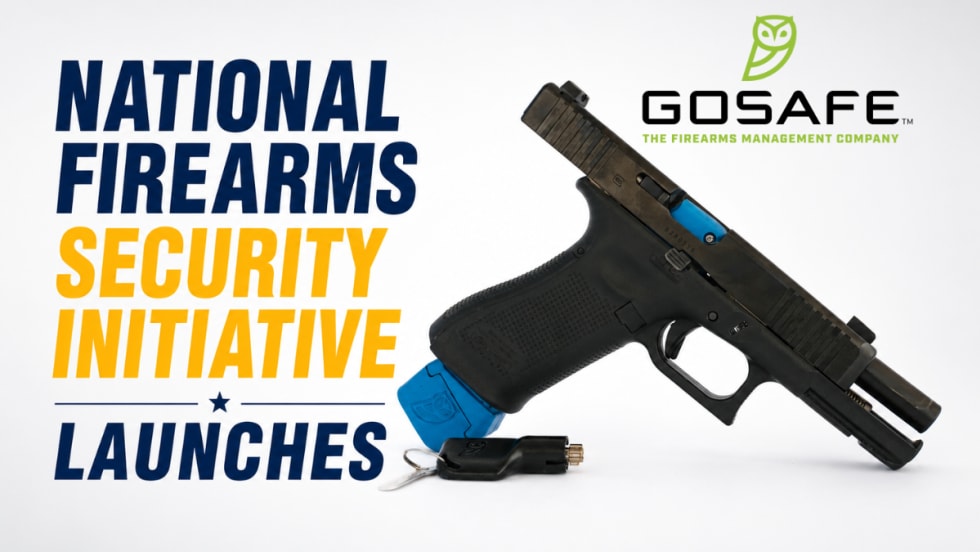
GOSAFE Technology Announces Public Safety Initiative Focused on Firearm Security and Risk Reduction
GOSAFE Technology’s new initiative provides support for agency-level solutions around secure firearm storage, vehicle-storage risks, off-duty firearm security, firearm accountability, and the public safety consequences that may result when firearms are stolen, lost, improperly secured, or diverted from lawful possession.
Read More →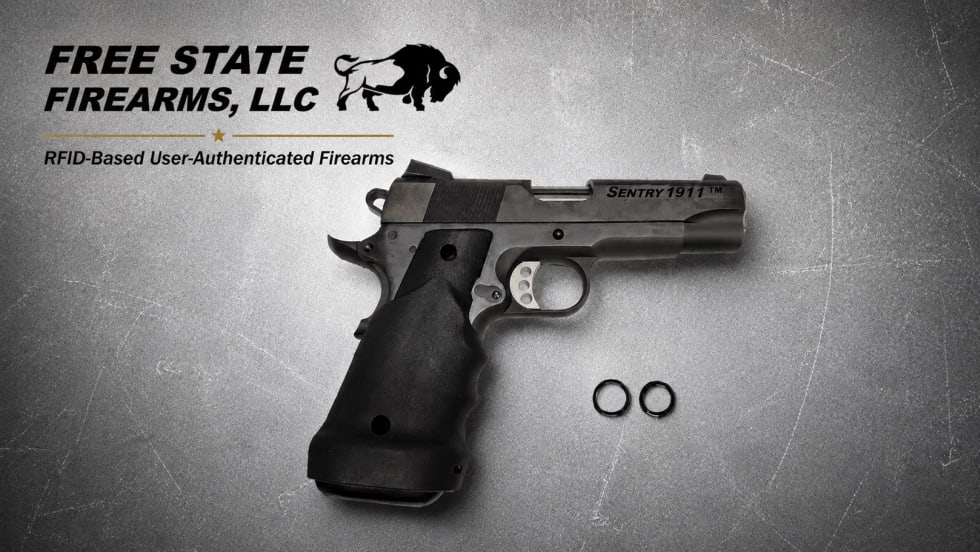
Texas Sheriff’s Office Deploys RFID-Based User-Authenticated Firearm for Prisoner Transport Operations
A sheriff’s office in Texas is now using RFID-based user-authenticated firearms, from Free State Firearms, for prisoner transfer and transport operations.
Read More →
Beretta Introduces the 80X Cheetah Tactical Bronze
Beretta has launched the 80X Cheetah Tactical Bronze, which features a fiber-optic front sight, a serrated rear sight, and a Picatinny rail for accessory mounting, and ships with three 15-round extended magazines.
Read More →
Wrap Raises $5 Million to Restart Domestic Manufacturing & Advance R&D
With new funding, Wrap Technologies will restart domestic manufacturing, advance validated R&D programs into commercialization, and responsibly accelerate early growth initiatives aligned with rising demand for non-lethal response capabilities.
Read More →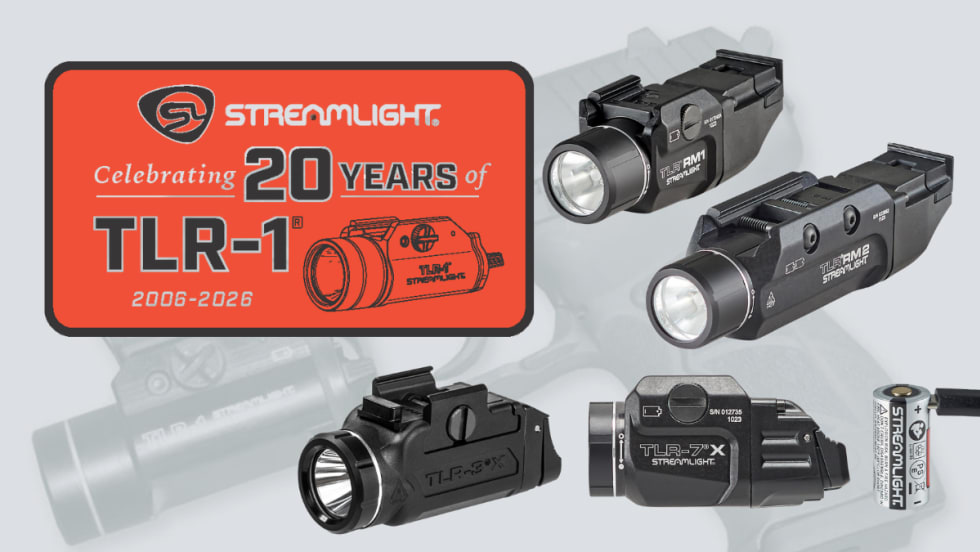
Streamlight Celebrates the 20-Year Anniversary of the TLR Series
This year, Streamlight marks two decades of weapon-mounted lighting innovation with the 20th anniversary of the TLR-1.
Read More →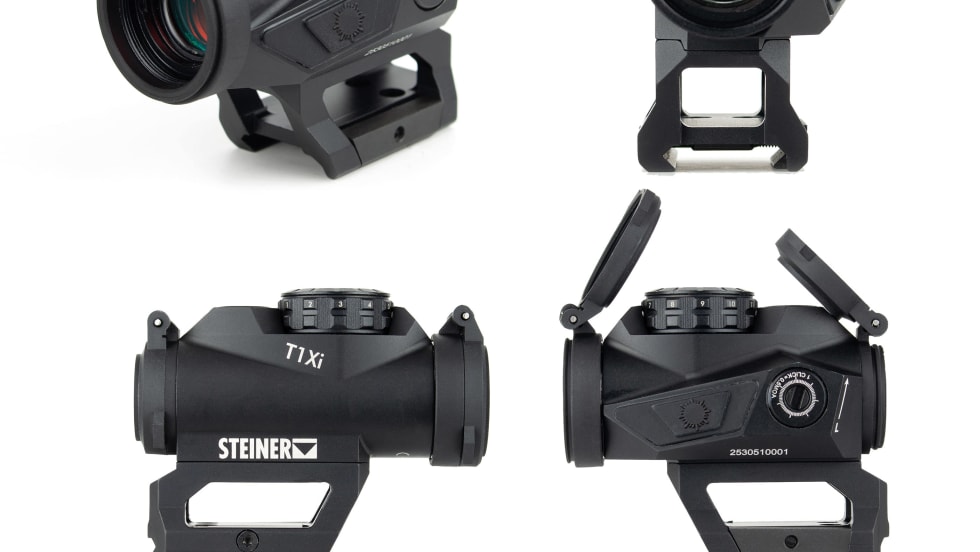
Steiner’s T1Xi Selected as Top Performer in Texas DPS Optic Evaluation
Steiner Optics’ T1Xi was selected as the top-performing red dot in the recent Texas Department of Public Safety optic evaluation.
Read More →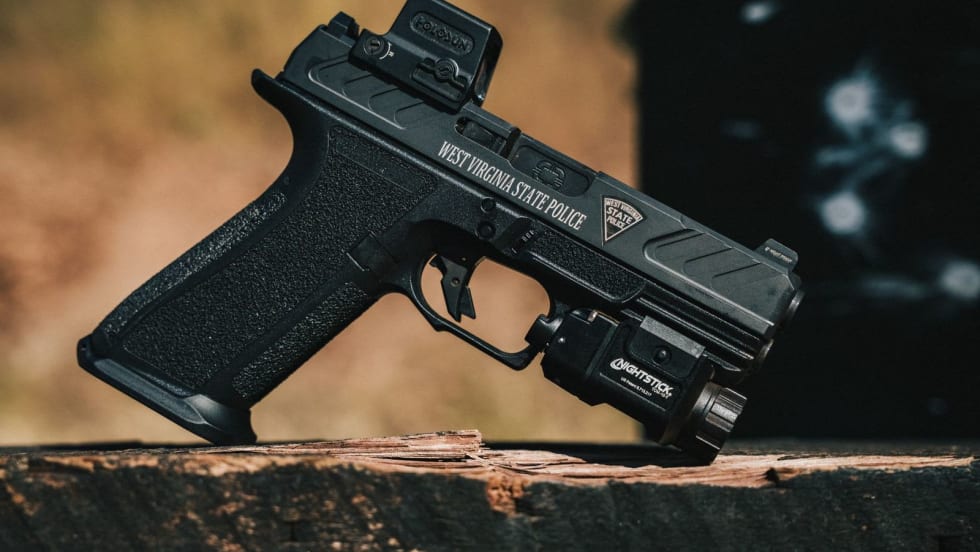
Shadow Systems Selected as Exclusive Pistol Provider for West Virginia State Police
Shadow Systems will provide 700 XR920 crossover pistols for West Virginia State Police troopers and 80 CR920X high-capacity subcompact pistols for the Bureau of Criminal Investigation.
Read More →
Aimpoint Celebrates 50 Years of Innovation and Excellence in Sighting Technology
Aimpoint is marking its 50th anniversary in 2025, celebrating five decades of red dot innovation trusted by military, law enforcement, and tactical professionals worldwide.
Read More →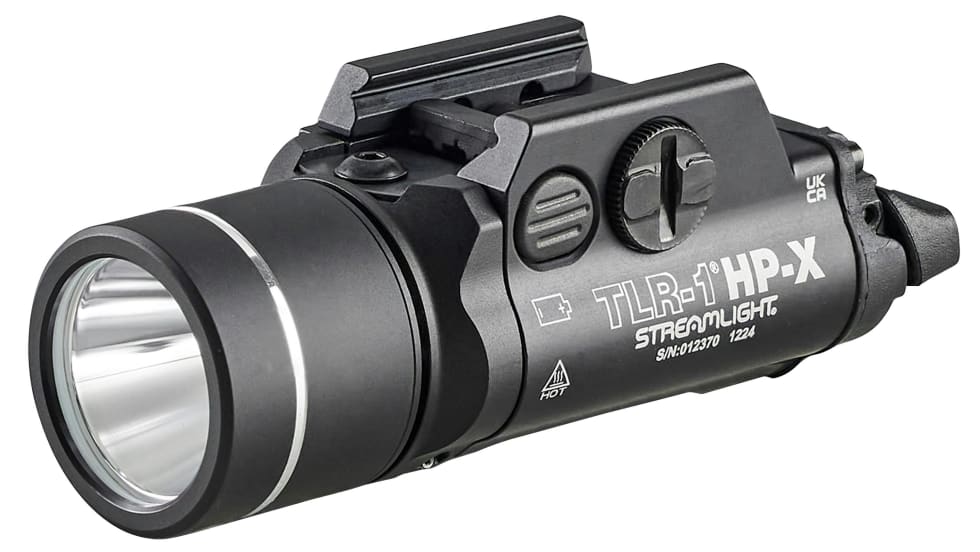
Streamlight Introduces Long-Range Handgun Light
“Our newest weapon light provides an industry-leading level of candela for handguns, giving users enhanced visibility under low light conditions, such as when searching a dark alley,” said Streamlight President Michael F. Dineen.
Read More →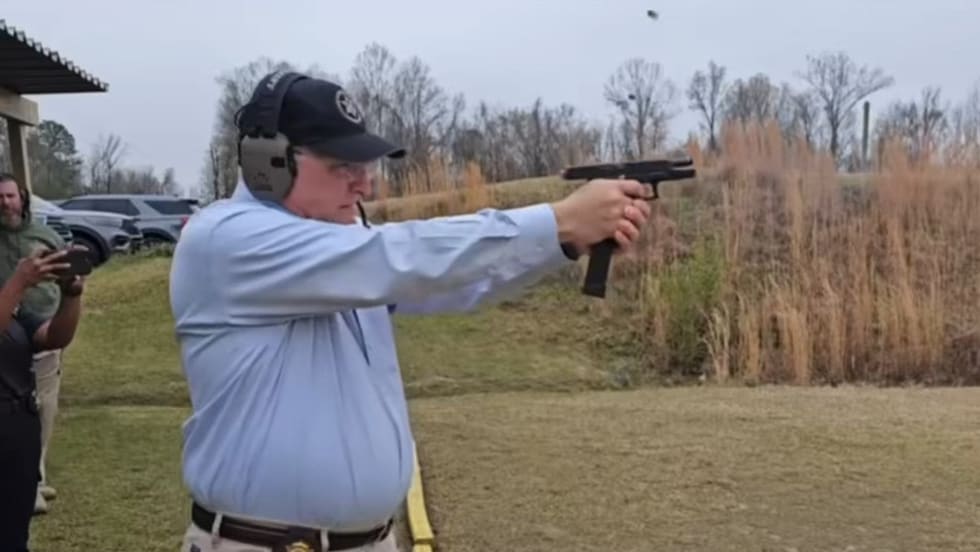
Georgia Sheriff Warns Criminals They Face Felony Charges for Having Glock Switches
This device by itself, regardless if it is installed on a slide or not, is classified by the ATF to be a machine gun, which is illegal to possess,” the Bibb County Sheriff’s Office said.
Read More →