



How to Evaluate Ammunition
Imagine for a moment that you are a law enforcement administrator who is responsible for evaluating ammunition for your agency. The decisions you make can have a profound effect on the safety of your sworn personnel and the civilian population that they serve. The same is true if you are an individual officer who is allowed to use personally owned firearms and ammunition on the job. You have a responsibility to select the best ammunition available.

Imagine for a moment that you are a law enforcement administrator who is responsible for evaluating ammunition for your agency. The decisions you make can have a profound effect on the safety of your sworn personnel and the civilian population that they serve. The same is true if you are an individual officer who is allowed to use personally owned firearms and ammunition on the job. You have a responsibility to select the best ammunition available.
The question is, how do you know which ammunition is the most reliable and effective for your specific law enforcement duties?
Talk to Other Cops
One of the most important contacts you can make regarding ammunition selection is with another law enforcement officer who is extremely well versed in this subject.
To find someone with the proper credentials, I recommend that you contact local police firearms instructors and law enforcement agencies that have a reputation for being progressive when it comes to firearms and ammunition. Certain federal agencies such as the FBI, the Border Patrol, the DEA, and the U.S. Immigration and Customs Enforcement (DHS) should also be approached because over the years these agencies have conducted large-scale ammunition and firearms tests.
Once you have located someone who is familiar with this topic, talk to him, take copious notes, and ask for copies of any test results or research that was used to justify the purchase of a particular caliber, brand, or type of ammunition that fits your needs. Also, ask for any documentation about the effectiveness of ammunition in actual police-involved shootings.
Now, contact various agencies that use the same ammunition. Hopefully, you will receive the same glowing reports about the ammunition's effectiveness. And before you make your final selection, determine if other calibers, brands, or types of ammunition are capable of producing even better results.
Remember, when you conduct research, your goal is to examine as much documentation as possible. Look for data that supports the claim that a particular caliber, brand, and type of ammunition works reliably in a variety of firearms and is very effective in defeating certain barriers and stopping an attacker from continuing to pose a threat. But be on guard for faulty research or findings that are based on very limited samplings of data.
Consider your mission and the requirements of your jurisdiction when you select service ammunition or special purpose ammunition. Law enforcement officers assigned to traffic and motor vehicle enforcement duties need to be issued ammunition that is capable of delivering effective stopping power after defeating automobile glass, heavy clothing, and the components such as steel and plastics that are used to manufacture motor vehicles. In contrast, officers who work inside a courthouse or in an urban setting should be armed with ammunition that is less likely to over penetrate a human body or building construction material.
It's important that you also consider the problems of recoil and muzzle flash when adopting a new caliber, brand, or type of ammunition. Adopting new ammunition is not wise if by doing so you dramatically increase felt recoil and make it difficult for some sworn personnel to qualify or accurately use their service handguns to protect life and property.
Failing to consider recoil when changing ammo may cause certain members of your agency to file legal actions if they are terminated because they are unable to qualify. Issuing ammunition that produces a low level of muzzle flash can also help your officers shoot more accurately in low-light conditions.
It's also a good idea to resist the temptation to use a particular caliber, brand, or type of ammunition that receives extremely positive test reports until some time has passed. I mention this because ideally a specific caliber, brand, and type of ammunition, as well as the firearms that it will be used with, should be adequately tested in the field before they are adopted on a widespread basis.
For example, allow a portion of your patrol and investigative force to carry a sampling of different makes, models, and calibers of handguns for six months to a year before the final selection is made. This may be the most intelligent way to convert to a new handgun or adopt a new caliber or type of ammunition. Remember, evaluating firearms and ammunition under constant field use and "combat conditions" is always the best way to go.
Contact the Companies
Don't hesitate to contact the ammunition makers about their products. They have a lot of data on performance, and they will send you stuff to test.
Winchester (Olin) will even assist law enforcement agencies in testing the company's ammo. If a law enforcement agency is too small to justify the expense of testing ammunition locally, Winchester will arrange for personnel from that agency to participate in a ballistic workshop in another area.
Ammunition companies should also be approached to work on specific projects. One example of this occurred after the FBI conducted extensive tests and evaluations on 10mm ammunition as a service caliber and Smith & Wesson and Winchester launched a joint project to develop .40 S&W caliber pistols and ammunition. This caliber is now widely used by law enforcement agencies throughout the United States.
Another example of collaboration between an ammunition company and a gun company occurred when SIGARMS and Federal Cartridge developed the .357 SIG caliber. Federal Cartridge also puts on ballistic workshops for law enforcement agencies. Due to the tremendous expense involved, Federal accommodates smaller agencies by inviting them to attend workshops with other departments in other areas.
More than 100 such ballistic workshops are hosted by Federal Cartridge each year. CCI Speer is another ammunition company that will host ballistic workshops and assist law enforcement agencies in selecting the best ammunition for their operation. (CCI Speer and Federal cartridge are now both under the ATK corporate umbrella.)
Every major American ammunition company has law enforcement representatives who can provide you with the research data that you will need to make your decision before you purchase a particular brand or type of ammunition. Some of this information can be found on the Internet. But as a consumer you must not be shy about asking questions. You should also ask for copies of documentation that prove that certain advertised "facts" are true.
Gelatin Tests
According to some experts, a hollow-point bullet should penetrate a minimum of 12 inches and a maximum of 15 inches in properly prepared ballistic gelatin, but must not be so powerful as to over penetrate and cause collateral damage.
But some controversy exists about minimum and maximum levels of penetration in ballistic gelatin that is designed to replicate human tissue. The 12-inch penetration guideline was established by the FBI to rate ammunition that is more likely to reach a vital organ and the central nervous system after entering a human body. The experts also say that the best hollow-point ammunition should mushroom or expand beyond its caliber size and should retain much or all of its weight after being fired into a human body.
The most scientific way to test ammunition is by shooting it into carefully mixed and maintained Kind and Knox Ballistic Gelatin that is properly prepared and used according to accepted protocols.
One of the accepted protocols used in modern ammunition testing is to cover a properly mixed and prepared block of ballistic gelatin with layers of denim cloth to simulate penetrating a human subject wearing heavy or winter clothing. Bullets that achieve the proper penetration and expansion through different types of barriers, including covered and bare gelatin generally provide effective stopping power in the field under ideal circumstances.
Of course, there is no way to inject ballistic gelatin with tremendous amounts of adrenalin or illegal drugs to duplicate the effects that such substances can have on a person's ability to continue to resist after being shot by the police. There is also no way to reproduce the human fight-or-flight mechanism in gelatin testing.
The human response to danger can cause an armed violator to do amazing things to avoid capture after being seriously or even mortally wounded. These factors are the wild cards that can dramatically influence the way a person behaves after being shot by law enforcement officers or a legally armed citizen. The adrenaline we produce during a life-threatening situation, along with the psychological desire to either avoid danger or fight to the death when absolutely necessary, also enables armed professionals and law abiding citizens to go to great lengths to survive.
Revisit and Refine Your Research
In order to achieve the preferred or ideal results, a tremendous amount of research and testing must be conducted before a bullet design is perfected. Even then, ammunition companies will periodically update their designs to improve the effectiveness of their products. This is a critical point to remember because ammunition that you once ignored because it was previously proven ineffective may one day become highly rated because it was modified to perform to a higher standard. This means that it is in your best interest to constantly monitor the performance of all law enforcement ammunition.
It is also important to consider the potential ramifications of using service ammunition in handguns of the same caliber with different barrel lengths. Ammunition should always be tested before being issued or used to determine the actual velocity produced when fired from the same make and model handgun that you intend to carry.
If it is determined that the ammunition you are interested in adopting will suffer a significant loss of velocity when fired from a certain handgun, you may wish to select a different caliber, brand, or type of ammunition, or use a different firearm in order to achieve better results.
You must also recognize that some compromise may be required when you select certain types of ammunition. I mention this because some of the most effective service ammunition is often more difficult to comfortably shoot, especially in certain lightweight handguns. This was also true in the old days when many of us carried .357 Magnum revolvers but loaded our wheel guns with softer shooting .38 Special Plus P ammunition.
In the end, you must consider the need to be accurate over all other factors because it makes no sense to issue or use the most effective ammunition available if the recoil this ammunition produces prevents you from being able to qualify or consistently hit what you are aiming at.
If you believe that knowledge is power, you will learn all you can about ammunition and firearms. One way to accomplish this is to converse with people who are extremely knowledgeable about these subjects. As you learn more, you should be able to draw your own conclusions and separate fact from fiction. I would also go online and carefully read everything you can find about ammunition effectiveness, ammunition testing, and the selection of ammunition. You can also increase your knowledge by reading books and magazine articles about firearms and ammunition. However, I caution you about drawing conclusions or taking sides on various issues until you become significantly more knowledgeable about firearms and ammunition.
Nick Jacobellis is a retired U.S. Customs Agent and former New York City officer who was physically disabled in the line of duty while working undercover.
THE LATEST POLICE AMMO
Black Hills
Rapid City, S.D.-based Black Hills Ammunition does not make a line of ammunition specifically for law enforcement. However, a number of agencies use the company's products, especially for special application. For example, Black Hills .308 Winchester 180-grain Nosler Accubond is very popular with SWAT snipers. The round steps out at 2,550 feet per second.
Need FREEinfo? Use #13324
CCI/Speer
There's probably no more respected ammo in law enforcement than the CCI/Speer Gold Dot handgun cartridge. Gold Dots are in the mags of more law enforcement officers nationwide than any other bullet. In addition to Gold Dot duty rounds, CCI/Speer also makes Lawman Shotshells, RHT frangible training rounds, and Speer Lawman and CCI Blaze lead training rounds.
Need FREEinfo? Use #13325
Custom Cartridge
California-based Custom Cartridge produces very high- end frangible ammo for self-defense. Its basic ammo, SoftShot, is available to both civilians and law enforcement. And don't let the name fool you; it hits real hard, leaving behind a substantial wound channel. The company's other primary product is Hush, and it's only sold to law enforcement and military customers because even the handgun rounds will penetrate body armor.
Need FREEinfo? Use #13326
Federal Law Enforcement
Like CCI/Speer, Federal is now part of the ATK group. The company makes tactical, training, and duty rounds. Its duty sidearm rounds include HST hollow points and EFMJ ball ammo with a rubber core that causes expansion. In addition, Federal makes ballistiClean non-toxic training ammo, TRU tactical rifle ammo, and TruBall rifled shotshell slugs.
Need FREEinfo? Use #13327
Hornady Manufacturing
You can find just about any caliber or type of ammo in the Hornady catalog. The company makes handgun, rifle, and shotgun ammo for hunters, match shooters, and law enforcement. Its TAP for personal defense line is designed to stop threats quickly without over penetration.
Need FREEinfo? Use #13328
International Cartridge
Pennsylvania-based International Cartridge makes frangible duty ammo branded as Green Elite. Available in most popular sidearm and long gun calibers as well as shotgun slugs, Green Elite rounds are designed to fragment on impact, creating multiple wound channels with little risk of over penetration.
Need FREEinfo? Use #13329
PMC Ammunition
South Korea's PMC Ammunition is one of the world's largest providers of rifle and handgun ammo. The company's Starfire brand ammunition is specifically designed for law enforcement duty handguns. These hollow point handgun rounds were developed by Tom Burczynski, and are designed to create large wound cavities.
Need FREEinfo? Use #13330
Remington
One of the most trusted names in American firearms, Remington, is also one of the most trusted names in law enforcement ammo. Remington's Golden Saber hollow-point handgun ammo comes in an HPJ Bonded model that has been engineered to penetrate automobile glass. The company also makes tactical rifle and shotgun rounds.
Need FREEinfo? Use #13331
Winchester
Winchester Ranger Bonded ammo is designed specifically for law enforcement duty. The company also makes shotshells and rifle ammo in the Ranger line. Its newest Ranger product is the .223 Rem. cartridge with Nosler partition. This round achieves 17.4 inches of penetration in ballistic gelatin. You can shoot and observe tests of Winchester ammo at one of the company's Ballistic Workshops. Contact your local Winchester law enforcement ammunition distributor for more information.
Need FREEinfo? Use #13332
More Weapons
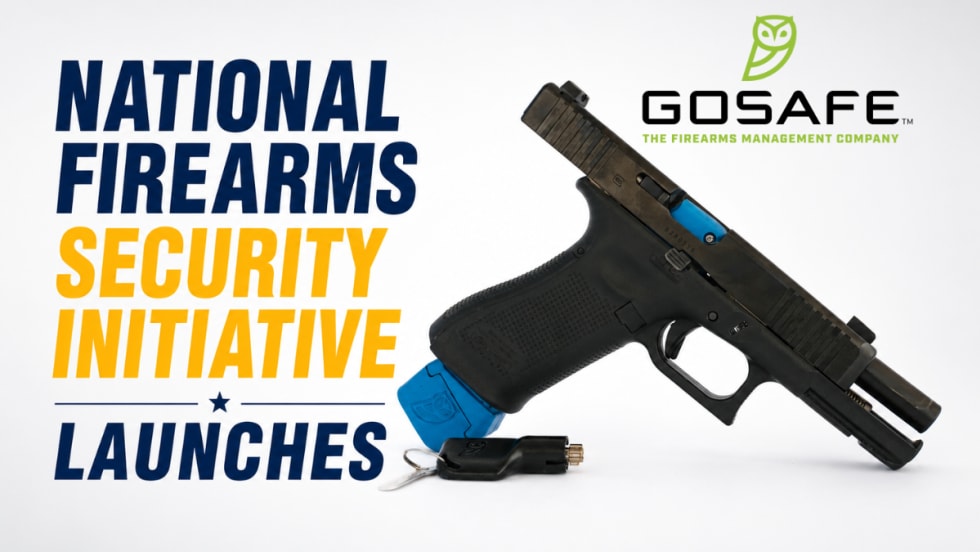
GOSAFE Technology Announces Public Safety Initiative Focused on Firearm Security and Risk Reduction
GOSAFE Technology’s new initiative provides support for agency-level solutions around secure firearm storage, vehicle-storage risks, off-duty firearm security, firearm accountability, and the public safety consequences that may result when firearms are stolen, lost, improperly secured, or diverted from lawful possession.
Read More →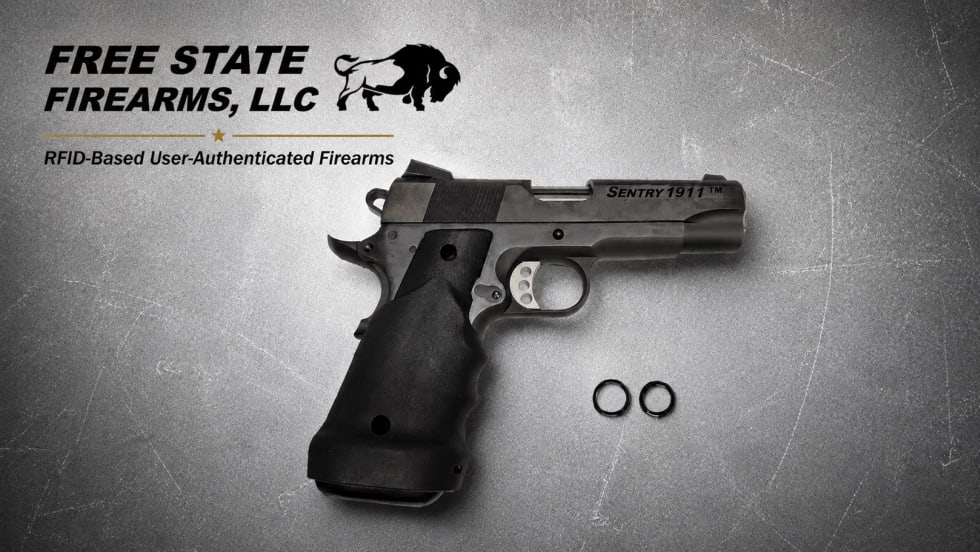
Texas Sheriff’s Office Deploys RFID-Based User-Authenticated Firearm for Prisoner Transport Operations
A sheriff’s office in Texas is now using RFID-based user-authenticated firearms, from Free State Firearms, for prisoner transfer and transport operations.
Read More →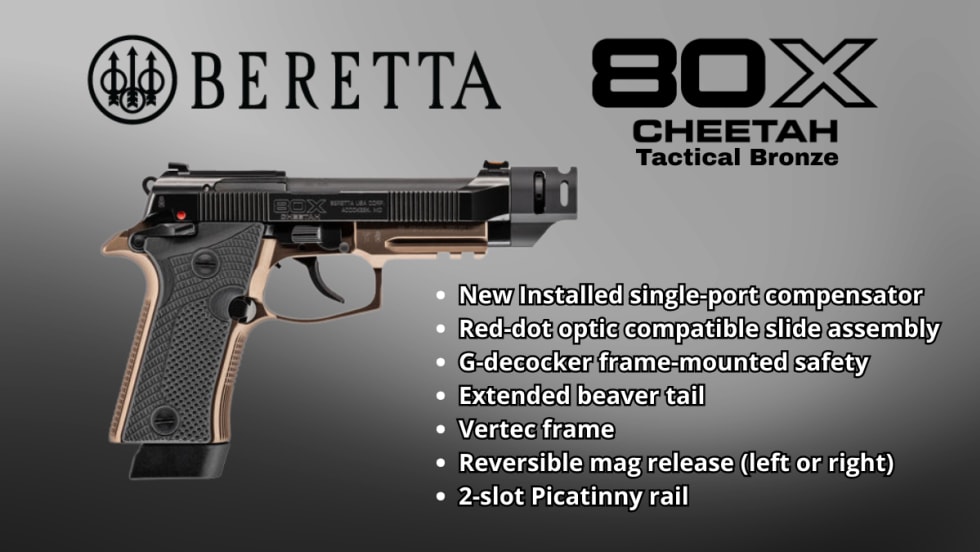
Beretta Introduces the 80X Cheetah Tactical Bronze
Beretta has launched the 80X Cheetah Tactical Bronze, which features a fiber-optic front sight, a serrated rear sight, and a Picatinny rail for accessory mounting, and ships with three 15-round extended magazines.
Read More →
Wrap Raises $5 Million to Restart Domestic Manufacturing & Advance R&D
With new funding, Wrap Technologies will restart domestic manufacturing, advance validated R&D programs into commercialization, and responsibly accelerate early growth initiatives aligned with rising demand for non-lethal response capabilities.
Read More →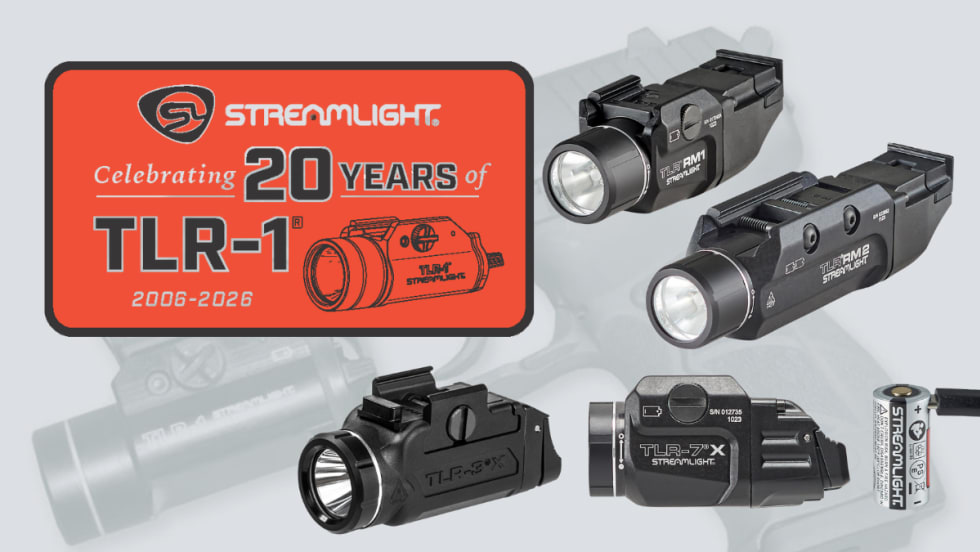
Streamlight Celebrates the 20-Year Anniversary of the TLR Series
This year, Streamlight marks two decades of weapon-mounted lighting innovation with the 20th anniversary of the TLR-1.
Read More →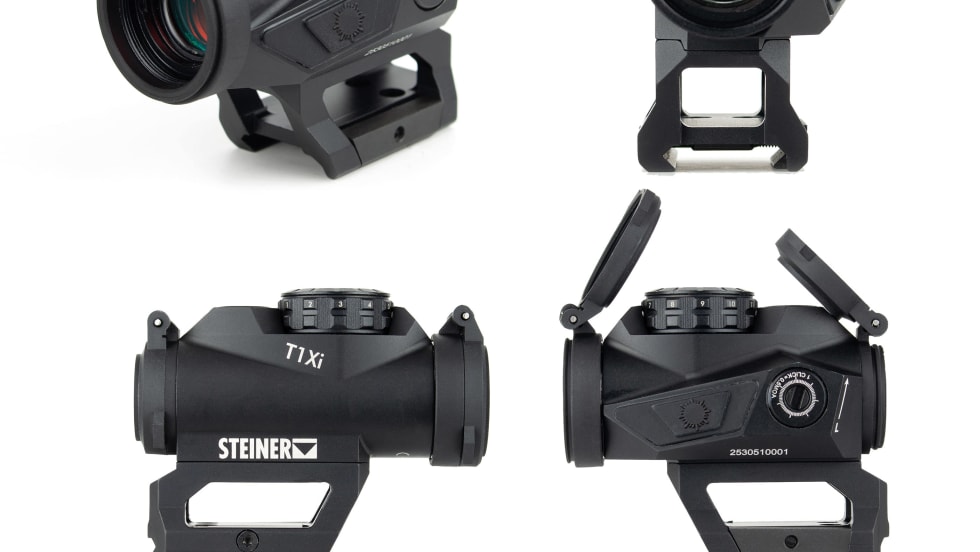
Steiner’s T1Xi Selected as Top Performer in Texas DPS Optic Evaluation
Steiner Optics’ T1Xi was selected as the top-performing red dot in the recent Texas Department of Public Safety optic evaluation.
Read More →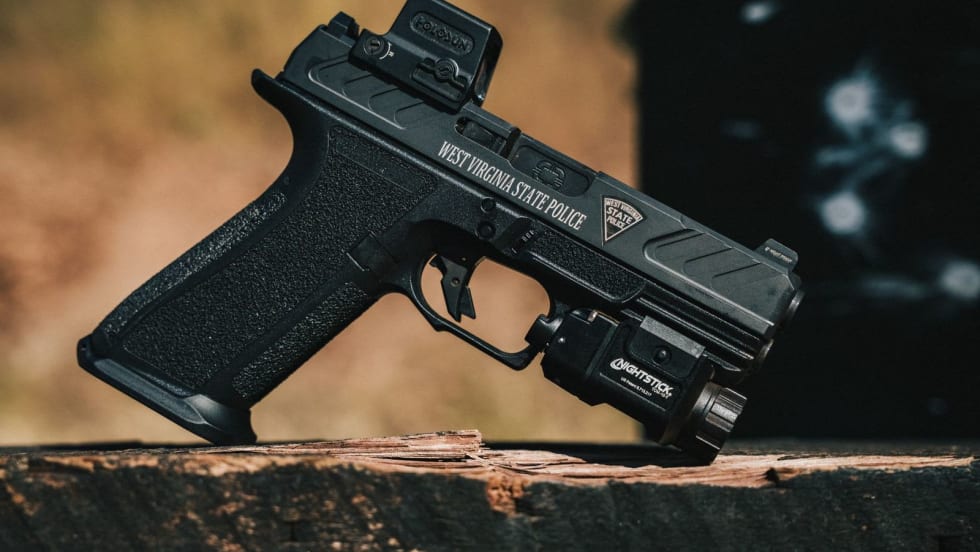
Shadow Systems Selected as Exclusive Pistol Provider for West Virginia State Police
Shadow Systems will provide 700 XR920 crossover pistols for West Virginia State Police troopers and 80 CR920X high-capacity subcompact pistols for the Bureau of Criminal Investigation.
Read More →
Aimpoint Celebrates 50 Years of Innovation and Excellence in Sighting Technology
Aimpoint is marking its 50th anniversary in 2025, celebrating five decades of red dot innovation trusted by military, law enforcement, and tactical professionals worldwide.
Read More →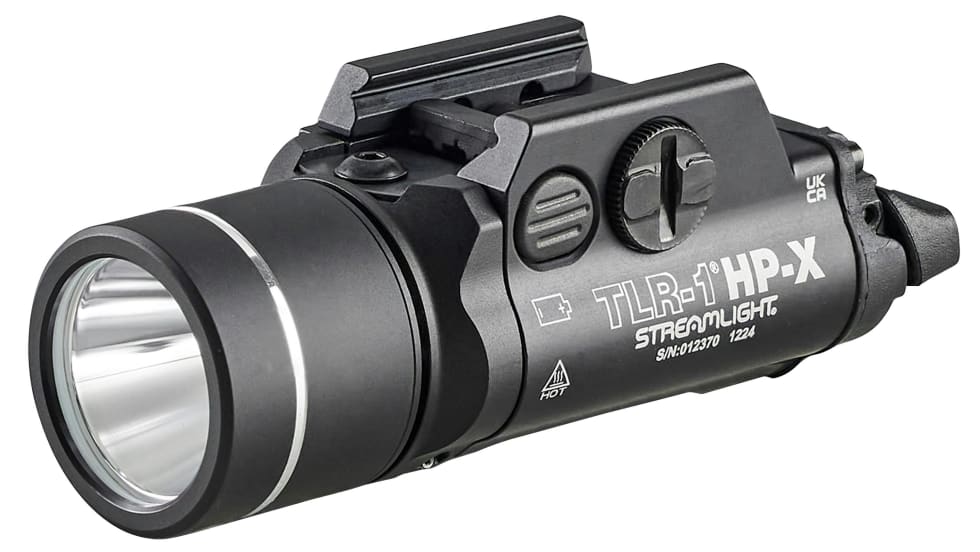
Streamlight Introduces Long-Range Handgun Light
“Our newest weapon light provides an industry-leading level of candela for handguns, giving users enhanced visibility under low light conditions, such as when searching a dark alley,” said Streamlight President Michael F. Dineen.
Read More →
Georgia Sheriff Warns Criminals They Face Felony Charges for Having Glock Switches
This device by itself, regardless if it is installed on a slide or not, is classified by the ATF to be a machine gun, which is illegal to possess,” the Bibb County Sheriff’s Office said.
Read More →