



‘Smart’ Buildings to Guide Future First Responders
The best response to a building emergency is a fast and informed one. The National Institute of Standards and Technology (NIST) is working with the building industry as well as the public safety and information technology communities to achieve both objectives.

The best response to a building emergency is a fast and informed one. The National Institute of Standards and Technology (NIST) is working with the building industry as well as the public safety and information technology communities to achieve both objectives.
NIST researchers are studying how "intelligent" building systems can be used by firefighters, police and other first responders to accurately assess emergency conditions in real-time. One of the biggest problems faced by first responders is a lack of accurate information. Where is the fire within the building? How big is it? Are there flammable chemicals stored nearby?
NIST is working with industry to develop standards to allow manufacturers to create intelligent building systems that use various types of communication networks (including wireless networks) to assist first responders in assessing and mitigating emergencies. The systems would send information such as building floor plans and data from motion, heat, biochemical and other sensors and video cameras directly to fire and police dispatchers who then can communicate detailed information about the scene to first responders.
NIST recently released video presentations that demonstrate how an “Intelligent Building Response” program would work. The videos outline team efforts to create a system of interoperable data content and communications standards that would link first responders with "intelligent" building systems.
Firefighters are shown using laptops to track the spread of a developing fire on a floor plan even before reaching the scene. Other real-time building sensor information includes status information concerning a specific building’s mechanical systems, elevators, lighting, security systems and fire systems, the locations of building occupants, and temperature and smoke conditions.
The Intelligent Building Response research is made possible by funding from the Department of Justice’s Office of Community Oriented Policing Services (COPS) office through NIST’s Office of Law Enforcement Standards (OLES). Public safety and building technology representatives are welcome to join the standards development effort.
For more information on the program and downloadable video presentations visit www.bfrl.nist.gov/ibr.
More Patrol

Streamlight Portable Scene Light III Wins 2026 OH&S New Product of the Year Award
Streamlight’s Portable Scene Light III has won the 2026 Occupational Health & Safety (OH&S) New Product of the Year Award in the Lighting category.
Read More →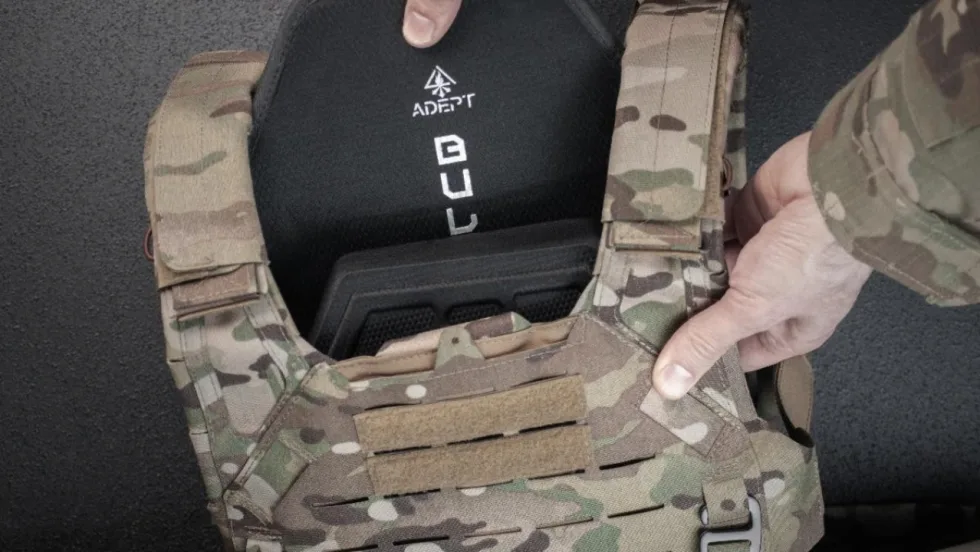
Adept Armor Introduces Two New Rifle Plates
Adept Armor has launched two new Level IV ballistic plates, the Emperor and the Archon Mark 2, which brings Adept Armor’s new Quatroid ceramic to the high-threat, performance-value center of the range at 5.2 pounds.
Read More →
POLICE Product Test: Benchmade Bailout
The Benchmade Bailout is a slim, lightweight carry knife with a deep-ride pocket clip and comes in a variety of blade steels and scales. Here is a detailed review of the Taiga Green Bailout, released earlier this year.
Read More →
NLEOMF Announces July 2026 Officer of the Month
NLEOMF honored a Michigan deputy sheriff as the July 2026 Officer of the Month for rescuing a trapped driver from a burning vehicle following a Fourth of July crash.
Read More →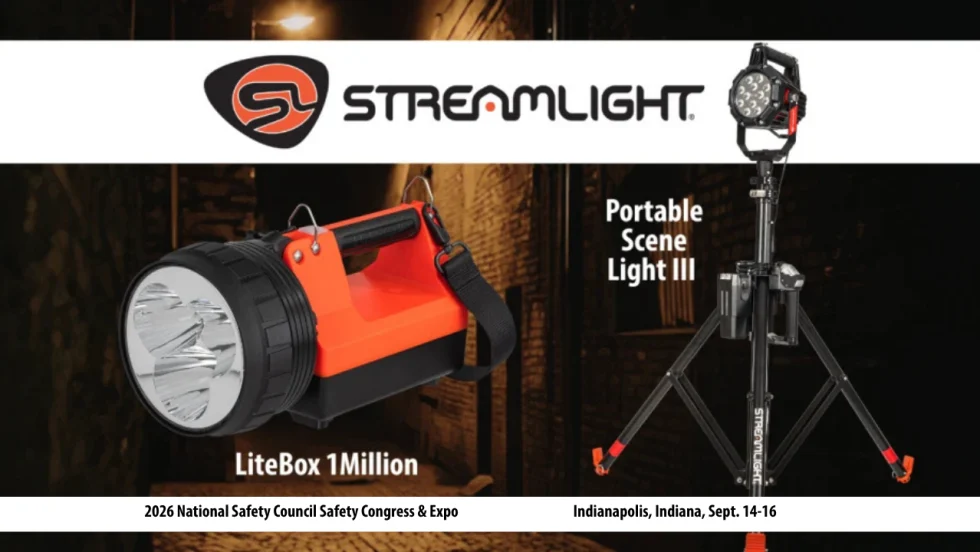
Streamlight to Showcase Newest Lighting Products at National Safety Council’s Safety Congress & Expo 2026
Streamlight will showcase its latest lights, including the Portable Scene Light III and the LiteBox 1Million, at the 2026 National Safety Council (NSC) Safety Congress & Expo.
Read More →
The 2027 World Police & Fire Games Set for Perth, Australia
The 2027 World Police & Fire Games (WPFG) will take place in Perth, Western Australia, from Friday, March 12 through Sunday, March 21, 2027.
Read More →
5.11 Partners with National Fallen Firefighters Foundation to Support #ForThe343
5.11 has joined the nationwide movement honoring the 343 New York City Fire Department firefighters lost on Sept. 11, 2001.
Read More →
Team Wendy Announces Title Sponsorship of the Jorge Pastore Foundation
Team Wendy’s 3-year partnership with the Jorge Pastore Foundation expands access to programs that strengthen those who serve.
Read More →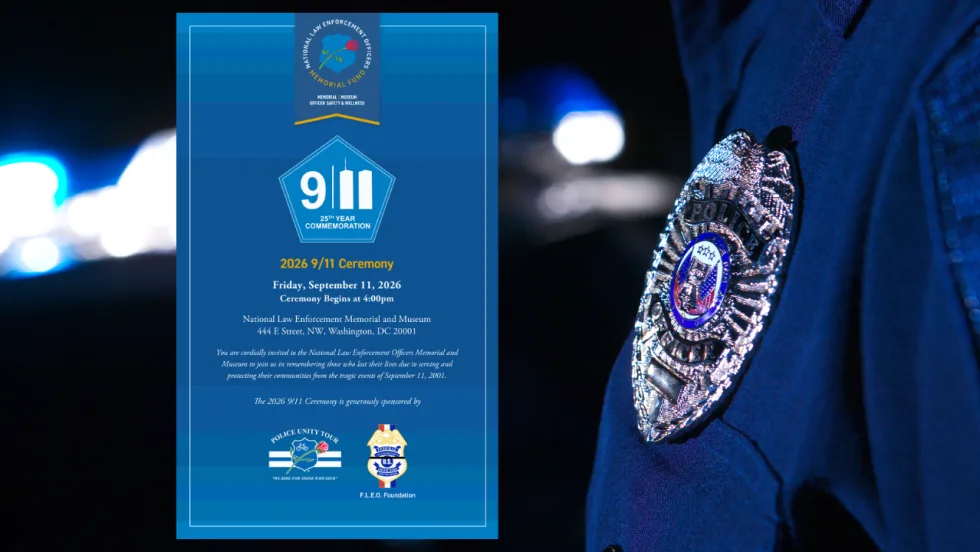
National Law Enforcement Memorial and Museum Hosting 9/11 25th-Year Commemoration Ceremony
The National Law Enforcement Memorial and Museum is hosting a 9/11 25th Year Commemoration Ceremony on Sept. 11 at 4 p.m.
Read More →
National Law Enforcement Officers Memorial Fund Announces June 2026 Officers of the Month
The National Law Enforcement Officers Memorial Fund (NLEOMF) named 15 officers of the Chico Police Department (California) as the Officers of the Month for June 2026 for their roles in responding to an active-shooter incident at a public library.
Read More →