



Taking the Bite
I would later reflect on the odd incongruity of the K-9's toenails gently striking the tiles in the Junior High that we had just cleared. They were so dainty, almost tentative, as he rounded the corner into the shadows of the dead-end hallway where I hid silently in darkness. After that, he was a blur of snarling teeth and crushing power gripping my extended right arm.

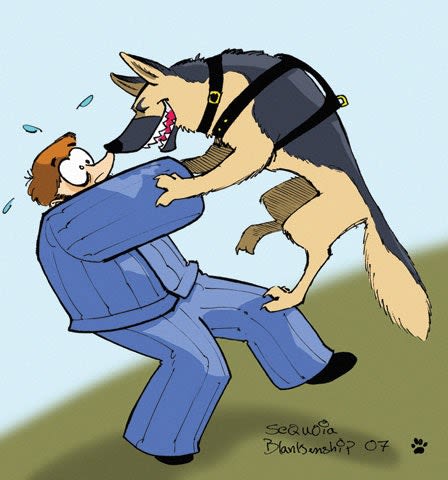
I would later reflect on the odd incongruity of the K-9's toenails gently striking the tiles in the Junior High that we had just cleared. They were so dainty, almost tentative, as he rounded the corner into the shadows of the dead-end hallway where I hid silently in darkness. After that, he was a blur of snarling teeth and crushing power gripping my extended right arm.
I quickly began to understand that the veterans had, in fact, lied to me about how fun this was going to be, and the honor of taking a bite from a disappointed K-9 that had searched the school and had suffered the frustration of finding nothing was actually a great time only for one of us, the monster German shepherd that bit me!
Now, I am a dog lover by nature, having grown up with at least one around me all the time. In fact, I currently live with three of them, including a shepherd who I have not and will not aggression train. She is our giant, almost 100-pound puppy, but there are moments, split seconds in time when we are playing rough and she gets that look. That look makes me remember back to the instant I understood the truth about dogs: They still carry the complete DNA of the grey wolf and secretly, desperately love to bite something.
If you have never participated in a K-9 Unit training session, know that it is one thing to watch a K-9 tear the pants off of a suspect and quite another to take the bite yourself.
Yeah, if all you've ever done is see the end result of all the training, then I invite you to go find a way to volunteer and learn at the deepest emotional level why dogs hooked up with us to begin with. They say over 100,000 years ago men and wolves started migrating and cooperating together on the hunting of migratory herds. Eventually wolves became dogs, so they could trick us into giving them the food at the end of day without them ever leaving the couch. But what they really want to do, desperately want to do, is bite something for us, especially another one of us.
I guess what is disturbing at a visceral gut level is that dogs don't care about uniforms or right or wrong. That is why the training of these land-sharks is so vital and at the same time has a few important reminders for us. K-9s are taught to absolutely comply with their handler's commands, so even though they love to bite they know they must let go finally upon command. Next, dogs are taught to be fearless…sadly, this is because they are expendable, and you are not!
Finally, it often struck me as odd that the reason I was in that school was so a disappointed dog could bite me and be happy. So the dog would not become detrained by routine and would go into every situation expecting to find someone…expecting to bite someone. Conversely, the city was perfectly happy to let me search a thousand schools, and shops, and businesses and find no one, regardless of whether it was training me to expect to find nothing or not.
The real lesson I learned from taking that bite was the true role of training as an antidote to routine and false alarms and compliant people, and how important it was to give our in-service officers a chance to get a bite. After all, we don't want them detrained any more than we want our K-9s detrained.
More Training
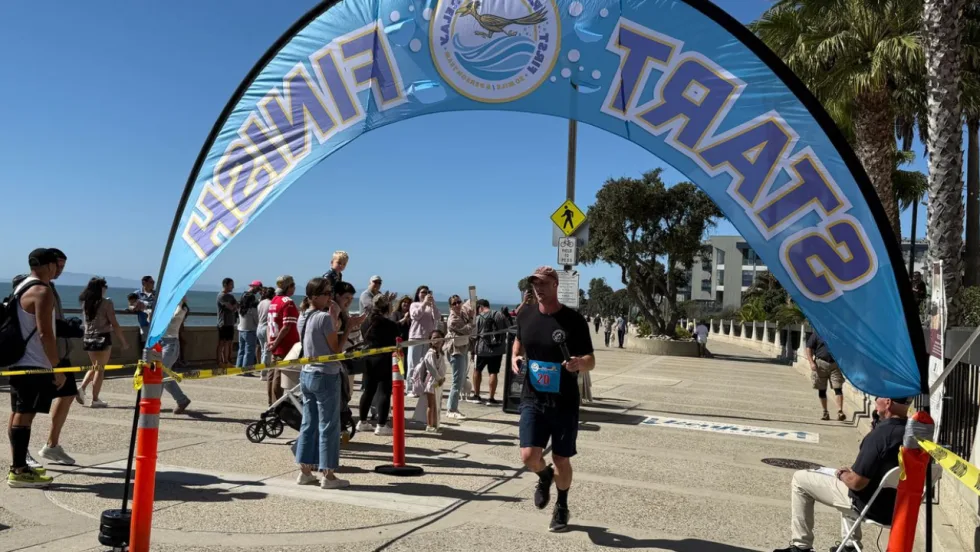
Registration Underway for Sixth Annual First Responders Relay
The California Police Athletic Federation’s annual First Responder Relay will welcome first responder teams from across the globe to compete along Ventura's scenic coastline on Oct. 11. Registration is underway.
Read More →
Vector Solutions Launches Comprehensive Online Dispatch Training Catalog for Emergency Communications Professionals
Vector Solutions’ new catalog of 35 expert-developed online courses can help emergency communication centers strengthen training, meet certification requirements, and simplify continuing education.
Read More →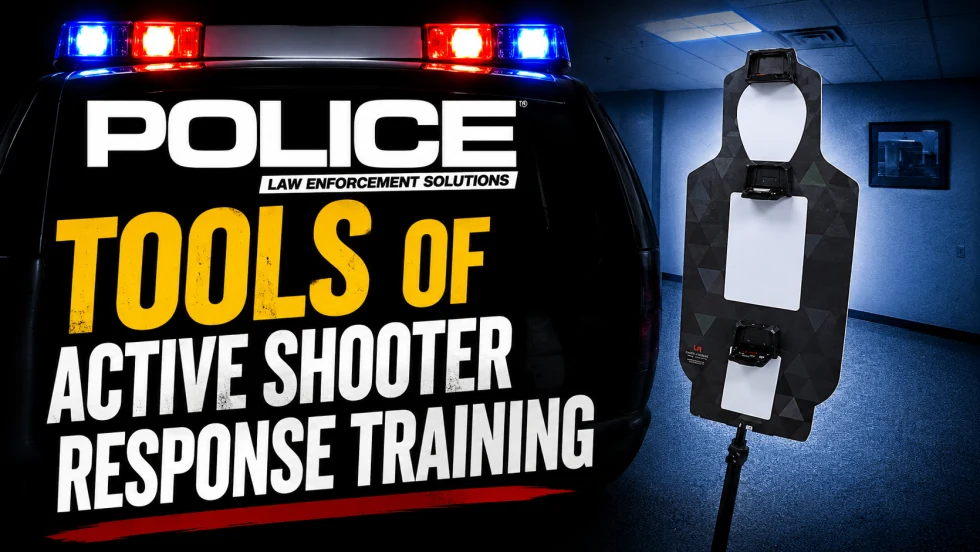
Tools for Active Shooter Response Training
What technologies help prepare officers for active shooter response situations? This behind-the-scenes look at law enforcement training explores shot simulators, smart firearms, laser target systems, and the tools used to build safer, more effective training environments.
Read More →
Two-Officer Tactical Doorway Entry Techniques
Entering a room during active-threat situations requires communication, coordination, and disciplined tactical movement. In this video, trainers from the United States Deputy Sheriff’s Association demonstrate critical room entry concepts, including fatal funnel awareness, team coordination, and safe tactical movement.
Read More →
High Compressed Ready Explained | Muzzle Control For Room Entry
In this video, Mike Willis, law enforcement national training and program director for the United States Deputy Sheriffs’ Association, demonstrates the high compressed ready position and discusses muzzle control during room entry.
Read More →
Why Attend the DroneSense Innovation Summit by Versaterm?
Let’s hear from Ryan Bracken, head of product, about why your agency should send someone to the first annual DroneSense Innovation Summit by Versaterm in April.
Read More →
Caswell Live Fire Spins Off from InVeris
Caswell Live Fire has spun off from parent company InVeris, coinciding with the 100th anniversary of Caswell’s founding. Over the past 100 years, Caswell has developed pioneering solutions that support military, law enforcement, and commercial clients worldwide.
Read More →
When Do You Transport a Wounded Officer Instead of Waiting for EMS?
Thumbnail for video series POLICE Topics, Tactics & Tips with a yellow headline that reads When Do You Transport a Wounded Officer Instead of Waiting for EMS?
Read More →
How to Pick Your High-Risk Stop Location for Tactical Advantage
Hear veteran trainer Mike Willis, of the United States Deputy Sheriff’s Association, explain several considerations that can help you wisely pick your best spot to initiate high-risk or felony traffic stops.
Read More →
Coffee Break with Police Experts: Using Your Patrol Vehicle for Cover
In this video, hear from Dustin Mowery, a product specialist at Team Wendy, as he discusses how to best use a patrol vehicle for cover.
Read More →